Another milestone on my Ethos ledger: steady paid work in Senior Business Development Manager, on my own terms. If that sounds like your kind of thing: https://t.co/IBUrdo7s8q
Ethos marked my profile All-Star this week. They actually check: profile call, work history, real reviews of real work. And profiles stay private: clients only see you when a match is real. https://t.co/IBUrdo7s8q
Wa alaykumussalam warahmatullah.
Qiyam al-Layl means standing the night in worship. It is a complete spiritual experience that goes far beyond just the units of prayer you offer on the mat.
If you want to build a deep night routine outside of the voluntary prayers, you can structure your time with these powerful acts of worship:
1) The moment you wake up, before making wudhu, wipe the sleep from your face and recite the last ten verses of Surah Ali 'Imran. The Prophet (peace be upon him) used to do this to ground his heart and reflect on the creation of the heavens and the earth before starting his night worship.
2) Spend time with deep Quranic reflection. Do not just rush through pages to finish a chapter. Read slowly.
When you come across a verse about mercy, stop and ask Allah for His mercy. When you read a verse about punishment, pause and seek protection. This turns your recitation into a real conversation with the Creator.
3) Dedicate the final window before Fajr to Istighfar. The last twenty to thirty minutes before the adhan is the time of Sahar. Allah praises the believers in the Quran specifically for seeking forgiveness during these late hours. Sit quietly and focus entirely on asking for pardon.
Here say this endlessly: La ilaha illa anta, subhanaka, inni kuntu minaz-zalimin.
4) Make intense, personal Du'a. The last third of the night is when Allah descends to the lowest heaven, asking who is seeking from Him so He can grant it. This is your private audience with the King. Speak straight from your heart in your own language and lay down all your burdens.
You can also fill the gaps between these actions with general adhkaar, especially sending blessings upon the Prophet, saying SubhanAllah, Alhamdulillah, and La ilaha illa Allah.
Lastly, know that Qiyam is about companionship with Allah when the world is asleep. Mixing up these actions keeps your heart alive, focused, and fully engaged throughout the night.
Allah knows best.
Allāhumma innī asʾaluka al-ʿāfiyah fī -dunyá wa-al-ākhirah allāhumma innī asʾaluka al-ʿafwah wa-al-ʿāfiyah fī dīnī wa-dunyāya wa-ahlī wa-mālī allāhumma ustur ʿawrātī wa-āmin rawʿātī allāhumma iḥfaẓnī min bayni yadayya wa-min khalfī wa-ʿan yamīnī wa-ʿan shimālī wa-min fawqī wa-aʿūdhu bi ʿaẓamatika an ughtāla min taḥtī.
"O Allah, I ask You for well-being in this world and the Hereafter. O Allah, I ask You for pardon and well-being in my religion, my worldly affairs, my family and my property. O Allah, conceal my faults and keep me safe from what I fear. O Allah, guard me from in front of me and behind me, on my right and on my left, and from above me. And I seek refuge in Your Magnificence from being swallowed up from beneath me."
Allahumma rahmataka arju fala takilni ila nafsi tarfata ‘aynin wa aslih li sha’ni kullahu la ilaha ila anta
“O Allah, I hope for Your mercy. Do not leave me to myself even for a blink of an eye. Correct all of my affairs for me. There is none worthy of worship except You.”
***
I recite the above a lot. I recommend.
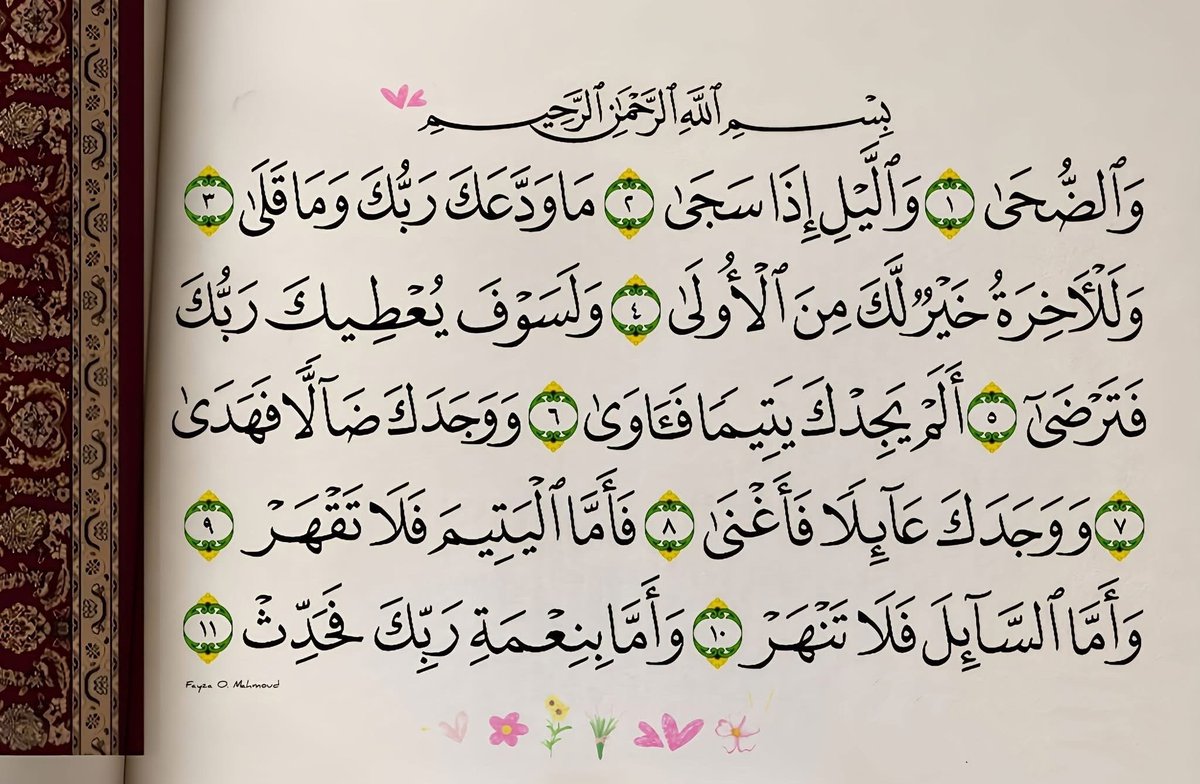
Surah Ad-Duha is the medicine of anxiety‚ depression and sadness . It reminds us that even in silence , Allah has not left us. After every hardship, His mercy arrives like the morning light.
The Day of Arafah is the most important day of the year but balancing it with a demanding work schedule is tough.
You don’t need to take the whole day off to maximize it. It is all about strategic planning and intentional blocks of time.
Below is a practical blueprint to maximize the Day of Arafah while managing your 9-to-5:
1. The Night Before (tonight)
- Set a hard stop: Finish your work tasks early the night before.
- Write your Dua list: Do not wing it.
- Categorize your desires: Akhirah, Health, Career/Wealth, and Family.
- Pre-schedule Charity: Set up an automated donation to go out on the morning of Arafah so you don't forget during a meeting.
2. Pre-Work
- Suhoor & Tahajjud: Wake up 45 minutes before Fajr. Eat well and hydrate to sustain your energy. Pray 4 Rak'ah of Tahajjud.
- Post-Fajr Power Hour: Spend 30 minutes reading Quran after Fajr. You can also do this while on transit.
3. Micro-Dhikr & Ibaadah
- Recite SubhanAllah, Alhamdulillah, Allahu Akbar during routine tasks or commutes.
- Do not work through your lunch hour. Take that 30–60 minute block, find a quiet conference room or your car, and spend it entirely on intense, mid-day Dua.
- Constantly repeat the best Dua the Prophet (SAW) taught us for this exact day:
"Laa ilaaha il-lal-laah, wahdahu laa shareeka lah, lahul-mulku wa lahul-hamd, wa huwa ‘alaa kulli shay’in qadeer."
- Protect your fast. Avoid gossip, venting about clients, or idle chatter in meetings.
4. The Golden Hours: Asr to Maghrib (Non-Negotiable)
- The Final Hour Push: The hour before Maghrib is critical. Find a quiet room, face the Qiblah, raise your hands, and pour your heart out using your pre-written Dua list.
The Prophet (SAW) said: "The best supplication is the supplication on the day of 'Arafah."
Don't let the grind rob you of the most forgiving day of the year. Plan your day, protect your time, and make it count.