Ito yung political ad na nilabas namin nung 2016 campaign pero hinarang ng kampo ni duterte. Ngayon, alam nyo na ang epekto ng isang violent environment sa mga bata.
This hits close to home.
My mom worked as a Public Health Nurse in a Health Center for decades before she took on an administrative role. Every summer break, she would bring us to work with her since we do not have a sitter to watch over us.
Some of the most reliable people in her life are/were the Barangay Health Workers who are basically volunteers with a bit of allowance (if they even have any). It’s out of their desire to help others more than anything and most of them are in their 40s to 70s.
Really makes me happy that BHWs are now more protected by law. These are the same people who also go out during immunization drives, going house-to-house or school to school, but receive less protection from the law.
Salamat, Sen. @risahontiveros ❤️
We should remind our pasahod and palamuning si @piacayetano na wala siyang karapatang mag-inaso to any working senator after niyang mag-absent nang mag-absent. Pinili niyang maging tagasunod ng kapatid niyang gaya niyang inutil. She should tone down the attitude.
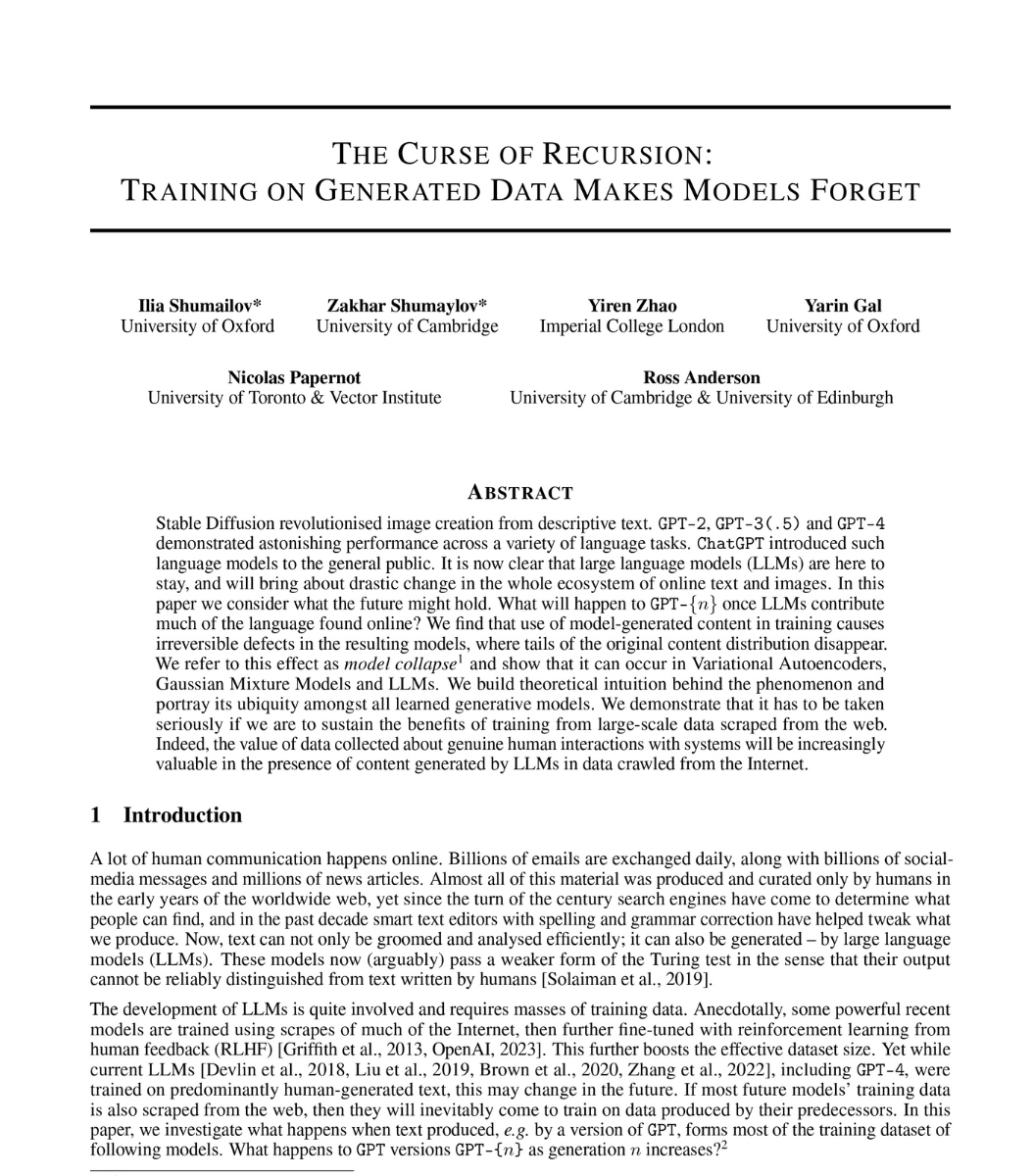
🚨 THE INTERNET IS EATING ITSELF ALIVE. AI IS TRAINING ON AI. AND LOSING ITS MIND.
Oxford and Cambridge researchers just proved it in Nature. They call it Model Collapse.
Here is what is actually happening.
AI companies scrape the internet to train the next generation of models. But the internet is now flooded with AI-generated content. So the next generation trains on the output of the last one.
Each cycle, something gets lost. Not the average stuff. The weird stuff. The personal stuff. The things only a human would say at 2am on a forum nobody reads.
Researchers call these the tails of the distribution. The rare ideas. The unexpected takes. The things that made reading feel alive.
Those disappear first.
What survives is the average. The safe. The expected. The same six words rearranged forever.
Then the next model trains on that. And loses more.
Ross Anderson, one of the paper's authors, put it plainly. Large language models are like fire. Useful. But they pollute the environment.
The pollution is invisible. You cannot tell which sentence was written by a human. Neither can the AI about to train on it.
Model Collapse is not a technical glitch. It is a slow erasure of everything that made the internet feel like people actually lived on it.
Let me explain in detail🧵
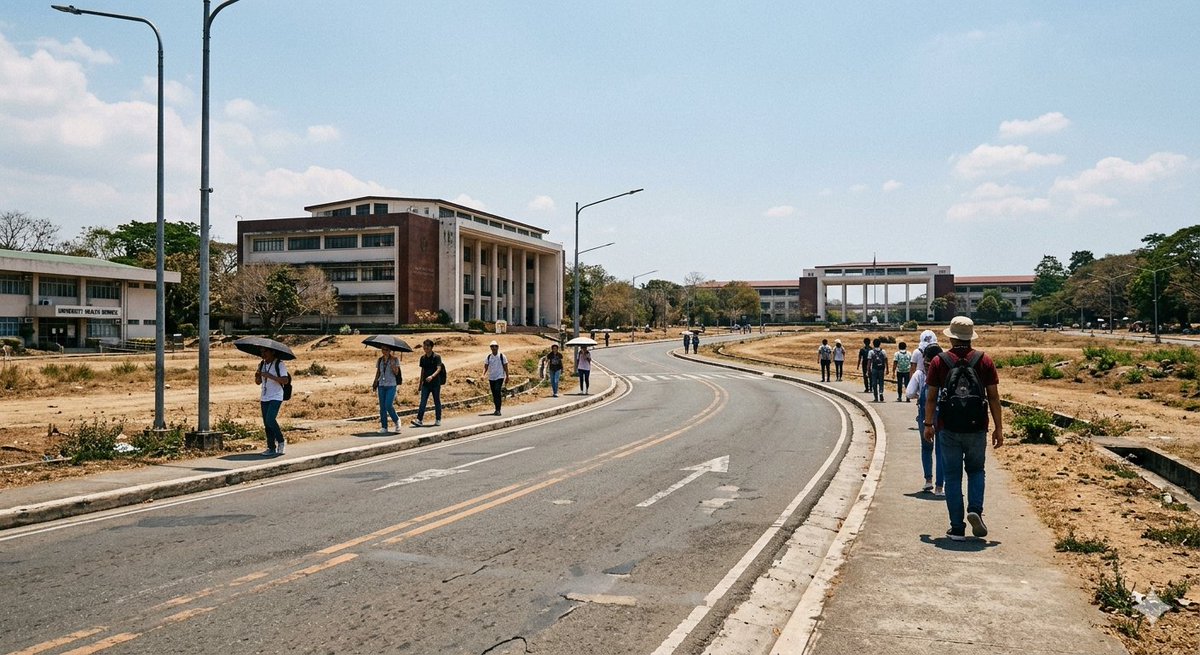
I asked AI to imagine UP Diliman without its big trees. Ang ganda pala. Naging mas visible ang mga building. Sabi nga ng DENR, para sa pag-unlad kailangan alisin ang mga puno. Sana lagyan ito ng Skyway para lalo tayong umunlad
Wow! Sana all may choices. 😒🙄
Yung ordinaryong Pilipino, walang option. Kinulong agad dahil napagkamalang nanlilimos.
Pero kapag makapangyarihang opisyal na may kasong plunder at graft, may pa-consultation muna?
Dapat patas ang proseso. Walang special treatment, walang VIP lane, walang batas na para lang sa mahihirap.
A French ad company once pitched the city of Paris on a strange deal: let us put ads on your bus stops, and we'll build you public toilets that clean themselves every time someone uses them. Paris now has 435 of them on its sidewalks. Taxpayers paid nothing.
The toilets are called Sanisettes. JCDecaux invented them in 1981 and put the first two near the Centre Pompidou museum. They cost 1 franc back then. The city made them free in 2006. People used them 18 million times in just the first nine months of 2025.
The cleaning is what people film and share. After you walk out, the door locks. The floor swings open. Jets spray the toilet, the walls, and the floor with disinfectant. The whole cabin gets a wash. About 30 seconds later, the door unlocks for the next person. If you try to walk in during the cycle, the door doesn't open. There's also a 15-minute timer inside, so you can't move in.
Cities don't pay for any of this. JCDecaux builds the toilets, installs them, cleans them, and maintains them with their own staff (who, by the way, stay on the job for an average of 18 years). In exchange, the city lets the company sell ads on bus stops, info displays, and other things on the sidewalk. JCDecaux pulled in nearly €4 billion in revenue last year doing this around the world.
This same trade was offered to New York. In 2006, NYC signed a $1.4 billion deal for 20 of these toilets plus 3,300 bus shelters. Two decades later, only 7 toilets are in service. The rest spent years sitting in a warehouse in Queens. The reasons get bureaucratic fast: neighborhood boards rejecting locations, state laws getting in the way, fights over wheelchair access, fights over which agency cleans them. Paris was swapping in 7 new toilets every single week during its 2024 rollout. New York managed 7 in 20 years.
The same model now runs in 28 countries. The full network is 2,500 toilets strong, used by over 30 million people every year. Berlin alone has 278 of them, the second-biggest network in the world. San Francisco, Stockholm, Lagos, and Abidjan all use the same trade. Nobody pays except the advertisers.
A private ad company has been keeping millions of strangers in 28 countries from peeing on the street, for free, for 45 years now. And most cities still can't pull it off.