The real bottleneck of AI isn’t models—it’s IP‑cleared, real‑world data. And @StoryProtocol is building the foundational layer to unlock this $70 trillion IP economy.
Story is no longer just a creative‑IP chain—it’s expanding into the frontier: physical AI (robotics, healthcare, autonomous systems) that require trustworthy, permissioned, programmable data.
Zion is a powerful example of this evolution. They’ve fully implemented Story’s licensing and royalty modules to tokenize text‑based IP like cover letters—transforming them into privacy‑preserving, monetizable digital assets with attribution. While cover letters were the starting point, the system is designed for any text asset: memos, essays, research, resumes, product feedback, and more.
Zion’s model addresses four critical IP challenges:
1/ Preserving privacy while enabling AI to learn from personal documents.
2/ Monetizing personal content—turning effort into revenue streams.
3/ Ensuring transparent attribution and traceable on‑chain provenance.
4/ Enabling creative value from personal IP beyond traditional media.
And it’s not just theory. The team behind Zion operates a consumer app with over 600K users. They won the Story track at @buidl_asia—and now, at @NarrativeCap, we’re working closely to bring this to market.
The goal is clear: unlock a new category of monetizable IP—personal text—that AI systems actually need.
This is what Chapter 2 of Story is about: Not just tokenizing art or music, but making structured real-world data usable, traceable, and monetizable—from user-generated content to operational workflows
Looking ahead, imagine a future where Story works with data consumers—autonomous vehicle companies, robotics firms, and healthcare innovators—to transform rich, permissioned data streams into powerful AI inputs.
Picture @Tesla_AI or other advanced robotics firms purchasing verified, licensed data to train better driving models or robotics systems. Tesla already uses real-world fleet data to train its Full Self-Driving and develop robotics—this IP layer could turn data into a tradable commodity, accelerating development and ensuring accountability
At Narrative, we’re investing and co‑building toward this vision: Story as the sovereign IP layer for data‑powered AI.
Envision:
– Robots and autonomous systems trained on verified, licensed real‑world datasets
– Healthcare AI built on opt‑in biometric and sensor data, tracked and compensated
– Creators licensing UGC and enterprise text with automated royalties and provenance
This is Chapter 2: scaling IP tokenization from music and art to the lifeblood of AI—real‑world data.
Let’s build a future where every byte of value is tracked, licensed, and monetized—on‑chain, permissioned, and ready for the AI era.
<Story’s Chapter 2: AI-Native Infrastructure for the $70T IP Economy>
Today, we’re sharing what’s next for Story. We call it Chapter 2, which includes expanding verticals of IP tokenization, flipping the licensing model, and an evolution of our infrastructure to meet the most urgent need emerging from the AI frontier: making real-world data usable, traceable, and monetizable as IP.
From day one, we built Story to tackle a glaring gap. IP is the world’s most valuable $70T asset class, yet still stuck in a world of pen and paper, PDFs, and lawyers. Even as AI began transforming how content is created, used, and remixed, the infrastructure for IP remained unchanged.
So we built one from scratch: a purpose-built Layer 1 blockchain that makes IP programmable. Today, it secures hundreds of thousands of IP assets on-chain.
We’ve worked with cultural giants like Justin Bieber, BLACKPINK, and BTS via Aria, global brands like Crocs and Adidas via Ablo, and AI pioneers like Stability AI to bring their IP on-chain and reimagine its value.
But the frontier of AI is shifting.
In recent months, leading AI teams have come to us searching for datasets with embedded provenance, permissions, and programmable royalties that persist across the AI development lifecycle.
This reveals that the real bottleneck for AI isn’t compute, but IP-cleared, real-world data.
Models trained on the world of bits (LLMs, image generators, and other media-based systems) are no longer the edge. The next wave lies in physical AI: embodied systems that operate in the world of atoms. Think robotics, healthcare, autonomous systems, and beyond.
These models can’t rely on scraped internet content. They need something more specific and scarce.
That need is now urgent.
There’s a global race to gather the uncrawlable, specialized datasets needed to train physical intelligence. From household robots to surgical assistants to autonomous vehicles, these systems must learn from real-world interactions. Pixels and text aren’t enough.
As Meta CTO Andrew Bosworth put it, no amount of media content can replicate “the intuitive judgment of friction and material deformation when people grab a coffee cup.”
That’s the world Story was built for.
This isn’t a pivot. It’s an expansion. The infrastructure we built for creative IP is exactly what AI needs next.
That’s why Chapter 2 centers on the most pressing need from the AI frontier.
Story was built to make IP programmable, traceable, and monetizable. Now, it’s uniquely positioned to do the same for the most underutilized category of IP: real-world data.
But that’s only part of Chapter 2.
We’re dramatically expanding IP tokenization. Beyond early traction in music and fashion, we’re moving into under-tapped sectors like sports, DeSci, and entertainment. This unlocks liquidity across the IP economy and enables new ways to invest, trade, and build via our IPRWA model.
We’re also flipping the licensing model. Together with partners who’ve worked with the world’s biggest brands, we’re helping major players embrace, not resist, viral user-generated moments. That means enabling brands to legally capture memes or remix surges instead of chasing them down. Fashion houses can now monetize UGC trends. Entertainment giants can convert unpredictable cultural explosions into licensed, revenue-generating IP.
No other protocol registers data as IP, tracks its full derivative lifecycle, and routes royalties in real time. From raw data collectors to synthetic generators to AI agents.
Chapter 2 of Story begins now.
In the coming weeks, you’ll see this vision come to life. New primitives. New partners. And a flagship project built by us on top of Story.
All focused on one goal: making IP usable infrastructure for the AI era.
The most expensive “Hi!” I’ve ever sent.
In December 2023, I got a Telegram DM from @xulian_hl, a Core Contributor at @HyperliquidX.
“gm gm — I’d love to talk more with the Korean community.”
My reply:
“Hi!”
Then I didn’t properly follow up for about 14 months.
During that time, Hyperliquid kept growing, early users used the product and earned points, and today Hyperliquid trades at around $70B FDV.
I missed the chance to collaborate, try the product early, and earn points.
This is a reflection on my reply habits.
Opportunity walked into my DMs, and I basically said hello and closed the door.
Next time a great team reaches out,
I’ll reply properly — and actually use the product.
Huge congrats to Xulian and the Hyperliquid team.
Respect for building a great product, growing the community, and proving it in the market.
I’m currently at @ns in Malaysia.
I was curious what would happen if founders, builders, creators, and other people who make things were brought together in one place to live for a while.
My conclusion is simple: I now want to build something like this in Korea.
Network School is a community created by @balajis. He was the CTO of Coinbase, a partner at a16z, and the author of The Network State.
I came here through the @baseapac Network State Residency.
People who had only been connected online now live, learn, work out, and work together in the same place. Over time, those shared days turn into real relationships.
After spending time here, it feels less like a school and more like a small society.
This kind of experiment is often called a Startup Society. It is a community where people with their own goals live together for a period of time and try a new way of being together. It is not a company, a conference, or a short-term camp. Trust forms through the simple act of living and working together. People host events, join each other’s sessions, and build relationships through repeated interaction.
Balaji has written that he does not want Network School to end as just one school. He wants the people who go through it to build other Startup Societies. For the first cohort, more than 4,000 people from over 80 countries applied, and 128 were accepted.
I also have a small personal connection with Balaji. We have co-invested in a few startups, and recently I distributed part of the proceeds from one of those investments to him.
Being here also reminded me of an earlier experience in my life.
Before founding Code States in 2015, I attended a coding bootcamp in San Francisco. Living, learning, and spending time with people there had a huge influence on me.
Without that experience, I may not have built Code States in the same way.
Back then, the community was for people who wanted to become software developers. Now I think we need a broader version of that. A place not only for developers, but for founders, builders, creators, investors, researchers, and others who are actively making things to live and learn together.
I also met a Japanese friend at @wecandaoit_jp here who has been thinking along similar lines. We had only known each other online before. Inspired by Network School, he is now preparing to build a Startup Society in a declining small city in Japan.
He is planning to run his first popup this August.
Hearing that made me more convinced. If this can be tried in Japan, it can be tried in Korea too.
Korea needs a place like this.
Not just another event where founders, developers, designers, investors, creators, and researchers meet for a few hours and then leave. I mean a community where people live together for a while.
I especially want to try this outside Seoul, in a smaller Korean city. I want to see what kind of founder community can grow in a place with a completely different rhythm of life.
A good community does not stop at gathering people.
It should help people ask better questions, live healthier lives, and build relationships that last longer.
We were originally people who made things. We have only gradually lost that instinct inside the rules of school, companies, and society.
People build better when they are surrounded by good people.
So I’m left with a few questions.
Who are the people who would live together in Korea, learn together, work out together, work together, and build something together?
And where should the first city be?
If this question resonates with you, please reach out. I’d love to build a Startup Society in Korea that we would actually want to live in.
@CosmicDude3000@ns Jeju is definitely high on my list for the same reasons: airport access, international familiarity, and a local government that may be open to this kind of experiment. :)
Write in any language. Reach the entire world. 🌍
Every post is automatically translated to match each user's language — no barriers, just connection.
Now supporting 11 languages, including English, Spanish, Korean, French, Japanese, German, and more.
🇺🇸🇬🇧🇦🇺🇯🇵🇰🇷🇻🇳🇹🇭🇹🇼🇩🇪🇫🇷🇧🇷🇪🇸
수백억대 뷰티 브랜드를 만든 창업자와, 이제 막 뷰티 AI 솔루션을 시작한 창업자가 같은 방에 모이면 어떤 얘기를 할까.
이번 주 토요일 저녁, 성수에서
Beauty x AI Builders Meetup을 엽니다.
요즘 AI 제품을 만드는 일은 쉬워졌어요.
며칠이면 데모는 만들 수 있습니다.
그래서 더 어려운 질문은
“무엇을 만들 수 있나”가 아니라
“무엇을 만들지 않을 것인가”예요.
AI를 붙일 수 있는 곳은 많지만,
고객이 실제로 다시 쓰는 제품은 그중 일부예요.
좋은 AI 제품은 기능이 많은 제품이 아니라
고객의 고민 하나를 더 짧고 정확하게 해결하는 제품에 가깝습니다.
뷰티, AI 분야에서 제품을 만들고 있거나 만들고 싶다면 이번 주 토요일 성수에서 만나요.
신청은 로켓펀치(@rocketpunch_kr) 이벤트에서 할 수 있습니다. https://t.co/OOUjAtx9ec
제품은 AI로 만들 수 있습니다. 하지만 시장의 기회는 사람을 통해 열립니다.
요즘 AI/Web3 빌더를 만나면 비슷한 고민을 듣습니다. “이제 만드는 건 빨라졌는데, 누가 진짜 쓸지 모르겠다.”
이게 앞으로 더 큰 문제가 될 거라고 봅니다.
AI가 코딩의 문턱을 낮추면 제품은 더 많이 나옵니다. 하지만 첫 사용자를 찾는 일, 좋은 팀원을 만나는 일, 투자자·파트너·커뮤니티와 연결되는 일은 여전히 어렵습니다.
그래서 빌더는 제품을 만들기 전에 이 질문을 먼저 해야 합니다.
1/ 이 문제를 누가 매주 겪고 있는가
2/ 첫 고객 10명은 누구인가
3/ 그 사람들은 어디에 모여 있는가
4/ 지금 쓰고 있는 대안은 무엇인가
5/ 어떤 말로 설명해야 바로 이해하는가
6/ 누가 이 제품을 다른 사람에게 공유할 이유가 있는가
7/ 이 제품이 커지려면 어떤 연결이 필요한가
저는 로켓펀치(@rocketpunch_kr)가 앞으로 이 질문에 더 잘 답하는 플랫폼이 되어야 한다고 생각합니다. 단순히 사람과 회사를 나열하는 공간이 아니라, 빌더가 첫 사용자·팀원·파트너·투자자와 만나는 비즈니스 네트워크.
5월 30일 성수 Narrative Lounge에서 열리는 맨틀(@Mantle_Official) 서울 AI 해커하우스에서 이 이야기를 해보려고 합니다.
오후 3시 세션 주제는 “빌더를 위한 진짜 지원이란 무엇인가?”
좋은 지원은 자본만이 아니라고 생각합니다.
좋은 질문. 빠른 피드백. 첫 사용자와의 연결. 배포 기회. 같이 만들어갈 사람들.
사실 이번 행사가 개인적으로 더 반가운 이유가 있습니다.
Mantle 한국 담당자 @Gem3a 님은, 이번에 함께 패널로 참여하는 @zk_bella 님이 주최한 북클럽에서 처음 만났습니다. 그때는 그냥 같이 책을 읽고 이야기하던 자리였는데, 시간이 지나 이렇게 다시 만나 협업하고, 같은 행사에서 주최자와 패널로 함께하게 됐습니다.
돌이켜보면 저에게 중요한 기회들은 대부분 이렇게 왔습니다.
처음에는 가벼운 대화였고, 작은 소개였고, 별생각 없이 갔던 자리였습니다.
로켓펀치도 결국 이런 서비스를 만들고 싶습니다.
사람들이 더 좋은 인연을 만나고, 우연한 기회가 더 자주 생기고, 그 연결이 일과 커리어와 사업의 다음 단계로 이어지는 곳.
AI/Crypto 분야에 관심 있다면 오세요.
그날 하루가 내 아이디어와 팀을 다시 점검하는 시간이 되면 좋겠습니다.
📍 5월 30일 | 성수 Narrative Lounge
🎟️ RSVP: https://t.co/nZWkYoRsZT
🎤 맨틀 서울 AI 해커하우스 | 파이어사이드 챗 02
빌더를 위한 진짜 지원이란 무엇인가?
🗓 2026년 5월 30일, 오후 3시
📍 내러티브라운지, 성수
자본은 출발점일 뿐입니다. 웹2와 웹3를 넘나드는 빌더들이 VC와 파운데이션에게 실제로 원하는 것은 무엇일까요?
이번 세션에서는 빌더에게 필요한 실질적인 지원, 네트워크, 배포 기회, 그리고 해커톤 이후의 성장 경로에 대해 이야기합니다.
연사
• 모더레이터: 맨틀 한국 리드, @Gem3a
• @MashupVentures 투자 담당, @bobo_sung_00
• @Rocketpunch_kr 대표, @codekim1214
• @SolanaFndn 개발자 릴레이션스, @decentra1ized_
• @surfAI 그로스 매니저, @zk_bella
AI 반도체 호황은 삼성전자만의 이야기가 아닙니다.
큰 산업은 한 회사가 아니라 넓은 협력사 네트워크로 움직입니다.
장비, 소재, 부품, 공정, 품질관리, 제조기술, 연구개발, 생산관리까지.
커리어 기회도 꼭 가장 유명한 회사 이름으로만 오지 않습니다.
AI 반도체 시대에 다음 기회를 찾고 있다면, 삼성전자 협력회사 채용관도 한번 살펴보세요.
로켓펀치에서도 이번 채용관 홍보를 함께 지원하고 있습니다.
https://t.co/vJIBy63w78
The AI chip boom is not just a @Samsung story.
Big technology shifts are never built by one company alone.
Behind every semiconductor leader is a wide network:
equipment, materials, parts, process, quality control, manufacturing technology, R&D, and production management.
Pre-registration for KAIZONE at the 2026 @kaistpr Festival is now open on @rocketpunch_kr.
KAIZONE is a dedicated festival viewing area for current KAIST students.
For this partnership, Rocketpunch is doing more than hosting an event page.
We help verify that each applicant is a current KAIST student through Rocketpunch’s student verification feature. We also check eligibility based on the education information registered on each user’s Rocketpunch profile.
In other words, this is not an event that anyone can apply for.
It is designed specifically for verified KAIST students.
It also makes on-site check-in much easier.
Students who pre-register can avoid long lines at the venue and confirm their entry quickly through QR-based check-in.
Rocketpunch is a business networking platform.
But we are not building just another profile service.
We are building infrastructure that connects verified identity, background information, event participation, and networking. A profile should not only show who someone is. It should also help people access the right opportunities, meet the right people, and move through offline events with less friction.
The KAIZONE pre-registration for this year’s KAIST Taeul Seokrim Festival is a good example of where we are headed.
A festival is about the stage, the music, and the people you experience it with. But a better festival experience starts before the show, by reducing waiting time, confusion, and unnecessary friction.
Rocketpunch is glad to support this year’s Taeul Seokrim Festival and help KAIST students enter KAIZONE faster, more accurately, and more comfortably.
If you are a current KAIST student, please apply through the Rocketpunch event page during the registration period.
If you are not a KAIST student but would like to help run the Rocketpunch booth and take part in the festival with us, please feel free to email [email protected].
@realfromis_9@triplescosmos@BabyDONTCry_BDC@now_im_young Haon
@reclaimprotocol
6/ Ingi Kim (@codekim1214), CEO of @rocketpunch_kr, provided a structural view of the Korean AI market.
While AI supply and enterprise demand already exist, the missing piece has been a scalable layer connecting enterprises with production-ready AI solutions.
Rocketpunch is building this with its network of over 620,000 verified professionals and 25,000 company profiles.
Why small hackathons often lead to big opportunities: what I’ve learned from the @solana ecosystem
Solana’s global hackathon, @colosseum FRONTIER, is now open. @rocketpunch_kr will also be running a side track for Korean builders together with @SuperteamKorea. If you submit a project to the global main track, you can also apply to the Seoulana x Rocketpunch side track.
On the surface, this might look like just another hackathon. But in my experience, the real value has much less to do with prize money and much more to do with the people you meet, the ecosystem you get pulled into, and how quickly those connections can turn into real opportunities. Solana is one of the few ecosystems where that happens especially fast.
I’ve learned that by being part of it. My involvement in the Solana ecosystem led to opportunities to work with the @SolanaFndn and to help connect Solana ecosystem projects with major Korean exchanges. Staying active through tools like @phantom Wallet also opened up investment and business opportunities. Some of the people I first met through a fellowship program we built later became real collaborators. One of the teams we introduced at the last hackathon went on to win a side track award, and another Korean team received investment from @balajis at Network School.
Most big opportunities do not begin in big, dramatic moments. More often, they start in smaller places: a niche community, a small hackathon, an early introduction, or a simple decision to show up. Those smaller moments are often what open the next door.
The total prize pool for the global main track is $250,000, and the Seoulana x Rocketpunch side track offers an additional $10,000.
Superteam Korea is also putting real support around the process, including a build station, mentor feedback, a pitching clinic, a demo video clinic, and a builder community. So this is not the kind of hackathon where you build alone, submit, and just hope for the best. There is a real system in place to help builders improve the quality of their submissions and get useful feedback along the way.
If you’ve been wanting to build on Solana but have not found the right starting point yet, or if you already have a prototype and need a strong next step, this could be a very good opportunity. If that sounds like you, I’d strongly encourage you to give it a try.
https://t.co/0acsXn5RhT
https://t.co/13pYKCrphB
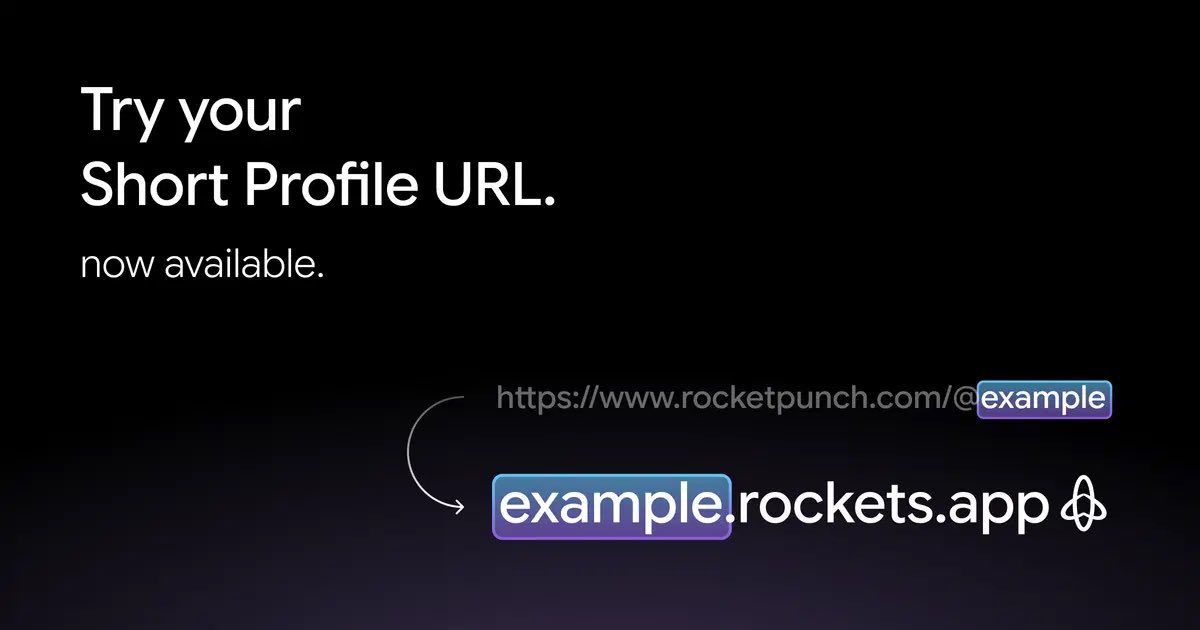
Long profile URLs are over.
Now, one link — https://t.co/6XSR74uGRj — does both:
share my profile and receive gifted assets.
It’s short, clean, and intuitive.
Perfect for your social bio, business card, or intro deck.
But this isn’t just a profile link.
With Rocketpunch Wallet, you can receive gifts in ETH, stablecoins, stocks like SPY, Tesla, and NVIDIA, and even commodities like gold.
One profile link becomes both your identity and your value-transfer address.
That’s what makes Rocketpunch (@rocketpunch_kr) interesting.
Try it yourself:
Leave your Rocketpunch profile link in the comments, and I’ll send QQQ ETF tokens straight to your wallet.
An easter egg skill we hid in hyperframes:
/website-to-hyperframes
- create DESIGN.md
- screenshot the page - download assets
- build logo animations + more
we hope to support the launch of anyone's businesses
RT + comment "Website" for codebase access (must follow)