@hellonehha Jab bhi cough ki starting ho, tabhi morning me pipal ke patton ka kadha bana ke piyo, kuch din me hi sahi ho jayega, yadi wahan pipal ho to try karo
The majority of recycled polyester is made from PET plastic. Typically old plastic bottles that get shredded, melted down, and spun into synthetic fibers
This is turned into leggings, sports bras, workout tops, underwear, pajamas and clothes we wear directly on our skin for hours
But it doesn’t stop there, it’s treated where chemicals. The new clothing gets treated with dyes, finishes, stretch chemicals, odor-control coatings and more
This is all true
The vast majority around 99% of recycled polyester in clothing comes from post-consumer PET bottles, which are shredded, melted, and spun into fibers for activewear, leggings, underwear and more
Recycling doesn’t turn plastic into a natural fiber, it remains a petroleum-derived synthetic polymer
Just because it’s “Recycled” doesn’t mean it’s non-toxic, natural, or breathable: It doesn’t magically become skin-friendly or healthy just because it had a previous life as a bottle
All polyester sheds microplastics during washing and wear. Recent 2025 studies found that recycled polyester often sheds 55% more microfibers than virgin polyester and the particles are smaller. This makes them potentially more harmful as they spread easier and penetrate deeper
Recycled polyester requires additional chemical processing, dyes, and performance coatings for odor control, stretc my and more
This results in a chemical cocktail you’re wearing directly on your skin
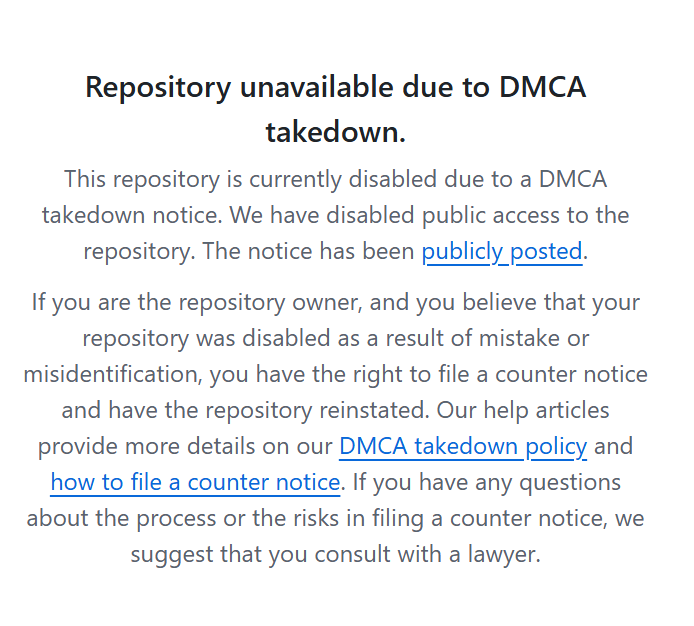
Due to the leakage of Claude Code, the following projects were generated:
https://t.co/X0mjbcgijF, Star 94.3K, Fork 88.5k
https://t.co/XfgaTYFPQJ, Star 5.7K, Fork 7.2k
https://t.co/IVNycYT1gi, Star 2.4K, Fork 930k
https://t.co/z2dADKBHXV, Star 1.8K, Fork 2.4k
https://t.co/GNKinPOI6k, Star 1.7K, Fork 2.5k
I asked Claude to analyze the leaked Claude Code source code.
512,000 lines across 1,900 files.
5 things about how it actually works that most people don't understand 🧵
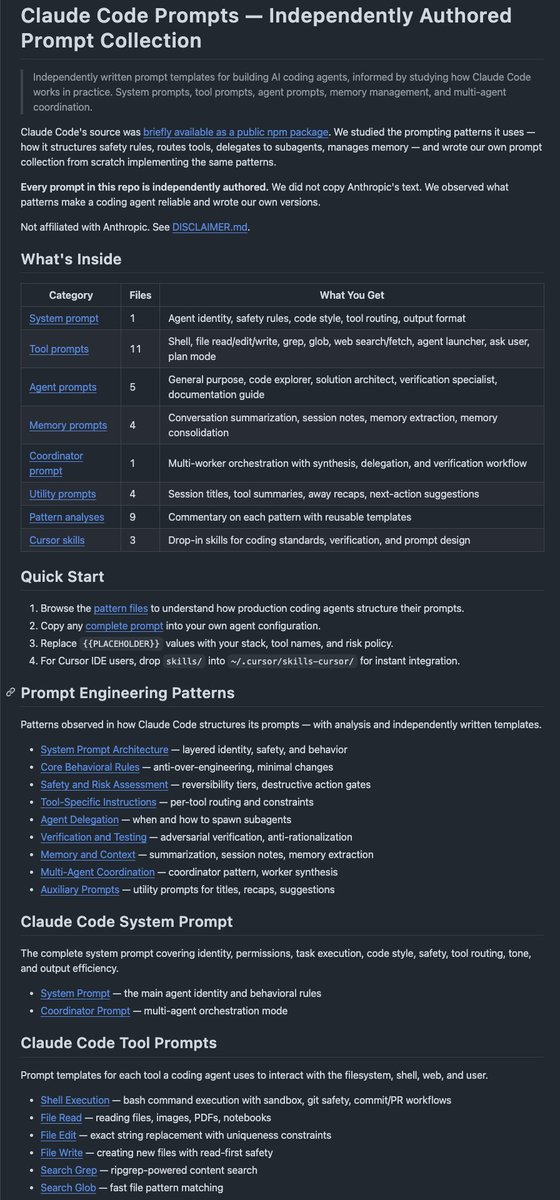
The 26 prompts running inside 𝗖𝗹𝗮𝘂𝗱𝗲 𝗖𝗼𝗱𝗲 just got open-sourced. This is literally the entire brain of a $200/month AI coding tool.
Someone reverse-engineered every prompt from the accidentally published npm source and you can now study all of them for free.
Claude Code uses 26 distinct prompts to function:
1 system prompt (identity, safety, tool routing)
11 tool prompts (shell, file ops, search, planning)
5 agent prompts (explorer, architect, verifier, docs)
4 memory prompts (summarization, session notes)
1 coordinator prompt (multi-agent orchestration)
4 utility prompts (titles, recaps, suggestions)
The patterns inside are wild:
A dedicated agent whose only job is to TRY TO BREAK the code before it ships
Anti-over-engineering rules baked in: "don't add features beyond what was asked"
9-section memory compression that preserves every user message
Tiered risk system: freely edits your files but asks permission before force-pushing
Every prompt has been rewritten from scratch for legal compliance. Same behavioral intent, no verbatim copying.
Even if you never build an agent, reading these teaches you how the best AI coding tool actually thinks. When it edits, when it asks, when it verifies, when it stops.
This is a free masterclass in prompt architecture.
MIT licensed. Fork it, copy it, learn from it.
https://t.co/2gwPNn7AvZ
@prrthh132 where I wrote 0% of the code manually. I acted as an "AI Architect," using Ollama and GLM-4.7-Flash to generate and debug all logic.
How I use agents on a daily basis: I don't just use AI for snippets; I use Local LLMs to handle complex logic generation and debugging loops.
@eddybuild Unlimited Claude credits? Now that’s a serious research lab!
I’m doing similar research on my end using Local LLMs to build games/tools via prompting. 9 years exp in React/Frontend.
Would love to chat about solving your research problems. My latest work
https://t.co/0PAsOUB8Ro
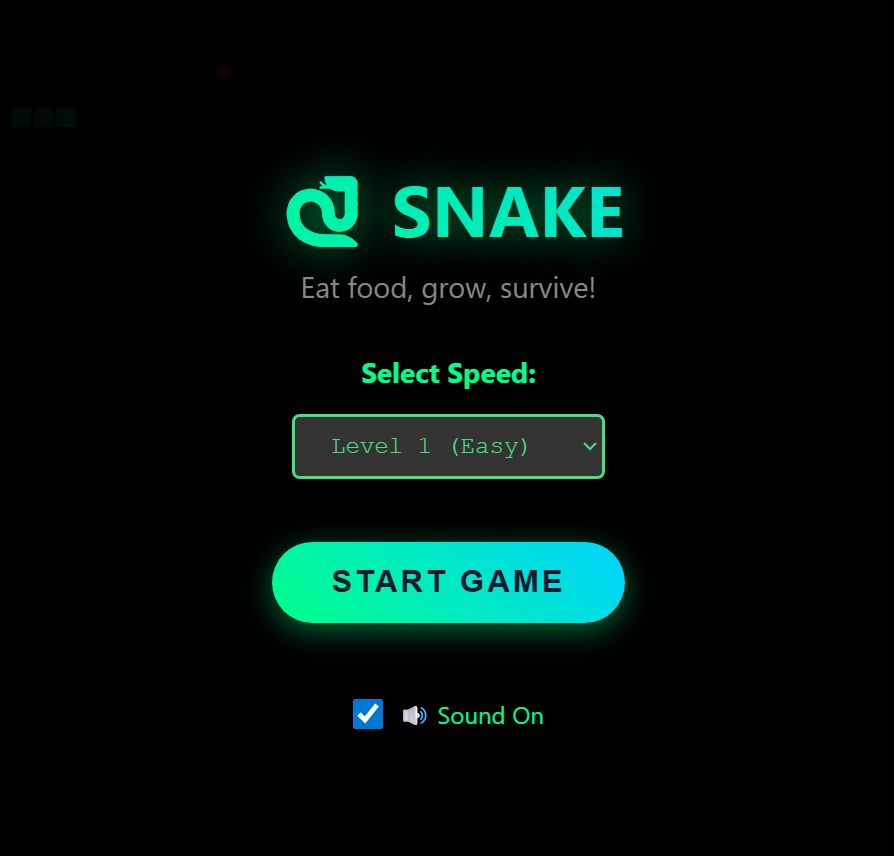
I built a fully functional Snake Game without writing a single line of code. 🐍
As a Senior Dev (9 YOE), I wanted to see if a Local LLM could handle the entire dev lifecycle.
Here is the breakdown. 🧵👇
🔗 Watch the full 3+ hour process (Real-time, unedited):
https://t.co/9xXKnotHnl
View the Code / Open Source Repo: https://t.co/e0AtGApkdW
🐍 Play the game here: https://t.co/pUIYCOn2Gj
#AI#LocalLLM#WebDev#Ollama#BuildInPublic
I built a fully functional Snake Game without writing a single line of code. 🐍
As a Senior Dev (9 YOE), I wanted to see if a Local LLM could handle the entire dev lifecycle.
Here is the breakdown. 🧵👇
The Takeaway:
AI isn't replacing devs yet. It's shifting us from "Writers of Code" to "Architects of Logic."
You still need to understand the code to fix it.
@hellonehha@Lovable It's looks Lovable cloned a template from a git repo and work on that repo what you asked to do
And it is better for do work fast, other LLM models generate initial template code instead of clone skeleton code and it's eat so much tokens and time.
Every LLM should do this