Walmart and Kroger are quietly rolling out an internal store technology across America that could either modernize retail or bankrupt the middle-class family budget.
Starting across thousands of locations heading into 2027, traditional paper price tags are being ripped off grocery shelves and replaced with cloud-connected digital screens. Raise the price of bottled water by 20 percent the second the afternoon temperature hits 90 degrees. Surge the cost of ground beef, milk, and sandwich bread between 5 PM and 6 PM when exhausted commuters are rushing home from work. Drop prices at 10 AM on a Tuesday, then hike them right back up the minute the after-school crowd walks through the sliding doors.
Every price change happens wirelessly in seconds from a central corporate dashboard. No store employee has to touch a single shelf.
Walmart has already signed a massive deployment deal with VusionGroup to wire 2,300 American supercenters with EdgeSense digital shelf rails by 2027. Kroger is expanding its own Microsoft-backed system called EDGE across hundreds of supermarkets. Over 60 million digital price tags are already blinking on US grocery aisles right now.
This is not supply chain inflation. This is Uber-style surge pricing built directly into the shelves where Americans buy baby formula, eggs, and medicine.
Last week I sat down for coffee with a former retail pricing director who spent 14 years building supermarket margin algorithms before leaving the industry. What he shared over the table completely changed how I look at a grocery aisle.
"Retailers just turned static shelves into live stock tickers. The question is not whether grocery chains will use instant price changes, because they already spent billions installing the hardware. The question is how much extra money a family of four will lose every week simply because both parents work until 5 PM and cannot shop during off-peak hours."
Here is how the digital grocery pricing system actually works, how it tracks you in the aisle, and the exact phone settings and checkout playbook you need to beat it.
Digital pricing could make retail more efficient, but transparency and fair pricing matter just as much. Dynamic pricing should never come at the expense of consumer trust, especially for everyday essentials.
Walmart and Kroger are quietly rolling out an internal store technology across America that could either modernize retail or bankrupt the middle-class family budget.
Starting across thousands of locations heading into 2027, traditional paper price tags are being ripped off grocery shelves and replaced with cloud-connected digital screens. Raise the price of bottled water by 20 percent the second the afternoon temperature hits 90 degrees. Surge the cost of ground beef, milk, and sandwich bread between 5 PM and 6 PM when exhausted commuters are rushing home from work. Drop prices at 10 AM on a Tuesday, then hike them right back up the minute the after-school crowd walks through the sliding doors.
Every price change happens wirelessly in seconds from a central corporate dashboard. No store employee has to touch a single shelf.
Walmart has already signed a massive deployment deal with VusionGroup to wire 2,300 American supercenters with EdgeSense digital shelf rails by 2027. Kroger is expanding its own Microsoft-backed system called EDGE across hundreds of supermarkets. Over 60 million digital price tags are already blinking on US grocery aisles right now.
This is not supply chain inflation. This is Uber-style surge pricing built directly into the shelves where Americans buy baby formula, eggs, and medicine.
Last week I sat down for coffee with a former retail pricing director who spent 14 years building supermarket margin algorithms before leaving the industry. What he shared over the table completely changed how I look at a grocery aisle.
"Retailers just turned static shelves into live stock tickers. The question is not whether grocery chains will use instant price changes, because they already spent billions installing the hardware. The question is how much extra money a family of four will lose every week simply because both parents work until 5 PM and cannot shop during off-peak hours."
Here is how the digital grocery pricing system actually works, how it tracks you in the aisle, and the exact phone settings and checkout playbook you need to beat it.
@piyascode9 High-quality real-world data and expert-driven environments are exactly what AI needs to master complex, long-horizon enterprise tasks. Exciting work from Epsilab!
@joannewang_@ycombinator High-quality real-world data and expert-driven environments are exactly what AI needs to master complex, long-horizon enterprise tasks. Exciting work from Epsilab!
High-quality real-world data from actual domain experts is still the missing piece for long-horizon enterprise agents.
Epsilab is going after it the right way. Congrats on the YC F26 launch.
🚨 BREAKING: Claude can now build your entire mobile app like a $350K senior developer — for free.
Use these 10 prompts to plan, design, code, test, and launch apps faster than most development teams.
(🔖 Save this before your competitors do).
"Pull block 2, the Jenga tower falls. Pull block 14 slowly, it stands. PAN 2 simulated both, and per IFM both match the real footage. “What if” with receipts."
A GPU has thousands of cores. A CPU has maybe 16.
So why doesn't your computer just run everything on the GPU?
The answer explains why AI runs on GPUs, and why a bigger GPU won't fix every slow workflow.
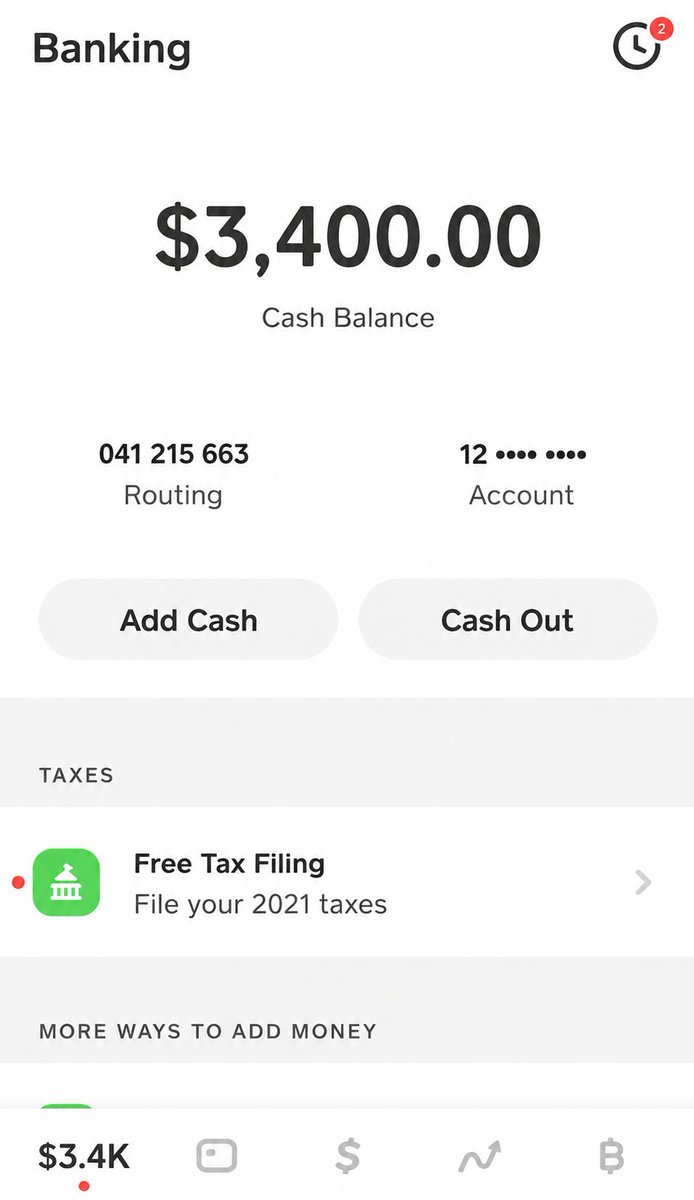
You can earn $3,400 per week, if you have:
1. Internet
2. Mobile
3. 1 hour a day
I’ve put together a full guide for this, and it’s 100% free
Like and reply “Guide” and I’ll DM you the document
Must follow me to get this killer guide in your DMs
FREE for next 48 hours
Dumb credit card user:
Year 1 (2022): Pays the minimum.
Year 2 (2023): Pays the minimum.
Year 3 (2024): Pays the minimum.
Year 4 (2025): Pays the minimum.
Year 5 (2026): Pays the minimum.
Smart credit card user: ↓↓↓
Walmart and Kroger are quietly rolling out an internal store technology across America that could either modernize retail or bankrupt the middle-class family budget.
Starting across thousands of locations heading into 2027, traditional paper price tags are being ripped off grocery shelves and replaced with cloud-connected digital screens. Raise the price of bottled water by 20 percent the second the afternoon temperature hits 90 degrees. Surge the cost of ground beef, milk, and sandwich bread between 5 PM and 6 PM when exhausted commuters are rushing home from work. Drop prices at 10 AM on a Tuesday, then hike them right back up the minute the after-school crowd walks through the sliding doors.
Every price change happens wirelessly in seconds from a central corporate dashboard. No store employee has to touch a single shelf.
Walmart has already signed a massive deployment deal with VusionGroup to wire 2,300 American supercenters with EdgeSense digital shelf rails by 2027. Kroger is expanding its own Microsoft-backed system called EDGE across hundreds of supermarkets. Over 60 million digital price tags are already blinking on US grocery aisles right now.
This is not supply chain inflation. This is Uber-style surge pricing built directly into the shelves where Americans buy baby formula, eggs, and medicine.
Last week I sat down for coffee with a former retail pricing director who spent 14 years building supermarket margin algorithms before leaving the industry. What he shared over the table completely changed how I look at a grocery aisle.
"Retailers just turned static shelves into live stock tickers. The question is not whether grocery chains will use instant price changes, because they already spent billions installing the hardware. The question is how much extra money a family of four will lose every week simply because both parents work until 5 PM and cannot shop during off-peak hours."
Here is how the digital grocery pricing system actually works, how it tracks you in the aisle, and the exact phone settings and checkout playbook you need to beat it.
🚨 BREAKING: Google Gemini can now analyze any stock like a Wall Street analyst (for free).
Here are 10 insane Gemini prompts that replace $4,000/month Bloomberg terminals:
(Save this 🔖 you’ll need it later)
The most legalized mafia in America isn't on Wall Street. It is your local HOA (Homeowners Association).
You buy a $500,000 house, pay the mortgage, and still have to ask permission to paint your own front door.
Here is the dark truth about neighborhood cartels ↓↓
I LAUNCHED A GROK BOT TERMINAL OVERNIGHT, GAVE IT $44.82 AND STOPPED ASKING AI WHAT IT WOULD DO. BY MORNING IT HAD $11,643.21 AND SIX AGENTS LOGGING EVERY TRADE
I spent a year asking agents what they'd trade and watching the chat scroll. Last weekend I built the thing that actually trades, in Grok Bot, with no code I touched by hand.
The six agents share one screen, each one job:
> scanner reads new token pairs and volume spikes
> rug check filters suspicious tokens before anything executes
> sizer sets position from account equity, not a fixed ticket
> executor opens and closes with slippage tracking
> logger writes the reason behind every trade
> equity curve updates on every close
I went to bed on $44.82 and left the laptop open on the dashboard. By morning the balance read $11,643.21. Every trade on the activity feed had a reason next to it and a line in the log.
That's the shift I didn't see coming. Not that an agent made money overnight. That I stopped being the one asking "would you long this?" and started being the one reading the log of what already happened.
Starting balance: $44.82
Current balance: $11,643.21
Grok Bot built the terminal, the agent architecture and the dashboard. I described what I wanted and the thing went live.
The full build is in the article below ↓
The whole build is in the post below ↓
Comment " Grok_Bot "
2️⃣ Like and Repost
3️⃣ Follow me @IsabellaA60913
I'll DM you the complete setup.
@n8n_io This is a great step toward truly autonomous AI agents. Running locally with browser access and support for your preferred AI provider makes Nod even more powerful!
AI agents that can actually get things done are becoming more interesting.
Nod takes it a step further with its own computer, browser, and permission-based approach.
Love the focus on giving users control while letting AI handle the repetitive work.
someone just dropped a tutorial how to generate unlimited unlimited AI images/videos on Google Flow for free
you can you it for your YouTube automation on YouTube