My dear lady,
Soldiers pay their taxes in advance, even before they get their pay.
You can go for vacation to such areas bcoz our soldiers are guarding it day & night, even at the cost of their lives.
Your Language is the reflection of good parenting & schooling. Be respectful always.
Learn to be a good law abiding citizen before asking for entitlement.
And lastly ….
“Get Well Soon”
Jai Hind 🇮🇳
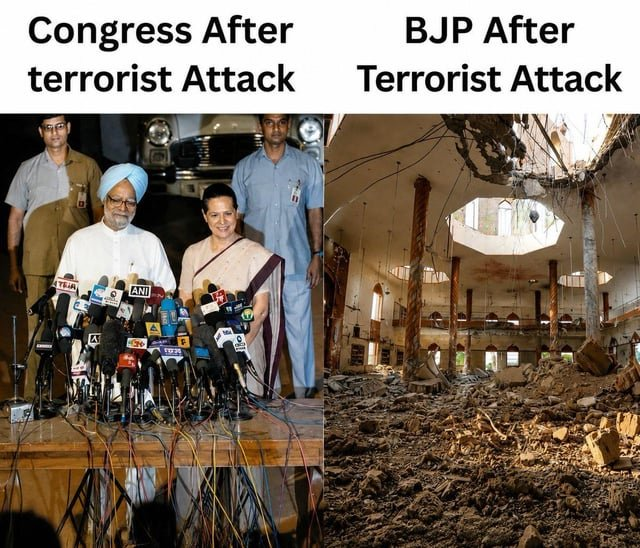
Power of narrative and power of algorithmic suppression in one picture. A reminder that if the ruling party's new SM skills get carried over to GoI and even if GoI were to do really good counter narrative for India, the algorithms of SM platforms will suppress India's narrative.
Ease of doing Business in India:
1. Take loans of Rs 1000 crores
2. Transfer Rs 100 crores to your personal account by some legal or illegal route
3. Deploy remaining Rs 900 crores in the business
4. If things go well then you will grow otherwise business will become 0
5. Bank approaches you for loan repayment
6. Go to NCLT stating default on loan repayment
7. NCLT will give an order of repaying only Rs 5 crores which can be done from Rs 100 crores which is there in personal account
8. Remaining Rs 95 crores is all yours to enjoy your life
Our founder who created the Jhooth ki goonj website has been continuously threatened by Rahul Gandhi’s PR team.
She is just 20 years old. Let this tweet spread and tell everyone what kind of person Rahul Gandhi is.
Rahul Gandhi can keep pushing his usual misinformation. 😂
But now, there’s a website doing the opposite: breaking down his claims, one by one, WITH FACTS.
It’s called “Jhooth Ki Goonj” — and honestly, the name says it all. 😎
His propaganda may echo. The facts hit harder.
𝐆𝐨, 𝐡𝐚𝐯𝐞 𝐟𝐮𝐧 ➡️ https://t.co/Has7IfA42Z
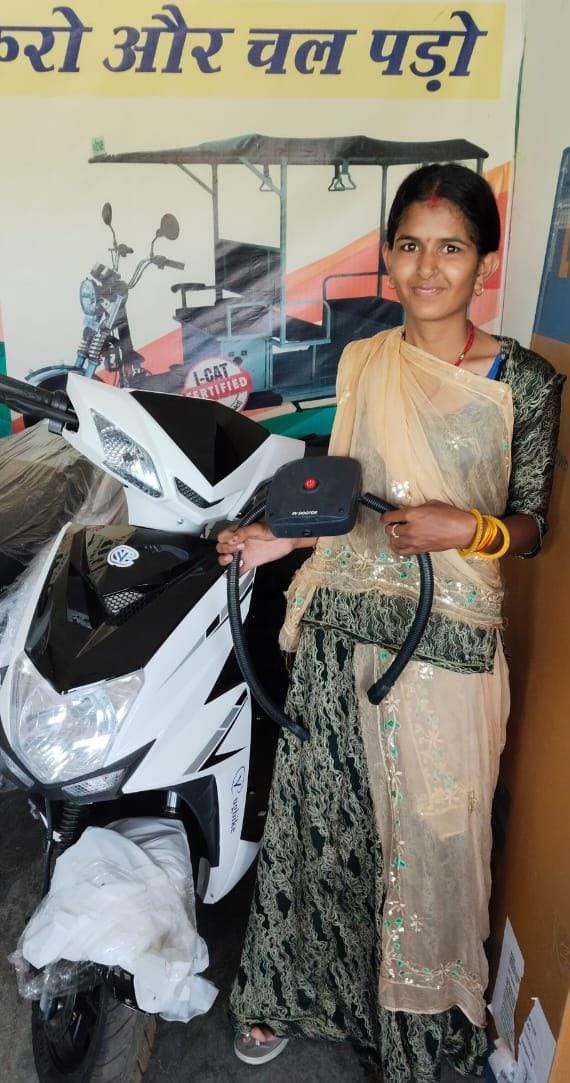
Four years ago, I pitched EV DOCTOR™ to a Silicon Valley VC.
EV battery diagnostics.
Energy APIs.
Battery intelligence.
I was barely a few minutes into the conversation when he asked:
“How much have you raised?”
I said:
“Nothing.”
We had bootstrapped it with my https://t.co/7kghkBZtn4 stipend (from MHRD), personal savings, and a few government grants.
The meeting lasted 17 minutes.
His verdict?
“Not scalable.”
That same week, I remember reading about a US startup raising millions for an app built around something as simple as reminding people to drink water.
And something clicked.
Maybe India was never supposed to build Silicon Valley-style startups.
Because here, we aren't always building for convenience.
We are building because problems leave us no other choice.
When a mechanic cannot understand why an EV battery is failing, that's not a UX inconvenience.
That's his livelihood.
When a farmer cannot reach the right buyer, that's not an optimization problem.
That's his income.
When energy becomes unreliable, water becomes scarce, mobility becomes unaffordable, or infrastructure simply doesn't exist…
you don't build because it sounds cool.
You build because someone desperately needs it to work.
That is the India I see being built today.
EV DOCTOR™: turning ordinary garages into EV-ready diagnostic centres with fast, data-driven battery intelligence.
DeHaat: connecting more than a million farmers with markets, inputs and services.
Agnikul Cosmos: building and 3D-printing rocket technology from Chennai.
Vicharak: building next-generation computing infrastructure from Surat.
And there are hundreds more.
This is what constraint-driven innovation looks like.
A lack of sophisticated battery diagnostics becomes a new intelligence layer.
Scarce resources force better systems.
Weak infrastructure forces founders to invent infrastructure.
Problems the world once dismissed as “too Indian” are suddenly becoming global problems.
Climate.
Energy.
Mobility.
Food security.
Battery safety.
Resource scarcity.
These are not local problems anymore.
They are tomorrow's global emergencies.
And some Indian founders have already spent years solving them.
That “unscalable” EV battery diagnostic idea?
EV DOCTOR™ has now tested 10M+ batteries, reached 30+ countries, and we are working toward making battery diagnostics universal.
But the part I care about most isn't the number.
It's the garage owner who can now diagnose an EV confidently.
The technician who gets a new livelihood.
The buyer who doesn't have to gamble on a used battery.
The business that can finally understand the most expensive component inside an EV.
Because this was never only about selling a device.
It was about giving people intelligence they never had access to.
And then came the strange full-circle moment.
That VC reached out again recently.
This time, asking about participating in our first fundraise for Energy AI Labs. (@energyailabs)
I refused with all due respect :)
Funny how four years can change the meaning of “not scalable.”
So I have one message for anyone watching Indian startups from the sidelines:
DON'T UNDERESTIMATE THEM.
We may be underfunded.
We may be building from smaller cities, garages, workshops, hostels and laboratories you've never heard of.
We may be hungry.
We may even be, in Steve Jobs' words, “foolish.”
But that hunger creates a very different kind of company.
Not companies designed merely to make comfortable lives slightly more comfortable.
But companies trying to make difficult lives possible.
India isn't chasing Silicon Valley anymore.
We are slowly writing our own playbook.
One battery.
One farmer.
One rocket.
One livelihood.
One impossible problem at a time.
And maybe that's how the world actually changes.
We started with batteries, because they were the most uncertain energy nodes we knew of, now we are past that conversation.
Now we are building energy superintelligence, from batteries, to homes, enterprises, utilities, factories and beyond.
Just a heartfelt suggestion to all VCs of the world:
Never underestimate Indian startups and its founders.!
Rs. 30,000 crore worth of projects across 9 states covering railways, roads and power sectors…this is what we reviewed during today’s PRAGATI session.
Focus areas remain - better connectivity, higher growth, better public services and lesser delays.
Here are the details…
https://t.co/ToGrchdZdJ
Muslim women outside the Congress office are exposing Rahul Gandhi:
Why did Congress oppose the abolition of Triple Talaq?
When will you speak about our rights?
Why are you silent on reforms that can improve our lives?
Why is there not a single woman minister in Karnataka?
You speak about what women wear—but when will you speak about our rights?”
Rahul Gandhi must answer the Muslim women or vote bank considerations prevent him to speak up!
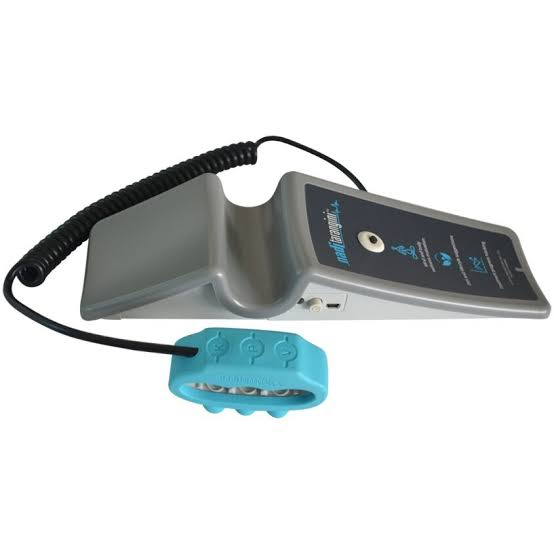
Three Fingers, One Wrist, and a Question Engineers Are Still Trying to Answer....
For ~800 years, Ayurvedic physicians have diagnosed patients by pressing 3 fingers, index, middle, ring onto the radial artery at the wrist, each finger meant to read a different one of the body's three doshas: vata under the index finger, pitta under the middle, kapha under the ring.
It is called Nadi Parikshan, and it traces back to the 13th-century physician Śārṅgadhara, the same scholar who first formally introduced pulse diagnosis into the Ayurvedic tradition.
For all 800 of those years, the entire diagnosis has depended on 1 thing: the trained sensitivity of a single physician's fingertips.
No instrument. No number. No second opinion except another physician's fingers.
A group of Indian scientists decided to actually try to fix that, not by dismissing the tradition, but by asking a genuinely engineering question: can a machine feel what a Vaidya's fingers feel, and turn it into a number?
Starting in the mid-2000s, an engineer named Aniruddha Joshi, trained at IIT Bombay, built a device called Nadi Tarangini, working alongside co-authors Anand Kulkarni, Sharat Chandran, V. K. Jayaraman, and B. D. Kulkarni, a senior scientist at Pune's National Chemical Laboratory who mentored and supported parts of the effort.
The device was instrumented with a strain-gauge sensor (commercial and some later research versions incorporate piezoelectric elements) pressed against the wrist, feeding into an amplifier and a 16 bit digitizer, capturing the radial pulse not as a subjective "feeling" but as an actual continuous waveform, logged as raw data over time.
Where a physician's fingers give an impression, the machine gives a graph, precise, repeatable, and comparable across patients, across time, across doctors.
Their published results, in a 2007 IEEE Engineering in Medicine and Biology Society paper, real, peer-reviewed academic ground showed the device could capture genuinely richer, more detailed waveform data than earlier attempts at pulse-sensing hardware.
Joshi went on to commercialize the tech through a company called Atreya Innovations, based in Pune, which continued refining the hardware.
Follow-up research groups have kept building on the underlying idea too, a 2024 paper, published through the ACM's Computational Biology and Bioinformatics conference, described a newer, independent device using a piezoelectric sensor and a modern STM32 microcontroller, specifically built to test whether Ayurvedic pulse principles could be captured with cleaner, more reliable signal acquisition.
Worth noting is the commercial device has since moved well beyond the prototype stage.
It received approval from India's drug regulator, the CDSCO, making it by that account, the first Ayurvedic pulse-diagnostic device of its kind to clear that specific regulatory bar, and it is reportedly now in use across a number of clinics.
The commercial version of the device is marketed today with claims of 85%+ accuracy, reportedly based on matching the device's readings against experienced Vaidyas' own assessments across a large dataset, and including data submitted as part of the CDSCO regulatory process.
That is a genuinely more substantial evidence base than pure marketing copy.
What's genuinely remarkable here is not a triumphant "science proved Ayurveda right" headline, it is that a diagnostic method built entirely on trained human touch, refined over eight centuries with zero instrumentation, was specific and consistent enough that engineers a century after the invention of the ECG machine looked at it and thought: that is not folklore, that is a signal worth trying to capture properly.
The jury on what the machine actually proves is still out. But the fact that serious biomedical engineers are still building new hardware to chase this exact question, 20 years and counting, tells you something about how seriously the underlying observation is being taken, not as legend, but as an open, unresolved measurement problem.
First jet engines, then MRI Machine and now tunnel-boring machine, India is becoming self-dependent on every aspect that's why they want to remove Modi
WAKE UP HINDUS 🚨
Kriti Sanon is a full blown JNU lover so what the hell can we even expect from her when it comes to respecting Hindu festivals and traditions?
She openly disrespected our pious Raksha Bandhan… and THIS is exactly why Modiji keeps warning us about these dimagi Naxals rotting our culture from within!
Hindus will make damn sure her next Bollywood movie is a massive FLOP. No mercy. No free passes.
RT if you’re done tolerating this anti Hindu nonsense 🔥
🚨 “We have given Skyroot 300 acres in Space City near Tirupati at ₹5 lakh per acre. They will build their entire launch vehicle there, while the rockets will be launched from Sriharikota.”
- Andhra Pradesh minister Nara Lokesh.
🚨 BIG BREAKING: India's closest friend, Israel, has sent a message to the Prime Minister of India. They said that the Cockroach Janata Party is operating as a terrorist organization under the guise of student activities. They also stated that, if necessary, they are prepared to launch an operation.
Abhijit Dipke, Saurav Das, Ranka, and the entire CJP are national security threats.
THIS IS HUGE ‼️
Indian nationalist GenZ have launched a new website exposing Rahul Gandhi’s false claims.
Please support this site as much as possible. Amplify this tweet and post about the website to help it reach a wider audience.
Lets make this a nationwide trend.
https://t.co/xrmTPBqh0h