Hi, I’m Gabokeke Emmanuel, a Software Developer.
I currently work with FIXR, an Engineering company where I focus on building their web and mobile applications with clean user experiences, stable API integrations, and efficient handling of large datasets and daily workflows.
In the last 4 years, I’ve helped both a medical institute and a national festival, amidst other companies go from idea to revenue by developing their websites and mobile apps, while shaping user experiences that drive growth, engagement, and retention.
I also build pixel-perfect interfaces and develop systems that prioritize speed, usability, and seamless interactions.
Beyond that, I enjoy working closely with product and design teams to translate complex ideas into simple, human-centered solutions.
Tell me about you?
Hi, I’m Freedom Oboh, a Data & BI Analyst.
I currently work as a Client Success Analytical Consultant for an IT advisory firm where we help small businesses and founders without leadership teams scale their businesses by designing revenue growth patterns and creating Scrum/POD teams.
I also develop spreadsheet solutions for businesses and individuals using Excel (VBA & Macros) and Google Sheets (Apps Script).
I build beautiful analytical dashboards using Power BI and Excel.
I run a quarterly class called EXCEL101 - Spreadsheet Mastery. The next cohort starts on the 16th of May.
Tell me about you?
Everybody wants to jump straight into React, Next.js, Vue, or Node.
Very few developers want to slow down and actually learn JavaScript properly first.
That decision quietly separates developers who depend on frameworks from developers who truly understand what they’re building.
Because once your JavaScript fundamentals are strong, frameworks stop feeling magical. Closures, async/await, promises, scope, event loops, and DOM manipulation suddenly make the ecosystem easier to reason about instead of harder to memorize.
And the interesting part is this: frameworks change constantly, but JavaScript fundamentals stay relevant for years. Developers with strong foundations adapt faster because they’re not learning every tool from scratch, they’re recognizing patterns built on concepts they already understand.
It also changes how you debug. Most “framework problems” usually trace back to JavaScript underneath. Developers who understand the language deeply solve issues faster, ask better questions, and rely less on trial-and-error debugging.
More importantly, learning JavaScript from scratch builds confidence. Real confidence, not tutorial confidence. The kind that lets you approach unfamiliar systems without panicking every time the syntax changes.
Frameworks can help you build projects, but fundamentals shape how you think as an engineer.
The strongest developers are rarely the ones who rushed the fastest. They’re usually the ones who built their foundation properly first.
What JavaScript concept confused you the most when you were learning, but now feels obvious?
One of the most important career lessons developers learn late is this:
Nobody will care about your growth more than you do.
Not your manager.
Not your company.
Not your team.
And once you fully accept that, your mindset changes.
You stop waiting to be “trained.”
You start learning intentionally.
You pick roles based on growth, not just comfort.
You ask better questions.
You take ownership of your weaknesses.
Because you realize your career is your responsibility.
Not something a company builds for you.
That shift also changes how you think about work itself.
You stop tying your entire identity to a job title. You stop feeling guilty for protecting your time.
You stop expecting loyalty from systems designed around business needs.
And ironically, that’s usually when developers start growing faster.
Because they stop being passive participants in their own careers.
The best engineers I know are proactive.
They learn before they’re asked.
Adapt before they’re forced to.
And invest in themselves consistently.
A company can give you opportunities.
But only you can decide whether you evolve from them.
What’s one decision you made that gave you more control over your career as a developer?
One of the hardest parts of being a developer is showing up when nothing seems to be working.
No clear progress.
No big wins.
Just small signals.
A feature finally works after hours of debugging.
Something clicks in a system you didn’t understand last week.
Your code gets a little cleaner.
It doesn’t look like much.
But it’s not nothing.
That’s the phase most people quit in.
Because the results aren’t visible yet.
Only the effort is.
And it messes with your head.
You start questioning everything:
Am I even improving?
Is this working?
Am I wasting time?
Meanwhile, everyone else looks like they’ve figured it out.
They haven’t.
A lot of developers you admire are still figuring things out too.
They just got comfortable working without immediate validation.
That’s the difference.
Progress in this field is delayed.
But it’s not absent.
Every hour you spend thinking through problems…
Every bug you fight through…
Every system you try to understand…
It compounds quietly.
Until one day it doesn’t feel hard anymore.
So if you’re in that phase where nothing looks like it’s working yet…
You’re probably closer than you think.
Keep going.
What’s something you’ve been working on lately that doesn’t look like progress yet, but you know it is?
Guess who's building another invoicing system 2 weeks after the working on https://t.co/4OOWCJU1xw
Our current partners needed an invoicing system that will track their invoices as well as automatically send to customers without having to go through customer support "CJ, noticed you built something like this, can you help integrate it into the company's existing workflow??" Why i was so happy is what I can't tell you Just keep building guys, someone's watching Someone's seeing what you're building It'll pay of ... Eventually
So I worked on the invoice preview today…
You know that moment after filling a long form and you’re like
“okay but what does this actually look like?” 😅
That’s this page.
Everything you entered just shows up properly…
your business details, client info, line items, totals, tax… all in one place exactly how it’ll be sent.
And I won’t lie, this part exposed me small 😂
Because it’s one thing to collect data… it’s another thing to present it clean enough that someone can take it serious.
Had to start paying attention to things like spacing, alignment, how totals are arranged… even the small things start to matter.
Also made it easy to just download, print, send, or quickly edit if something looks off.
If you’ve ever sent an invoice and later noticed one small mistake… you’ll understand why this page matters 😭
It’s live for testing: https://t.co/4OOWCJTtHY
Share the issues you face
Between 2013 and 2015, one Lithuanian man made $120 million…
and it really wasn’t as hard as you think.
Google and Facebook had a problem.
Invoicing.
Not the usual “they got hacked” story.
No crazy breach. Nothing as sophisticated as that
Just the way their invoicing system was running.
Everything was so mechanical… if it looked right, it got paid.
And they kept paying. Repeatedly.
Nobody noticed until much later… when things were finally done properly.
That part is scary.
Because your business might not be losing millions…
but you could be leaking small amounts monthly or yearly and not even realize it.
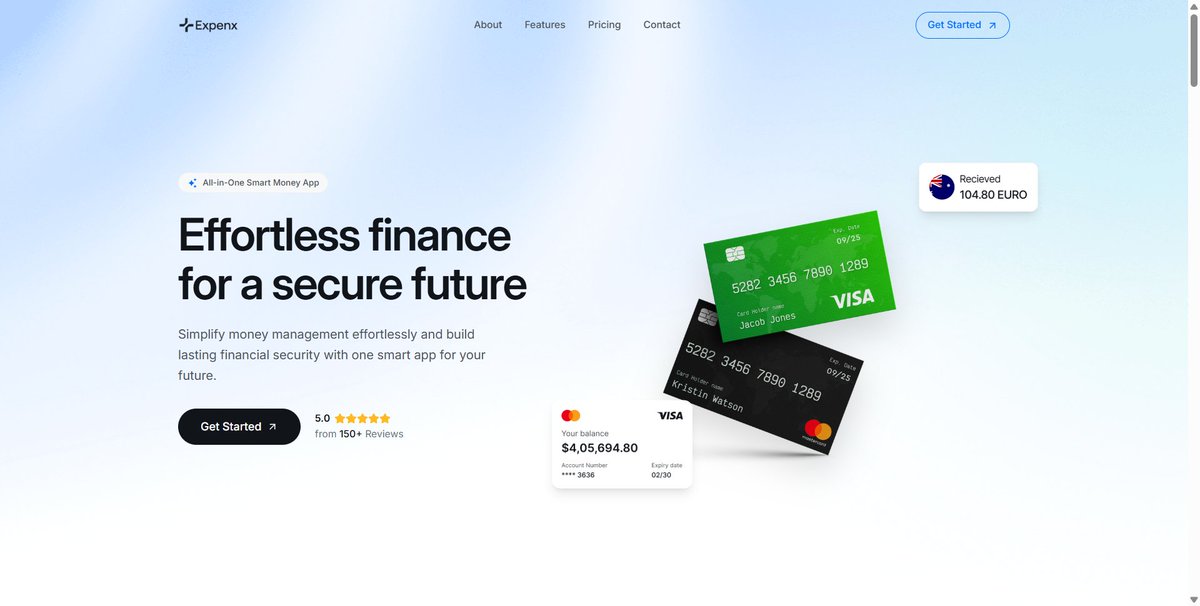
That’s exactly why I started building Expenx.
Still in the works, but we’re starting from the foundation:
doing invoices right.
Because something that simple shouldn’t be what costs you money.
It’s currently live and under beta testing:
https://t.co/4OOWCJU1xw
Give your feedback on what you’d love to have as a feature that’ll suit your business
Expenx - The only business partner you’ll need 😌
Selecting a customer should move the invoice forward.
In most products, it resets everything instead.
Building a customer flow inside an invoicing tool.
You save a customer, then pick them while invoicing.
But you still land on a blank form.
The issue is broken continuity in the flow.
Customer selection is treated like a lookup, not a step.
But users expect progress when they make that choice.
That mismatch creates unnecessary repetition.
The flow was adjusted to continue from that selection.
Choosing a customer now pre-fills key invoice details.
Previous structure and patterns are already there.
So users start editing, not rebuilding.
Invoice creation becomes quicker and more consistent.
Less friction, fewer repeated inputs.
That speed directly affects how often invoices get sent.
When a user selects a customer, does your product move them forward or backward?
Invoicing is one of those things that looks simple…
until you try to build it properly.
Fixr app had a small update recently, just tightening a few things on that end.
At the same time, I’ve been working on the invoice system for Expenx
and the main thing I’ve been paying attention to isn’t features
it’s arrangement
Where totals sit
How the breakdown shows
What should come first
Because if that part is off, the whole thing just feels wrong even if it works
So I cleaned it up and this is what it looks like now
Still tweaking it, but it’s starting to feel right
Would you prefer your invoices structured like this
or drop what yours currently looks like
I’m trying to see how different businesses actually set theirs up
Finally got invoice generation working today.
Like actual flow… fill the form → generate → clean invoice comes out.
Not even going to lie, it’s still rough. Spacing is off in some places, alignment still needs work, but at least it works end to end now.
This one humbled me small because I thought it was just “collect data and display” 😅
Till you start fighting layout, formatting, totals, making sure everything lines up like a real invoice.
Now it’s less of “can I generate it”
and more of “can I make it look proper every single time”
We’re getting there.
Backend isn’t fun honestly 😅
You’ll just be coding with nothing to show.
I’ve been on the backend since yesterday and while working, I realized something I didn’t account for at first.
What if one person has multiple businesses?
Maybe you want to create for your school, your warehouse, and your logistics business.
It makes sense to let one account create multiple business profiles instead of opening a totally different account for each one.
But now another issue comes up.
What if those three businesses are managed by three different people?
And you don’t want business A seeing anything happening in business B?
That’s the kind of thing backend will quietly humble you with.
How would you handle it?
Using Codex, Claude Code, Cursor and Gemini is now the norm in software engineering.
It’s not cheating.
It’s how modern software engineers work.
Using these tools does not make you less of a developer.
Implementing them correctly can make you far more productive.
Spent today on authentication
Set up the flow, got email verification working end-to-end.
User signs up → gets a code → verifies → enters.
Didn’t stop there.
Also put together the dashboard layout, so there’s actually somewhere to land after login.
Next up is wiring in invoice creation and making the whole thing usable, not just functional.
It’s starting to look like a real product now.
Having a product is easy.
Getting people to actually use it?
That’s the real problem.
For the longest time, that’s why I didn’t bother building anything serious…
because who exactly is going to use it? 😅
Then I came across a business still doing invoicing the old way.
Manual. Scattered. Stressful.
And well on the spot I offered to build something for them 😅
Y’know instead of building blindly, why not solve something real?
So I’m starting with that.
Expenx — beginning as an invoicing platform for that business,
but the goal is bigger… a full financial dashboard.
And that 2FA backend system I’ve been working on?
This is where it’s going.
No more random projects.
Everything now ties back to a real use case.
I’ll be building this out in the open,
so if you’ve ever used an invoicing tool or managed finances for a business…
What’s one thing you wish it did better?
Most of today was mobile.
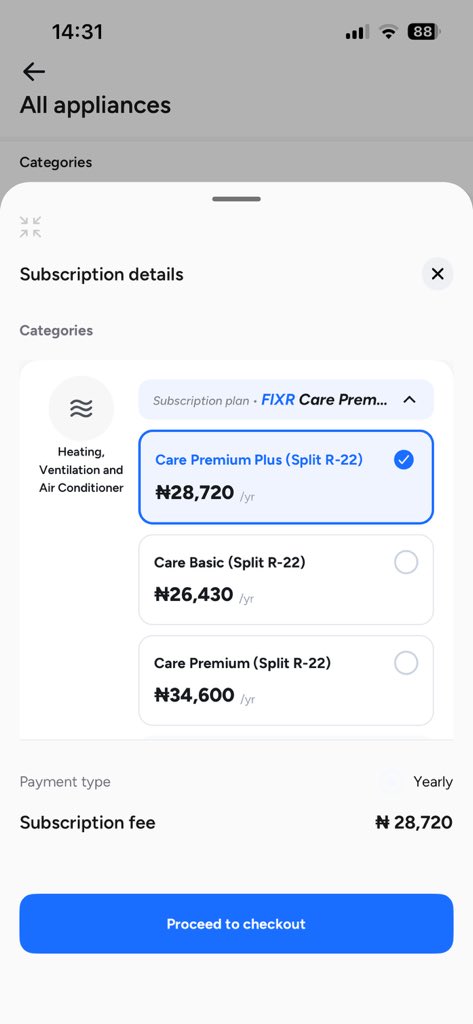
Worked on the subscription flow, cleaning up how appliances tie into plans and making sure pricing actually reflects what the user selects.
Sounds simple… until one wrong state update and your totals start lying to users.
Then my backend side quest.
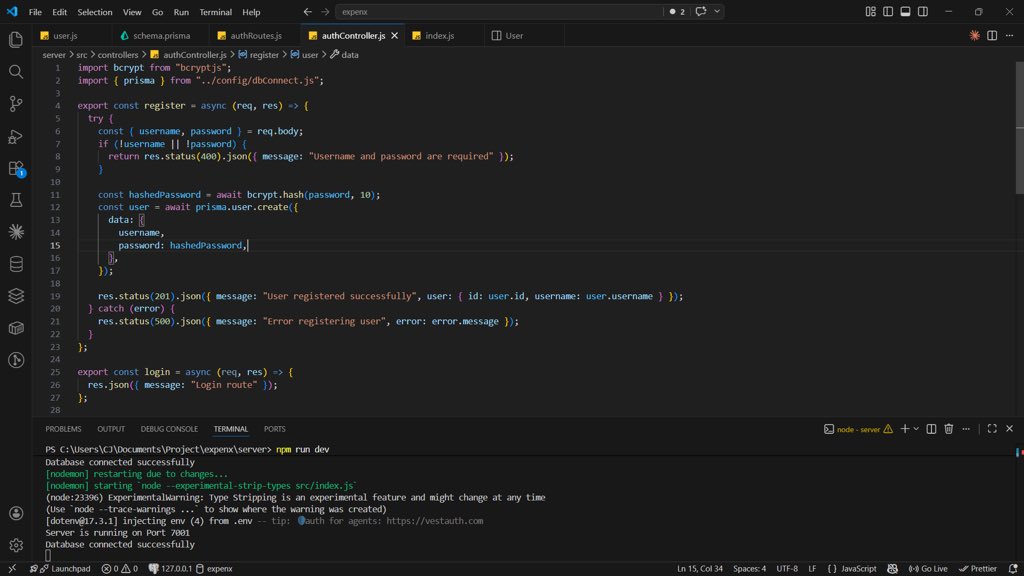
Currently building out a 2FA auth system, setting up the structure properly so it’s not just “it works” but something I won’t have to rewrite later.
Then the aviation gig.
Just rounded up the contact page and pushed it closer to production.
Three different problems in one day.
Mobile → Backend → Web.
What did your day look like?
Good news.
I’ve finally been given the go ahead to share a bit of what I’ve been working on.
For the past couple of weeks I’ve been deep in the Fixr Customer App, which is why my posts have been more educational than “build in public”.
Now I can finally show some of the work.
The project has been interesting because it’s not just about building screens. It’s about making the flow between users, tasks, and services feel seamless.
There’s still more coming, but I’ll start sharing parts of the process, decisions, and progress from here.
Feels good to finally talk about it openly.
Available on play store and App Store
Didn’t really touch frontend today.
I’ve been inside Passport.js instead… and I won’t lie, it’s actually fun once it starts making sense 😂
At first it feels like… what is all this strategy, serialize, deserialize talk?
Then you realize you’re not just “logging users in” anymore, you’re actually controlling how sessions behave, how users are remembered, how auth flows through your app.
Different stuff entirely.
Still trying out different approaches, but I see why people use it in real systems.
How many of you have used Passport.js before?
Did it click for you immediately or you also had to fight it small first? 😅