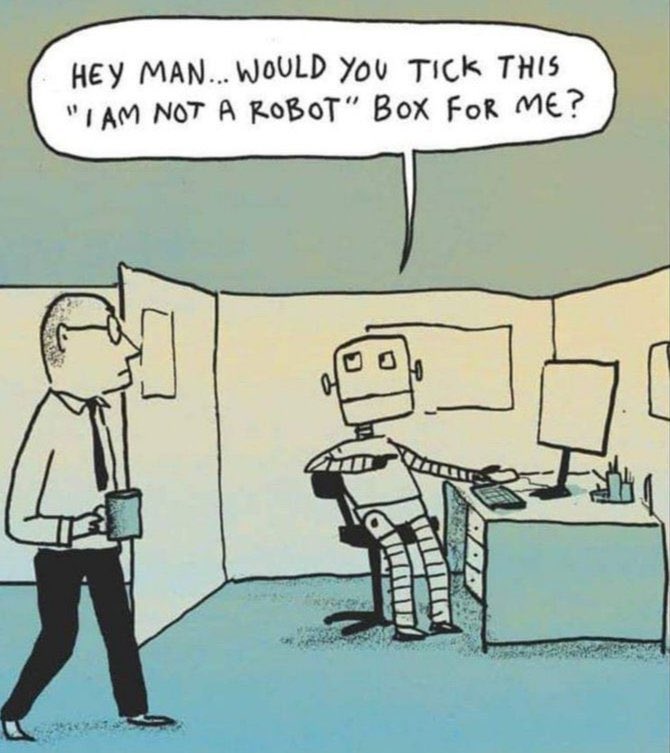
How do you build E2E test automation in your projects? Do you have your SDETs distributed across feature teams building E2E automation? Is that working?
Or do you have a dedicated scrum that looks at project at hand and delivers on test infrastructure, frameworks and E2E automation?
Do you use any other model? Reply.
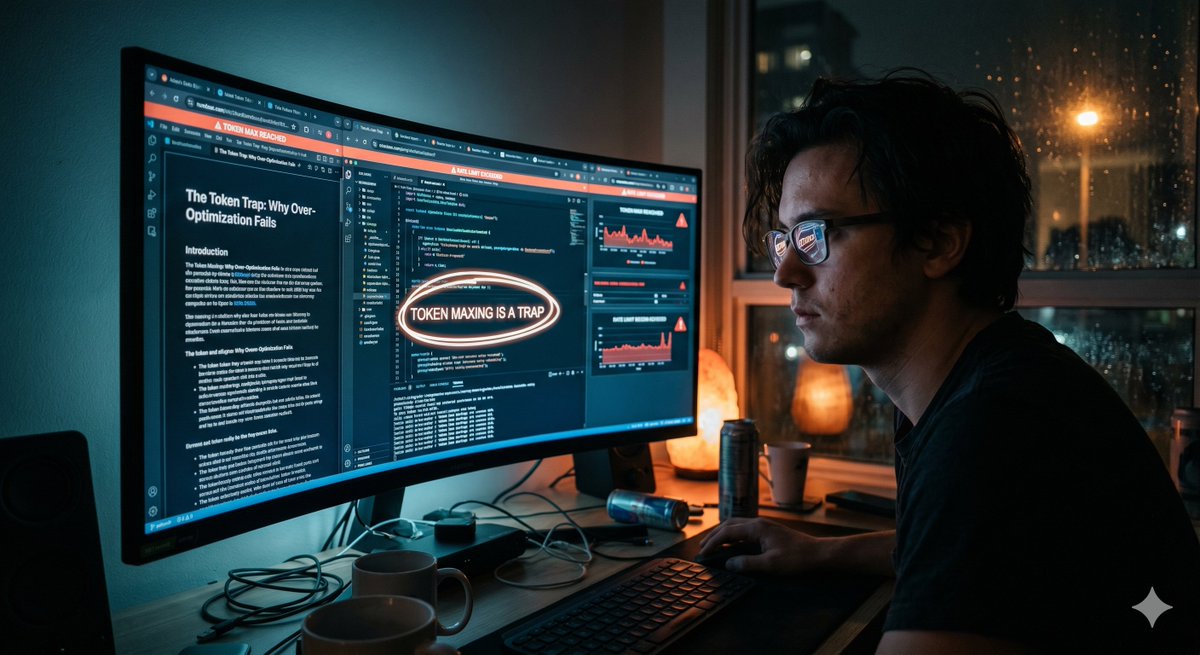
Token maxxing is a trap.
In the early days, you want people comfortable and curious. Not anxious about burning tokens. Track lines of code, commits, PR reviews. That's fine for now. Then you can get to the stuff that actually tells you something: velocity, cycle time, DORA.
Don't optimize before people have even formed the habit.
The case against MCP MCPs feel like magic the first time. Connect GitHub, Slack, Google Drive, Jira, and suddenly Claude can see everything. One conversation, all your context.
Then you actually start using Claude Code for serious work.
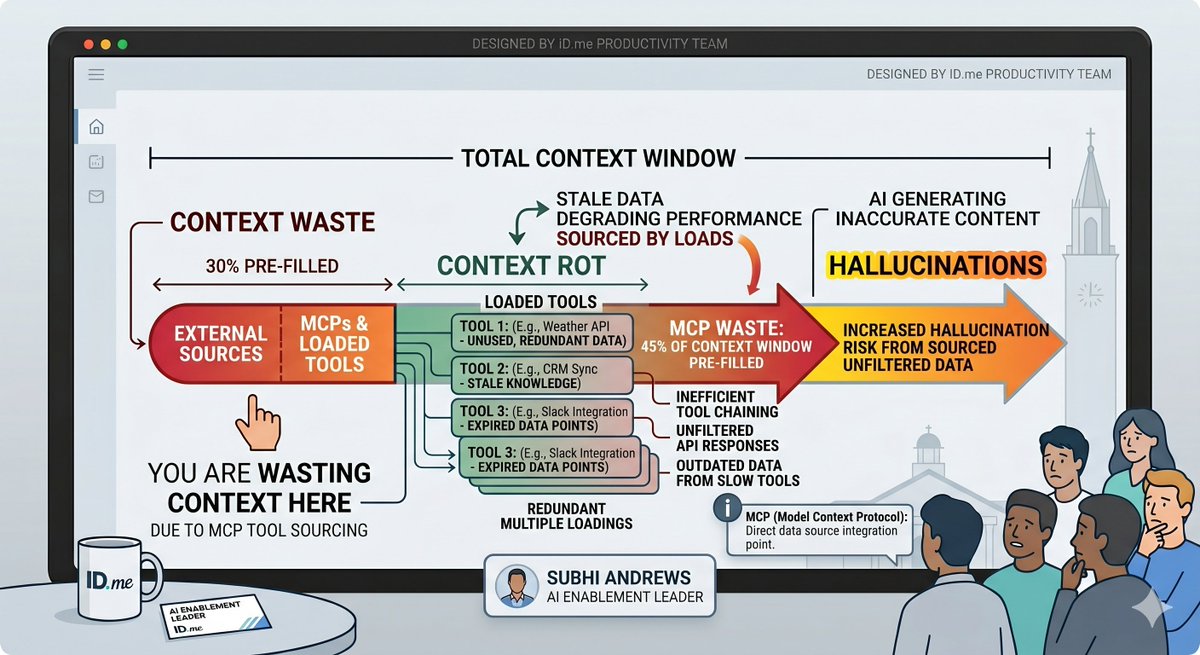
Here's a number that stopped me: with GitHub, Atlassian, Slack, and Google MCPs all connected, even on a fresh conversation with cleared context, you've already burned roughly 10% of your model's capacity. On a 1 million token model, that's 100,000 tokens. Gone. Before you've typed a word.
MCPs don't load lazily. Their schemas, tool definitions, and capability descriptions get injected into every request whether you use them or not. Your GitHub MCP is sitting in the context when you're writing a Python script that has nothing to do with GitHub. Your Slack MCP is fully loaded when you're analyzing a CSV. You pay for the connection whether you use it. That's the irritating problem. The worse problem is what all that unrelated context does to your actual outputs.
Language models can't ignore things. Everything in the context window is live - schemas, tool descriptions, whatever your MCPs happened to pull in. Ask Claude to write a careful database migration while your Slack MCP has been retrieving messages, and those messages are just sitting there. Need a precise regex? The model is working through a context window that also contains a full Jira board. It doesn't get to separate "the task" from "the noise."
The effects range. At the minor end you get outputs that feel slightly off - variable names that don't quite fit your codebase, phrasing that vaguely echoes a Slack thread you never meant to include. At the bad end you get hallucinations, where the model draws on unrelated material and produces something that looks plausible but is wrong in a way that's hard to catch before it ships.
You can always buy more tokens. You can't undo a hallucination that made it into a production commit.
CLI tools don't have this problem. When Claude Code runs gh pr list, context gets used when it acts, not while it waits. The tool schema isn't sitting in the prompt between calls. Information gets pulled, used, and cleared. And everything the command line already does - jq, awk, grep, piping, scripting - still works. Want to cross-reference GitHub comments with Jira tickets? That's a shell script. Claude Code can write it and run it. MCPs have no real answer for that kind of composition.
MCPs aren't useless. For quick, one-shot lookups they're fine. Ask "what's my latest PR status?" and a GitHub MCP handles it. But for anything agentic, anything where Claude needs to reason and act over multiple steps, CLI is the better design. Context stays lean. You control what's loaded. You don't give up 100K tokens as a standing tax on every conversation just for having tools connected.
The terminal was built for this kind of work. It's worth using it.
Driving home from the gym at 9PM. Signal lights flashing red. Right-turn-only lane blocked by a pickup.
My Tesla on FSD calmly stops, waits its turn, then confidently makes a right from the next lane.
Flawless logic. I’m legit impressed. 🤯👏 #Tesla#FSD
Our family’s world was turned upside down one fateful Saturday in the wake of the CrowdStrike outage, leaving us feeling helpless and betrayed by the very airline we trusted—@Delta . My daughter, full of excitement and promise, had just finished attending a prestigious summer program for high schoolers in Boston. My wife had accompanied her, eager to share in this milestone and support her through the journey. Little did they know, their experience would soon shift from joyous to nightmarish.
They were scheduled to fly back to San Jose on Saturday, a day after the @CrowdStrike outage. Despite the chaos, Delta assured us their flights, including a connecting flight, were unaffected. Relieved, they arrived at the airport early Saturday afternoon, ready to return home. But as they stood in line, the 11th-hour news struck like a thunderbolt—their flight was canceled.
The despair that followed was only the beginning. My wife and daughter, exhausted and anxious, contacted Delta’s customer support while simultaneously standing in an endless line at the Boston airport. The phone call proved futile, with no resolution in sight. After hours of waiting and frustration, they were finally rebooked on a flight—three nights later, on Tuesday morning.
Delta promised they could spend up to $500 a night for accommodations, assuring them the cost would be reimbursed. Trusting this promise, they booked a room totaling around $1200 for the three nights. My wife, sacrificing another PTO day, worked remotely from the hotel room, missing precious time with our family. The emotional and financial toll was mounting.
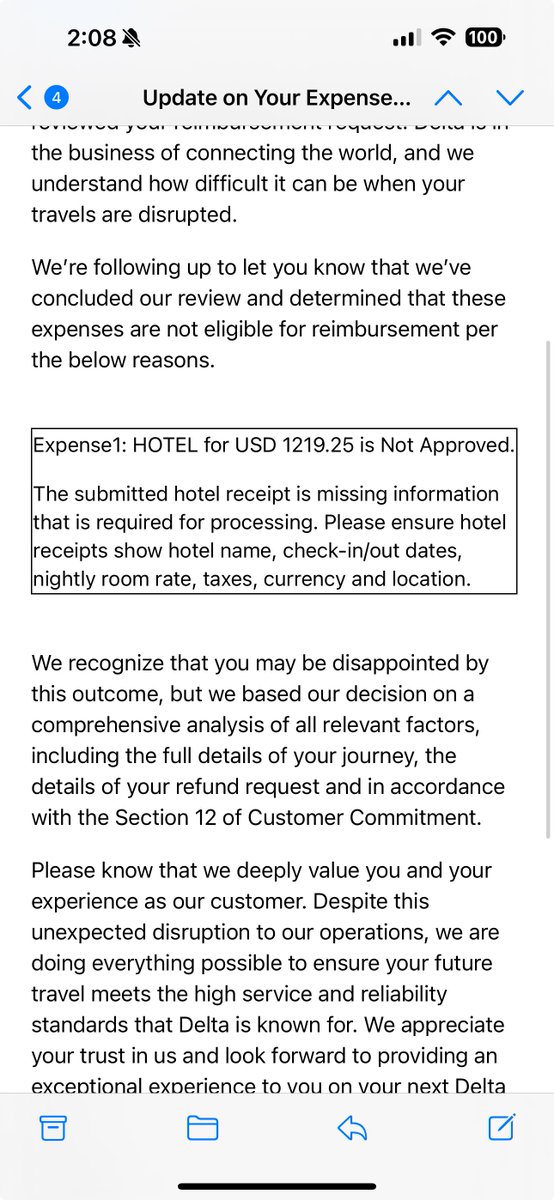
Finally, on Tuesday, they boarded their flight and made it home. But the relief was short-lived. When my wife requested the promised refund for the hotel accommodations, Delta’s response was a cold and unequivocal refusal. Not only did they deny the cost of the accommodation, but they also refused to pay anything at all.
This harrowing experience was more than just an inconvenience. It was a betrayal—a horrible ordeal compounded by being cheated out of over $1200 by a giant corporation. Our trust in Delta was shattered. What should have been a seamless journey turned into a nightmare, leaving us to pick up the pieces and bear the emotional and financial scars.
Delta's failure to uphold their promise left us feeling powerless and wronged. This wasn’t just about money; it was about the time lost, the stress endured, and the trust broken. We share our story not just to seek justice but to warn others of the potential pitfalls and to hold corporations accountable for their commitments. No family should ever have to endure what we did.
Japan is not futuristic
Japan is a fossil stuck in 1990
99% of Westerners still don't get this
Futuristic Asia is China, Korea, Vietnam, etc
No Asian rates Japan for modernity at all
There are actually 4 Kurian brothers. The twins have 2 older brothers.
The oldest Jacob, Jacob, now 59 and living in Bengaluru, did engineering from NIT, Trichy and MBA from XLRI, Jamshedpur, and is credited with having turned around the Tanishq, part of Titan industries as its COO. He is currently a partner in private equity firm New Silk Route Advisors.
Middle brother Matthew is a pediatrician int the UK.
@RealBenjizo rindex will return the index of 'n' at the end of the word 'Python', which is 11
index will return index of 'n' at the end of the word 'learn, which is 4.
Sum = 15