New DUH & Coffee Watch report: major risks in German coffee supply chain due diligence. With the EUDR & CSDDD weakened, responsible companies face unfair competition — and forests & workers pay the price.
🔗https://t.co/7whBJuJaAx
We’re not totally sold on arugula as a dairy substitute for coffee ☕🥬😅, but we are here for @gwynethpaltrow encouraging people to explore plant-based options. 🌱
What’s your go-to non-dairy milk? Drop it in the comments below 👇
🌎 This World Environment Day, coffee's future depends on true climate action.
Coffee production remains heavily reliant on synthetic fertilizers, water-intensive farming, and fossil fuel-based inputs. That leaves farmers vulnerable to climate shocks, supply chain disruptions, and rising costs driven by global conflicts.
The good news? Solutions already exist. Regenerative agriculture, compost, biochar, agroforestry, and reduced reliance on synthetic fertilizers,will help us build a resilient coffee future.
https://t.co/ZOMzCDm0Tl
In response to the Brazilian government's recent statement targeting organizations documenting forced labour in coffee supply chains: the issue is not the messengers. The issue is that workers continue to face exploitation. Protect workers. Address abuses. Demand accountability.
👉Read Coffee Watch's response:
https://t.co/0FeU3IDAuS
👉Read ADERE's response:
https://t.co/zFULJjHYyi
👉Read the Business & Human Rights Resource Centre's reaction: https://t.co/CFuKzjujPL
The Coffee Barometer 2026 launch programme is out!!
June 11, 14:00 CEST. Sjoerd Panhuysen presents 20 years of findings. Then Ashlee Tuttleman, Kenneth Barigye, Piet Van Asten, and Ric Rhinehart respond — from origin, trade, specialty and policy.
Alisha Bhagat closes with a look at what comes next.
Registrations are still open: https://t.co/uwopk1IiAT
Feeling overwhelmed by the headlines? ☕ Here are 4 positive changes happening in coffee—from deforestation monitoring and farmer support programs to global mapping and stronger sustainability commitments. 🌱
Check out the full newsletter and subscribe to get updates on all good coffee news: https://t.co/61S2rlWtIW
🚨 Breaking news in the coffee industry: Walter Zwald, Honorary President of the Swiss Coffee Trade Association, and a titan in the idnustry for decades, just issued a blistering letter threatening to quit his role, and saying unless the SCTA adopts mandatory standards on deforestation, labor abuses, traceability & living incomes, he will step down. A rare moment of truth from inside the industry from a major figure. What happens next??
Right now, children are being exploited in fields, factories, and supply chains. This #InternationalChildrensDay, CLC & our partners refuse to look away. Join us June 10 on Capitol Hill for a briefing on ending child labor at home & abroad. https://t.co/wUTj92lIl0
Coffee should never come at the cost of forests, human rights, or exploitation. ☕🌱
We are demanding a future where every cup of coffee is:
• Deforestation-free
• Land dispossession-free
• Child labour-free
• Exploitation-free
• Built on living wages and living incomes
• Truly sustainable from farm to cup
Behind every bag of coffee are farmers, communities, forests, and ecosystems that deserve protection, dignity, and justice. Ethical coffee cannot just be a trend. It must become the standard.
Hallelujah for coffee that protects both people and planet. ✊🏽🌍
What have 20 years of sustainability promises actually done to change coffee? ☕🌍 You have questions? We have answers! Join the 2026 Coffee Barometer webinar exploring transparency, rights, poverty, accountability, and power in global coffee. #CoffeeBarometer
🔗 https://t.co/tZL9I0Wwcu
Happy #Mothersday to all the mothers, grandmothers, caregivers, and women who hold up the world — including the millions of women who hold up the global coffee industry.
As we celebrate today with lattes, brunches, and time with our mums, it’s worth remembering a truth the coffee sector rarely acknowledges: coffee is built on women’s labor, but too often at the cost of their rights, safety, and dignity.
Women provide up to 70% of the labor on coffee farms worldwide. Yet they own far less land than men, earn less income, have less access to training and credit, and are routinely excluded from decision‑making roles. Many work without contracts, without protections, and without a living wage.
And behind the economic inequality lies an even darker reality: sexual and gender‑based violence (SGBV) is widespread in global agriculture — including coffee.
The International Labour Organization has found that SGBV is “widespread, perhaps even pervasive” among agricultural workers. Studies show that 90% of women farmworkers in some sectors identify sexual harassment and violence as their biggest challenge. Coffee is no exception. Women in coffee often work in isolated fields, processing stations, and packing houses — places where abuse can occur without witnesses, without reporting mechanisms, and without consequences for perpetrators. Many women fear retaliation if they speak up. Many have nowhere to turn.
This Mother’s Day, we can honor mothers everywhere by demanding better for the women who grow the coffee we drink.
Every coffee company that sees this should check out a pathway towards gender equality stat, right here: https://t.co/AYrfUUWqIy Courtesy of Equal Origins, which does incredible work on women in coffee.
And if you're not in a company but you just care about women in coffee, please either (1) post on the social media of your favorite coffee company to demand gender equality in all their coffee stat, supply chain, or (2) donate to Coffee Watch to help us pay for our current effort to document these abuses, support survivors, and push companies, policymakers, and consumers to confront the truth: there is no sustainable coffee without women’s safety, equality, and rights.
Today, as we celebrate the mothers in our lives, let’s also stand with the women in coffee who deserve safety, dignity, and justice — not just on Mother’s Day, but every day.
In a galaxy not so far away… ☕🌌
Imagine a future where coffee supports forests, farmers, and clean water. 🌱
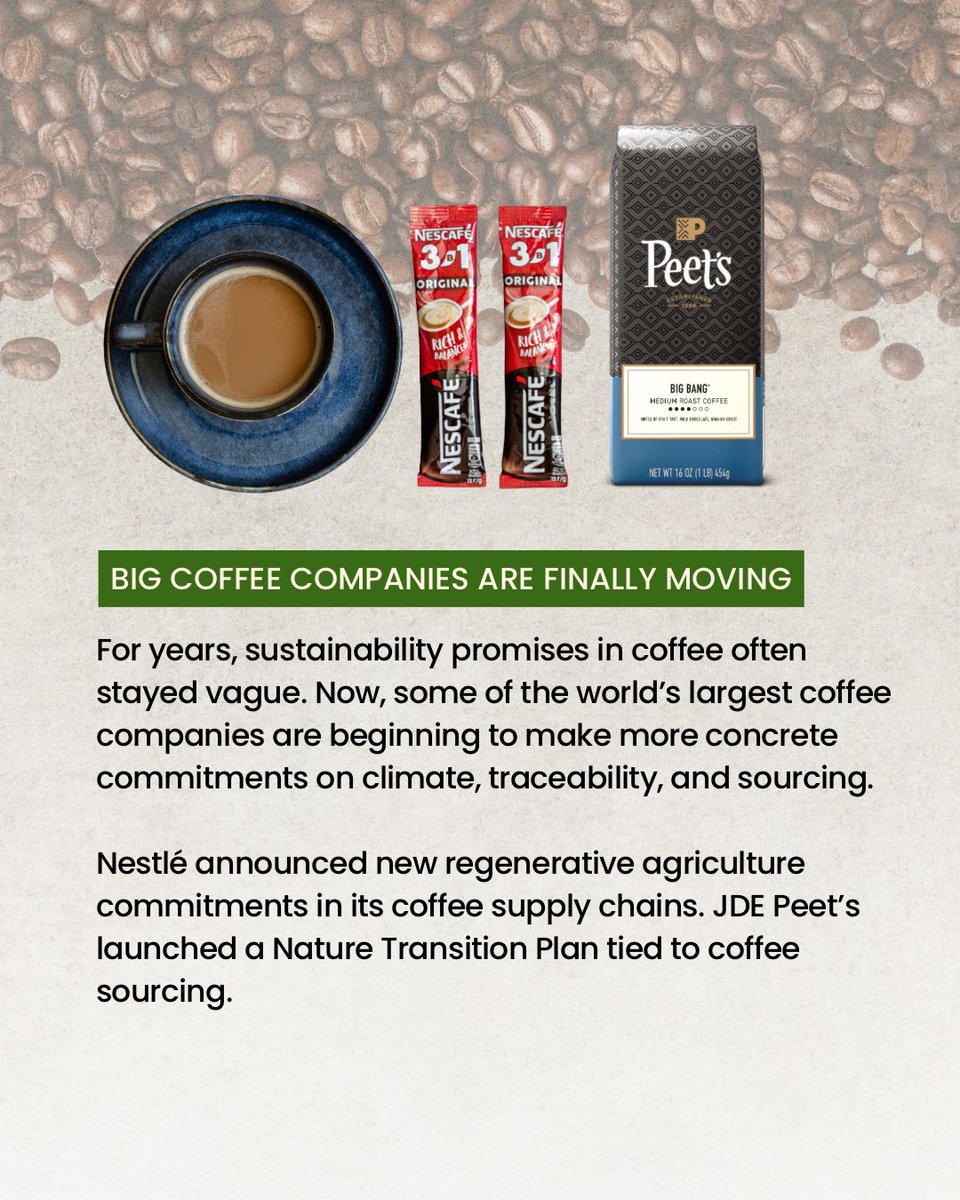
That future is starting to take shape—sustainable coffee is on the rise.
Not science fiction. Just the future we can build.
#MayThe4th#SustainableCoffee
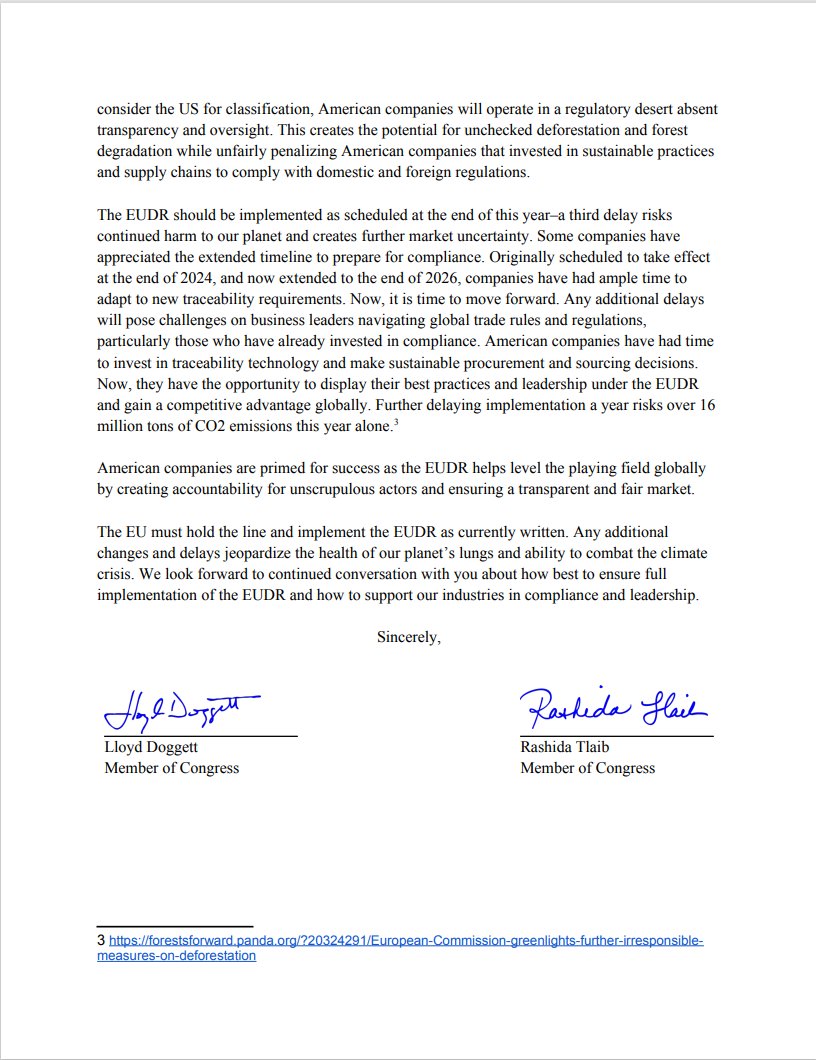
As 25 million acres of forests are destroyed each year–accounting for up to a fifth of global greenhouse gas emissions–I led my colleagues in urging the European Union to stand tall against Trump's climate bullying.
Our forests serve as the lungs of our planet and home to so many unique plants and animals.
Implementing the EU Deforestation Regulation as it is written is critical to protect forests across the globe.
We’re hiring a summer fellow 👀☕
Love coffee, sustainability, and the spotlight? This one’s for you. We’re looking for someone who’s comfortable on camera, has personality for days, and can turn coffee content into something people actually want to watch.
Learn more here 👉 https://t.co/Mk2qGKBuLZ
Dear Earth, we owe you better. 🌍☕
Every cup of coffee carries a hidden cost—deforestation, water loss, and disappearing ecosystems. But it does not have to be this way. Regenerative agroforestry offers a path forward, protecting biodiversity, storing carbon, and supporting farmers.
This Earth Day, choose coffee that gives back to the planet. Our choices matter. Tag your favourite coffee company to share this message with them!
Learn more about agroforestry by exploring our e-library https://t.co/0bzeSN4FHJ
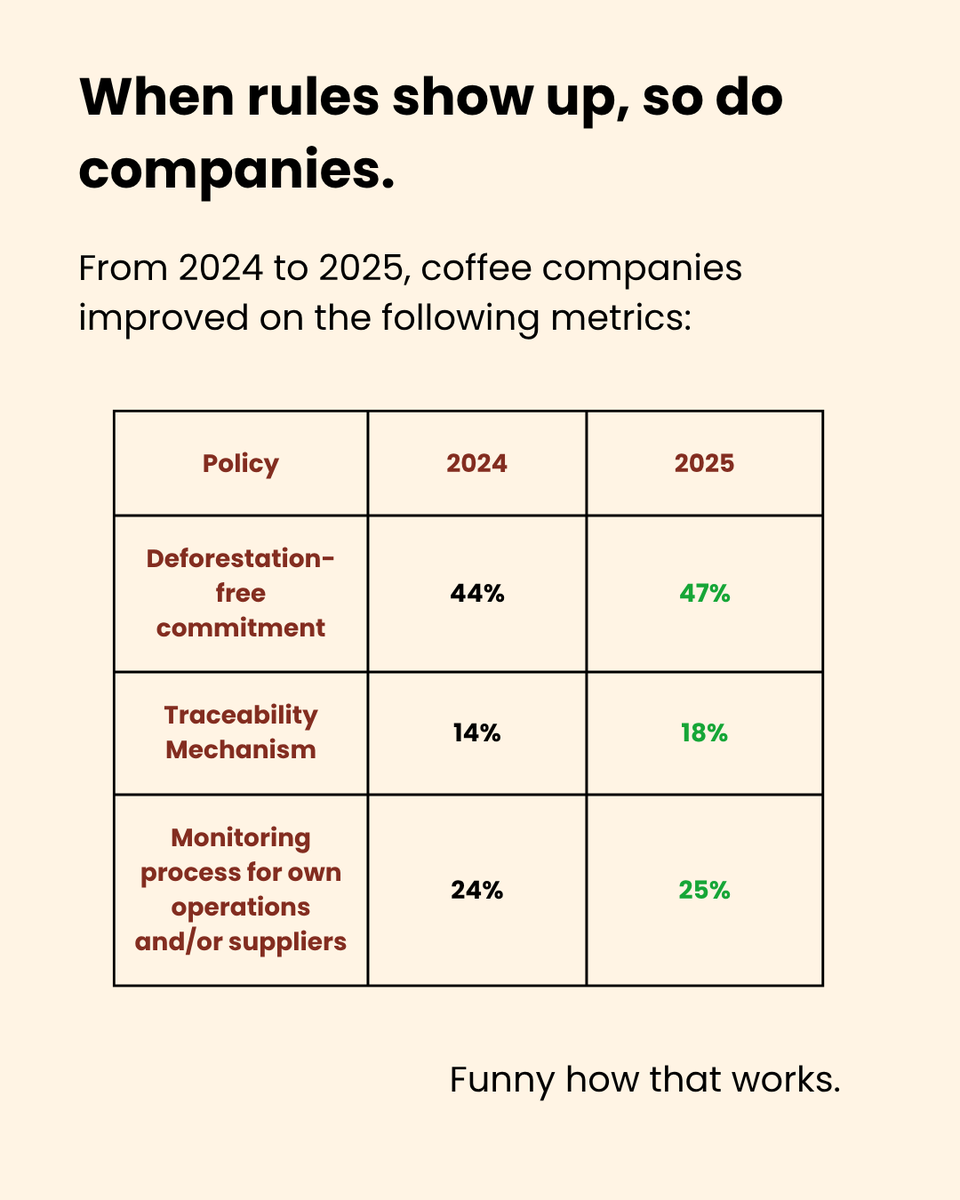
Companies: “We’re working on it.”
Also companies (when regulation shows up): suddenly working on it ☕🌳
The data is clear—EUDR is already driving action.
The problem? Most coffee companies are still nowhere near deforestation-free.
So no, voluntary commitments weren’t enough.
We need the EUDR. Now.
🔗 Forest 500 report by Global Canopy: https://t.co/oHVPiWwzLb
Coffee is at risk ☕️⚠️
Up to 20% of arabica land could be lost by 2050 — 8% already gone.
📉 less supply
💸 higher prices
🔄 shifting origins
The industry isn’t ready.
Read: https://t.co/hvkYBOdWzA
#CoffeeWatch#CoffeeCrisis#ClimateChange
☕🔍 Who’s falling behind on due diligence in German coffee supply chains?
In our latest ranking with @Umwelthilfe, Darboven ranks lowest on compliance with EUDR, LkSG & CSDDD.
🚨 Major gaps remain on deforestation risk, human rights, and transparency.
🔗 Read the full report: https://t.co/fAXF9ZyPLh
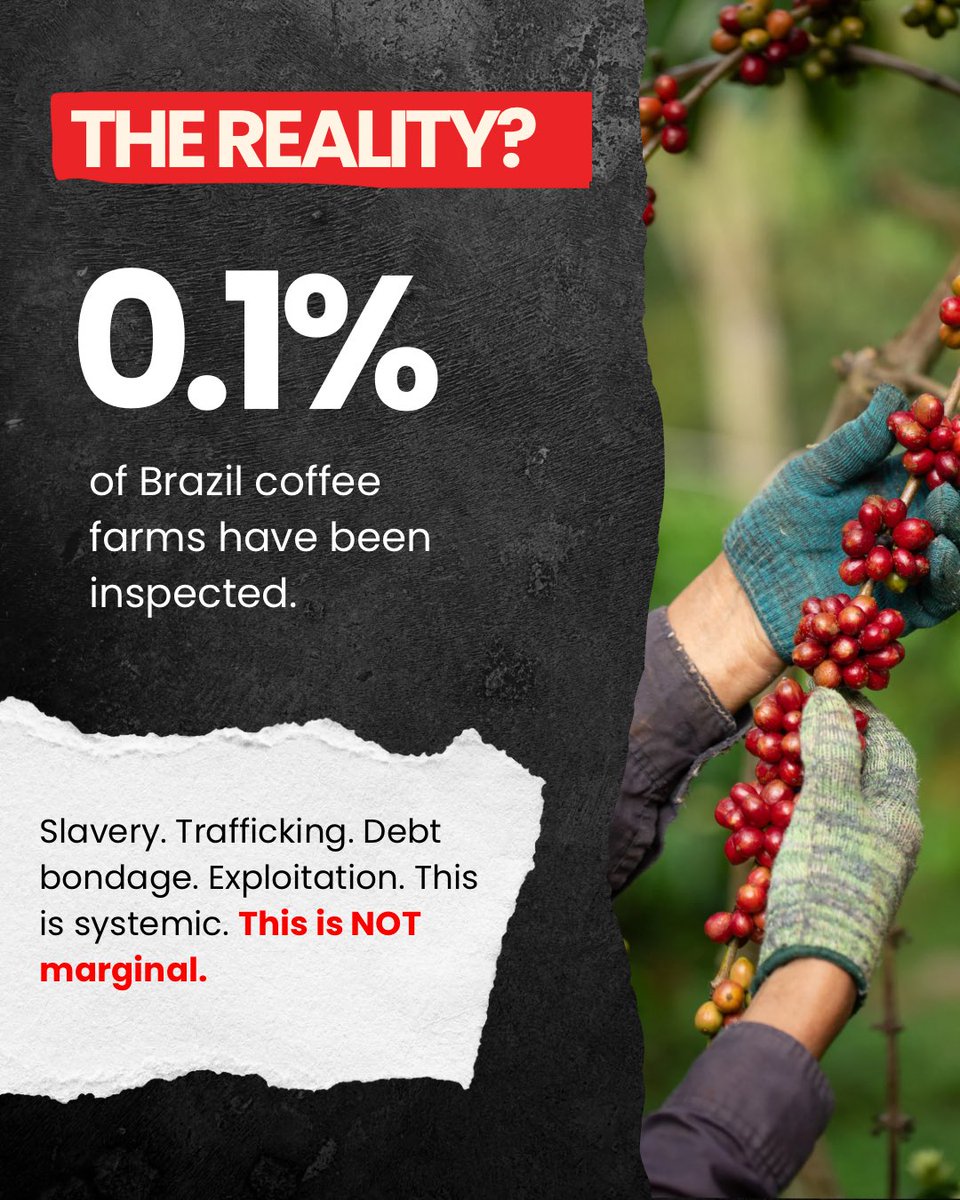
Can companies still profit from forced labor and exploitation in 2026? Yes.
Organizations including @Conectas Direitos Humanos, @Repórter Brasil, and the @Business & Human Rights Centre raised this at the UN, highlighting impacts on Brazil’s Black populations.
They urge:
✅ Stronger enforcement & inspections
✅ Supply chain accountability
✅ Renewed govt–civil society dialogue
🔗 https://t.co/JSX5vdiYdL
🌱 BREAKING NEWS: A Historic Day for Coffee! 🌱
All major coffee companies have just announced that, effective immediately, they will end slavery, child labor, human trafficking, gender‑based violence, hazardous pesticide use, and deforestation across their entire supply chains.
They’ve committed to full traceability, living incomes, safe working conditions, and zero exploitation — and they’re implementing it all today.
A new era of ethical coffee has officially begun. ☕✨
☕🌍 Can business look beyond profit?
New @GLCpodcast episode with Etelle Higonnet :
“There’s literally no money you can make on a dead planet… you are definitely drinking poverty… and... child labor.”
Check it out on Youtube: https://t.co/flDmLIys7F
#greenchatters #glcpodcast