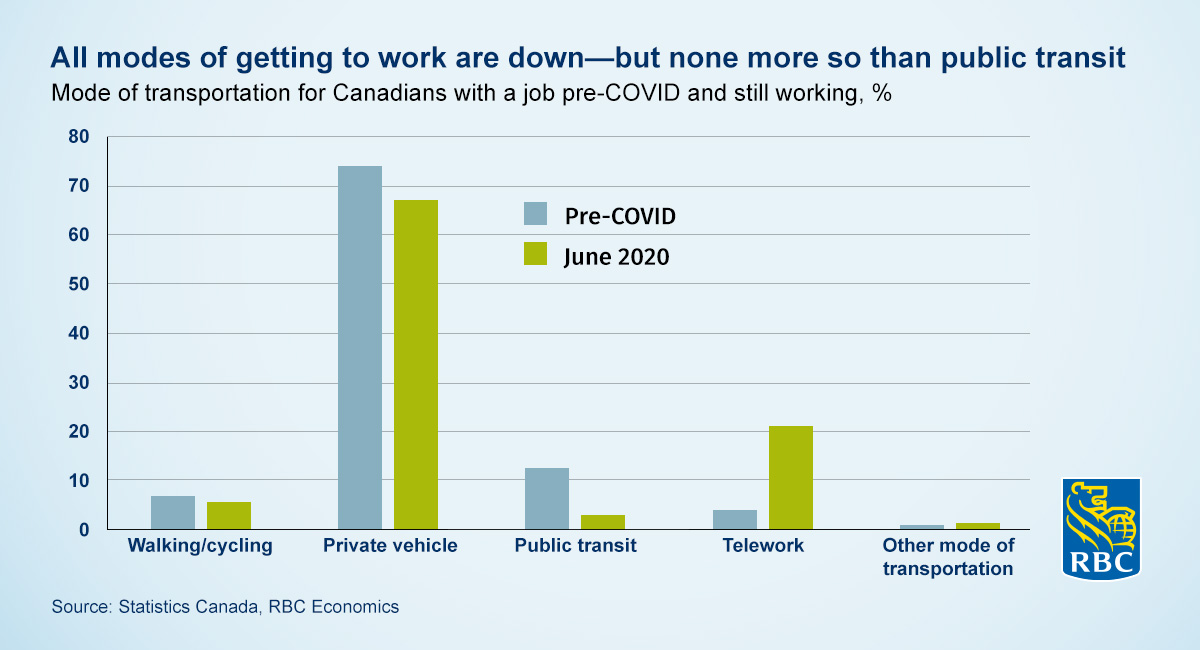
Would love to read any reports/publications recently on this topic if anyone has any to share! Transit development remains a major infrastructure need in Ontario, would love to learn more about how COVID has impacted it if anyone has resources 🙌🚈
I have to imagine that the current work-from-home environment (and preference to avoid transit crowds) has taken a massive dent out of expected revenues for transit corporations. Much needed upgrades/development of public transit may be even further off #cdnecon
One suggestion to increase revenues in the medium term: implementing sales tax on e-commerce transactions from outside of Canada.
Quebec has implemented this, and other provinces could follow suit to increase revenues moving forward #cdnecon#cdnpoli
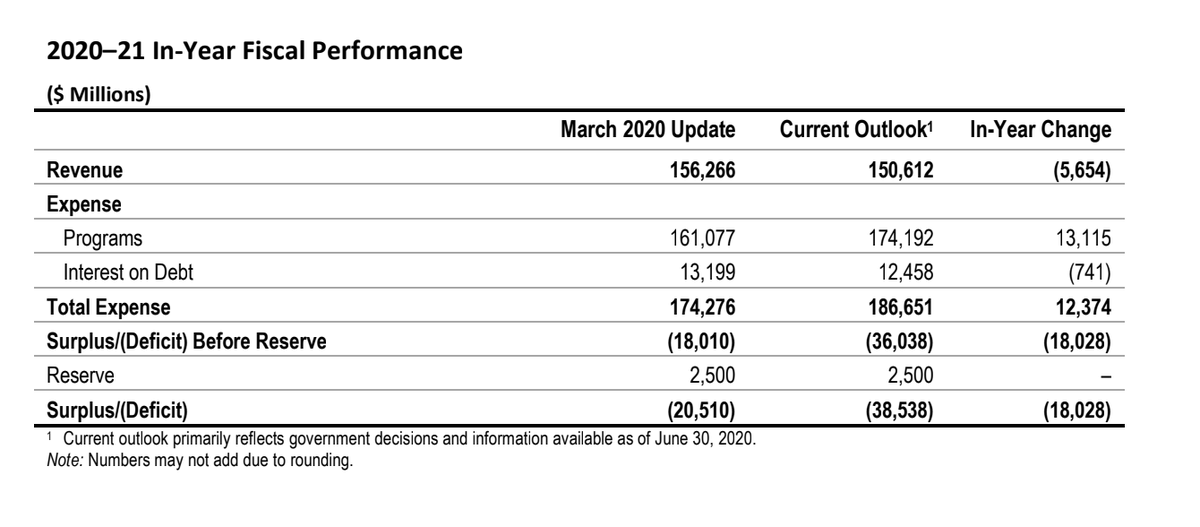
Nearly 1/3 of that $18B increase coming from a projected $5.5B dip in government revenues as a result of economic downturn. Staggering to see the deficit projection almost double the March 2020 Update prediction. Things change quick #COVID19#onpoli
#BREAKING: Ontario's deficit projection balloons to a staggering $38.5 B up $18.0 B since March due to the impacts of #COVID19, the outlook remains uncertain due to the possibility of a second wave #Onpoli
Assets held at the BoC expanded from 5.4% to 23.8% of GDP as a result of #COVID19 crisis, a huge jump. However, this still dwarfs totals in the US(36%), EU(54%) and Japan (128%) #cdnecon
The Bank of Canada's unprecedented expansion of its balance sheet raises some key questions, says Stephen Williamson. Read our latest Intelligence Memo: https://t.co/Xlr7D1Qfx5 #cdnecon#BoC
One major challenge that has arisen in recent years: the education performance gap between smaller and larger provinces has continued to widen.
Increasing inter-provincial resource sharing can help to limit deficiencies related to smaller economies of scale #cdnpoli#education
Canada should embrace consumption taxes and eschew wealth taxes if it wants to fight the looming debt crisis, say Peter van Dijk and Glen Hodgson. Read more: https://t.co/9V32SCKUz1 #cdnecon#cdnpoli
What can Canada learn from economic recovery in China? While the tech sector rebounded strongly, consumer spending continued to stagnate due to uncertainty. An adaptive/flexible income support system will be necessary as some sectors see stronger recovery than others #cdnecon
ICYMI: China has a head start down the road to recovery. Watching their progress can be instructive for Canadian policymakers, says Miles Wu. Read more: https://t.co/q5QTcWsykl #cdnecon#cdnpoli
While application of "national security" for the imposition of steel/aluminum tariffs still presents significant challenges for Canada, it appears that the court system (at least at the CIT level) will not allow for a completely unrestricted use of Section 232 #cdnecon#trade
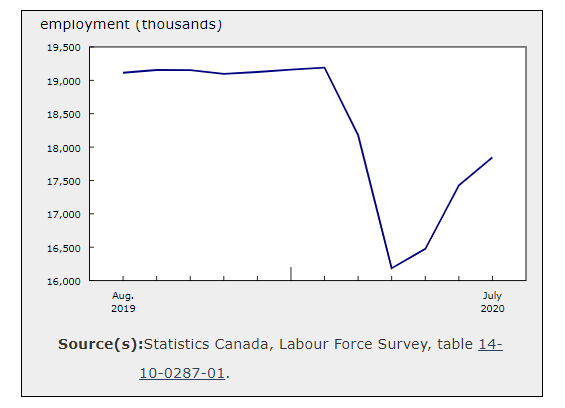
Employment numbers still down by over 1m compared to pre-crisis natural employment. August numbers (and the slope of the rebound) will be a good indicator of where employment may settle in the coming months based on current economic factors #cdnecon#cdnpoli#Jobs
Auto sales continued to rebound into July, with July sales at 95% of 2019 levels. As per the export data from yesterday, auto exports remained stable amidst other industry export decreases over the past few months #cdnecon
Source: https://t.co/OeCykxEQOQ
With public health and supporting institutions firmly in the front seat of policy discourse, now is the time to address not just #COVID19, but how policy can improve systems of public health in the long run #cdnpoli
With the COVID-19 crisis, investments in public health are more important than ever. Listen to our latest podcast episode: https://t.co/YE6tWBF1wx #cdnecon#cdnpoli
As noted in the piece, Joe Biden's campaign promises to invest $400B in additional federal purchases and "modernize int'l trade rules" - even in a post-Trump presidency scenario, there are divergent paths as to how Canada-US trade relations can move forward #cdnpoli#trade
Fairer, more balanced access to procurement opportunities would benefit both the US and Canada, says Jon Johnson. Read our latest Intelligence Memo: https://t.co/JIiXrbLUv1 #cdnecon#cdnpoli
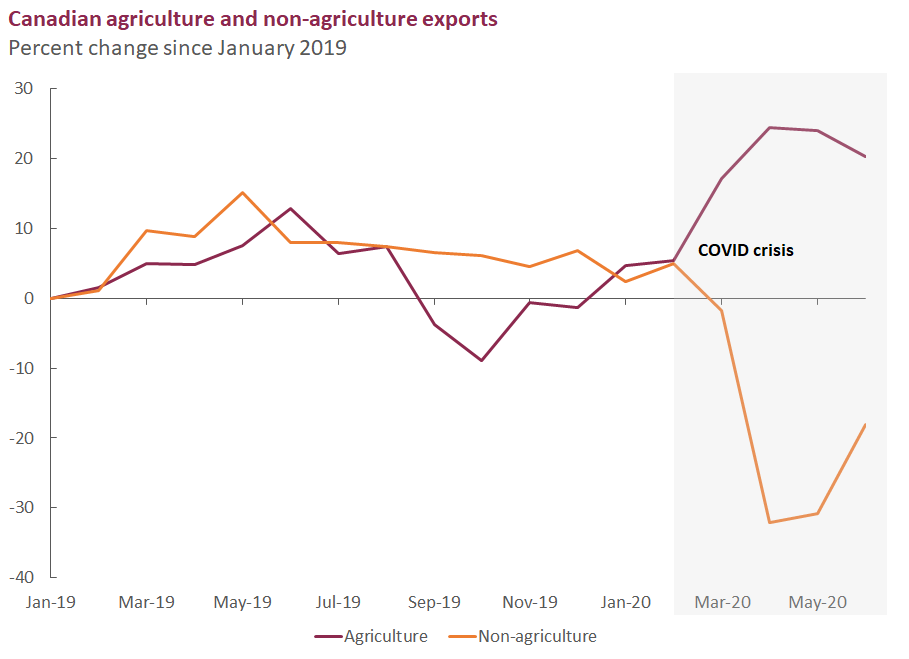
This also seems consistent with the job numbers changes seen in the same period, where agriculture saw a lower drop in employment (8%) relative to the overall goods producing sector (12%)
https://t.co/5U9hXxOS49
• Canada's agriculture exports have been resilient during the COVID crisis.
Since February, they have grown by 14%, while non-agriculture exports have fallen by 22%.
#CdnEcon
@dbcurren I'd be curious as to what most Canadians feel is the threshold for a "second surge" - we are seeing rebounds of active case totals in Western Canada, with limited signs of a retreat to stricter lockdowns (so far)
Those most affected by the pandemic are also less likely to have access to the most recent smart phones, making the #COVID19 alert app inaccessible to many higher risk Canadians. A policy oversight that will need to be addressed moving forward #cdnpoli
https://t.co/7UxCF7eD4a
Amazing point from this pod: healthcare is often focused on disease prevention or fixing problems, rather than promoting a "healthy" life. A focus on keeping people healthy, rather then fixing things after they go wrong, will be vital in an aging Canada #cdnhealthcare#cdnpoli
#ICYMI : Many G7 countries are adopting more stringent nat. security lens when it comes to foreign investment, but defining key industries and ensuring a quick review timeline means that Canada will not lose needed foreign investment to help re-start the economy #cdnecon#cdnpoli
It goes without saying that our economy — and businesses — will continue to need infusions of foreign capital, as well as a lot of Canadian investment, too: https://t.co/lG60c7O02e #cdnecon
On top of #COVID19 challenges, Canadian education has performance challenges to face as well. Quebec was the only province to not have a statistically significant decline in math, and gaps between students from lower income and higher income homes remain large #education#cdnpoli