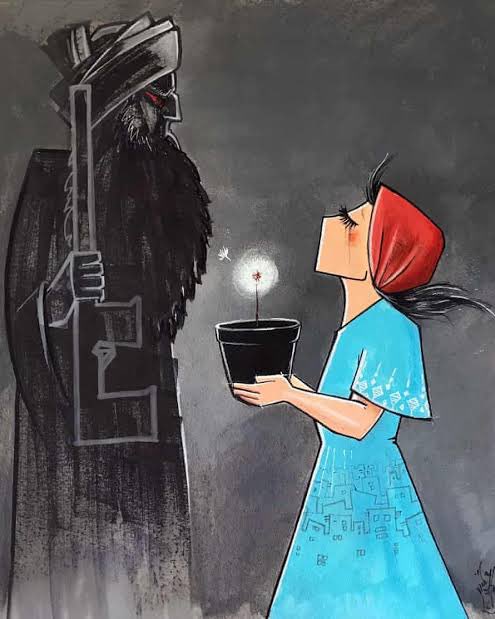
Message from Afghan woman
Please read and share:-
Life for a woman in Afghanistan is beyond belief. Many people may not know what happens outside the home — but what happens inside, behind closed doors, is even worse.
We are forced to endure abuse from both husbands and mothers-in-law. I cook, clean, and wash all day, but I’m still mistreated. My husband beats me.
Once, my mother-in-law told him that I was secretly studying on my phone — and he took my phone away. I feel completely trapped.
Sometimes I think about ending my life, but when I look at my little daughter, I stop — for her. Still, I feel powerless.
Yet whenever my husband is not home, I study in secret.
I want to share my voice with the world.
Please read my message, support me, and be the voice for Afghan women.
@jk_rowling
Y el último de @AgudosSEC Torneo All-Star en #cardioclinica25@clinica_sec:
¿Tiramos la toalla con el balón de contrapulsación o debemos seguir contando con él en algunos escenarios?
Top 5 most read papers in @JACCJournals#JACCAdvances in 2024
From ST-Segment Elevation MI to Occlusion MI: The New Paradigm Shift in Acute Myocardial Infarction | JACC: Advances https://t.co/T8fICPVoYH
MANEJO DEL PACIENTE POST - #PCI
Revisión @JACCJournals
✍️3 pilares
🔴Modificaciones en estilo de vida 🏃♀️🏋️♂️🥦
🔴Medicación para prevención secundaria💊
🔴Monitoreo de la reestenosis
https://t.co/wXaZNpYxw4
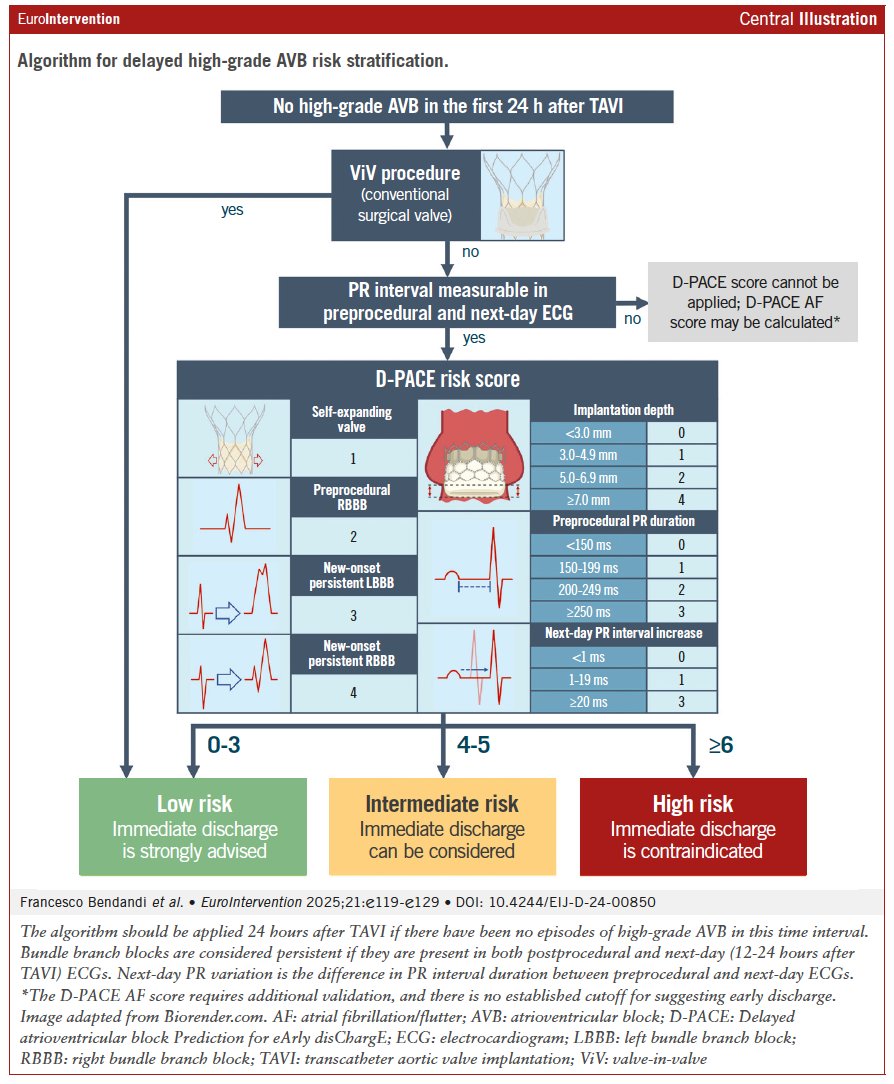
"The Delayed atrioventricular block Prediction for eArly disChargE (D-PACE) score, consisting of procedural and electrocardiographic variables, can be used the day after transcatheter aortic valve implantation to stratify patients according to the risk of delayed high-grade atrioventricular block. Based on the result of the score, it is possible to identify patients who can be safely discharged 24 hours after the procedure." #EAPCI #TAVI
@fra_bendandi@saia_francesco
https://t.co/UiyfXi9QiL
Aterosclerosis coronaria en atletas y deportistas. Interesante revisión en @ESC_Journals
🔖 Mecanismos y factores asociados
🔖 Clínica e identificación
🔖Propuesta de manejo
@secardiologia@SVCardio
https://t.co/kzi90xHyW7
New EAPCI/ESC consensus: High-risk #PCI in patients with reduced LVEF unsuitable for surgery. Guidance on patient selection, procedural strategies, and long-term management to optimize outcomes. #Cardiology#EAPCI
https://t.co/n9AIDcdxGh
I'm excited to share our recent publication on flow dynamic factors that correlate with device-related thrombosis #DRT after left atrial appendage occlusion #LAAO now in @JACCJournals: Advances.
In this work, we showed that:
(1) #LA volumes and #MV areas were > in DRT group
Se observaron más tiempos de procedimiento y uso de contraste en el grupo IVUS.
Conclusión: el uso de IVUS mejora los resultados en pacientes con SCA, aunque presenta algunas limitaciones prácticas y contextuales.
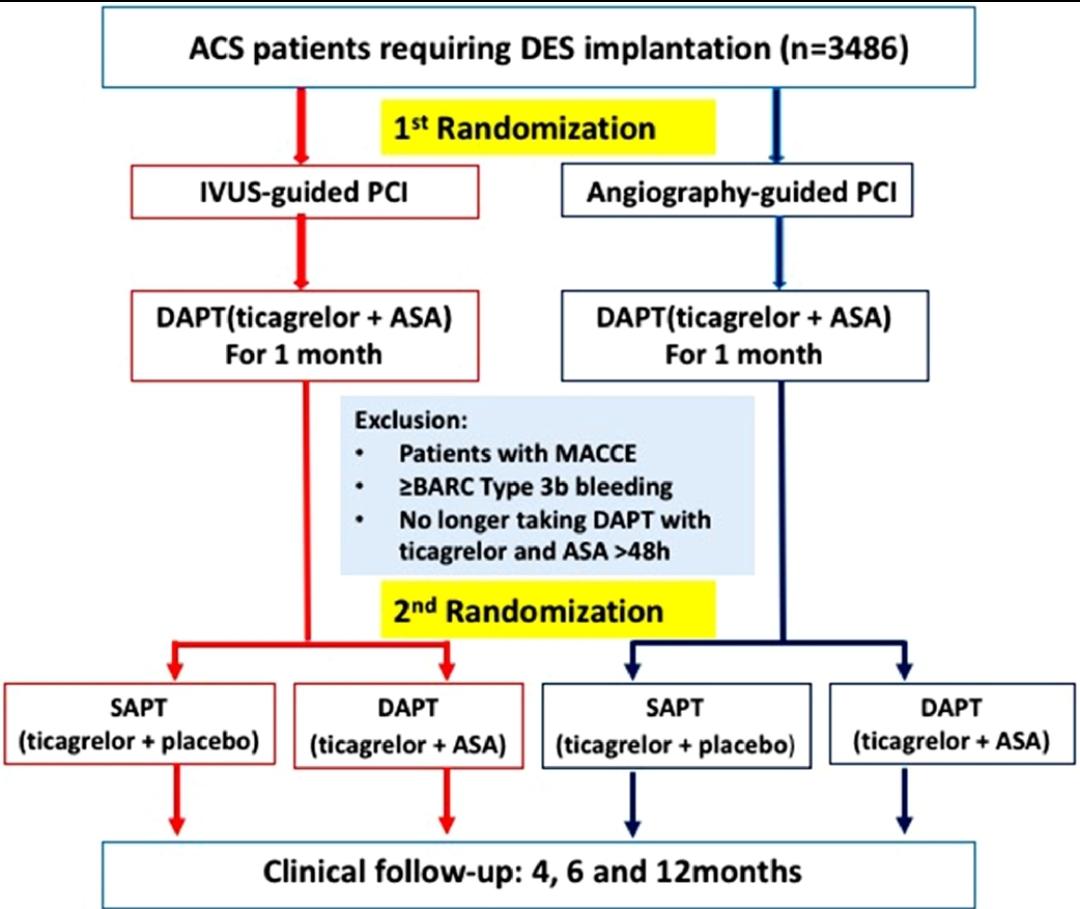
El uso de técnicas de imagen intracoronaria, como el IVUS, es útil para guiar la ICP y está recomendado en la evaluación de lesiones coronarias complejas. Se incluyeron 3.505 pacientes, divididos en dos grupos: ICP guiado por IVUS y por angiografía.
A un año, el fallo del vaso diana (muerte cardíaca, infarto o revascularización) fue menor en el grupo IVUS (4% vs. 7.3% con angiografía).
Se redujeron los infartos de miocardio y revascularizaciones en el grupo IVUS, sin diferencias en mortalidad o complicaciones de seguridad.
IVUS-Guided DES Reduced MACE at 1 year Compared to Angiography-Guided PCI: IVUS-ACS Trial
Written by @acastrom91!
Summary, analysis and more #ACC24 coverage below! https://t.co/C6wznZevdY
@CMichaelGibson
En resumen, el estudio aporta nuevos datos sobre la "vulnerabilidad" de las placas coronarias, pero también recalca la necesidad de un enfoque más amplio y personalizado en la prevención cardiovascular.
Perspectiva futura: La actividad de placa es un factor de riesgo cuantificable, pero no explica toda la enfermedad aterosclerótica. En el futuro se incluirá técnicas más avanzadas como la radiómica, la genética y la inteligencia artificial para una evaluación aislada del riesgo.