Just In: Binance’s Chinese X account has issued an urgent warning that the official English account @BNBCHAIN has been compromised and is currently under repair. Users are advised not to click on any links.
As happens in one’s life, I’ve been taking stock of my last 40 years. It’s been a wild ride. I’ve gone from consulting for the NSA to watching the early stages of Bitcoin. Then, I met Arthur, Jed, and Chris and worked on coding the XRP Ledger. Now, I’ve spent more than 13 years at Ripple.
I can’t begin to explain the depth of my gratitude to this company, the people who work here, and the community that surrounds XRPL. It’s been one of the greatest honors and experiences of my life, second only to my amazing family.
The time has come for me to step back from my day-to-day duties as Ripple CTO at the end of this year. I’m really looking forward to spending more time with the kids and grandkids and going back to the hobbies I set aside. But be warned, I’m not going away from the XRP community. You haven’t seen the last of me (now, or ever).
The last few months I’ve been tinkering on the side – spinning up my own XRPL node and publishing its output data, researching other use cases for XRP (besides what Ripple is focused on), and more. I truly enjoy this part — getting my hands dirty, talking to builders, coding for the pure love of it — and I’m really excited to get back to that. More to come on this very soon, I’m sure.
But back to gratitude — to Brad and Monica — leaders who have been here nearly as long as I have, and are the very soul of Ripple itself. To Chris, who took a huge leap of faith and never wavered. To Arthur, who had the big ideas every time we needed them. To the RippleX team, ledger developers, community members, builders, and everyone else — it’s been an honor being in the trenches with you all. Thank you for everything you have done for the XRPL. I have total confidence in the next generation of leaders and builders – including Dennis Jarosch (Ripple’s SVP of Engineering) – and far too many others to name in the XRP community who will carry the torch.
I’ll still be in and out of the Ripple office as CTO Emeritus, and as my last task at Ripple, Chris asked me to join Ripple's Board of Directors to continue supporting the company’s mission and long-term vision...and I accept!
I look forward to seeing the rest of you at XRP community events around the world.
– JoelKatz
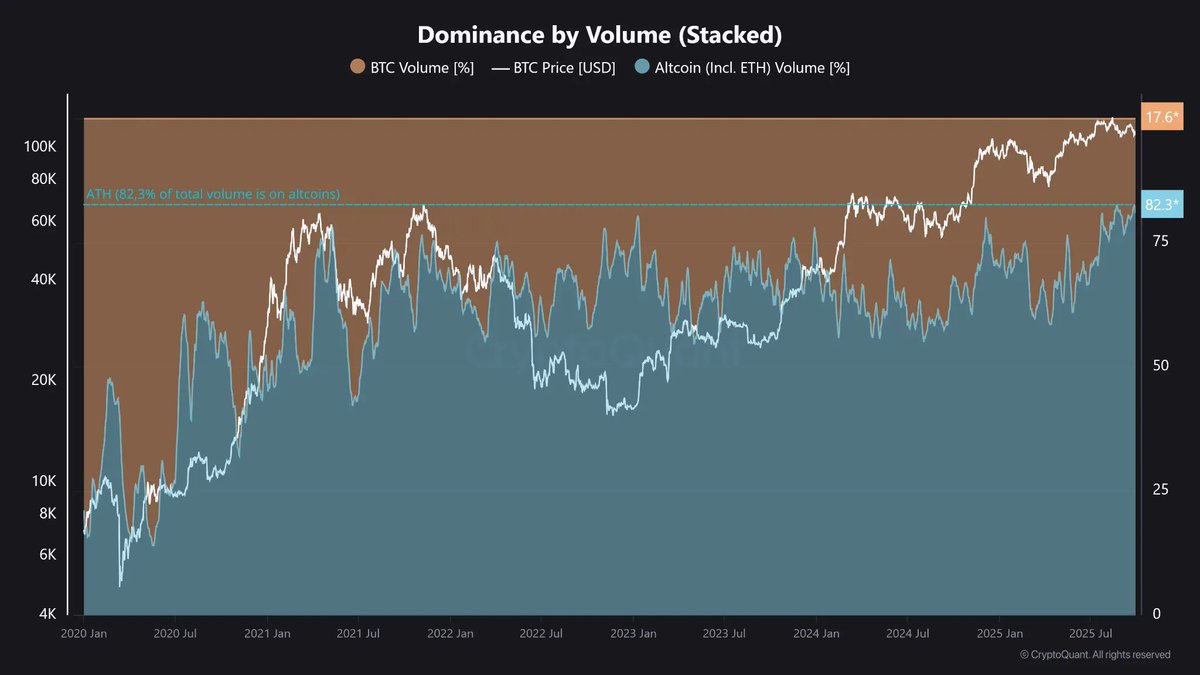
According to CryptoQuant, the share of altcoin futures trading volume on Binance has just reached an all-time high of 82.3%, surpassing Bitcoin. Altcoins such as XPL, ASTR, SOL, and PUMP are attracting massive capital flows, with ASTR surging 250% just last week.
Even during the “altcoin season” of 2021, the altcoin share only peaked at 76%. This new milestone indicates that traders currently believe altcoins offer greater profit opportunities compared to Bitcoin futures.
Ripple accelerates institutional DeFi as XRPL surpasses $1B in stablecoin volume
Ripple is driving institutional DeFi forward as the XRP Ledger (XRPL) records over $1 billion in monthly stablecoin transactions, ranks among the top 10 blockchains for real-world assets (RWA), and builds compliant blockchain credit infrastructure.
Ripple’s roadmap highlights three strategic pillars:
Advanced compliance infrastructure: KYC verification, account freezing for flagged wallets, and safe transaction simulations.
Credit markets: XRPL 3.0.0 will introduce a native lending protocol based on the XLS-65/66 standard, enabling on-chain borrowing and lending at lower costs.
Privacy: Development of zero-knowledge proofs and confidential multi-purpose tokens (Confidential MPTs) targeted for release in 2026.
Ripple stated that institutional DeFi has moved beyond pilot projects into a multi-billion-dollar market, positioning XRPL as a trusted settlement layer for both crypto-native firms and traditional financial institutions.
Binance has announced the 47th project on its HODLer Airdrops page – OpenEden (EDEN), a real-world asset (RWA) platform bridging traditional finance and decentralized finance.
Users who subscribed BNB to Simple Earn (Flexible/Locked) or On-Chain Yields between September 23–25 will receive the airdrop, which is expected to be distributed within 24 hours. EDEN tokens will be credited to users’ Spot Accounts at least 1 hour before trading begins.
Binance will list EDEN on September 30 at 11:00 (UTC) with trading pairs against USDT, USDC, BNB, FDUSD, and TRY. Deposits for EDEN will open on September 29. The token will carry a seed tag.
Details:
Total supply: 1,000,000,000 EDEN
Airdrop: 15,000,000 EDEN (1.5% of total supply)
Marketing allocation: 25,000,000 EDEN (before and after listing)
Circulating supply at listing: 183,870,000 EDEN (18.39%)
Networks: BNB Smart Chain & Ethereum
Listing fee: 0
EDEN will also be available on Binance Alpha prior to the official Spot listing.
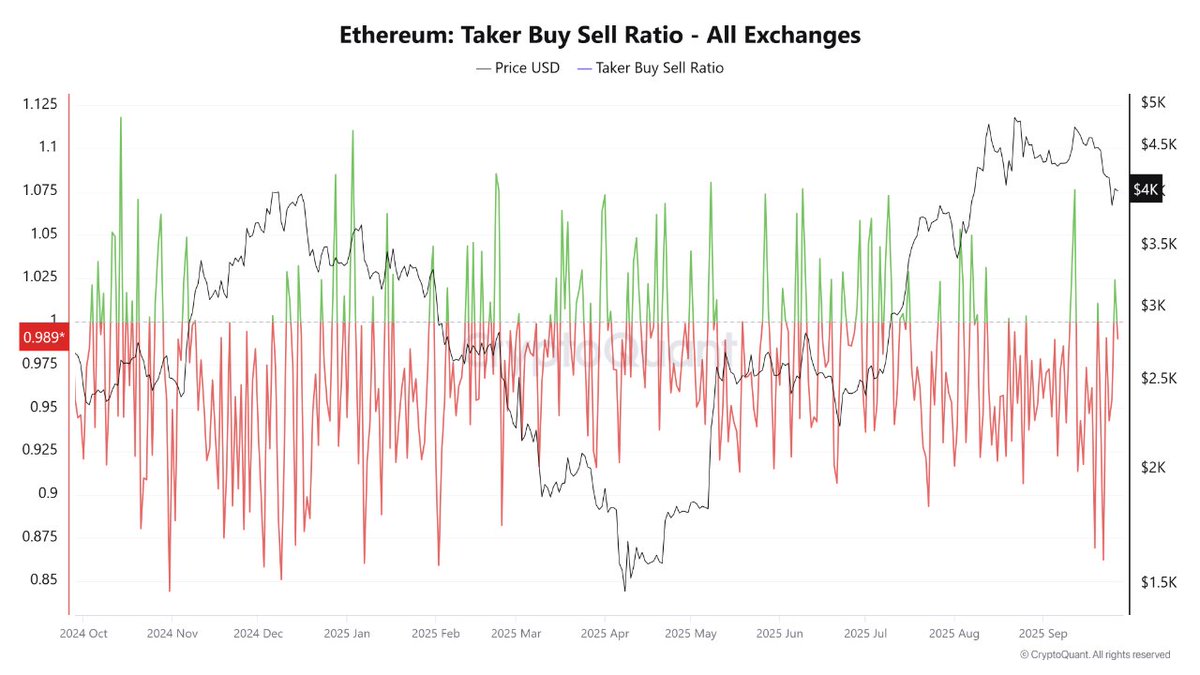
On-chain data from CryptoQuant indicates that Ethereum is approaching a pivotal setup, with several indicators aligning toward a potential sharp move higher driven by a short squeeze.
According to CryptoQuant, liquidation activity has cooled significantly after months of turbulence. Both long and short positions have been flushed out, but crucially, the downside liquidation clusters have already been absorbed. This leaves very few liquidation targets below the current price, while sizable clusters remain above. In such conditions, even a modest upward move could trigger a cascade of short liquidations, accelerating price gains.
Meanwhile, the Taker Buy/Sell Ratio is hovering just below 1.0, signaling continued selling pressure from aggressive sellers. However, historical data shows that when this metric bottoms and reverses, Ethereum often stages strong rebounds. The combination of exhausted downside liquidity and an overstretched selling imbalance has created a fragile equilibrium that could easily break upward.
In short, the ETH market is “primed”: shorts remain heavily positioned, selling pressure has largely run its course, and the liquidity map now favors an upward squeeze. Traders should prepare for heightened volatility — a short squeeze may unfold faster than expected.
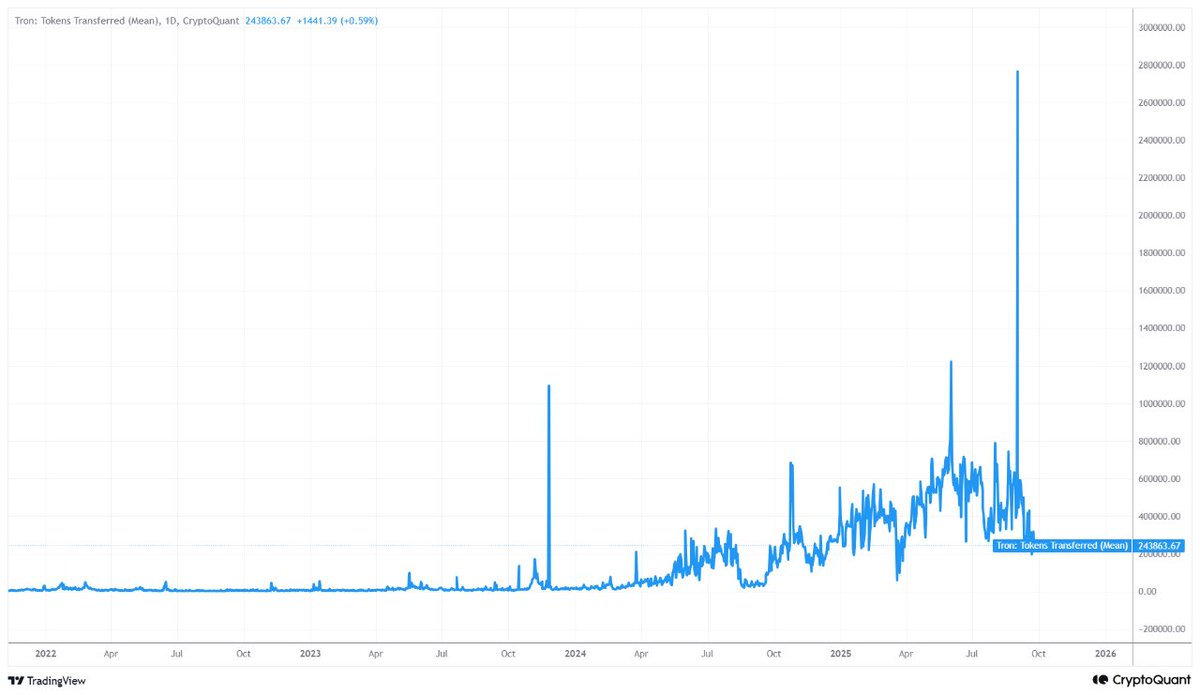
According to data from CryptoQuant, on September 25 the TRX network recorded a historic spike in the Tokens Transferred (Mean) metric, reaching 2,749,327.78 – the highest level ever. This figure is several times higher than the recent monthly averages, indicating an unusual short-term surge in network activity.
Experts note that such spikes are often driven by factors such as large whale movements, internal exchange transactions, the deployment of new smart contracts, or liquidity shifts in DeFi protocols linked to TRX.
This development could have short-term implications for TRX’s price volatility and market sentiment, especially if accompanied by rising trading volumes and changes in token supply on exchanges. Close monitoring of on-chain metrics and exchange inflow/outflow data will be crucial to determine whether this was an isolated incident or the beginning of a new trend.
On September 25, the Bitcoin community was stirred after The Rage published an article alleging that Luke Dashjr, a veteran developer and maintainer of Bitcoin Knots, had proposed a hard fork introducing a “trusted multisig committee” with the power to review and retroactively alter the blockchain to remove illicit content.
Dashjr immediately rejected the claims: “I have not proposed a hard fork or anything of the sort. This is fabricated nonsense meant to slander me and undermine my efforts to protect Bitcoin.” He reiterated multiple times within the next 24 hours: “Nope, nothing changed. Nobody is calling for a hard fork still.”
The controversy reignited a long-standing rift between two camps:
Bitcoin Knots (maintained by Dashjr): enforces stricter transaction policies, blocking non-financial data such as Ordinals inscriptions and Runes tokens. Dashjr argues this protects Bitcoin’s monetary integrity and reduces regulatory risks.
Bitcoin Core: follows a more permissive approach, tolerating non-standard data as long as it doesn’t break consensus.
Critics claimed the supposed hard fork confirmed fears that Dashjr’s vision compromises Bitcoin’s immutability. Supporters countered that the leak was merely a smear campaign designed to discredit stronger spam-filtering measures.
Interestingly, Udi Wertheimer – co-founder of Taproot Wizards, an Ordinals project often seen as opposite to Dashjr’s philosophy – also came to his defense, calling the report a “hit piece” and “fake news.” Wertheimer explained that the leaked messages were only a hypothetical discussion about using zero-knowledge proofs to let Knots nodes avoid downloading “spam,” not an actual hard fork plan.
Google DeepMind unveils Gemini Robotics: a major step toward reasoning and self-learning robots
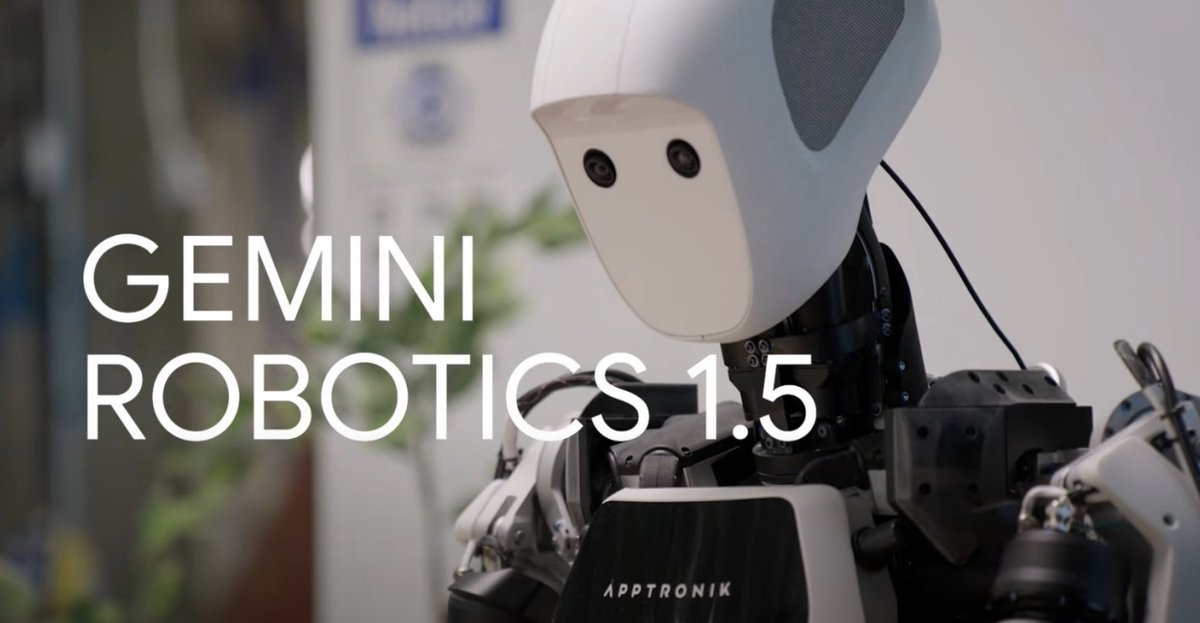
Google DeepMind has introduced two new AI models – Gemini Robotics 1.5 and Gemini Robotics-ER 1.5 – designed to enhance robots’ capabilities, enabling them to not just follow commands but also plan, reason, search for information, and share skills.
Robots that can adapt and learn
Instead of executing pre-coded scripts, this new generation of robots can handle complex real-world scenarios. For example, they can:
Check online weather forecasts to pack a suitcase appropriately.
Access local recycling guidelines to sort trash correctly.
Fold clothes by color or material without being explicitly programmed step by step.
This is the long-sought ability of “generalization”, something traditional robots and algorithms typically struggle with.
How the two models work together
Gemini Robotics-ER 1.5 acts as the “brain,” creating multi-step plans and retrieving information via Google Search.
Gemini Robotics 1.5 converts those plans into precise physical actions through its vision-language-action (VLA) model.
In one test, robots identified household objects, pulled up San Francisco’s recycling rules online, and sorted waste accordingly. While the success rate was only 20%–40%, it marked a significant improvement over previous models.
Strategic implications
CEO Sundar Pichai emphasized that these models bring robots closer to being able to reason, plan, use digital tools, and transfer learning across machines, laying the groundwork for general-purpose robots.
Compared with rivals:
Tesla focuses on mass-producing factory robots.
Boston Dynamics pushes physical agility with advanced robotics.
Google is betting on adaptive AI that enables robots to handle any situation without pre-programmed steps.
Open access for developers
Currently, Gemini Robotics-ER 1.5 is available via the Gemini API on Google AI Studio, allowing developers worldwide to experiment. Gemini Robotics 1.5, however, is still limited to select partners.
👉 This marks a foundational step toward AGI in the physical world, positioning Google prominently in the global robotics race—especially as the U.S. and China push ahead with national AI and robotics strategies.
Over the weekend, Binance founder Changpeng “CZ” Zhao made a surprise appearance in an X Space with the team behind Aster, a perpetual DEX project. CZ emphasized that his role is purely advisory on product and technology, with no involvement in legal matters.
He noted that Aster has several former Binance employees on its team, who remain closely connected to the BNB Chain ecosystem. CZ described Aster as a strong project that indirectly benefits BNB, the token closest to him.
The ASTER token recently hit an all-time high of $2.41 three days ago before correcting to $1.98, down more than 18% from its peak. Interest in perpetual DEX platforms has been heating up, particularly following the momentum from Hyperliquid and its token HYPE.
Bloomberg has released a striking report claiming that Justin Sun, the founder of Tron, controls more than 60% of the total TRX supply. This has sparked concerns over the level of decentralization in Tron, a project promoted as a smart contract blockchain aiming to advance the decentralization of the Internet.
According to the report, which allegedly cites data from Sun’s own team, the revelation highlights an alarming concentration of power. In principle, a single individual holding more than half of all circulating tokens contradicts the very philosophy of decentralization. Still, TRX’s price has not shown dramatic movement despite volatility throughout the week.
Sun is also entangled in legal disputes, as his lawsuit challenging these claims was dismissed by the court this week. In the past, he has sued several media outlets over negative coverage, but those efforts largely failed. Should he proceed with a defamation case against Bloomberg, both sides may be forced to disclose their evidence.
Beyond this, Sun has faced several other controversies, including accusations that he offered to invest in WLFI after his wallets were frozen, as well as scrutiny related to a past SEC investigation.
On social media, the reaction has been muted, with many commentators unsurprised and even sarcastically calling Sun “the second-biggest market manipulator.” However, in the long run, these allegations could severely damage Tron’s credibility and community trust.
The Shariyah Review Bureau (SRB), operating under the Central Bank of Bahrain, has officially certified that XRP meets Shariah compliance standards. This marks an important milestone, giving the digital asset access to the $2 trillion Islamic finance market.According to the report, this certification allows XRP to be used in financial transactions without violating religious principles that prohibit interest (riba), excessive uncertainty (gharar), or speculative behavior. As a result, XRP can be integrated into banking services, investment funds, and remittance operations in jurisdictions governed by Islamic law.A major distinction for XRP is that the certification comes from an entity regulated by a central bank—something many other cryptocurrencies have not achieved. This could give Ripple a competitive advantage in forming partnerships with Islamic banks, fintechs, and cross-border payment providers.However, certification in Bahrain does not automatically mean XRP will be accepted in other countries such as Saudi Arabia or the UAE. Shariah boards in each jurisdiction would still need to conduct their own reviews before XRP can be incorporated into their financial systems.Still, the XRP community believes this development will boost interest from institutions and retail investors in the Middle East, potentially driving price momentum. Ripple must continue to uphold strong standards of transparency, governance, and ethical practices to ensure XRP remains compliant with Shariah principles.What is Shariah law in finance?
Shariah law is the Islamic system of rules that applies to both social life and financial practices. In money and investment, it establishes key principles:
Ban on interest (riba): Lending with interest is prohibited.
Ban on excessive uncertainty (gharar): Transactions must be transparent, without ambiguity or excessive risk.
Ban on speculation or gambling (maysir): Wagering-type activities are not allowed.
Encouragement of real assets: Investments should be tied to goods, services, or tangible value.Therefore, when XRP is certified as “Shariah-compliant,” it means the digital asset can be used in Islamic financial activities without violating these principles, enabling Ripple to expand its opportunities in Islamic markets.
SoftBank and Ark Investment interested in multibillion-dollar investment in Tether
According to Bloomberg, SoftBank and Cathie Wood’s Ark Investment may be considering joining a multibillion-dollar funding round for stablecoin issuer Tether.
Anonymous sources cited by Bloomberg said: “The two investors, both long-time technology financiers, are among several high-profile names engaged in early discussions to provide capital to the world’s largest stablecoin issuer in its biggest external fundraising effort to date.”
Earlier this week, Bloomberg also reported that Tether is in talks with investors to raise up to $20 billion at a valuation of around $500 billion. If successful, the company would become one of the world’s most valuable private firms, potentially on par with giants such as OpenAI and SpaceX.
Cantor Fitzgerald, said to be a Tether shareholder, is advising on the potential deal.
It is common for companies, investors, and advisors to leak information about potential transactions to signal interest or gauge market sentiment.
SoftBank, Cantor Fitzgerald, and Tether are also partners in the Bitcoin treasury firm Twenty One Capital. At launch, the firm held $3.6 billion worth of bitcoin, making it the third-largest corporate holder of bitcoin among publicly traded companies at the time.
Tether, headquartered in El Salvador, is the world’s largest stablecoin issuer with $173 billion worth of USDT in circulation. The company recently announced plans to launch a USD-pegged stablecoin for the U.S. market. Bo Hines, CEO of Tether’s newly created U.S. unit, said at a conference in Seoul this week that the firm “has no plans to raise money.”
China launches new digital yuan operations center in Shanghai
On September 25, the People’s Bank of China (PBoC) announced the opening of a new operations center in Shanghai to promote the global role of the digital yuan (e-CNY). The center will focus on cross-border payments, blockchain services, and digital asset platforms.
According to Xinhua News Agency, the infrastructure includes a cross-border payment platform, a blockchain service platform, and a digital asset platform. This move implements commitments made by Governor Pan Gongsheng in June, who outlined eight measures to expand the internationalization of the yuan within a multipolar global monetary framework.
Experts believe the new center could enhance China’s standing in the international financial system while improving cross-border payment infrastructure with a distinctly “Chinese solution.”
The initiative also forms part of China’s effort to reduce reliance on the U.S. dollar and extend the yuan’s international reach. Beijing is simultaneously exploring the issuance of yuan-backed stablecoins, despite having banned crypto trading and mining since 2021.
In August, media reports indicated that Chinese regulators were considering authorizing such stablecoins to support global trade. Around the same time, AnchorX, a Hong Kong-based fintech firm, launched the first stablecoin pegged to the offshore yuan, enabling payments for countries involved in China’s Belt and Road Initiative.
BlackRock Global Allocation Fund significantly increases Bitcoin ETF exposure
According to a Sept. 26 SEC filing, the BlackRock Global Allocation Fund boosted its holdings in the spot Bitcoin ETF (IBIT) by 38.4% in Q2. As of July 31, the fund held 1,000,808 IBIT shares valued at $66.4 million, up from 723,332 shares at the end of April.
This marks a return to Bitcoin exposure after reducing its allocation earlier this year. Year-over-year, holdings surged by 403% compared to July 2024, when the fund owned just 198,874 shares.
IBIT now represents 0.4% of the fund’s $17.1 billion in assets, up from 0.25% in Q1 and 0.1% in October 2024, though still below BlackRock’s recommended 1–2% Bitcoin allocation in its model portfolio.
The move highlights BlackRock’s gradual and cautious accumulation strategy as it edges toward its target weighting, reflecting the growing institutional trend toward Bitcoin adoption.
https://t.co/TWH4A8nPkW
Binance leads LINK reserves across the market
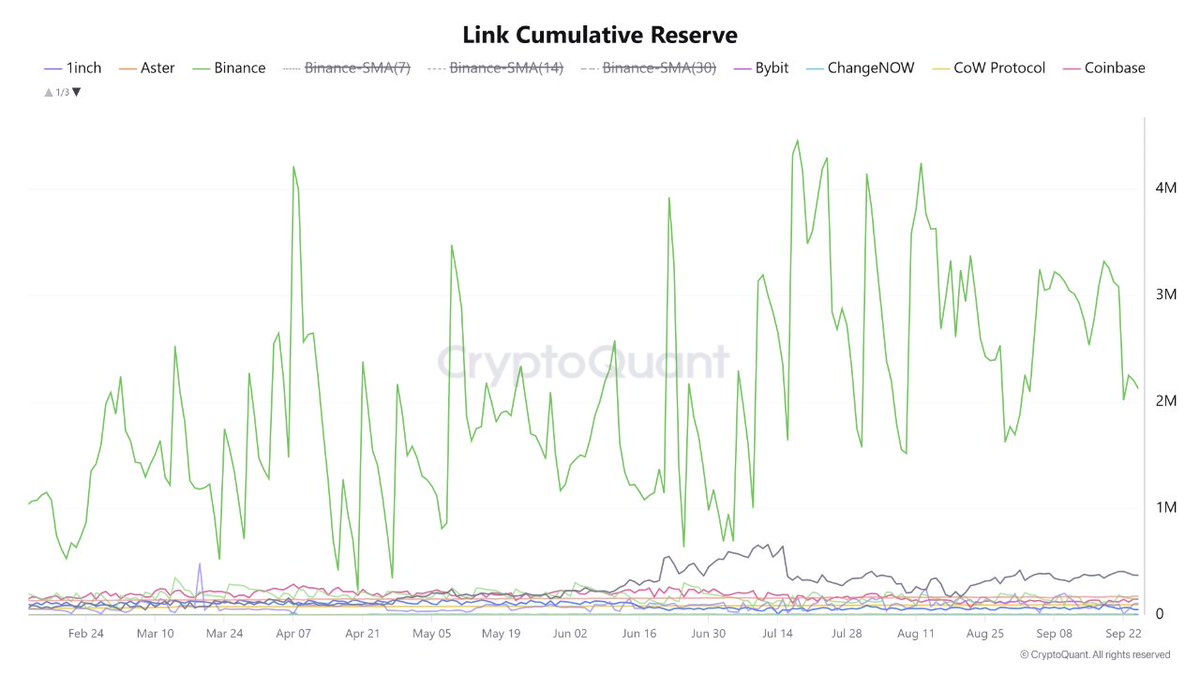
According to data from CryptoQuant, Binance is currently the largest holder of Chainlink (LINK) reserves, surpassing both centralized exchanges and decentralized protocols such as Uniswap. The massive amount of LINK stored in Binance’s wallets underscores its role not only as the leading platform in daily trading volume but also as the primary liquidity hub for LINK.
This concentration gives Binance significant influence over market liquidity, price stability, and user confidence when executing large trades. It also reinforces Binance’s strategic position within the LINK ecosystem, with the ability to shape price movements and overall market dynamics in both centralized and decentralized environments.
Mirae Asset Global Investments has signed an MOU with Ava Labs to jointly develop fund tokenization and build on-chain operation and settlement systems. Mirae Asset will leverage Avalanche’s blockchain infrastructure to tokenize fund products in the U.S., Hong Kong, and expand globally.
Ava Labs stands out with its fast processing speed, scalability, and real-world applications in finance, while Mirae Asset is a global asset management group operating in 16 countries, with 45% of its assets overseas.
Both parties aim to lead the real-world asset (RWA) tokenization trend and bring new investment experiences to clients while strengthening their global position.
AlphaTON Capital raises over $71M, acquires $30M in TON to build treasury reserves
AlphaTON Capital Corp (Nasdaq: ATON), a specialized digital asset treasury company focused on the Telegram ecosystem, announced the successful completion of its financing deals and the acquisition of its first $30 million tranche of TON, establishing itself as one of the largest global holders of the token.
The company closed a private placement of 6.32 million ordinary shares at $5.73 per share, raising approximately $36.2 million, and secured a $35 million loan facility from BitGo Prime. With these funds, AlphaTON Capital has strengthened its balance sheet while gaining the ability to participate in staking, network validation, and investments in TON-based applications.
CEO Brittany Kaiser stated: “This is a pivotal moment for AlphaTON as we position ourselves as a premier digital asset treasury company with substantial TON holdings, directly participating in the growth of the Telegram ecosystem.”
AlphaTON Capital aims to expand its TON treasury to $100 million by Q4 2025, with a strategy spanning reserve management, staking operations, and investments in Telegram mini apps — a platform with over 1 billion users.
Its strategic partners include BitGo, Animoca Brands, Kraken, SkyBridge Capital, DWF Labs, Cryptocom, P2P, and other leading firms.
👉 AlphaTON Capital is positioning itself as the “TON treasury” of the Telegram ecosystem, offering shareholders direct exposure to one of the most promising markets in blockchain.
https://t.co/jZnEdflvEC