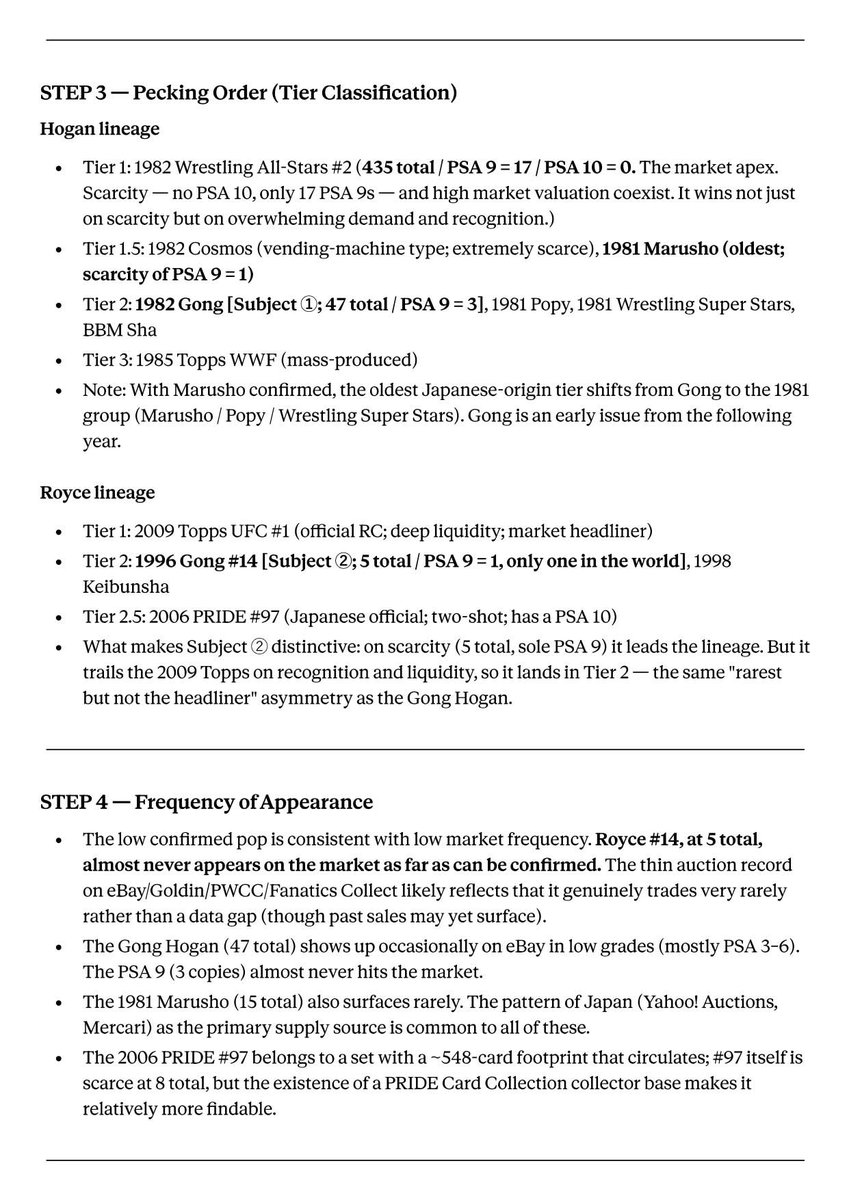
The rarest card is not necessarily the apex card in a player’s lineage.
A card can be historically important without being the market favorite.
At some point, this stopped feeling like card research and started feeling like history.
9-10 of 10
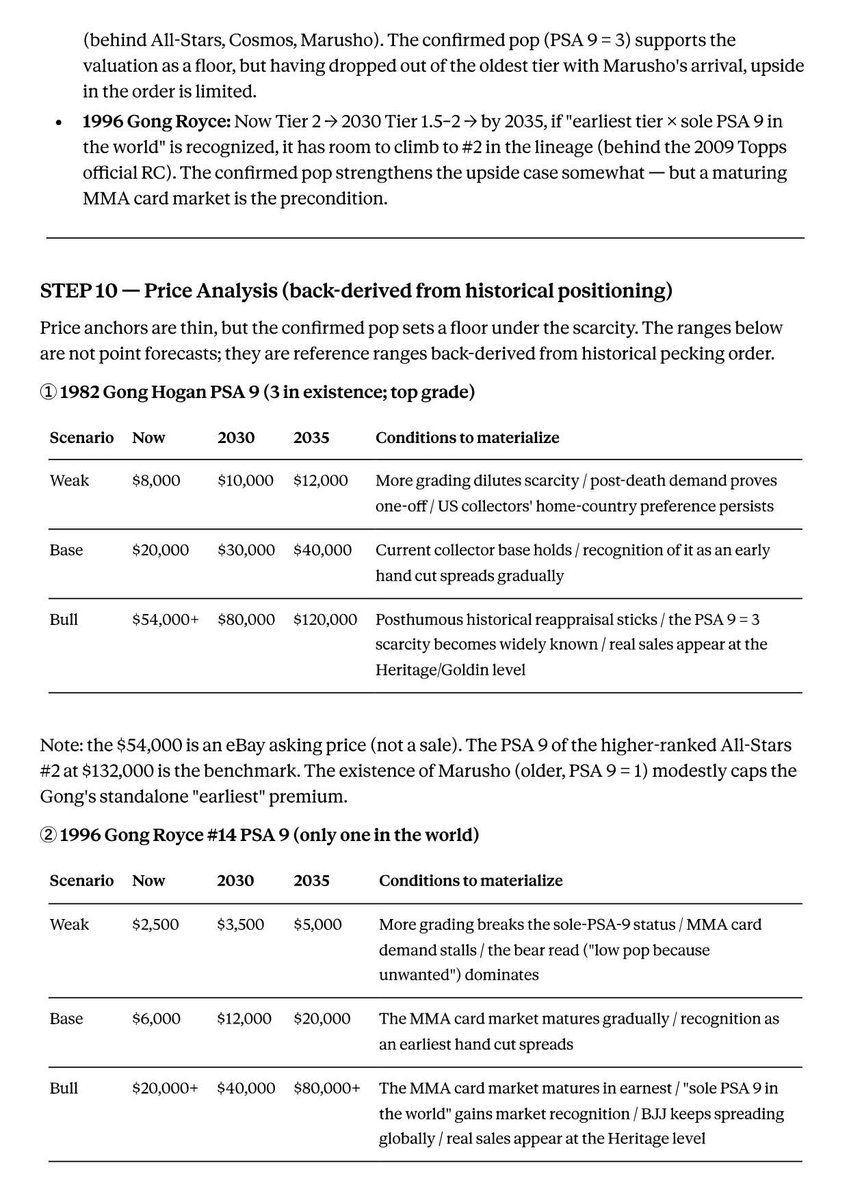
I used AI-assisted research to study two Japanese magazine-insert cards:
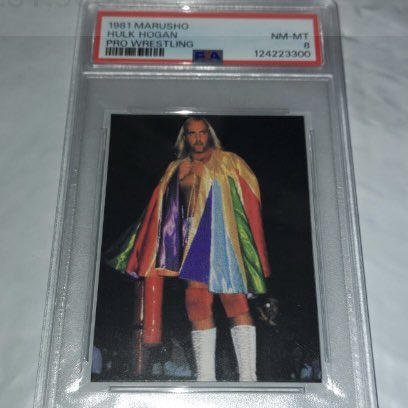
• 1982 GONG Hulk Hogan PSA 9
• 1996 GONG #14 Royce Gracie PSA 9
What started as card research quickly became a study of pro wrestling history, MMA history, and Japan’s hand-cut card culture.
1-4 of 10
One interesting finding:
Scarcity, historical importance, and market recognition are not the same thing.
1996 GONG #14 Royce Gracie has a PSA population of 5, with only one PSA 9. But that can mean either an undiscovered treasure or simply thin demand.
5-8 of 10
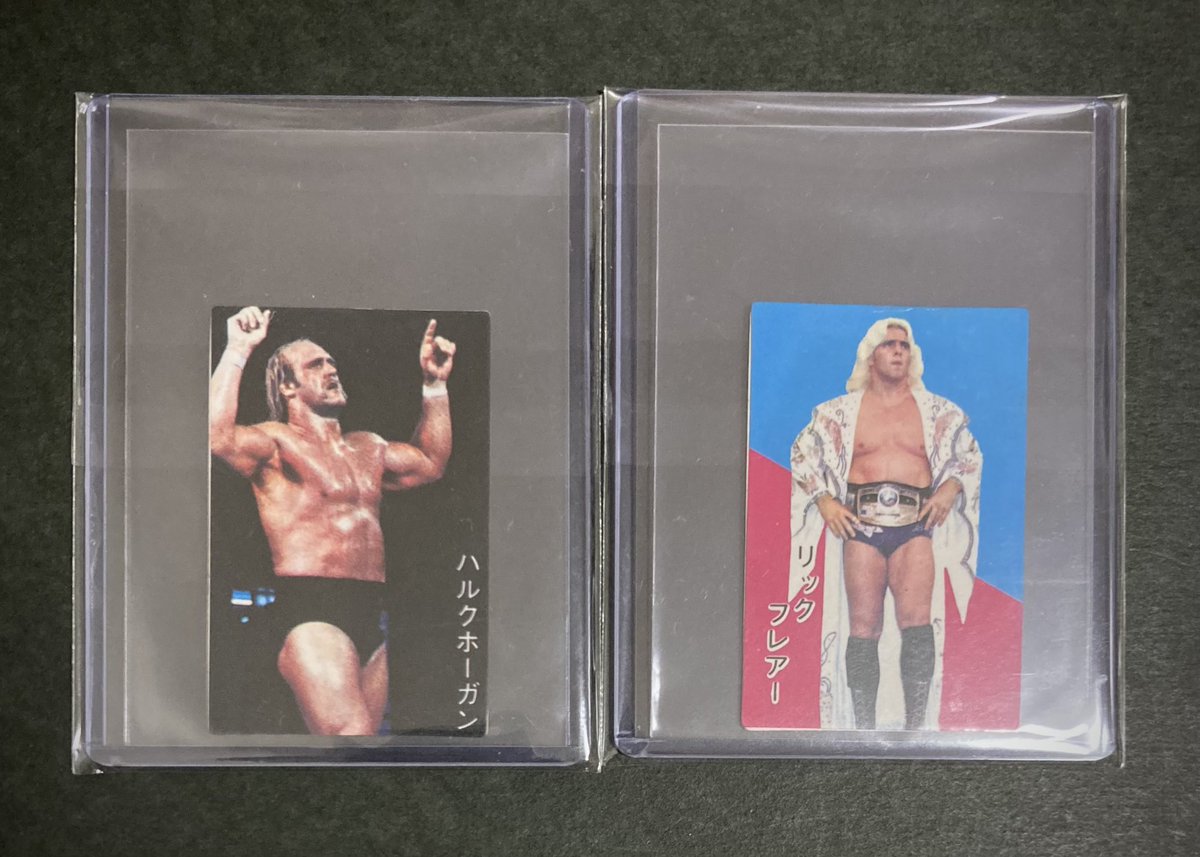
I have a question about 1982 Cosmos cards.
As far as I know, these cards are normally single-sided with a blank back, but I recently found a copy with another card attached to the back.
@RealRichHopkins Yeah, a creative kid making his own double-sided cards probably never imagined that these cards themselves would someday become so valuable.
@_IronHorse4 That makes sense to me as well.
If they were glued together after production, I could see PSA viewing them as altered rather than authentic factory-issued variations.
@RealRichHopkins Yeah, that’s what I’m thinking too.
I’m just not sure whether it was done by the manufacturer, modified for vending machine/display use, or simply something kids did back in the day.
@_IronHorse4 Yeah, that’s what makes it interesting.
The Hulk Hogan card has Tatsumi Fujinami attached to the back, and the Ric Flair card has Tiger Mask on the back.
It doesn’t look double-printed to me. It feels more like two separate cards may have been glued together at some point.
@RealRichHopkins The card size looks normal, but it feels slightly thicker.
The Hulk Hogan card has Tatsumi Fujinami on the back, and the Ric Flair card has Tiger Mask on the back. It feels like two cards may have been glued together.