This iconic photograph is still considered one of the most-terrifying space photographs to date. Astronaut Bruce McCandless II became the first human being to do a spacewalk without a safety tether linked to a spacecraft. In 1984, he floated completely untethered in space with nothing but his Manned Maneuvering Unit keeping him alive.
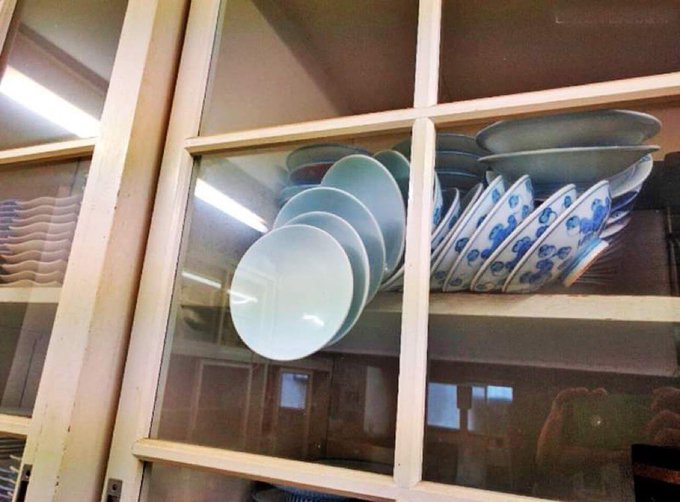
It’s been said before but deciding who to shout for in this one is like deciding if I want a kick to the crotch or a punch to the face. I’m leaning towards a punch to the face😀. Good luck to both. #ENGvRSA
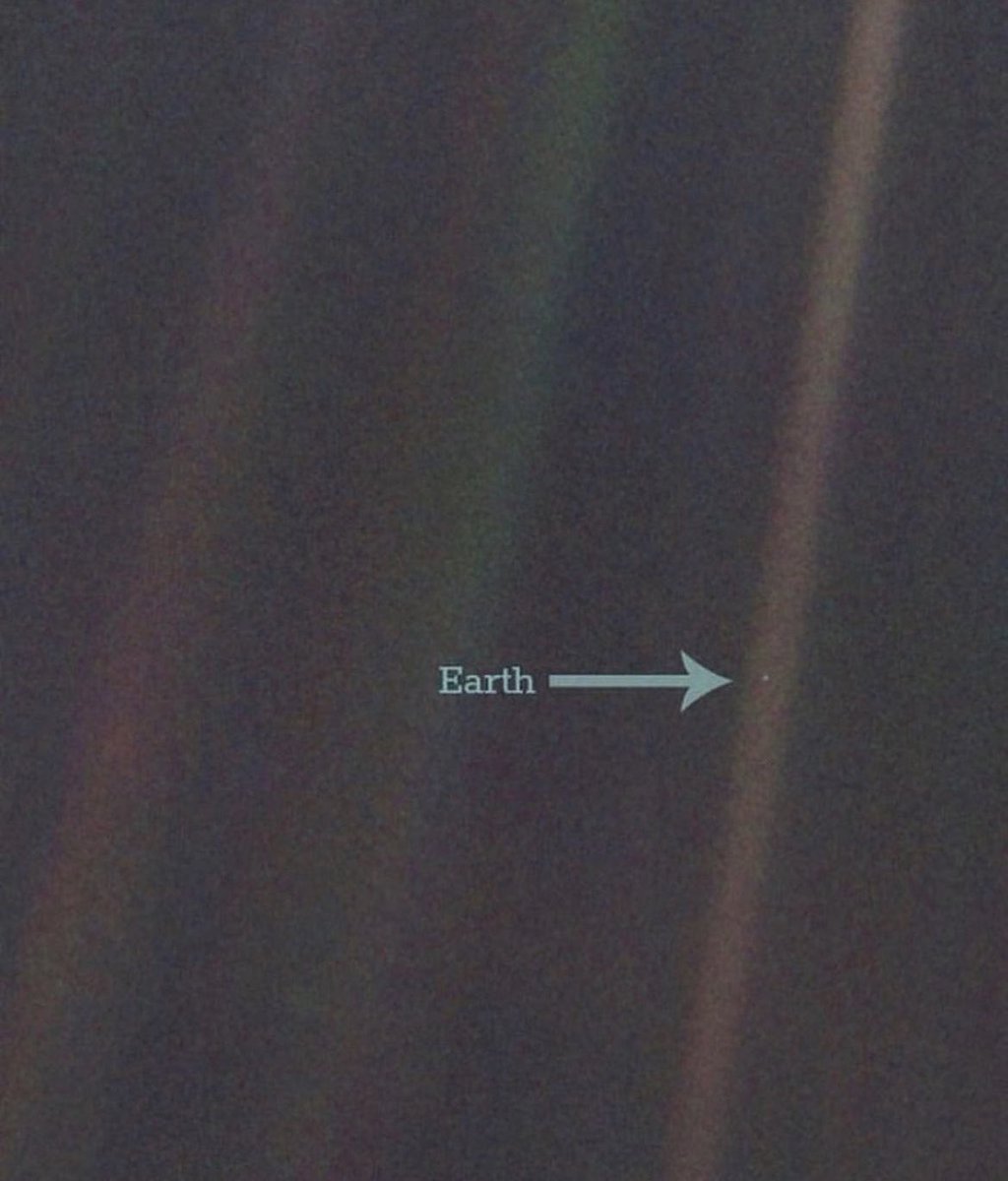
Pale Blue Dot is a photo of Earth that was taken by the Voyager 1 space probe in 1990 from a distance of about 6 billion kilometers (3.7 billion miles) as it was leaving our solar system. This is what Carl Sagan said about the photo:
"Look again at that dot. That's here. That's home. That's us. On it, everyone you love, everyone you know, everyone you ever heard of, every human being who ever was, lived out their lives. The aggregate of our joy and suffering, thousands of confident religions, ideologies, and economic doctrines, every hunter and forager, every hero and coward, every creator and destroyer of civilization, every king and peasant, every young couple in love, every mother and father, hopeful child, inventor, and explorer, every teacher of morals, every corrupt politician, every 'superstar,' every 'supreme leader,' every saint and sinner in the history of our species lived there — on a mote of dust suspended in a sunbeam.
The Earth is the only world known so far to harbor life. There is nowhere else, at least in the near future, to which our species could migrate. Visit, yes. Settle, not yet. Like it or not, for the moment the Earth is where we make our stand. It has been said that astronomy is a humbling and character-building experience. There is perhaps no better demonstration of the folly of human conceits than this distant image of our tiny world. To me, it underscores our responsibility to deal more kindly with one another, and to preserve and cherish the pale blue dot, the only home we've ever known.”
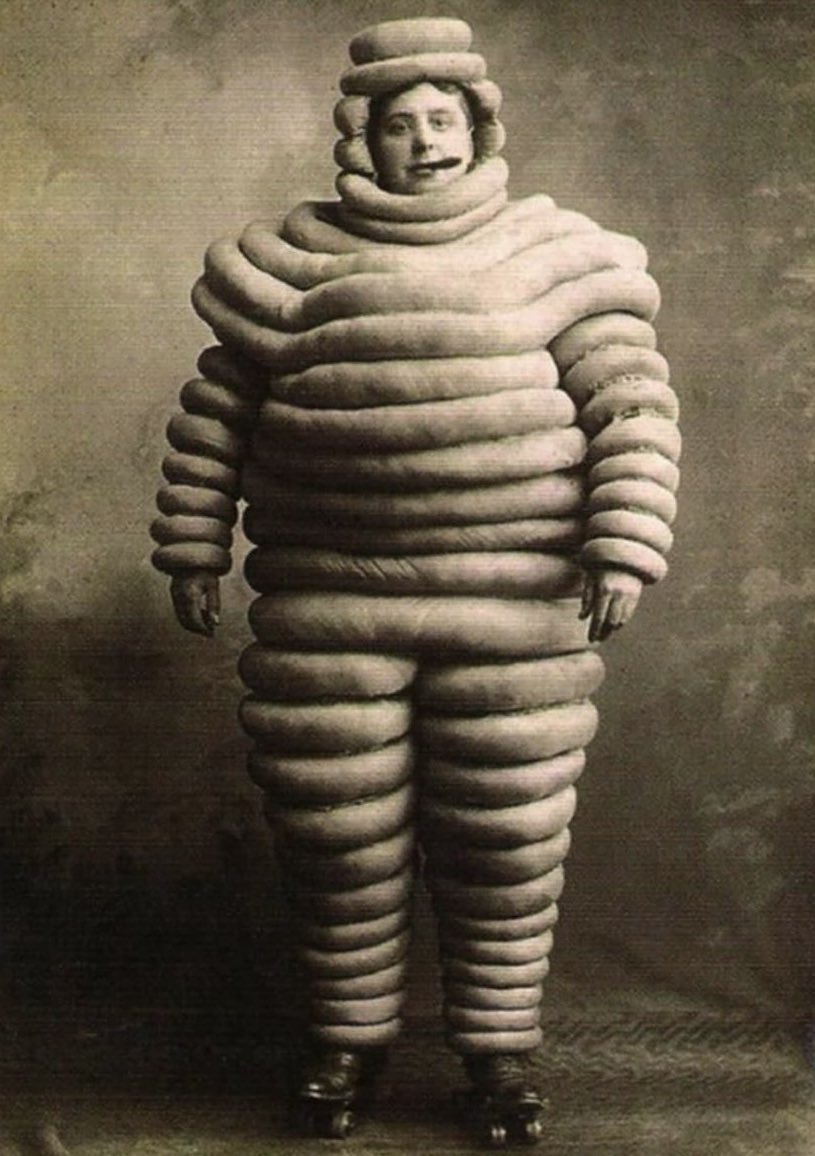
The original Michelin Man from 1894.
He was is white because rubber tires are naturally white. It was not until 1912 that carbon chemicals were mixed into the white tires, which turned them black. The change was structural, not aesthetic. By adding carbon, tires became more durable.
Michelin also began reviewing restaurants so that more people would travel further distances in their cars to eat at these restaurants. This, in turn, would wear down their tires faster and force them to buy more.
The star system that Michelin uses goes up to three and is broken down by whether or not it's worth driving to the restaurant:
One star: "A very good restaurant in its category" (Une très bonne table dans sa catégorie)
Two stars: "Excellent cooking, worth a detour" (Table excellente, mérite un détour)
Three stars: "Exceptional cuisine, worth a special journey" (Une des meilleures tables, vaut le voyage).