Researchers propose widespread banking of stool samples for autologous faecal microbiota transplant later in life - @harvardmed@BrighamWomens have proposed individuals bank samples of own gut microbiota when they are young for potential use later in life https://t.co/e5aL30Cttu
Researchers warn against over reliance on liquid biopsy for CRC recurrence: Researchers at City of Hope report limitations of Signatera used to detect the recurrence of CRC in pts who have had their disease surgically removed https://t.co/MF9obEqdU6
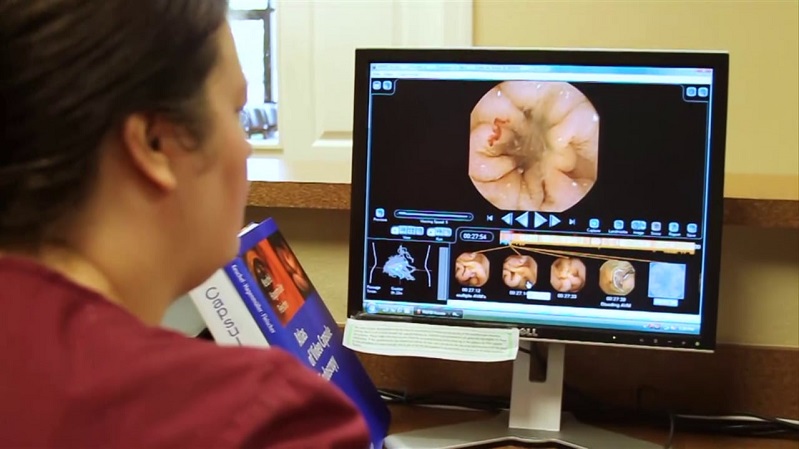
Computer-assisted colonoscopy identifies more precancerous polyps vs traditional colonoscopy - Colonoscopies performed with computer-aided detection saw an increase in the overall rate of detection of adenoma, or cancerous and precancerous polyps https://t.co/rTnlpuQlIv
Wireless device can provide new options for CRC treatment - @TAMS team are working to develop a low-cost, minimally invasive wireless device that offers precise, safe treatment options for cancers https://t.co/QjodfsOLba
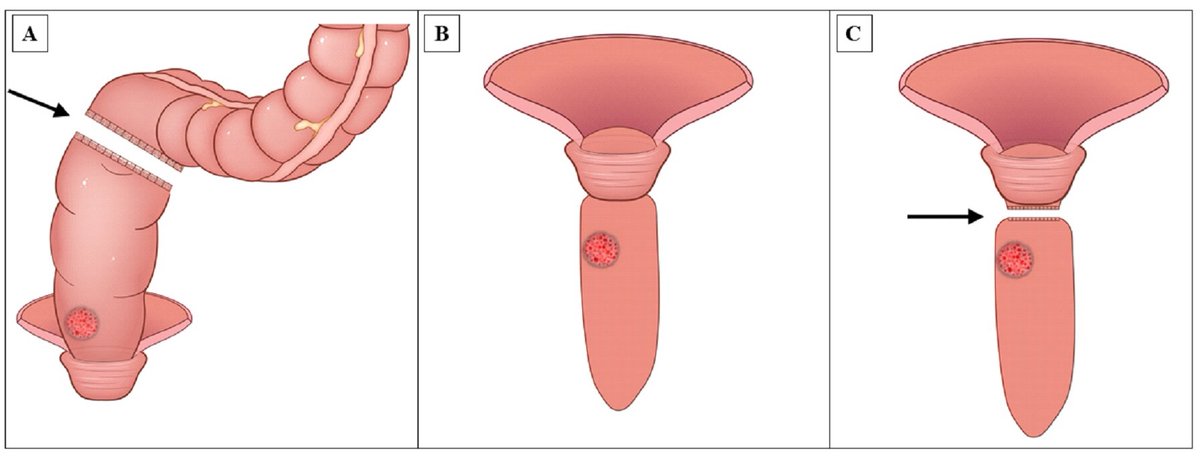
Outcomes of natural orifice specimen extraction surgery (NOSES) for CRC - By avoiding auxiliary abdominal incision for specimen extraction, NOSES including TVSE & TASE, is thought to be one of the least invasive options in the treatment of CRC https://t.co/Z7XWqrS2Hf
@AmerGastroAssn calls for national CRC screening approach: AGA releases a series of evidence-based position statements amounting to a call to action for a national CRC screening approach, enabling everyone to participate in CRC screening without barriers https://t.co/svgnR6DX2u
New classification system proposed for CRC to guide treatment & clinical trials - Scientists who used single cell techniques to uncover a central dichotomy for colorectal cancer cells, have proposed an update of the classification system for the disease https://t.co/JUHbTWfOvn
Model can predict anal cancer risk HIV patients: Researchers @UCSDMedSchool and @UCSDHealth describe a new mathematical model to help predict anal cancer risk in persons with HIV infection and aid clinicians and patients in making screening decisions.
https://t.co/OvT32qEUMb
A Japanese research @OkayamaUni have developed a new large-scale synthesis method for widespread and stable supply of 4-(ethyl(3-isobutoxy-4-isopropylphenyl)amino)benzoic acid or NEt-3IB, a promising drug candidate for IBD https://t.co/otiZpARyjc
Researchers warn against overreliance on liquid biopsy for CRC recurrence: @cityofhope researchers report limitations of Signatera - used to detect the recurrence of colorectal cancer in patients who have had their disease surgically removed https://t.co/CtbYqaxvdB
ONE WEEK TO GO! Remember to book your place for the ESCP Safe-Anastomosis study webinar next Wednesday at 3pm GMT. The @EagleEscp team will share exclusive data and finding from the first year and give an update on the East of DAMASCUS study.
Register: https://t.co/dE8iXGVLUy
Culturally tailored patient programme may increase CRC screening among Hispanic population: @RWMC_Cancer team reports culturally tailored patient navigation programme can improve the rate of CRC screening among Hispanic adults https://t.co/rYrDMZ9vyi
CRCs raise defensive barrier in response to chemotherapy: CRC drugs that cause tumour cells to oversecrete proteins known as mucins, these proteins alter the mucous layer forming a physical barrier that prevents drugs from reaching their target https://t.co/qSLfAN7Yva
3D cellular structures could repair intestine tissue damaged colitis: @TMDUniversity detail protocol for transplanting 3D cellular structures that can regenerate the intestinal tissue that gets damaged in colitis https://t.co/o9PgUZFYGN
Spatial transcriptomics for colonic gene mapping provides IBD insights: @karolinskainst create map showing where in the tissue individual genes are expressed by using spatial transcriptomics https://t.co/g4zKmDpx0f
Potential new diagnostic marker may help diagnose ulcerative colitis: Potential new diagnostic marker for UC in a trans-ethnic analysis of Japanese & white patients could lead to the development of non-invasive, diagnostic blood test https://t.co/pN2e1rBUD3
Promising targetable pathway for CRC prevention and treatment: @muschollings study sheds light on better ways to prevent & treat CRC after discovering connection between a series of pathways, actions among molecules that lead to a change in CRC cells https://t.co/b90Bx24pys
CRC screening programme can erase disparities in outcomes: Colorectal cancer disparities between Black & white adults were eliminated after the health care organisation instituted a regionwide, structured CRC screening programme https://t.co/S743HYrtuD