@Daoxue_Academy Just putting out another idea in case it's useful, maybe a feature where hovering/tapping a word in language A highlights its translation in language B, a bit like like Reverso Context (I'm not sure if these are accurate)
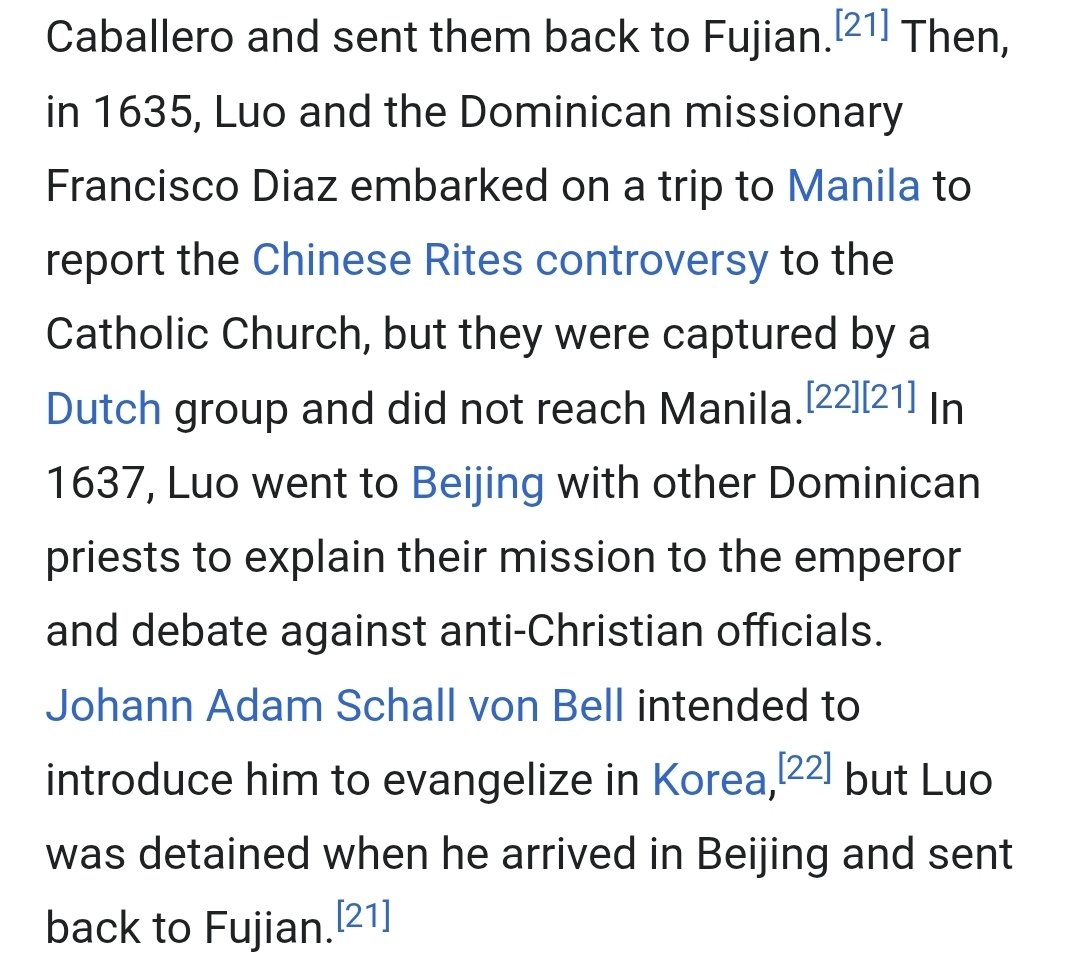
@ted_huang That is interesting! His wiki says he met both Francisco Diaz (author kf a Mandarin vocabulary) and Adam Schall von Bell, both from this thread https://t.co/QkBSUTFkx5
@egasmb@ColossalMemer I tend to agree. In late 16th century Western missionaries began to document Hokkien (eg, Juan Cobo 1542-1596). Later efforts seemed to focus on Mandarin of the court 南京官話, for example “Vocabulario de letra China” (1640-1643) by Francisco Diaz (1606-1646)
@ted_huang This is just a preview & I actually haven't read all of it but I found it interesting because of the multiplicity of views by the government, priests, and common people. Plus, it leans a lot on documentary sources, filling some gaps in the traditional narrative
@ted_huang Possible context: Ancestors, Virgins, & Friars by Eugenio Menegon (2009), showing how Christian communities spread in Ming/Qing Fuan 福安 amidst arrests and public ridicule, with essays on literati, female members, interaction with local religions, etc. https://t.co/ywyyzM3M9z
@AntarcticSecret@edwardW2@HistorianZhang Are you really chinesemaxxing if you, as a dominican friar evading ming authorities, dont whip out the x ç and 7 diacritics cobbled from 4 different european languages
A forgotten and neglected history:
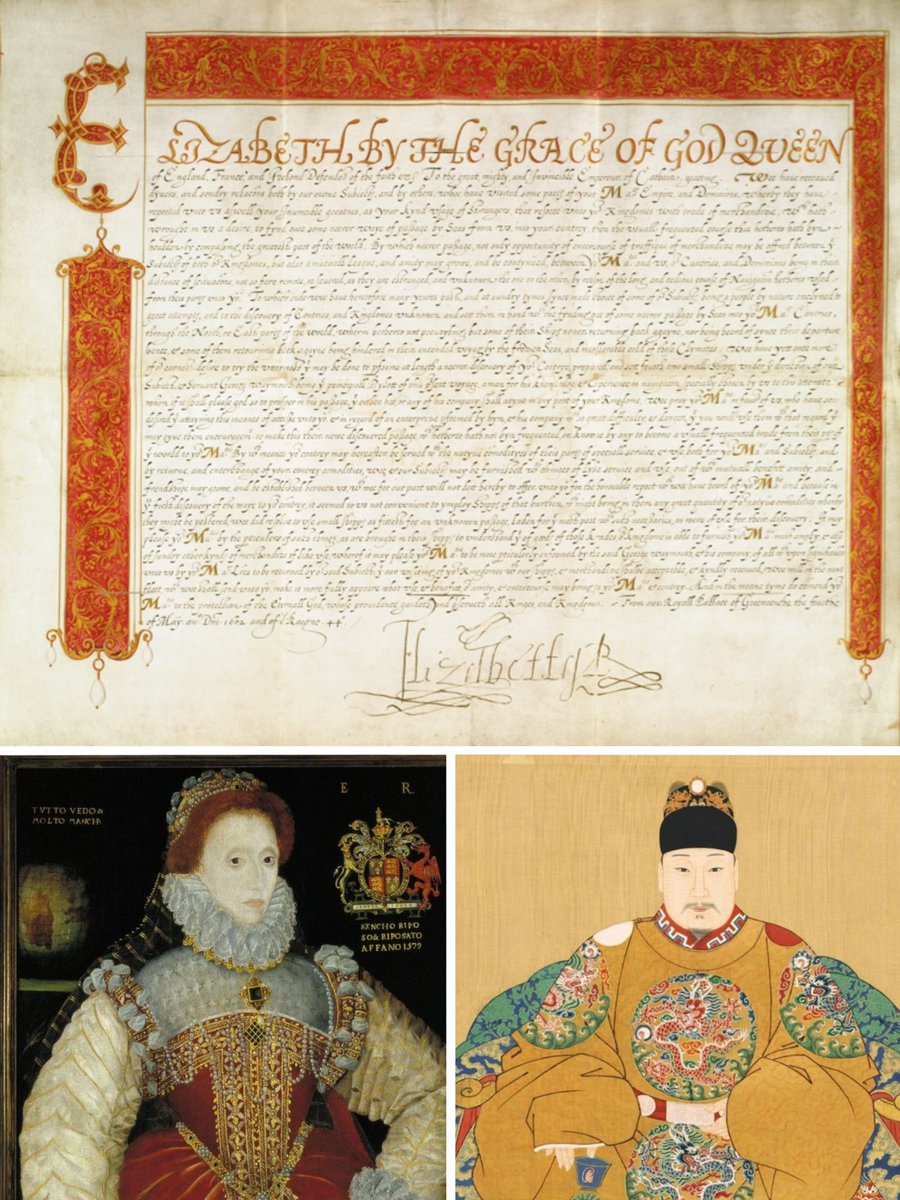
Queen Elizabeth I sent letter to the Wanli Emperor of China in 1602, seeking trade with China, but these attempts failed as the envoys perished at sea, never reaching the Emperor.
The letter was discovered centuries later from a shipwreck and eventually presented to China by Queen Elizabeth II in 1986.
The original text of the letter is shown below, in modern English form:
Elizabeth, by the grace of God, Queen of England, France and Ireland, Defender of the Faith to the great, mighty and invincible Emperor of Cathay, greetings.
We have received divers and sundry reports both by our own subjects and others, who have visited some parts of Your Majesty’s empire. They have told us of your greatness and your kind usage of strangers, who come to your kingdom with merchandise to trade.
This has encouraged us to find a shorter route by sea from us to your country than the usual course that involves encompassing the greatest part of the world.
This nearer passage may provide opportunity for trade between the subjects of both our countries and also amity may grow between us, due to the navigation of a closer route. With this in mind, we have many times in the past encouraged some of our pioneering subjects to find this nearer passage through the north. Some of their ships didn’t return again and nothing was ever heard of them, presumably because of frozen seas and intolerable cold.
However, we wish to try again and have prepared and set forth two small ships under the direction of our subject, George Waymouth, employed as principal pilot for his knowledge and experience in navigation.
We hope your Majesty will look kindly on them and give them encouragement to make this new discovered passage, which hitherto has not been frequented or known as a usual trade route.
By this means our countries can exchange commodities for our mutual benefit and as a result, friendship may grow.
We decided for this first passage not to burden your Majesty with great quantities of commodities as the ships were venturing on a previously unknown route and would need such necessities as required for their discovery.
It may please your Majesty to observe, on the ships, samples available from our country of many diverse materials which we can supply most amply and may it please your Majesty to enquire of the said George Waymouth what may be supplied by the next fleet.
In the meantime, we commend Your Majesty to the protection of the Eternal God, who providence guides and follows all kings and kingdoms. From our Royal Palace of Greenwich, the fourth of May anno Domini 1602 and of our reign 44.
Elizabeth R
@NoCaparison@sodalitatum@Rationalbot Oh, I see. I assumed it was from a digital library from the Biblioteca Marziana di Venezia or similar. It would be cool to find the rest in case there were unpublished ones https://t.co/oJ8HJ7hKaZ
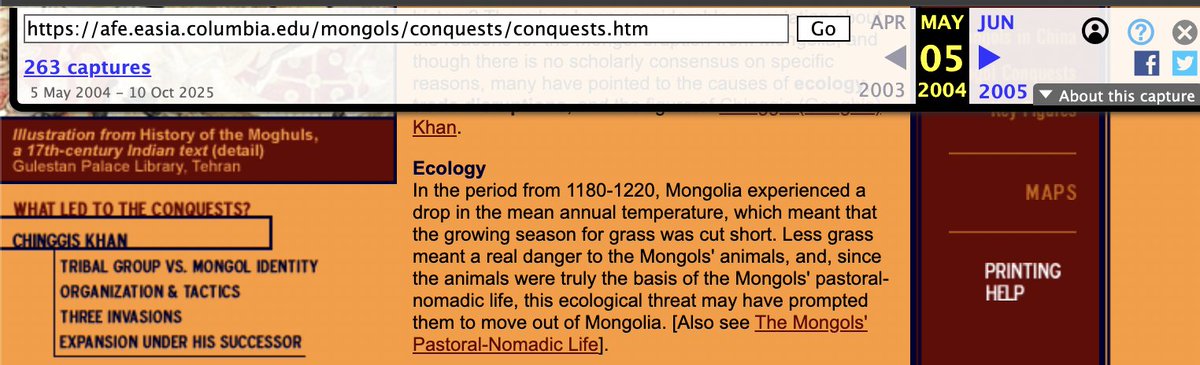
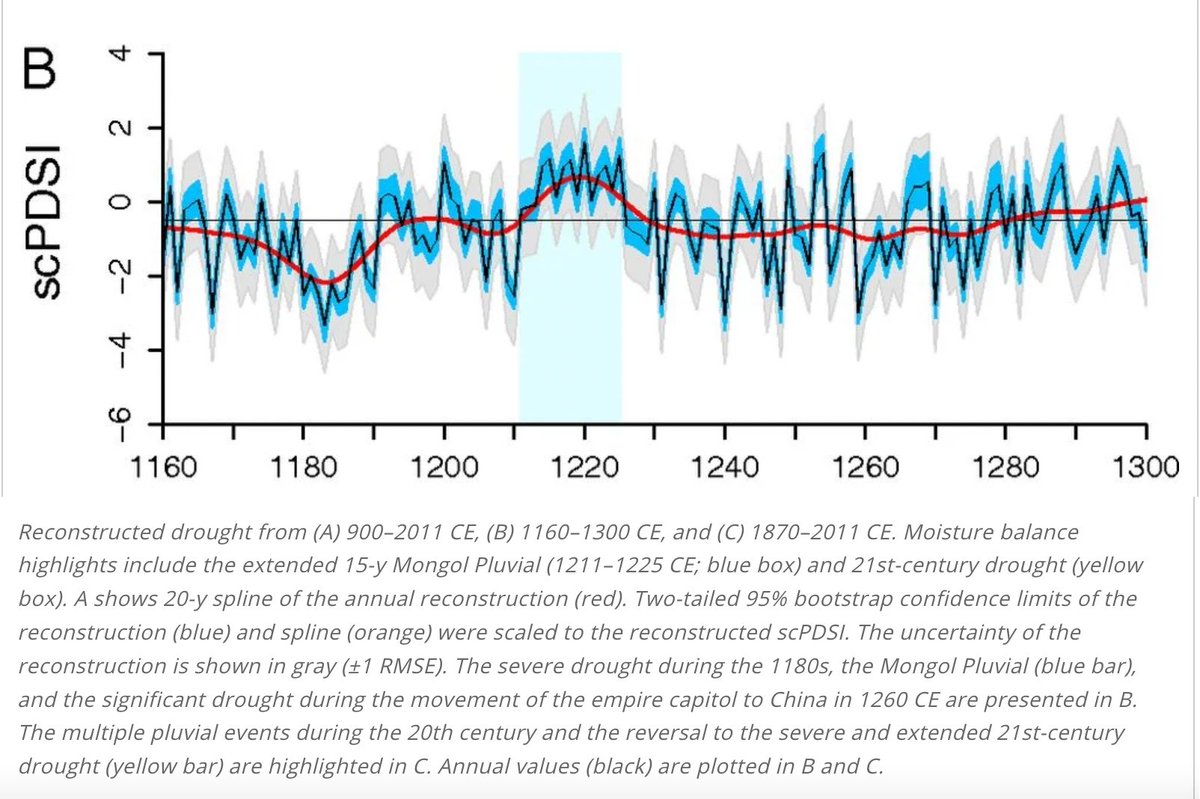
Funnily, Source 1 is from ~2004, while Source 2 is from 2014 & the article it's based on explicitly says the weather got better "in opposition to conventional wisdom" (e.g. Source 1), because there is a more fine-grained weather record in the tree rings. Classic thesis-antithesis
The Mongol invasions were caused by climate change, according to two articles on Columbia University’s website. Only one problem: First article says the invasions happened because the climate was so bad, and the second because the climate was so good.
@uncle_deluge Diplomatic transcription. They might be going semidiplomatic, which needs less technical introduction but is generally not reversible to the manuscript text