El comité de empresa de Ubisoft Barcelona anuncia paros para protestar por el ERE injustificado y defender sus puestos de trabajo.
Frente a la codicia de la patronal, organización sindical.
¡La movilización es nuestra única garantía! 🔥
#ubisoft#ere#gamedev
La mateixa policia que va militaritzar un barri sencer per protegir cinquanta nazis i carregar contra els centenars d’antifeixistes que van plantar cara, no contents amb això, avui al matí han anat a detenir a una persona a casa seva. Tota la solidaritat!
‼️ TV3 i Catalunya Ràdio, en vaga @comitedetv3
Les treballadores reclamen el reconeixement i pagament de les hores extres, la cobertura de les baixes de llarga durada, prestigi per a la marca TV3 i la fi de les places de lliure designació creades a dit.
I ara que toca?Doncs les lipotímies. Aquesta tarda pacients amb lipotímies a alguns caps de Bcn ciutat.
La seguretat del pacient sobretot oi @salutcat#OlgaPané?
Un tio que porta 40 anys mamant diners públics i que treballa amb l'aire acondicionat a 20 graus ens diu a la resta que si carda calor anem al Corte Inglés però que l'Ajuntament no pensa fer res per evitar que la gent mori de calor a casa seva. Aquesta gent són l'enemic
Alerta! 🤬
El Menjador Solidari Gregal, del Besòs i el Maresme, denuncia reiterats atacs de grupuscles feixistes que han culminat amb l’incendi d’una de les seves furgonetes.
Tot el nostre suport contra aquestes agressions!
Hola, esta es nuestra última oportunidad.
Este video dura dos minutos.
Y que te pares a verlo puede ser lo que marque la diferencia entre que encontremos un hogar o no.
Y no necesariamente porque tu nos adoptes. Es porque si tu ves el vídeo, el algoritmo detecta que es interesante y lo enseña a más gente.
Y si interactúas compartiendo, escribiendo un comentario o dando a like multiplicas nuestras oportunidades 💔
Gracias
Les escoles sense climatització però amb la Laia Bonet dient que li han donat màxima urgència. Els allotjaments d'urgència aturats, sense servei de traducció, sense places residencials urgents per a gent gran...
#Fuckpsc#Fuckpsc#Fuckpsc
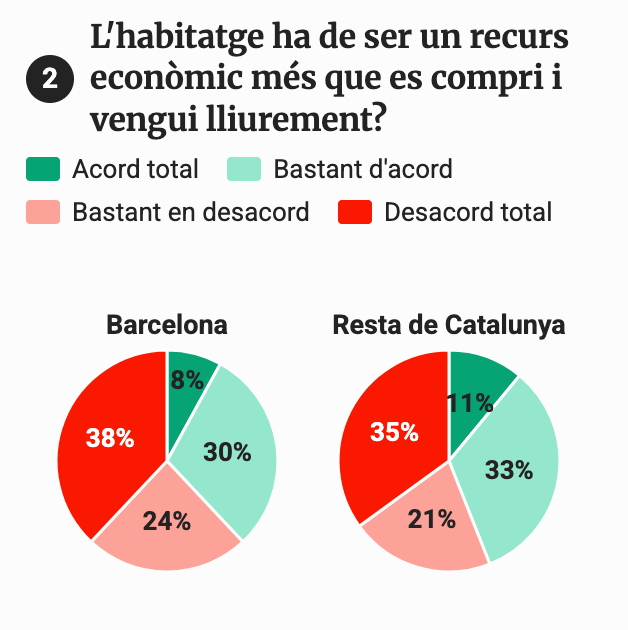
El 62% dels Barcelonins no volen que l'habitatge sigui un recurs econòmic més que es compri i vengui lliurement.
Font: Enquesta sobre actituds i preferències envers l’habitatge a Catalunya 2025, del Centre d’Estudis d’Opinió.
(la imatge forma part d'un gràfic més complet que trobareu a l'article)
☀Escola d'Estiu Joan Liébana
Del 26 al 28 de juny el @sindicatlloguer i la @cgtcatalunya organitzem aquest espai formatiu a la Nau Bostik de Barcelona
🏴 Inscripcions i més info a l'enllaç
https://t.co/pJ5oDaJRqP
Les biblios en lluita i vaga indefinida!!
Què està passant a les Biblioteques de Barcelona?
Aquest dissabte, 20 de juny, 12h, a l’hort-jardí comunitari Date una Huerta de la Prospe (Joaquim Valls, 79) trobada amb treballadores de biblios per a parlar de la lluita a biblioteques!
No permetre cantar 'Els segadors' a Barcelona només passava en moments anteriors a la democràcia.
El PSC-PSOE es vanta de no permetre cantar l'himne i fent ús de les forces policials, un cop més, per imposar una suposada pau social.
Sense la independència no tenim llibertat
In 2016, I received an email from an aspiring manga artist in Morocco.
It began like this:
“I want to become a mangaka, but there is no manga publishing industry in Morocco.”
Many people around the world love manga and read it, but when you look globally, there are many countries where manga is simply not published at all.
In some places, there is not even a publishing system(including publishing, translation, and distribution) in place.
Even where books exist, the infrastructure for printing, distribution, and bookstores is often lacking, making it very difficult for a true industry to develop.
Telling manga fans in those countries, “Your country has a relatively high GDP per capita, so you should buy manga,” is meaningless if there is no actual way for them to buy it.
That is something I find deeply painful.
Why is it that the manga industry has not been able to properly serve those regions?
Even in countries where publishing exists, manga books are often too expensive.
The price of a single tankōbon book is $ 15 to $ 20, which is high even in the United States, especially when today’s digital entertainment offers so many alternatives at much lower prices.
So, this is why I believe the future of manga is clearly not limited to print publishing, but must include digital services—manga that can be enjoyed in a reasonably accessible and affordable way.
If such systems are established globally, I believe the manga industry could grow dramatically.
In North America alone, a tenfold expansion would not be unrealistic.
Even countries without any publishing tradition could develop sustainable manga industries.
Once official digital services exist in each country, they can generate tax revenue, and governments can more seriously address piracy.
At that point, creators and aspiring manga artists can also demand proper enforcement and protection.
Most importantly, it would create opportunities for local aspiring manga artists.
And those opportunities would, in turn, strengthen the global industry as a whole.
When a country’s manga ecosystem develops properly, it becomes a cultural export industry.
From a government perspective, piracy then becomes something that can and should be actively addressed.
The first people to pay for legitimate manga services will, in many cases, be the very readers who once relied on piracy. They are not enemies of the industry—they are its earliest supporters in waiting.
Pirated manga readers are not our opponents.
They are our future audience.
They are proof that demand already exists.
In late 1990s Korea, manga piracy was widespread, and attitudes were often very hostile toward paid content.
Many believed that paying for manga was unnecessary, or even that the industry itself should not exist.
At the time, Steve and I did not fully understand this.
We were wrong in many ways.
But later, when proper legal services were introduced in Korea, readers were more than willing to support them. They paid for content gladly, and the Korean webtoon industry grew stronger, eventually becoming a major source of IP for film and television.
We learned, through experience, that the joy of not paying cannot compare to the deeper satisfaction of supporting and sustaining the culture you love.
Piracy users were never the enemy.
They were simply manga fans.
And all manga fans, in the end, are on the same side.
Through our mistakes, Steve and I came to understand this more clearly.
What needs to be done is simple: build proper digital manga services.
Ensure fair pricing.
And most importantly, help each country develop its own manga ecosystem.
Because only then can a truly global manga industry exist.
And only then can the works we create truly reach the world.
To be continued...