This civil engineer spotted something strange about a new pudding cup promotion and bought 12,150 pudding cups. In return he got 1.25 MILLION airline miles.
He only spent $3,140 on the cups of chocolate.
David Phillips was a civil engineer at UC Davis in 1999.
One day when he was buying groceries, he spotted a Healthy Choice promotion on the shelf.
If you buy 10 products, and mail in the barcodes for each of them, you can get 1,000 airline miles.
And if you mailed them all before the first of June, the rate doubled and it was only 5 barcodes needed.
Then he went around the store checking the math for each of the items.
If you bought $2 frozen meals, the deal was decent.
Other items were similar.
But then he stumbled across the pudding cups.
They were only $0.25 each and each cup had their own barcode.
There was no other specification to the promotion, only that they needed product barcodes.
He went home later that day and spent his time buiding a spreadsheet for each item.
The pudding cup deal was insane.
He then drove to the bank to get some cash and told his wife they needed to buy as much pudding as they possibly could.
He and his wife drove to ten stores across Sacramento Valley, completely emptying them of pudding cups.
He ended up with 12,150 cups, all for $3,140.
The only issue was the tedious work it would be to cut out each and every barcode.
Him and his wife realized they couldn't do it alone before June 1st.
They drove to the local Salvation Army and made a deal.
If they cut the barcodes, they could keep the cups.
It was a no brainer so they agreed.
He then mailed every barcode and waited patiently.
Then all of a sudden he started receiving certificates through the mail from Healthy Choice.
Each one of these certificates were worth 500 miles.
He received 2,506 of these in total.
1,253,000 airlines miles for only a little over $3,000.
That was enough for 31 round trip flights to Europe.
Healthy Choice never even tried to fight it.
They accepted their loss and went on with the business.
The promotion said any product and the pudding was a product.
If they tried to sue, it was an easy case for Phillips.
Being the smart man he was, he even got a $815 tax deduction for donating the pudding cups.
He also received lifetime Gold status by American Airlines for crossing one million miles with them.
His story became so famous that Adam Sandler played a character off him in the 2002 film Punch-Drunk Love.
He ended up using the miles to take his family to over 43 countries across the entire world.
This reddit user found a glitch in Robinhood's trading app that let him turn $4,000 into over $1 MILLION.
The glitch gave him unlimited borrowing power, and Robinhood was completely unaware it existed.
The reddit user was ControlTheNarrative.
He was a regular user on WallStreetBets, one of reddit's most known stock trading forums.
He discovered that with Robinhood Gold, users were able to trade with margin and use $2,000 to get $4,000 of buying power.
Bonuses or special offers like this were very typical of trading platforms like this.
Then he noticed something very odd.
If he sold off a covered call using borrowed margin, Robinhood would count the earnings as his own cash instead of the actual borrowed funds.
Because of this, he could actually borrow against them over and over again.
Each and everytime the money would double.
In 2019, he posted a video on Halloween showing off the method.
WallStreetBets were calling it an infinite money glitch, and it spread everywhere within a few hours.
He later turned a $4,000 deposit into an over $1 MILLION stock position.
He posted the screenshot and it also went viral.
There were other reports of people going up to $50,000, $100,000, and other numbers around that.
Some people used the method recklessly.
Like this one user that bought $50,000 in Apple options that expired worthless.
He ended up owing Robinhood $48,000 he didn't have.
Robinhood told CNBC they were aware of the issue.
A few days later they patched the glitch.
There were so many people doing this and Robinhood was only out a few million, so they took the hit.
It was really nothing to a company of this size.
They ended up never filing any criminal charges.
They took full responsibility for the glitch.
This judge sued a dry cleaner for $54 MILLION because they lost his pants.
The dry cleaner offered him a $12,000 settlement that he fully declined.
He lost the case, his job as a judge, and was suspended from practicing law.
This man was Roy Pearson, an administrative law judge in the DC area.
He spent his time deciding if other people's lawsuits truly were worth it.
In May of 2005, he had dropped off a pair of grey trousers at Custom Cleaners.
Custom Cleaners was a small dry cleaning shop that was owned and operated by Korean immigrants Jin and Soo Chung.
After some time had passed Pearson came back to collect his trousers.
The cleaners said they were missing.
The Chungs said they found a pair they thought was his, but he said they most definitely were not.
He got angry rightfully so.
He had requested the cleaners give him $1,000 so he could go out and quickly buy a replacement suit.
The Chungs refused his request.
Pearson then went and filed a lawsuit, asking for $67 MILLION, that he then reduced to $54 MILLION.
This was all to be more "reasonable".
The legal argument he built was around two signs on the front window of the cleaners.
The signs read "satisfaction guaranteed" and "same day service".
Pearson had argued that the signs gave an unconditional unlimited promise, and any customer not satisfied could demand any amount of compensation.
He got the $54 MILLION number from the following ways.
He was asking $500,000 from attorney fees he would normally spend, but in this case he was actually representing himself.
He was asking $2 MILLION for personal inconvenience and the mental stress it had caused him.
He got a $90,000 estimate that it would take to rent a car and drive ten years to a different dry cleaner.
Then also also had requested an additional $51 MILLION in additional damage on the behalf of every DC person he claimed was at risk of the same thing.
When on the witness stand Pearson actually broke down into tears.
He was so emotional while testifying he even had to take a break.
The Chungs made three offers all of which Pearson had rejected.
The first was $3,000, then $4,600, then finally $12,000.
Because of all of the legal fees, the Chungs had to close 2/3 of their dry cleaning shops.
This was causing them a lot more issues than Pearson in their personal lives.
Pearson could afford it, the Chungs could not.
Judge Judith Bartnoff ruled in favor of the Chungs,
She even ordered Pearson to pay their court cost.
She ruled that the signs didn't mean they had to satisfy a customers unreasonable demands.
Pearson appealed and it got rejected.
He tried this multiple times and the same thing happened each and every time.
In 2007 he even lost his judgeship, but this was because he sued for wrongful termination, another case in which he had lost.
In 2020 the Court of Appeals in DC suspended him from practicing law.
They said his damages were shocking and his litigation methods crossed boundaries and were abusive.
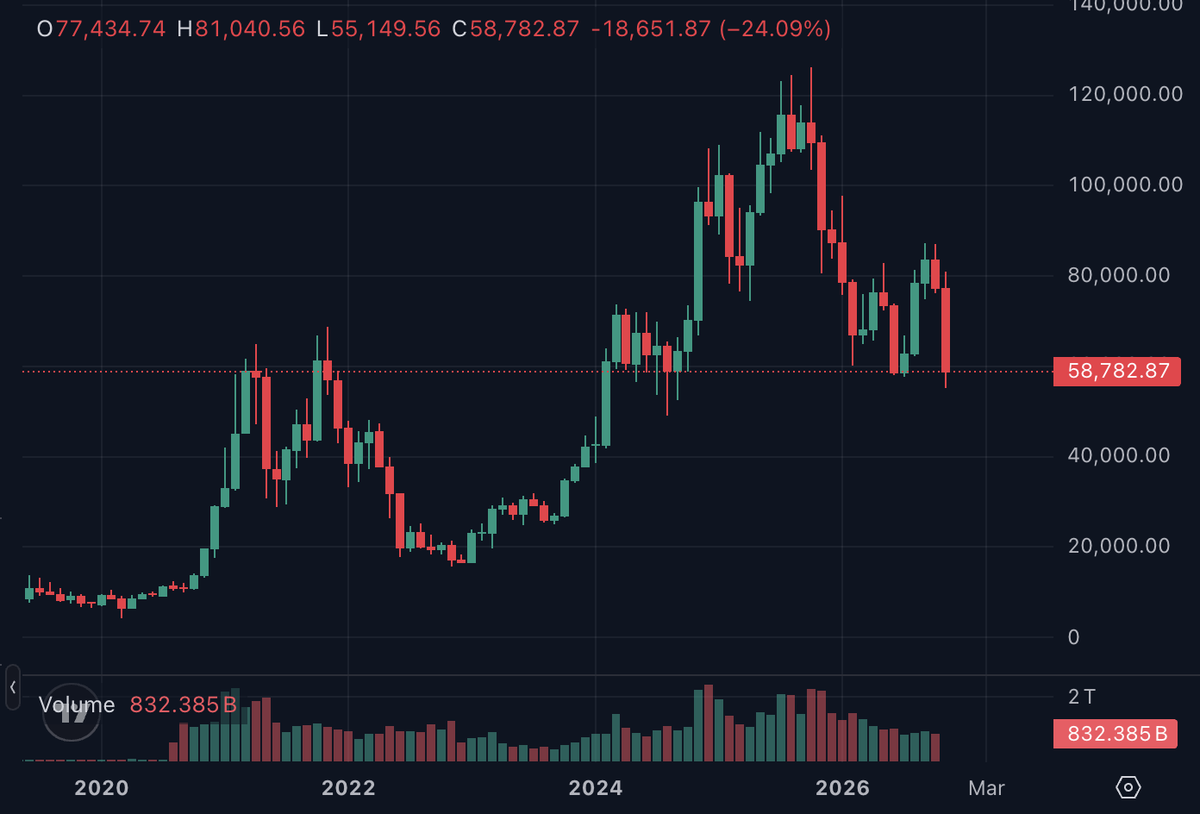
In March of 2020 Bitcoin's price crashed by over 40%.
It proceeded to go up 1000% the following years.
This month alone it's down almost 25%.
Now may be a really good time to start your DCA.
Last night an electric car in China was caught parking itself repeatedly overnight.
OVER 868 TIMES.
All while the owner was in his appartment getting some good quality sleep.
At around 3:00 AM, the apartment security guard observed the wild incident.
This had taken place in a parking garage in the Anhui Province in China.
The security guard initially saw a car moving back and forth, attempting to park.
He thought this guy must be a bad driver.
Then he saw there was NO DRIVER.
The car was completely empty.
The morning after, the owner was made aware of the odd event.
He checked the vehicles logs and the car parked itself a whopping 868 times.
They still haven't determined the reason for this glitch.
It could just be a software glitch.
Over even stranger someone remotely activating the vehicle's feature.
This woman thought she won $8 MILLION in a casino slot machine, the casino then claimed it was broken and ended up only paying her $80.
She initially put in $100, that's a $20 loss.
Veronica Castillo was a loan officer in Beaverton, Oregon.
In November of 2015 she decided to take a trip with her mom to the Lucky Eagle Casino in Rochester, Washington.
She decided to put in $100 into a slot machine named Jurassic Riches.
On her first pull the screen lit up showing a jackpot worth multiple millions.
This was not intended to be possible at this casino.
As soon as she saw it she got extremely happy as anyone would.
But then all of a sudden the casino staff came over and shut the machine down.
They also took it off the floor completely.
The casino printed her a ticket for $80, which was the actual amount the casino said she would've gotten.
A rep from the casino said the machine's max payout was nowhere near that, saying it was supposed to only be between $6,000 and $20,000.
This was vastly different than what Castillo saw.
The issue was every machine also had a disclaimer.
It read all malfunction voids all pays and plays.
As any normal person would think, Castillo called it cheating and maybe even fraud.
She wondered if this also happened to anyone else.
Castillo hired a lawyer and tried to sue the casino for the full $8 million.
Unfortunately the case never succeeded.
The disclaimer always wins.
This 58 year old thought he won £71,000 from the EuroMillions lottery, turns out he won £71 MILLION.
He said the money would definitely change him.
Ade Goodchild was a 58 year old factory worker that lived in Hereford, England.
In March of 2019 he bought a EuroMillions ticket at a local convenience store.
The winning numbers were 3-15-24-42-26 with the lucky stars being 9 and 12.
When he finally checked his ticket a few days later, it made a winning sound.
He thought the machine said £71,000.
He was amazed and couldn't believe it.
Goodchild put on his glasses to double check and the machine said £71 MILLION.
He was the only winner.
The prize made him UK's 15th biggest lottery winner at that time.
He instantly called his mom and dad, they were in complete shock.
Instead of just going to claim the amount, he kept the ticket hidden away in his sock drawer.
In the UK, lottery winners are publicly announced.
His name was called at a conference in Malvern on Wesnesday March 20th, in 2019.
He then quit his job and never had to work in the factory again.
The funniest parts was that he said the money would completely change him.
He bought a new house with a pool, a jacuzzi, and it even had staff.
On top of the house he was going to buy his dream car, and attend top sporting events for the following years.
He always dreamt of going on holidays to the US and now he finally could.
To celebrate his winnings, he bought a pizza.
He also said he would share some of his newfound wealth with the rest of his family.
There's a RUG PULL in the new GTA 6 campaign.
GTA 6 has a whole crypto storyline dedicated to a coin called "DacityCoin".
It's based on this company called Audacity that's basically creating a Ready Player One type metaverse.
DacityCoin is the cryptocurrecny their trying to promote with the release of the new metaverse.
You literally have to go on missions to go and promote it to gain more investors.
This includes construction jobs, parachute landings, and so much more.
Once these are done people will start buying the coin.
In the game they're making fun of people who buy the token because an influencer is promoting it.
There's a character named Papadacity that runs the company and appears in a bunch of side missions in Chapter 4 of the new campaign.
(SPOILERS WARNING)
In the last mission Papadacity allows the player to purchase his coin, and the price more than doubles during the mission.
In the end Papadacity RUG PULLS it.
The guide ingame literally recommends to sell before it's too late.
GTA 6 is truly remarkable.
This pro poker player found a flaw on the back of a playing cards brand.
He used it to exploit multiple casinos for $19 MILLION.
Phil Ivey was a well known World Series of Poker winner.
He was considered one of the best gamblers alive for winning the championship over ten times.
In April of 2012, he booked a private baccarat session at the Borgata in Atlantic City.
He put up $1 MILLION upfront.
He also made special requests like a private pit, and even a dealer who spoke Mandarin.
He brought a guest named Kelly Sun, ordered a single deck of purple Gemaco cards and an automatic shuffler only be used.
The Borgata agreed to all of the requests.
I mean how could you say no when they put up $1 MILLION upfront and it's a pro poker player.
When they first started, Sun had noticed something.
Certain decks had a visual defect.
There was a slightly uneven diamond pattern on the backs of cards.
Sun asked the dealer to rotate specific cards that were higher value 180 degrees.
She told the dealer it was a good luck thing.
It wasn't luck at all.
Once enough cards had been flipped over, she and Ivey could read the edge of the next card in the shoe before it was even dealt.
Ivey used this to his advantage and bet accorrdingly.
He went to the Borgata in 2012 four different times.
It resulted in over $9.6 MILLION In winnings.
He wanted to test his suspicion so he went over to Crockfords in London.
He won right under £8 MILLION playing the game known as punto banco.
But this time Crockfords caught on.
They refused to give him a payout.
Ivey sued the casino.
He had argued that he wasn't cheating at all.
This case went all the way up to the UK Supreme Court, where all five judges ruled against him.
In 2012, the Borgata had already paid him his full $9.6 MILLION in winnings.
When they did more research and found out what happened at the Crockfords, they wanted to sue.
The US court said it wasn't technically fraud.
The thing it did do was break New Jersey's Casino Control Act.
This slight overlook caused Ivey to have to repay over $10 MILLION.
Ivey appealed the courts ruling, and the Borgata spent years trying to actually get their money back.
There was even one point where the Borgata took Ivey's winnings at the World Series of Poker.
In July of 2020, Ivey and the Borgata were fully settled.
This was 8 whole years after.
The terms of the settlement were never made public.
GTA 6 has only been out for a few hours and people are finding all sorts of bugs.
For example, when you jump out of a plane, physics just go out the window.
The plane passes through any object.
13 years for this 😭
Airdrops in crypto used to be a great way for the average person to get some extra money.
Look at how much money was distributed through airdrops each year:
2021: $3.91b
2022: $7.56b
2023: $4.56b
2024: $20b
2025: $4.5b
2026: $1.056b
2026 has only a quarter of what each of the past few years had.
We only have a month and a half left of 2026 and we are yet to have a real solid wealth generating airdrop.
If you're an airdrop farmer, I'm sorry for your loss.
This construction worker from New Jersey secretly claimed a $24 MILLION lottery jackpot behind his coworkers backs.
He was buying tickets together with them for years.
He even lied and said he was taking time off work because of a foot surgery he claimed he needed.
Then he quit his job.
A year later the coworkers learned of his secret fortune.
Americo Lopes was an immigrant from Portugal that lived in Elizabeth New Jersey.
He worked as a construction worker and with his group of 5 coworkers would go out and buy Mega Millions lottery tickets each week.
But everything changed in November of 2009.
Lopes claimed a $38.5 MILLION Mega Millions jackpot and decided to take the lump sum payout.
It came out to $24 MILLION after taxes.
After receiving the money, he told his coworkers he needed to get foot surgery and would be taking some time off of work.
He never stepped onto a construction site again.
For the next year his coworkers were confused and never knew what had happened.
Then one of the coworkers found out the secret.
Lopes had claimed the jackpot that their group actually should've won together, and he kept every single dollar.
The 5 coworkers sued him in 2010, rightfully so.
In court they were able to provide evidence of their long-term arrangement, where they would pool money together and the winnings would be evening split.
The group had been doing this for years together.
Lopes argued the winning ticket was actually bought his own money rather than with the groups.
He had claimed the groups arrangement had ended before he won the winning draw.
It didn't sound right.
The jury didn't believe Lopes.
They ruled in favor of the 5 coworkers and ordered Lopes to hand over $20 MILLION.
This left Lopes with just $4 MILLION, less than what he actually would've had if they had split the original winnings.
The bigger issue was that he had already spent a significant amount of the money.
He bought a house for over a million dollars and moved out of his working class neighborhood in Elizabeth.
This was all within the first few weeks of receiving the winning money.
His coworkers each received $4 MILLION after the court order, completely changing their lives.
I can't stress enough the importance of patience in crypto.
We all can see the price action this past week, and it isn't anything good.
But if you have a multi-year horizon, there is truly nothing you should worry about.
This couple from Florida taped two losing lottery tickets together and tried to claim a $1 MILLION prize.
The lottery worker spotted the fake instantly.
Kira Enders and her boyfriend Dakota Jones lived in DeFuniak Springs in north Florida.
In March of 2024, Enders took a $50 scratcher to the Florida Lottery office in Pensacola and submitted a claim for $1 MILLION.
The ticket was actually two different losing scratch off tickets that had been ripped apart and taped together.
The couple even laminated the ticket to make it appear more legit.
But there was an obvious way to tell the ticket was fake.
The words on the back didn't even match.
The officials at the Lottery were able to tell it was fake within a couple seconds of actually seeing it.
Enders was already skeptical the scam wouldn't work, so she took the ticket to three stores beforehand to scan it and make sure.
The 3 lottery machines literally said it wasn't a winner.
But she went to the lottery office anyway.
I don't know how they thought this scam would work.
Enders had literally written her entire name and home address on the claim form.
This had meant she acknowledged the penalties of submiting a fraud ticket.
This was clearly a bad idea.
6 days later a special agent from the lottery asked her to come in and sign paperwork for the large prize.
She instantly got in her car with Jones and went back to the lottery office.
The moment they entered the building, the couple was arrested.
They didn't even have a proper story for the investigators.
Jones told them Enders knew the numbers didn't match.
While Enders said Jones had nothing to do with it.
The sheriff on the scene literally made fun of them for their plot.
He said they could've at least done a little better.
They were both in the end charged with grand theft and forgery over $100,000 which can have a maximum of 40 years in prison.
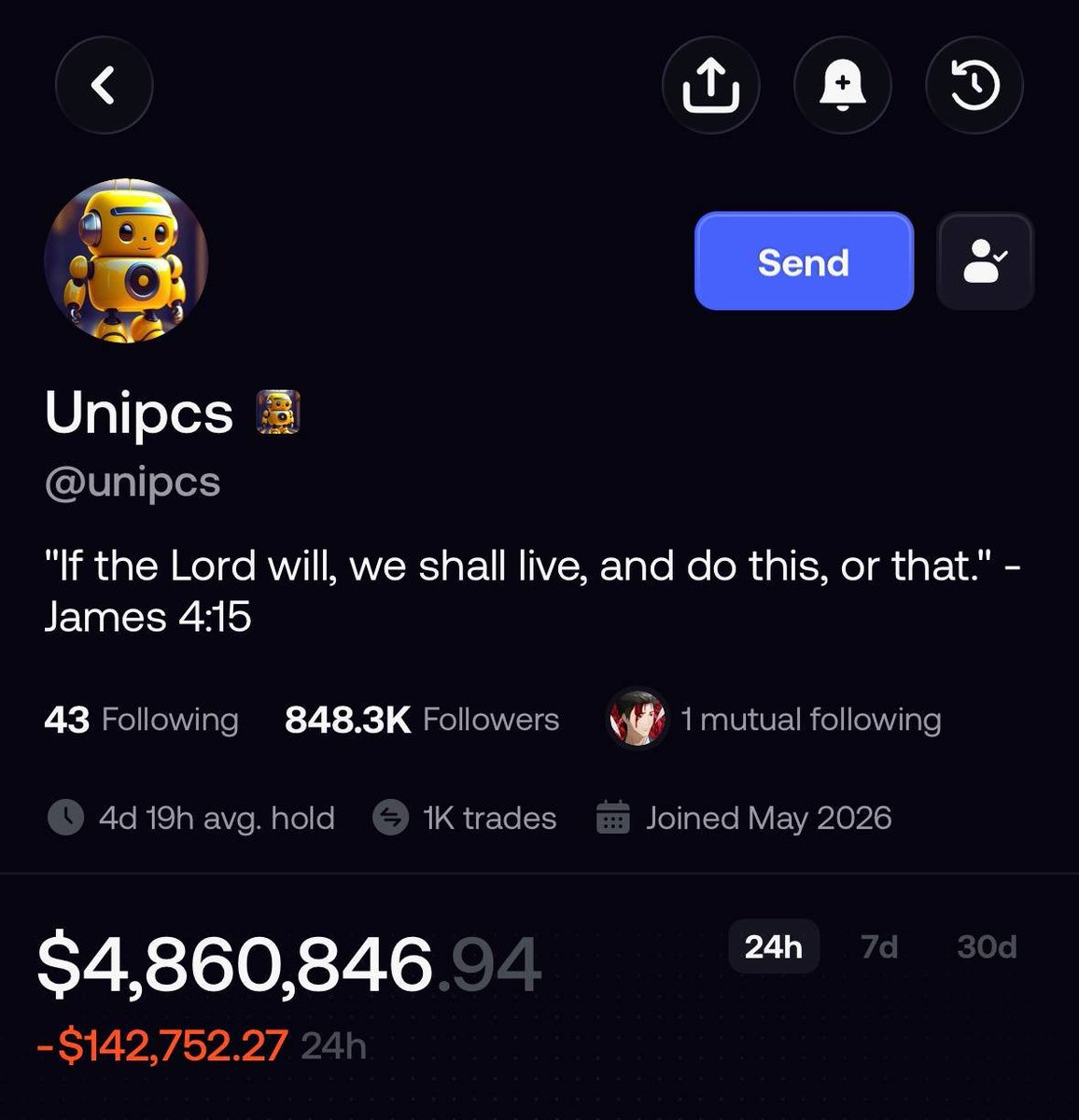
How is it possible Unipcs and PoorGoat have more than half a million followers on the FOMO app?
Crypto's been down and there's no way we have that many users active in crypto these past few months.
Their X accounts don't even have that many followers.
A 28 year old paid $18,000 to create 4 MILLION fake customers for her company.
JPMorgan then bought out the company for $175 MILLION without looking at a single detail.
JPMorgan also had to pay $100 MILLION to put the girl in prison.
In 2017, Charlie Javice created a company called Frank that was a platform to help college students.
It was able to help students apply for financial aid.
It was a solid business, but she wanted to more.
She had started claiming that the business had a lot more customers than they truly had.
Because of this, in 2019 she was in Forbes 30 Under 30.
And in 2021, JPMorgan actually wanted to buy out her business.
The bank offered her $175 MILLION for the entirety of her business, including all of the customers.
But before they went through with the deal, they wanted her to prove they had the customers she was claiming.
At the time Frank had <300,000 actual users.
Javice had been claiming that number was over 4 million.
To go through with the JPMorgan deal, she paid a data science professor $18,000 to create a list of over 4 MILLION fake students.
All to make Frank look like a legit large business.
The professor was able to create all sorts of fake information.
Names, emails, birthdates, and even income levels, they had all been fake.
JPMorgan went through with the deal, without even double checking the information they had.
She was able to get $29 MILLION and a position at JPMorgan as Managing Director.
The fraud started to get uncovered when JPMorgan tried to send marketing emails to Frank's customers.
Over 70% of the customers left instantly.
Something was clearly fishy.
It started spiraling when an engineering director testified that the week before the deal closed, Javice asked him to help fake all of the numbers.
But he had refused the offer because he was affraid of going to prison.
Javice was then arrested in 2023.
She got out with a $2 MILLION bail before the official trial actually started.
In the meantime she became a Pilates instructor in South Florida.
In March of 2025, the jury convicted her on all four counts of bank fraud, securities fraud, wire fraud, and conspiracy on top of it all.
She was then sentenced to 85 months in federal prison.
She also had to pay $287.5 MILLION in restitution fees.
But there was also a twist.
Because of how the contract with JPMorgan made her an employee, the bank was legally required to cover her entire bill.
The bill was over $100 MILLION.
The judge had told JPMorgan they had to take some responsiblity themselves because they didn't check before signing off.
The judge then sentenced her anyway.
This clip has gone viral recently for this Gen Z worker GOING OFF on Kevin O'Leary.
He questions what O'Leary even contributes as an investor, saying the systems broken.
The worker says he would NEVER go on Shark Tank because of all of the flaws within the concept.
O'leary said he worked pretty damn hard to be rich.
The worker counters this saying all he does now is just go from podcast to podcast.
O'leary says he still does a lot of investing.
The Gen Z worker makes fun of him saying "Wow, you're investing, that's so hard. How do you decide what to invest in? What makes you so valuable?"
O'leary responds saying he tries to find people like the Gen Z worker with a lot of passion, complementing the guy that's giving him a hard time.
He says it's great when they have a lot of passion and a solid business plan.
The worker rebutes this saying he could just use ChatGPT to analyze the business plan, questioning what makes O'leary so valuable.
He replies with one word, "Money".
The Gen Z worker says maybe the whole economy is broken and "because we're stuck with people like you controlling all of the money".
He says "if I have a good idea, why do I have to go on Shark Tank and beg you to screw me?"
Kevin O'leary then says he SHOULD come on Shark Tank.
The worker responds that he never will, he states "I don't want to be an entrepreneur, I just want to live."
This whole interview can be found in Jubilees latest video "1 Millionaire Boss vs 20 Gen Z Workers" and can be found on YouTube.
Highly recommend you go and watch it.
This Bronx butcher filled giant tanks with seawater and oil and convinced 51 banks that he owned 1.9 BILLION pounds of salad oil.
He actually owned 110M.
The fraud got exposed the same day JFK was assinated.
And Warren Buffet made more money from the collapse than the man who ran it.
Anthony "Tino" De Angelis was raised in the Bronx and didn't even complete basic schooling.
He then built a soybean oil refinery in Bayonne New Jersey.
In 1962 it was handling 75% of all US soybean oil exports.
To borrow more money, he needed physical inventory.
Banks would go and inspect it and then they would lend against the inventory.
Oil floats on top of water, Tino wanted to take advantage of this.
He filled all of his storage tanks, some even as tall as five story buildings, almost entirely with seawater, and added a couple feet of actual oil on top.
When American Express inspectors arrived they dropped weighted tape measures into the tanks.
The tapes came back completely coated in oil, and the tanks truly appeared full, everyone signed off.
Tino's crew also created hidden metal cylinders inside certain tanks below the inspection hatch so the tape only measured the oil and never actually reached the water beneath.
If the inspectors wanted to check the same tanks twice, his crew used hidden pipes to pump the same small amount of oil from tank to tank.
This way it was always at the top wherever the inspectors would look.
American Express vouched for all of the oil.
Then 51 banks lent against the receipts.
Chase Manhattan, Bank of America, Procter and Gamble, it was almost everyone.
In 1963, De Angelis had filed receipts claiming 1.9 BILLION pounds of salad oil.
The US Dept of Agriculture confirmed the entire country had only produced 110M pounds.
This was completely overlooked.
In 1963, the entire market crashed.
Allied Crude filed for bankrupcy, and two wall street brokerages fell apart.
American Express took a $58M loss.
On November 22nd, 1963, while investigators were still investigating the fraud, President Kennedy was assinated.
The NYSE closed 83 minutes early because of the fraud and the assassination.
De Angelis had to serve seven years for this.
He walked out of prison and ran the same fraud again using hogs instead of oil.
Warren Buffet bought 5% of American Express after its stock collapsed for $20M.
It became one of his most famous investments.