About Us:
Welcome to Space Insight, where passion for space and cosmology fuels our mission. Inspired by the vastness and wonders of the universe, we recognized the absence of a dedicated platform that unifies space science enthusiasts, researchers, astrophotographers, and explorers under one roof. Founded with a vision to revolutionize space education and exploration globally, Space Insight serves as a beacon for those eager to delve deeper into the mysteries of outer space. Our commitment lies in fostering a community that shares knowledge, collaborates, and inspires innovation for the betterment of humankind.
Our Vision:
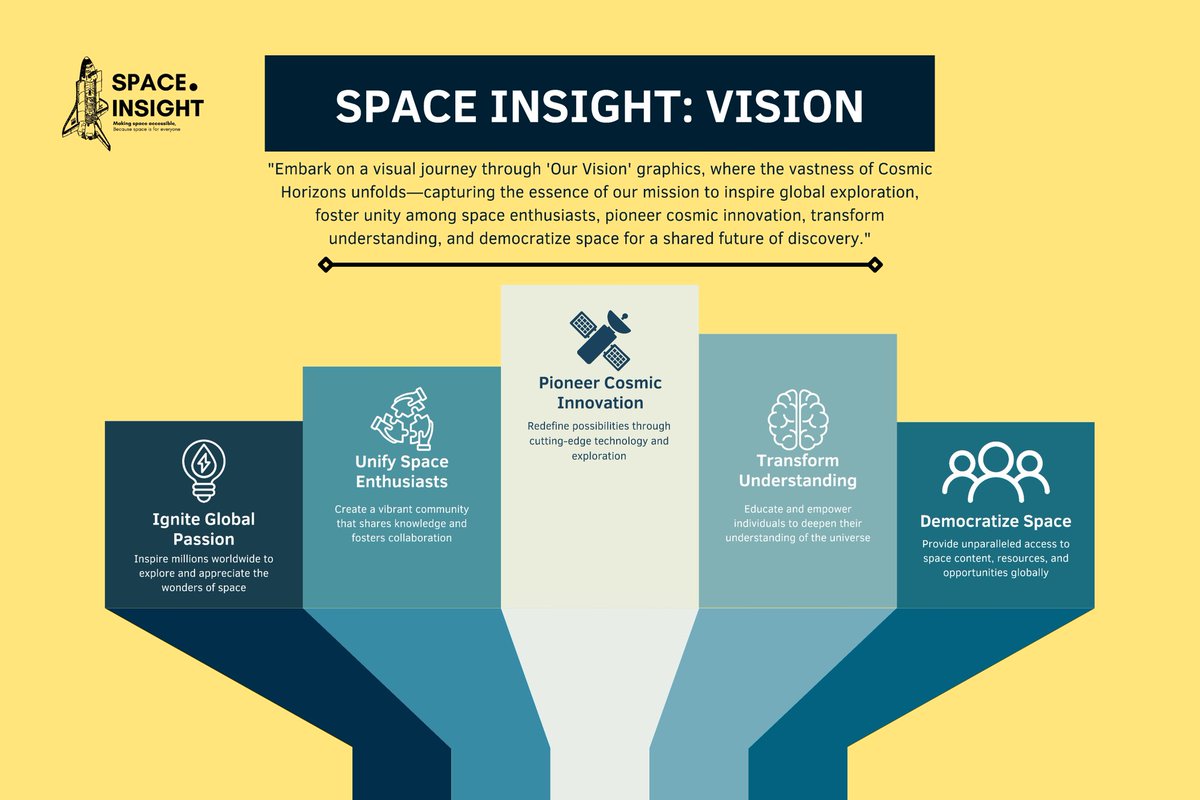
In the coming decade, Space Insight aims to touch the lives of over 30 million individuals globally and cultivate a robust community of 2 million dedicated space enthusiasts. We envision a world where space exploration transcends boundaries, fostering unity, curiosity, and technological advancements. Our goal is to provide unparalleled access to space content, resources, and opportunities, creating a harmonious ecosystem for learning, sharing, and collaboration.
Why Choose Us:
Space Insight stands apart as your premier destination for all things space-related. We offer a comprehensive platform designed to meet the diverse needs of space enthusiasts, researchers, and astrophotographers alike. Our one-stop solution provides access to:
- Extensive catalogs of space objects including NGC, IC, Messier, and more.
- State-of-the-art technology for astrophotographers to showcase their work.
- Collaborative forums for members to share ideas, opinions, and participate in decision-making processes.
- A vibrant community committed to fostering knowledge exchange, innovation, and exploration.
Audience:
At Space Insight, our primary audience comprises space enthusiasts, explorers, school & college students, scientists, researchers, and astrophotographers. We aim to ignite curiosity and passion for space science, providing resources, engagement opportunities, and a supportive community for individuals at every stage of their space journey.
Community:
Immerse yourself in a dynamic community experience at Space Insight. From hosting stargazers and astrophotographer meetups, engaging contests, quizzes, to organizing visits to space agencies, our initiatives foster collaboration, learning, and inspiration. Recognizing excellence, we honor the best astrophotographers, innovators, and contributors who enrich our community with their passion and expertise.
Astrophotography Community:
Our dedicated platform for astrophotographers offers a wealth of resources and opportunities. Gain access to cutting-edge technology, software, and a future telescope data pool to enhance your astrophotography endeavors. We invite enthusiasts to share their creations while adhering to our guidelines, ensuring authenticity, respect, and compliance with DMCA regulations.
This isn't just a flight path; it’s the blueprint for humanity’s new era in deep space. As the Orion spacecraft "Integrity" coasts away from Earth, this trajectory animation reveals the complex dance of orbital mechanics required to send four astronauts around the Moon and back. Unlike the Apollo missions that entered lunar orbit, Artemis II is utilizing a "free-return trajectory"—a giant figure-eight that uses the Moon’s own gravity to slingshot the crew home without a second major engine burn.
The journey began with a 24-hour checkout period in a high elliptical Earth orbit, ensuring every life-support system is "Go" before the Trans-Lunar Injection (TLI) burn committed the crew to the deep. From there, it’s a four-day trek to the lunar far side. At their closest approach, the crew will pass between 4,000 and 6,000 miles above the cratered surface, giving them a breathtaking view of the entire lunar disk—an altitude much higher than Apollo, offering a perspective of the Moon never before seen by human eyes.
At the peak of this arc, the crew will reach a staggering 252,000 miles from Earth, officially breaking the all-time distance record for human spaceflight set by Apollo 13. This animation tracks that 10-day, 1.4-million-mile round trip that concludes with a high-speed reentry into Earth’s atmosphere at 25,000 mph. We are watching the path to the future unfold in real-time.
#Artemis #ArtemisII #NASA #Orion #MoonBound #DeepSpace #SpaceInsight #MoonMission #SpaceLaunch #ArtemisGeneration #LunarFlyby #Astronomy #ScienceNews #Apollo13Record #SpaceX #Starship #NASAArtemis #ExploreMoon #SpaceEducation #RocketScience #ISS #NASA2026 #EarthView #MoonShot #SpaceExploration #AstroPhotography #SpaceCommunity #NASAWebb #LunarGateway #MarsMission
The 54-year silence has finally been broken. On the evening of April 1, 2026, the Space Launch System roared to life at Kennedy Space Center, propelling the Artemis II crew away from Earth and back toward the lunar frontier. This historic liftoff marks the first time since 1972 that humans have ventured beyond low Earth orbit, signaling a triumphant return to deep space exploration.
The mission is currently carrying a trailblazing crew of four on a ten-day journey that will take them farther from home than any human has ever traveled. Commander Reid Wiseman, Pilot Victor Glover, and Mission Specialists Christina Koch and Jeremy Hansen are now navigating a free-return trajectory that will swing them around the far side of the Moon. This voyage is not just a test of a spacecraft; it is a milestone of human progress, featuring the first woman, the first person of color, and the first non-American to journey to the vicinity of our nearest celestial neighbor.
As the Orion spacecraft "Integrity" coasts through the void, the successful launch serves as the ultimate validation of years of engineering and preparation. From the flawless performance of the RS-25 engines to the pinpoint separation of the solid rocket boosters, every stage of the ascent was a testament to the dedication of the thousands who made this moment possible. We are no longer just dreaming of the Moon; we are on our way there, paving the path for a permanent human presence and the future of exploration.
Follow Space Insight for real-time updates as the crew reaches the Moon and prepares for their record-breaking return to Earth. #ArtemisII #NASA #MoonBound #SpaceHistory #ArtemisGeneration #LaunchDay2026 #SpaceInsight #MoonMission #KennedySpaceCenter #Huston #nasaatmedia #Artemis #space
Jared Isaacman, NASA’s new chief, flew his own fighter jet over the Artemis II launch pad — where four astronauts will soon loop the Moon for the first time since Apollo program.
A striking moment that blends leadership with firsthand flight experience, reflecting a shift toward a more operational, pilot-driven mindset at the top. When those leading space programs understand flight not just on paper but in the cockpit, decisions tend to move with greater speed and clarity.
#artemisII #NASA
From Houston to the Space Coast: The Artemis 2 crew has officially arrived.
On Friday, March 27, astronauts Reid Wiseman, Victor Glover, Christina Koch, and Jeremy Hansen touched down in their T-38 jets at the Kennedy Space Center’s Launch and Landing Facility. Their arrival marks the final countdown for a mission 50 years in the making. Standing before the crowds, Commander Reid Wiseman had one simple message: “Hey, let’s go to the Moon.” With the SLS rocket and Orion capsule already waiting on Launch Complex 39B, the energy in Florida is undeniable. We are just days away from seeing these four explorers venture further into the deep-space void than any human in history. The wait is almost over.
🚀🌕 #Artemis2 #KennedySpaceCenter #NASA #MoonMission #SpaceHistory ##ArtemisII #artemis #lunarexploration #NASAMission #SpaceExploration #space #ArtemisMission #Rocket
The moment the Space Age was born.
On March 16, 1926, Dr. Robert H. Goddard launched "Nell"—the world’s first liquid-propellant rocket. It only flew for 2.5 seconds and reached a height of 41 feet, but its impact was infinite.
Just as the Wright brothers proved humans could fly, Goddard proved that liquid fuel was the key to leaving Earth. Without this "rickety contraption" in a snowy Massachusetts field, we might never have reached the Moon.
On the morning of July 21, 1961, astronaut Virgil “Gus” Grissom climbs into his Mercury spacecraft Liberty Bell 7 as backup astronaut John Glenn assists during final preparations. Just hours later, Mercury-Redstone 4 lifted off at 7:20 a.m. EST from Cape Canaveral, carrying Grissom on America’s second successful manned suborbital spaceflight.
The brief but historic mission followed Alan Shepard’s earlier flight and further proved the reliability of the Mercury spacecraft and Redstone rocket. Each mission built confidence in the nation’s growing space capabilities and moved the United States closer to achieving human orbital flight.
Image credit: NASA
#NASA #NASAmission #Apollo #SpaceExploration
On January 16, 2003, the Space Shuttle Columbia lifted off for its final mission with a crew of seven heroes: Rick Husband, William McCool, Michael Anderson, David Brown, Kalpana Chawla, Laurel Clark, and Ilan Ramon. Just eighty-two seconds into the launch, a piece of insulation foam about the size of a suitcase broke off the external fuel tank and struck the leading edge of the left wing at over five hundred miles per hour. Although NASA cameras captured the impact, mission managers believed the foam was too light to cause significant damage to the spacecraft's heat shield. The astronauts spent sixteen days in orbit conducting science experiments, completely unaware that their wing had a hole punched through its protective panels.
The disaster unfolded during re-entry on February 1, 2003, as the shuttle descended over the western United States. As Columbia hit the atmosphere at eighteen times the speed of sound, superheated plasma poured into the breach in the left wing. This extreme heat melted the internal aluminum structure of the wing from the inside out, eventually causing the shuttle to lose control and disintegrate over Texas and Louisiana. All seven crew members were lost just sixteen minutes before their scheduled landing at the Kennedy Space Center.
Following the accident, a massive search operation recovered more than eighty-four thousand pieces of debris across millions of acres. This evidence allowed investigators to reconstruct the wing and confirm exactly how the thermal shield had failed. The investigation revealed that the disaster was caused by both the physical foam strike and an organizational culture that had grown used to seeing foam shed during launches without taking action. Today, the legacy of Columbia and its crew serves as a permanent reminder that in space exploration, the smallest details are often the most critical. For more deep dives into the history and future of space flight, follow Space Insight.
Astronaut L. Gordon Cooper is helped from his Mercury capsule Faith 7 after completing a remarkable 22.9 orbits of Earth, traveling more than 600,000 miles during the Mercury-Atlas 9 mission. Cooper chose to remain inside the spacecraft until it was safely lifted onto the deck of the recovery ship USS Kearsarge, following the same calm and disciplined approach used by fellow astronaut Wally Schirra on the previous mission.
This flight marked the final and longest mission of Project Mercury, proving that humans could live and work effectively in space for extended periods. Cooper’s successful journey closed a crucial chapter in NASA’s early human spaceflight efforts and paved the way for the more ambitious Gemini and Apollo programs that followed.
On January 29, 1964, NASA achieved a major milestone with the first flight of the Saturn I Block II rocket, known as mission SA-5. This launch marked the first time the Saturn I flew with a fully operational S-IV second stage, proving the rocket’s ability to deliver heavier payloads into orbit and demonstrating a major leap in American launch capability.
President John F. Kennedy had pointed to this very rocket as the moment the United States would surpass the Soviet Union in lift power, a statement he made just one day before his assassination. Although he never lived to witness it, the successful SA-5 launch stood as a powerful validation of his vision and a critical step toward the Apollo missions that would soon follow.
Capturing the Eastern Veil Nebula from your driveway, which represents the remains of an unknown supergiant star that erupted as a supernova some 5,000 to 8,000 years ago, is a captivating achievement. Your ability to reveal the intricate details of celestial remnants contributes to our understanding of the dynamic processes in our universe.
We are an open-source community-based organization dedicated to encouraging and educating individuals worldwide about space science, astronomy, cosmology, rocket science, and astrophotography. We invite you to follow us and share your astronomical works. Rest assured, we will feature them across all our platforms with due credit.
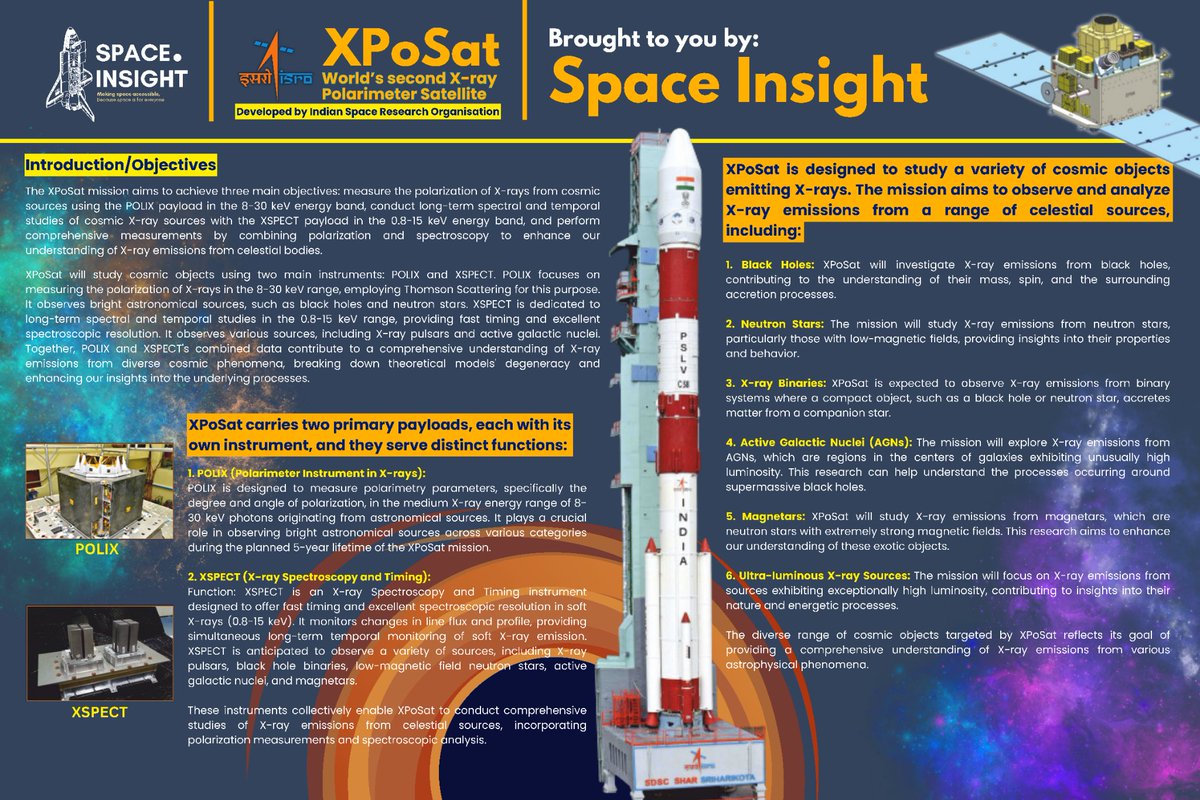
XPoSat, the X-Ray Polarimeter Satellite, represents a significant milestone for the Indian Space Research Organisation (ISRO). Launched on January 1, 2024, using the Polar Satellite Launch Vehicle (PSLV-C58), XPoSat entered a low inclination orbit with the primary goal of conducting space-based polarization measurements of X-ray emissions from celestial sources. The mission involves the use of two key payloads: POLIX (Polarimeter Instrument in X-rays) and XSPECT (X-ray Spectroscopy and Timing), developed by the Raman Research Institute and the Space Astronomy Group of URSC, respectively.
POLIX is designed to measure the polarization of X-rays in the energy band of 8-30 keV using Thomson Scattering. It observes bright astronomical sources, aiming to provide insights into the radiation mechanism and geometry of objects like black holes and neutron stars. XSPECT, on the other hand, focuses on long-term spectral and temporal studies of cosmic X-ray sources in the energy range of 0.8-15 keV. Its capabilities in fast timing and spectroscopy contribute to understanding the dynamics of various celestial phenomena.
The mission's objectives include comprehensive measurements by combining data from POLIX and XSPECT, enhancing our understanding of X-ray emissions from cosmic sources. The XPoSat mission is expected to contribute significantly to the broader understanding of the cosmic environment, particularly in areas such as black hole accretion, neutron star behavior, and X-ray binary systems. The successful execution of the mission is anticipated to provide valuable data for astronomers and researchers, aiding in breaking down degeneracies in theoretical models and advancing our knowledge of X-ray astronomy.
Reprocessing your data and boosting the colors of the captured Rosetta Nebula showcases your commitment to refining and enhancing your astrophotography work. Your dedication to perfecting the visual representation of celestial objects contributes to creating striking and visually appealing images.
We are an open-source community-based organization dedicated to encouraging and educating individuals worldwide about space science, astronomy, cosmology, rocket science, and astrophotography. We invite you to follow us and share your astronomical works. Rest assured, we will feature them across all our platforms with due credit.
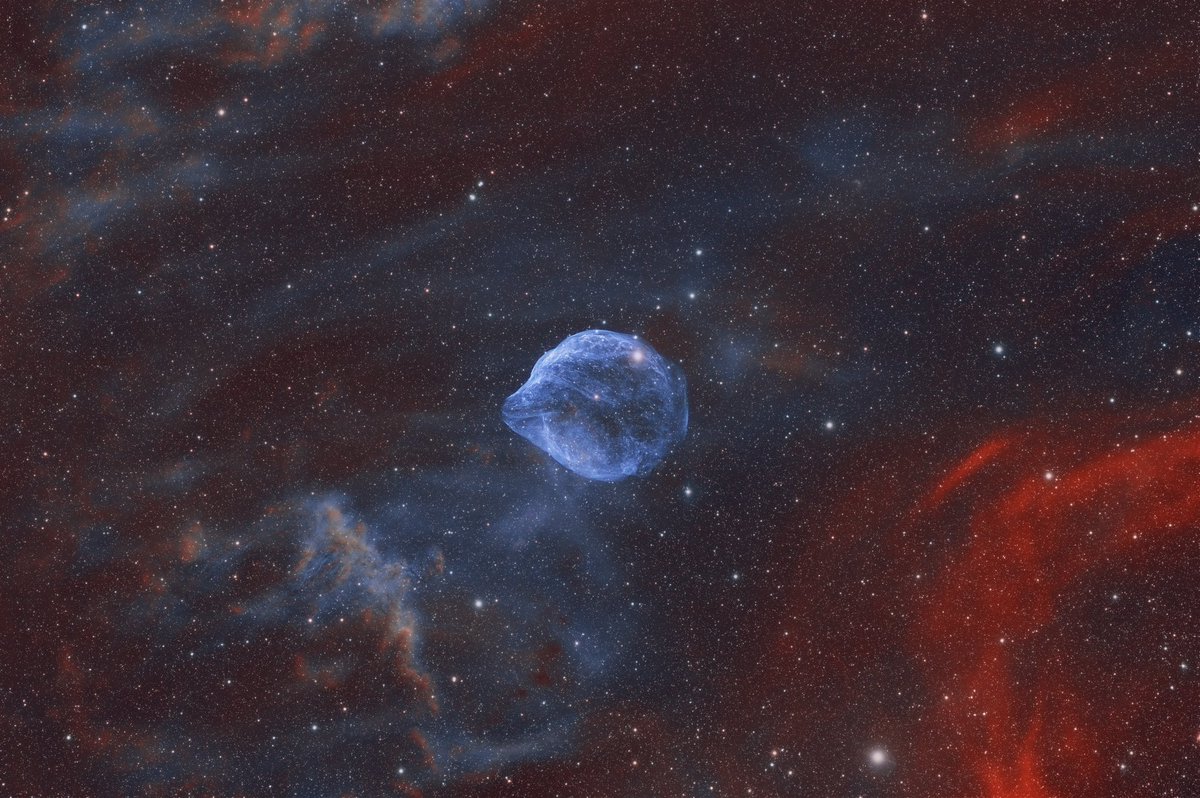
Capturing the Dolphin Head Nebula (SH2-308) from the Cederberg Mountains over four nights using a Redcat 51 telescope, ASI2600MM camera, AM5 mount, and Optolong 3nm Ha & OIII filters with a total integration time of 20 hours is a remarkable achievement. Your commitment to extended observation and astrophotography likely results in a detailed and captivating image of this celestial wonder.
We are an open-source community-based organization dedicated to encouraging and educating individuals worldwide about space science, astronomy, cosmology, rocket science, and astrophotography. We invite you to follow us and share your astronomical works. Rest assured, we will feature them across all our platforms with due credit.
First image of the year. The Dolphin Head Nebula (SH2-308), captured from the Cederberg Mountains over four nights. Telescope - Redcat 51, Camera - ASI2600MM, Mount - AM5, filters - Optolong 3nm Ha & OIII. 20 hours integration time @zwoasi @Optolong_filter#astrophotography
Capturing the Sun in white light today, January 16, 2024, revealing the Photosphere and showcasing new active regions around the east limb with a 1000mm setup and stacking the best 1641 frames from a 3-minute video is a commendable effort. Your ability to observe and document solar activity adds valuable contributions to the understanding of our nearest star.
We are an open-source community-based organization dedicated to encouraging and educating individuals worldwide about space science, astronomy, cosmology, rocket science, and astrophotography. We invite you to follow us and share your astronomical works. Rest assured, we will feature them across all our platforms with due credit.
Imaging NGC 6888, the Crescent Nebula, from your driveway last summer using a Celestron EdgeHD 8, ZWO ASI2600MM Pro, Antlia Filter 3nm SHO, and an iOptron CEM70G mount is a testament to your skills in astrophotography. Your ability to capture celestial wonders even under less than ideal conditions speaks volumes about your dedication and expertise.
We are an open-source community-based organization dedicated to encouraging and educating individuals worldwide about space science, astronomy, cosmology, rocket science, and astrophotography. We invite you to follow us and share your astronomical works. Rest assured, we will feature them across all our platforms with due credit.
Capturing M42 and the Running Man from your backyard with a Nikon D3300 mod and an impressive integration time of +20 hours in RGB showcases your dedication to astrophotography. The combination of equipment and extended exposure has likely resulted in a detailed and visually stunning image of the Orion Nebula and its surroundings.
We are an open-source community-based organization dedicated to encouraging and educating individuals worldwide about space science, astronomy, cosmology, rocket science, and astrophotography. We invite you to follow us and share your astronomical works. Rest assured, we will feature them across all our platforms with due credit.
Capturing the Crescent Nebula (NGC 6888) with a total of around 25 hours of integration using three different filters (Optolong L-eNhance, Optolong L-ultimate, and Askar D2) and processing the data in PixInsight demonstrates a remarkable commitment to astrophotography. Your efforts in collecting multiple exposures with varied filters likely contribute to a detailed and visually stunning image of this celestial beauty.
We are an open-source community-based organization dedicated to encouraging and educating individuals worldwide about space science, astronomy, cosmology, rocket science, and astrophotography. We invite you to follow us and share your astronomical works. Rest assured, we will feature them across all our platforms with due credit.
Capturing Jupiter and its moons (from left to right: Callisto, Europa, Ganymede, Io) through the clouds at 1721UT on January 13, 2024, is a testament to your observational skills and dedication to astronomical photography. Despite the challenging conditions, the celestial arrangement provides a captivating glimpse of the giant planet and its companions.
We are an open-source community-based organization dedicated to encouraging and educating individuals worldwide about space science, astronomy, cosmology, rocket science, and astrophotography. We invite you to follow us and share your astronomical works. Rest assured, we will feature them across all our platforms with due credit.
Capturing the Milky Way behind St. Andrews Church in Covehithe, Suffolk, UK, using a Canon 60D DSLR and a standard kit lens from Canon is a charming and evocative scene. Your ability to frame the celestial beauty against the architectural backdrop showcases the allure of astrophotography.
We are an open-source community-based organization dedicated to encouraging and educating individuals worldwide about space science, astronomy, cosmology, rocket science, and astrophotography. We invite you to follow us and share your astronomical works. Rest assured, we will feature them across all our platforms with due credit.