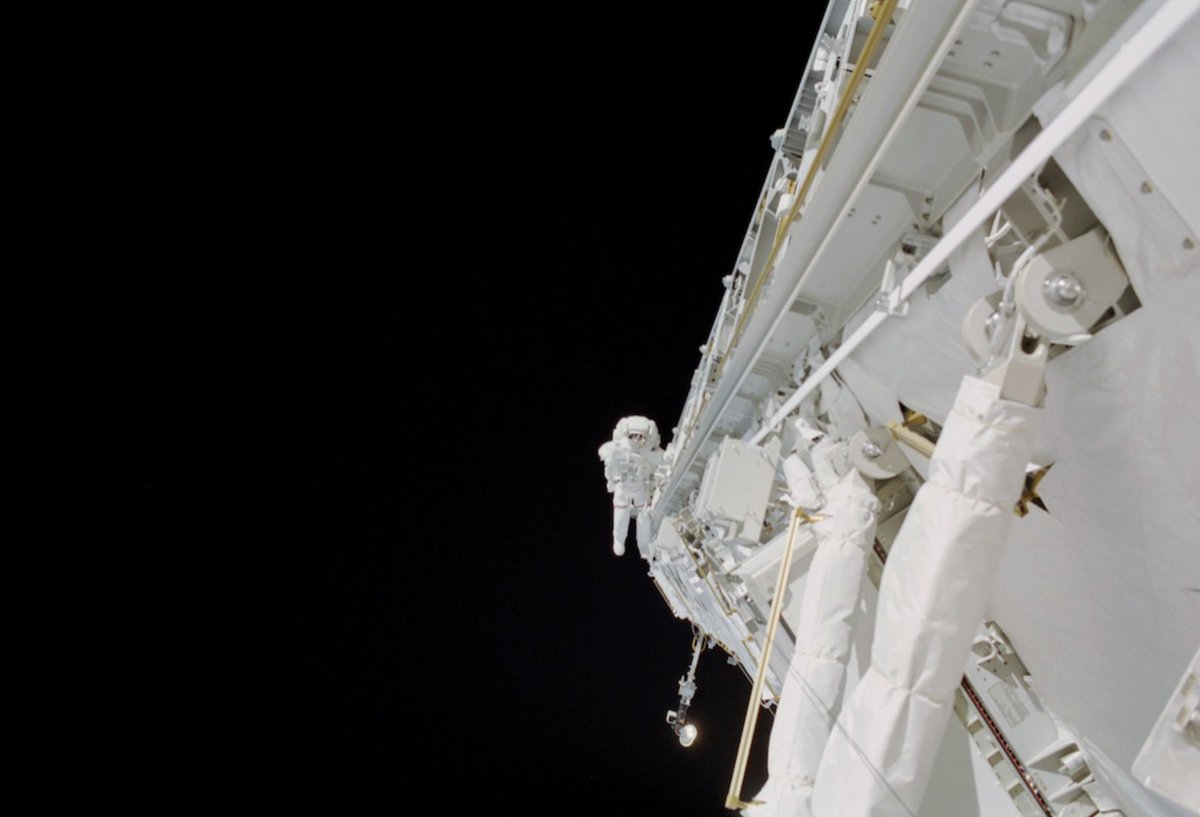
NASA Spacewalks are mind blowing achievements of choreography. The Russians on the other hand...
-- For the full story check out "Vytal Sines Episode 3: Walk Off"
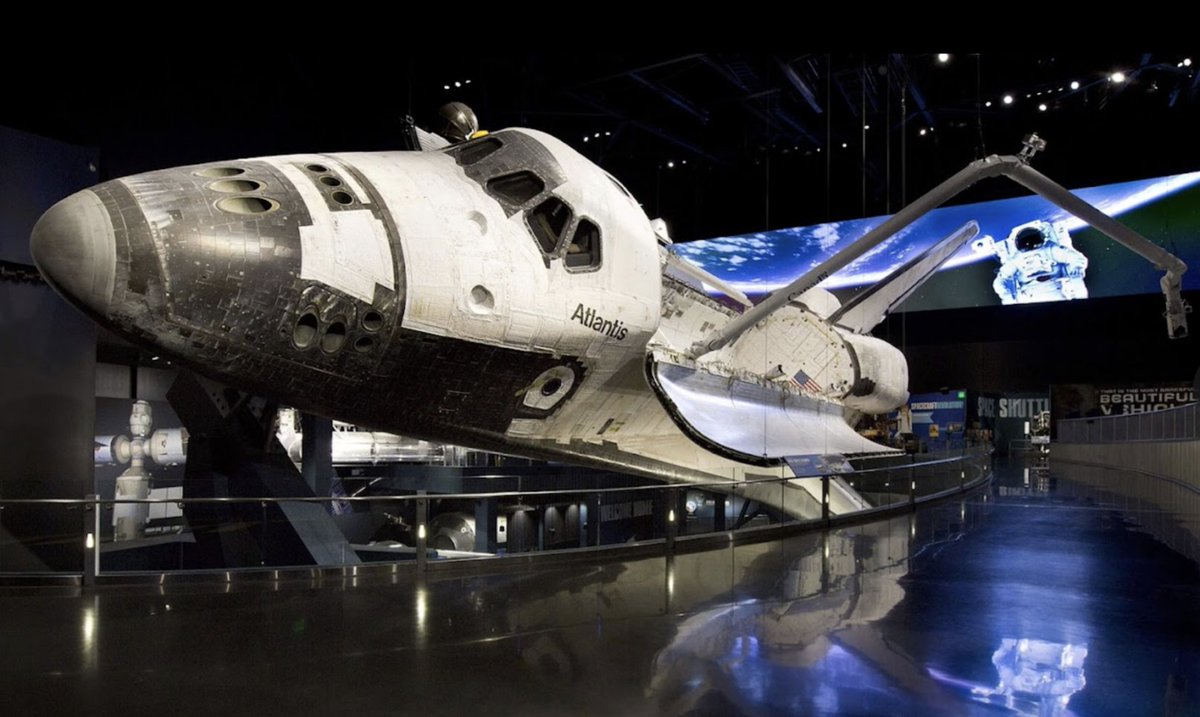
Shuttle Atlantis launched today in 2011 in what would be the final mission of the space shuttle program. She now sits proudly in the @ExploreSpaceKSC in Florida.
Building a spacesuit is one of the most demanding engineering challenges in human spaceflight. A spacesuit isn’t just clothing; it’s a fully functional, self-contained spacecraft. It must perform every function of a space station—providing oxygen, removing carbon dioxide, regulating temperature and pressure, protecting against radiation and micrometeoroids, and managing water and waste—all while remaining compact enough to fit into a backpack!
If the last one went to 'Ten', this next one's going to 'Eleven'. MLA has made a career of finding that next gear.
-- For the full story check out "Vytal Sines Episode 3: Walk Off"
When a dragon capsule splashes down in the ocean, a crane lifts it onto the recovery ship into a special on-dock cradle appropriately named 'Dragon's Nest.'
NEW EPISODE OUT NOW!
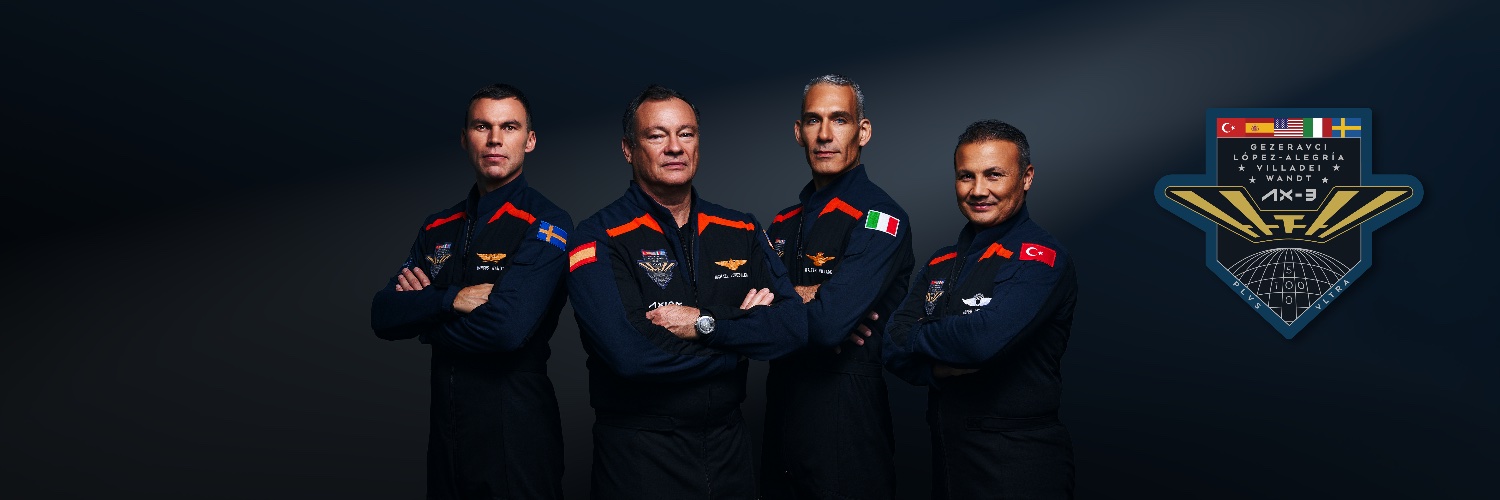
'WALK OFF' with Hall of Fame former NASA and current Axiom Space astronaut Michael López-Alegría! In this episode we cover 6 missions, 10 EVA's and commanding a new era of private astronaut missions to the International Space Station!
Episode 3 of Vytal Sines with Hall of Fame astronaut Michael López-Alegría releases July 1! Join Ryan and I as we talk through spacewalks from Shuttle to Station with the MLA!
When President Kennedy challenged us to go to the Moon 65 years ago we were extremely unprepared. America didn't have reliable rockets or spacesuits, in fact, we had never performed a spacewalk. Despite the heavy odds against us, we figured it out and made the impossible possible. Humans are incredibly capable and I believe we are only beginning our space journey!
Some things are easier in space, some are harder, and some are just surprising. We spend a lot of time training for medical issues or emergencies, but one day to day hazard is the risk of getting something in your eye. We do our best to dispose of everything but inevitably, a crumb or tiny piece of plastic will float right into an astronaut's eye. Because water doesn't flow in microgravity, engineers came up with this version of splashing water into your eye. During my long duration mission, we had to use the emergency eye wash kit more than once.
Food that lacks moisture is a problem in space. During Ax-1, Chef José Andrés, made paella (one of my favorite foods to both prepare and enjoy). When we opened the package, the individual grains of rice started flying out because there wasn't enough moisture for the surface tension to keep them together. I imagine we looked like a school of fish chasing those individual grains of rice. Flavor: 10/10. Containability: 0/10.
Anyone applying to be an astronaut wants to know how to best prepare for the NASA interview, I was no different. Standard interview questions generally focus on a mix of technical expertise, team dynamics, and personal experiences. But one of the first questions I’d heard they ask is, "If you were reincarnated as an animal what animal would you be?' I walked in confident and prepared ... and they never asked me 😐
The spacesuit is an incredibly complex machine in and of itself, capable of protecting the user against the extreme, fluctuating temperatures. Interestingly, because there is no air to carry the temperature and the suit is so well insulated, you don't really feel those temperature transitions. Instead, your level of exertion determines whether you feel hot or cold in the suit. The heat your body generates has nowhere to go. If you're really working hard, you'll notice it getting warm so you "turn up the air conditioning" to cool things down again.
Currently, the size of a space station module is limited by the size of the launch vehicle, but that limitation will disappear as we advance. In the coming decades I think we will begin to see in space assembly and modular construction techniques that allow us to build structures much larger and more complex than anything that can fit into a single fairing. Modules may launch in a compact form and then expand, or be 3D printed and welded together in orbit. Once we cross that threshold the structures we can build will be limited only by imagination and not by rockets!
Creating a spacesuit for the lunar South Pole is fundamentally a different engineering challenge than designing the Apollo suits. The Apollo astronauts worked near the Moon’s equator, where surface temperatures during their EVAs were relatively moderate (in terms of Moon temps), depending on the time of day. In contrast, Artemis astronauts will operate near the lunar South Pole, one of the solar system's most extreme environments. And with no atmosphere to moderate heat, these dramatic swings can happen abruptly as astronauts move between light and shadow. The suit must therefore actively manage both extremes: rejecting excess heat in sunlight while delivering reliable warmth in the freezing darkness.
The single foundation architecture is an important part of the #AxEMU. Having a core suit design that serves as a single base for multiple mission types means it can adapt quickly and cost-effectively with minimal changes. In most cases, the difference is as simple as swapping footwear: rugged lunar walking boots engineered for gravity, extreme temperatures, and abrasive dust versus lighter LEO boots optimized for microgravity translation and station interfaces.
Self-regulation is an important part of the commercial space industry; we can't have an FAA-like organization come in to “certify" that commercial human space flight is safe. Short of that, we have a balancing act between the wild west where we have no regulation and an agency that will stifle innovation and slow things down. To help center that regulatory pressure, it is incumbent upon the industry to demonstrate that it can self-regulate. Self-regulation can, and in part should, rely on industry-derived consensus standards from organizations like ASTM international’s F47 Committee on Commercial Spaceflight.