- Book reviews for non-fiction books📚
- Sharing stories with life lessons
- Food for thought articles - psychology
Mindset: To be better than yesterday
@DeFiTuna What are the options you are considering? I have been with you guys before TGE and have been using your platform almost from the start. It would only be fair to cover your mistake and make people who trusted you whole. If you want our trust, give us back our funds!
Book review:
The 10 Stories Great Leaders Tell By Paul Smith
Thoughts about the book:
Paul Smith has built a reputation around making storytelling practical, and this book feels like a distilled version of that mission, which is less theory, more immediate application. At its core, the book argues that great leadership is, in large part, a function of communication, and the most effective form of communication is storytelling. Smith identifies ten specific types of stories that leaders should be able to tell, from setting a vision and defining values to giving feedback and inspiring action. What I liked most was the clarity of structure. Unlike broader leadership books that wander through abstract principles, this one is sharply focused. Each chapter feels purposeful, offering a clear takeaway that can be applied almost immediately. The writing style is consistent with Smith’s other work, which is direct, conversational, and highly accessible. The book reads like a practical guide or even a workshop in print. The examples carry much of the weight, illustrating how stories function in real leadership situations. The chapters are short, the ideas are clearly presented, and the format encourages quick engagement. This is not a book that demands deep concentration or sustained analytical effort. It is designed to be picked up, used, and revisited.
If there is a weakness, it lies in the simplicity of the framework. The idea of “ten stories” is useful, but it can also feel somewhat reductive. Leadership communication is complex, and not every situation fits neatly into predefined categories. Additionally, readers familiar with Smith’s earlier books may find some overlap in themes and examples. Still, The 10 Stories Great Leaders Tell succeeds in what it sets out to do. It makes storytelling actionable. In the end, this is a focused, practical, and highly accessible book. It is easy to read, clearly written, and immediately applicable. It may not offer deep scientific analysis or groundbreaking theory, but it provides something many leaders actually need, and that is a simple way to communicate with greater clarity, purpose, and impact.
Who should read this book:
If you have ever wondered why some leaders command attention not through authority, but through the stories they tell, then The 10 Stories Great Leaders Tell by Paul Smith offers a clear and practical answer. You should read it if you are interested in leadership that resonates, and how trust is built, visions are shared, and values are lived through narrative rather than instruction. This is a book for readers drawn to leadership, communication, and human connection. It invites you to see that great leadership is not just about decisions and direction, but about the stories that give those decisions meaning and make people want to follow.
For the book summary by chapters, go to:
https://t.co/1kEX703AZs
Check out other book reviews at:
https://t.co/dkEqZw0FhQ
#booksummary #bookreviews #bookreview #bookworm #talkingaboutbooks #bookwisperer #letsdiscuss #LetsTalk #business #mustread #bookrecommendation #bookclub #bookworm #readabook #storytelling
Book Review:
Sell With A Story: How to Capture Attention, Build Trust, and Close the Sale
By Paul Smith
Thoughts about the book:
At its core, Sell with a Story argues that the most effective salespeople are not those with the best data, but those who can translate that data into meaningful narratives. Buyers don’t remember product specs, they remember stories that make those specs relevant. Smith reframes selling as a communication challenge, one that is best solved not with pressure, but with clarity and connection. What I liked most about the book is its practicality. Much like his earlier work, Smith organizes the content around specific situations, like how to build trust, differentiate your product, handle objections, or close a deal. For each scenario, he provides concrete story examples that sales professionals can adapt and use. This makes the book highly actionable. It doesn’t just tell you that stories matter, it shows you exactly how to use them. Smith uses everyday language and a conversational tone, making the book easy to read and easy to apply. There is no academic complexity here, no dense theory to unpack. Instead, the ideas are delivered through examples, short explanations, and practical advice. It is the kind of book you can read quickly but revisit often. However, as with many practical books, the real challenge lies in execution, and crafting authentic, relevant stories that resonate with real clients is far more difficult than simply understanding the idea. The book is informative, though not scientific in a rigorous sense. Smith draws on communication principles and some elements of psychology, but the foundation is primarily experiential. If there is a criticism, it is that the book can feel somewhat repetitive in its central message that storytelling is powerful, and you should use it in nearly every aspect of selling. While the variety of examples keeps things engaging, the core idea remains consistent throughout. Additionally, readers looking for advanced negotiation theory or deep behavioral science may find the book somewhat light. That said, Sell with a Story succeeds in reframing sales as a human, narrative-driven process. It moves away from pressure tactics and toward connection, which feels both modern and effective. Smith’s strength lies in making storytelling feel practical rather than abstract.
Who should read this book:
You should read Sell with a Story by Paul Smith if you are interested in moving beyond scripts, pitches, and product features, and toward communication that genuinely persuades. This is not about manipulation, it is about connection. It is for those who want to understand how stories can build trust, overcome objections, and make ideas stick in a way that data alone rarely can. Paul Smith is searching for the deeper mechanics of influence in sales. His interest lies in how real-world stories like the ones about customers, challenges, failures, and successes can bridge the gap between skepticism and belief. He explores how stories make value tangible, differentiate offerings, and create emotional engagement in moments where logic often falls flat. This is a book for anyone involved in selling, negotiating, or influencing, whether in business or everyday life. It invites you to see sales not as a process of pushing information, but as an act of guiding someone through a narrative they can understand, trust, and ultimately say yes to.
For the book summary by chapters, go to:
https://t.co/TgqurHjufV
Check out other book reviews at:
https://t.co/dkEqZw0FhQ
#booksummary #bookreviews #bookreview #bookworm #talkingaboutbooks #bookwisperer #letsdiscuss #LetsTalk #business #mustread #bookrecommendation #bookclub #bookworm #readabook #storytelling
Book review:
Lead With A Story: A Guide to Crafting Business Narratives That Captivate, Convince, and Inspire
By Paul Smith
Thoughts about the book:
At its core, Lead with a Story argues that storytelling is not just a soft skill but a fundamental leadership tool. Paul Smith suggests that facts inform, but stories persuade. Whether you are trying to set a vision, motivate a team, deliver feedback, or navigate change, the ability to tell the right story at the right time can be the difference between compliance and genuine engagement. What I appreciated most about the book is its practicality. Smith does not dwell in abstraction. He provides a wide range of real-world examples with stories leaders can use in specific situations, from handling failure to reinforcing values. The structure is almost modular, since you can dip into chapters based on the leadership challenge you’re facing. This makes the book immediately applicable, which is rare in a genre often filled with vague advice. The writing style is clear, direct, and highly accessible. Paul Smith uses everyday language and a conversational tone that makes the book easy to read. There is no academic density, no unnecessary jargon. Instead, the prose mirrors the very principle the book promotes: clarity through narrative. You move quickly through the chapters, guided by examples rather than theory. However, the simplicity should not be mistaken for a lack of importance of the message. The challenge lies not in understanding the concepts but in applying them effectively and learning to craft and deliver stories with intention.
The book is informative, though not scientific in a strict sense. Smith draws on communication principles and some psychological insights, but the foundation is largely his own experience rather than research-heavy. This is not a book of studies and data, it is a book of practice and observation. If there is a limitation, it is that the book can feel somewhat repetitive in its core message, which is that stories matter, and you should use them often. While the variety of examples helps, the underlying principle remains consistent throughout. Additionally, readers looking for a deeper theoretical exploration of narrative psychology or persuasion may find the book somewhat light. Still, Lead with a Story succeeds in what it sets out to do. It demystifies storytelling and places it firmly within the toolkit of effective leadership. It is practical, accessible, and immediately useful. It may not redefine leadership theory, but it sharpens an essential skill that many leaders overlook. In the end, this is a clear, engaging, and highly usable book. It speaks in the language of everyday leadership rather than academic theory.
Who should read this book:
If you have ever felt that data alone rarely inspires action, then Lead with a Story by Paul Smith is a compelling invitation to rethink how leadership truly works. You should read it if you are interested in communication that moves people and how ideas are not just understood, but felt, remembered, and acted upon. This is a book for those who lead teams, influence decisions, or simply want their message to resonate beyond the moment it is delivered. Paul Smith is searching for the missing link between information and inspiration. His interest lies in the power of storytelling as a leadership tool, how the right story, told at the right time, can build trust, shape culture, and drive change far more effectively than facts and figures alone. He breaks down what makes a story persuasive, when to use it, and how to make it authentic rather than performative. This is a book for readers drawn to leadership, persuasion, and human connection. It invites you to see storytelling not as entertainment, but as one of the most practical and underutilized skills in business and life.
For the book summary by chapters, go to: https://t.co/BW3NCKBPyM
Check out other book reviews at:
https://t.co/dkEqZw0FhQ
#booksummary #bookreviews #bookreview #bookworm #talkingaboutbooks #bookwisperer #letsdiscuss #LetsTalk #business #mustread #bookrecommendation #bookclub #bookworm #readabook #storytelling
@martypartymusic Hey MartyParty... when bull run for Zeus? Not talking about that anynore are you... buy zeus.. accumulate zeus... zeus the best... blabla bla... you quiet about that now before yelling how great it is... clean your 💩 first then talk about others.
Story time ⬇️
Will the impatient king learn his lesson or lose it all?
Once upon a time, there was a great king traveling alone through the unknown woods in his kingdom. It was quite unusual for a person of such status to do so. But the king had his reasons. To get unfiltered insights on what was going on in his kingdom and what people thought, were worried or happy about he secretly traveled among his people to gather information directly from them and not from his advisers who embellished or even fabricated information just to please him. But on this trip, the king traveled very far. He had never been so far before and very soon he got lost. He had to travel for two more days since he was aware that he was lost before he finally arrived at a hut late at night. He was hoping that the owners of the hut would welcome him in for the night as it was raining for the whole day while he was traveling. The king knocked on the door and an elderly woman opened it. The king being soaked and tired asked kindly if he could stay for the night to get warm and maybe get something to eat. As he was waiting for the elderly woman to answer he already made the first step towards the entrance. The elderly woman angrily stoped the king, “Why are you so impatient, I haven’t invited you in!” The king apologized and again tried to explain that he is tired, wet, and hungry and that he was hoping for some kindness”. The elderly woman accepted his apology and invited him in.
The woman thought that the king was a soldier from his army. It wasn’t that rare that lost soldiers who were returning from battlefields sought shelter in her hut. She gave the king some water to clean himself and some water to drink. She then spread a rug for him to relax and after a while, she brought a bowl of hot rice and placed it in front of him. The king was so hungry that he quickly tried to eat the hot rice but the food burned his mouth and from the shock, he dropped the bowl of rice breaking the bowl and dirtying the floor. The elderly woman was annoyed again and quickly reprimanded the king “Unbelievable, you are too impatient and hasty, just like your king.” The king was surprised by the old woman’s words. So he asked her, “Why do you think our king is impatient and hasty?”
The elderly woman smiled and began to explain to him. “My dear boy, our king has a great dream of capturing all his enemy strongholds. During this process, he ignores all the small forts of his enemy and tries to capture only the large forts.” The king interrupted the old woman and said, “That is good. What’s the problem with that? ” She smiled and replied, “Well, my boy. Much like your impatience with eating, where you have burned your fingers and wasted your food, the king’s impatience to quickly defeat his enemy is resulting in a greater loss of his men in his army than there has to be. As a result, the king is losing the trust of his soldiers and his people, while on the other side, his enemy is becoming more confident with each fight.” The king understood what the elderly woman was telling him, but he didn’t know what would be a better tactic to win the war. So he asked the elderly woman for her insight, “Well what would you do if you were in the king’s place?”
Now the elderly woman sat down next to the king and explained, “Well first I would look over every map and make a strategy to slowly drain all the resources of the strongest forts of my enemy. You do that by taking away everything around them, which means the small villages, forts, and other settlements that are providing the strongholds with supplies, information, and everything else. As the enemy morale would slowly but surely decrease, I would then start attacking the center of my enemy’s power that being his strongholds. Soon the strongholds that would be left would “cool down” and offer little or no resistance. The same goes for your bowl of rice. If you had simply been less impatient and eaten the rice at the edges you would slowly but surely come to the rice in the middle, which would cool down while you were “dealing” with the rice at the edge.” Hearing this, the king understood his mistake and realized that one must be patient and avoid haste in every situation. The next day the elderly woman pointed the way to the castle and when the king came home he immediately had a meeting with his generals and explained the new strategy. Not long afterward the king was victorious.
For more stories, go to:
https://t.co/UnHcHI1T9E
#stories #shortstory #storytelling #storyteller #wisdominstories #wisdomstories #lifelessons #storyoftheday #collectionofstories
Book Review:
Join The Club: How Peer Pressure Can Transform the World
By Tina Rosenberg
Thoughts about the book:
At its core, Join the Club argues that peer influence is not just a negative force to be resisted, but it can be harnessed for social good. Tina Rosenberg illustrates how collective norms, accountability, and social pressure can improve public health, encourage ethical behavior, and even drive large-scale social change. The book emphasizes the mechanisms behind influence and how behaviors ripple through networks, how reputation matters, and how social norms create powerful incentives that often outweigh laws or formal rules. What I particularly liked is Rosenberg’s combination of storytelling and research. She grounds her arguments in compelling case studies, such as communities that reduced smoking rates, cities that improved sanitation, and schools that adopted better practices through positive peer influence. These examples make abstract social science tangible, and they show the reader exactly how peer pressure operates in real-world contexts. The writing style is clear, engaging, and highly readable. Rosenberg has a journalist’s gift for narrative: she balances vivid anecdotes with analytical insights. The language is everyday and accessible, never burdened with heavy academic jargon. Complex ideas about networks, norms, and social contagion are explained in ways that feel natural and intuitive. This makes the book enjoyable without sacrificing intellectual substance. The book is easy to read, though it occasionally demands reflection. It is informative and based on scientific research, drawing from sociology, psychology, and behavioral economics, but it is not a technical manual. The science is presented through story rather than equations, experiments, or heavy statistics, which makes it highly digestible.
If there is a drawback, it is that the optimism can sometimes feel slightly overextended. Rosenberg focuses on the positive potential of peer influence, and while she does acknowledge misuses, the examples of negative influence are less emphasized. For some, this might make the narrative feel slightly one-sided. Additionally, while the breadth of examples is impressive, some chapters revisit similar themes, which can create a sense of repetition. Overall, Join the Club succeeds beautifully in reframing a familiar concept in a transformative light. It is engaging, thoughtful, and backed by research, yet written in a style that is accessible to everyday readers. Rosenberg shows that peer pressure is not merely a force to resist, but is a tool for shaping better behavior, both individually and collectively. The book leaves you with a renewed appreciation for the subtle forces that shape our choices and our world.
Who should read this book:
If you are fascinated by the power of human behavior, social influence, and the hidden forces that shape our decisions, then Join the Club: How Peer Pressure Can Transform the World by Tina Rosenberg is a book you should explore. You should read it if you are interested in how change really happens, not through mandates or rules, but through the subtle, persistent pressure of peers. Rosenberg dives into the ways social networks, group norms, and community influence can drive behaviors that range from the mundane to the monumental, showing that peer influence is not just coercive but also a powerful force for good. She is searching for the mechanisms behind collective action. Her interest lies in understanding how human beings are wired to follow, emulate, and sometimes challenge one another, and how this dynamic can be harnessed to solve social, political, and environmental problems. This book is for readers curious about psychology, sociology, and behavioral science, and for anyone who wants to understand how ordinary people, through everyday interactions, can collectively achieve extraordinary change. It invites you to reconsider the role of influence in your own life and to see that peer pressure, when directed wisely, can transform the world.
For the book summary by chapters, go to:
https://t.co/J5HpdsSCwr
Check out other book reviews at: https://t.co/dkEqZw1d7o
#booksummary #bookreviews #bookreview #bookworm #talkingaboutbooks #bookwisperer #letsdiscuss #LetsTalk #business #mustread #bookrecommendation #bookclub #bookworm #readabook
Book review:
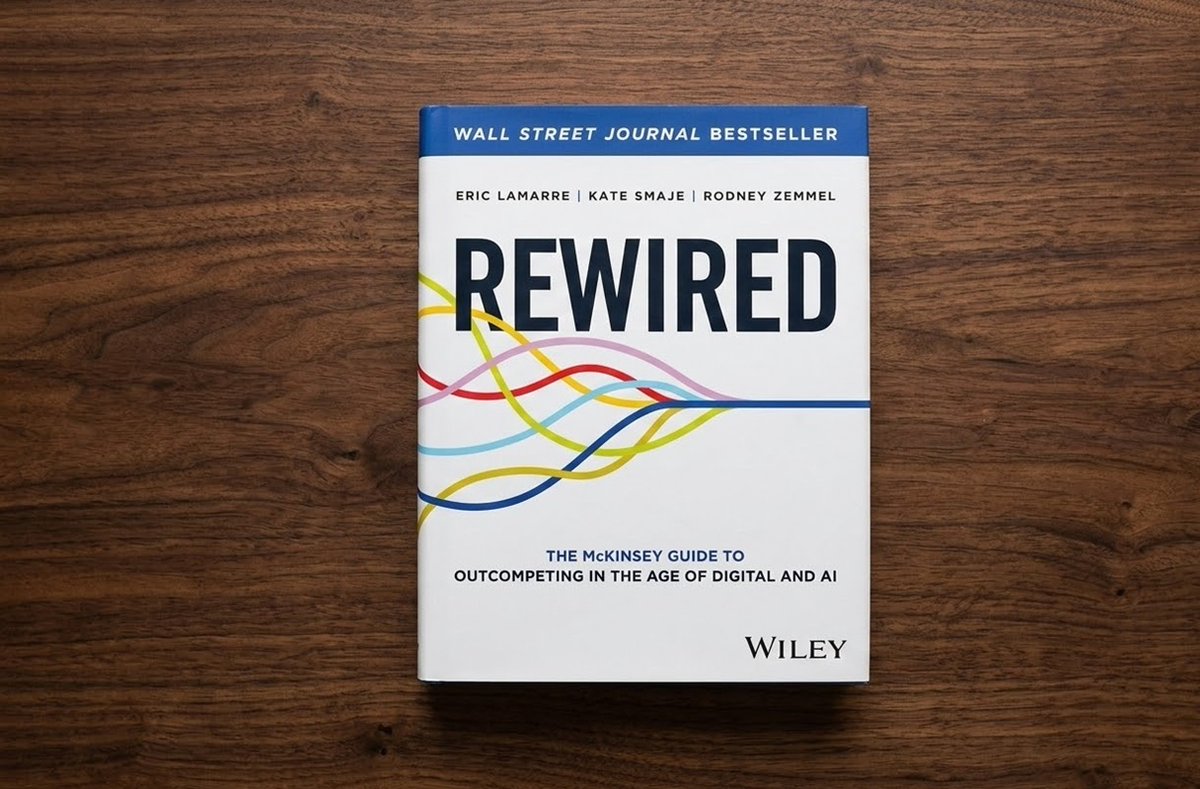
Rewired: The McKinsey Guide to Outcompeting in the Age of Digital and AI
By Eric Lamarre, Kate Smaje, and Rodney Zemmel
Thoughts about the book:
At its core, Rewired is about how organizations must fundamentally transform themselves to compete in an era defined by digital technology and artificial intelligence. The authors argue that success is not about adopting isolated tools or launching surface-level initiatives, but about becoming what they call a “digital and AI-native” organization. This involves rewiring the way a company operates its processes, talent, culture, and decision-making systems. What I found most compelling is the book’s emphasis on integration. Many books on digital transformation treat technology as an add-on, while Rewired insists that it must be embedded into the core of the business. The authors break this down into clear building blocks such as data, technology, operating model, talent, and adoption, creating a comprehensive framework that feels both rigorous and actionable. There is a strong sense that this is drawn from real-world experience with large organizations, not theoretical speculation. The writing reflects its origins. It is structured, disciplined, and highly organized. Each concept is introduced, explained, and then reinforced with examples or frameworks. The tone is professional and confident. The language is not overly academic, but it is more formal and technical than conversational. Terms like “operating model,” “capability building,” and “value capture” appear frequently, and while they are explained, they require a degree of familiarity with business thinking.
In terms of readability, the book sits in the moderate range. It is not difficult, but it does demand focus. This is not a casual read. Readers looking for narrative flow or storytelling may find it somewhat dry, while those seeking practical guidance in business will appreciate its clarity. The insights are supported by case studies, internal analyses, and observed patterns across organizations. If there is a weakness, it lies in the tone and repetition of familiar consulting ideas. The frameworks in the book are comprehensive, and they can sometimes give the impression that transformation is more orderly than it tends to be in reality. That said, Rewired succeeds in providing a structured roadmap for navigating a digital and AI transformation. It does not promise quick wins or simple hacks. Instead, it emphasizes the scale and seriousness of the challenge, and the need for sustained, organization-wide change.
Who should read this book:
If you are trying to understand how companies truly succeed in the age of digital transformation and artificial intelligence, not just in theory, but in actual practice, then Rewired by Eric Lamarre, Kate Smaje, and Rodney Zemmel is a book you should not overlook. You should read it if you are interested in how large organizations change, how they integrate data, technology, and people into something cohesive and competitive. This is not a book for those chasing buzzwords. It is for readers who want to understand what separates companies that talk about digital from those that are truly “rewired” to operate differently. The authors are searching for the underlying system behind successful transformation. Their interest lies in uncovering the building blocks, which are talent, operating models, technology, and culture, that must align for digital and AI to deliver real value. They move beyond surface-level insights and instead examine how organizations can embed these capabilities deeply into their core, rather than treating them as side projects.
This is a book for leaders, strategists, and anyone fascinated by the intersection of business and technology. It invites you to see digital transformation not as a one-time initiative, but as a fundamental reconfiguration of how an organization thinks, works, and competes in a rapidly evolving world.
For the book summary by chapters, go to:
https://t.co/Wm03COyAia
Check out other book reviews at:
https://t.co/dkEqZw0FhQ
#booksummary #bookreviews #bookreview #bookworm #talkingaboutbooks #bookwisperer #letsdiscuss #LetsTalk #business #mustread #bookrecommendation #bookclub #bookworm #readabook #businessideas #rewired #businessstrategy #competition #McKinsey #digitaltransformation
Book Review:
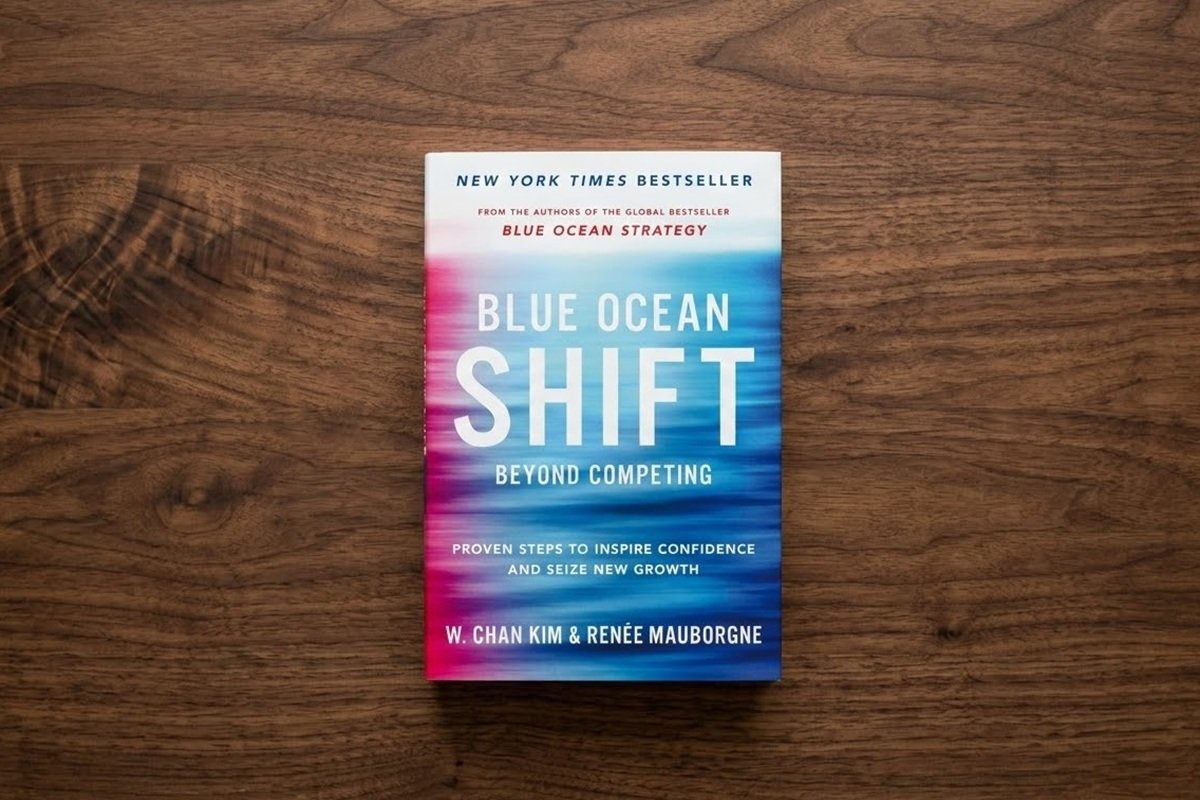
Blue Ocean Shift:
Beyond Competing - Proven Steps to Inspire Confidence and Seize New Growth
By W. Chan Kim, Renée A. Mauborgne
Thoughts about the book:
While Blue Ocean Strategy introduced the powerful idea of creating uncontested market space, Blue Ocean Shift focuses on execution. It is less about what the concept is and more about how to actually achieve it. The authors present a structured, step-by-step process designed to help organizations move from competitive “red oceans” into new, value-creating spaces. In that sense, this book feels more practical, more grounded, and more concerned with implementation. What I appreciated most is this emphasis on process. Kim and Mauborgne clearly recognized that many readers of their earlier work were inspired but left wondering how to apply the ideas in real organizations. Here, they attempt to close that gap. The inclusion of real case studies of companies, nonprofits, and even government entities adds credibility and makes the framework feel more attainable. The human element is also more pronounced as there is greater attention to organizational resistance, internal alignment, and the psychology of change. The writing is structured, disciplined, and highly methodical. Each step builds on the previous one, with clear explanations and practical tools. In terms of readability, it is relatively easy to follow, though it requires engagement. This is not a book you skim for inspiration, it is one you work through. The frameworks, exercises, and visual tools demand attention, but they are also what make the book useful. Compared to the original, this one feels slightly more hands-on and structured, and slightly less conceptual.
Blue Ocean Shift relies heavily on case studies and observed patterns rather than rigorous empirical testing. If there is a weakness, it lies in a certain level of repetition not only within the book itself, but in relation to the original Blue Ocean Strategy. Many of the core ideas remain the same, and for readers already deeply familiar with the first book, parts of this one may feel familiar. Additionally, while the process is clearer, the inherent difficulty of creating a true “blue ocean” is still somewhat understated. Strategy, in reality, is messy, and not every organization can successfully execute such a shift. That said, Blue Ocean Shift succeeds in making an influential idea more actionable. It transforms a compelling concept into a more structured journey. It may not feel as groundbreaking as the original, but it is arguably more useful for practitioners who want to do more than just understand the theory.
Who should read this book:
You should read Blue Ocean Shift by W. Chan Kim and Renée A. Mauborgne if you are interested in how companies, teams, and even individuals can move from crowded, competitive spaces into new arenas of growth. This book is for anyone who doesn’t just want to understand strategy but wants to know how to apply it, step by step, in the real world.
For the book summary by chapters, go to:
https://t.co/j8urbj80SY
Check out other book reviews at:
https://t.co/dkEqZw1d7o
#booksummary #bookreviews #bookreview #bookworm #talkingaboutbooks #bookwisperer #letsdiscuss #LetsTalk #business #mustread #bookrecommendation #bookclub #bookworm #readabook #sales #marketing #howtosell #businessideas #blueocean #businessstrategy #competition