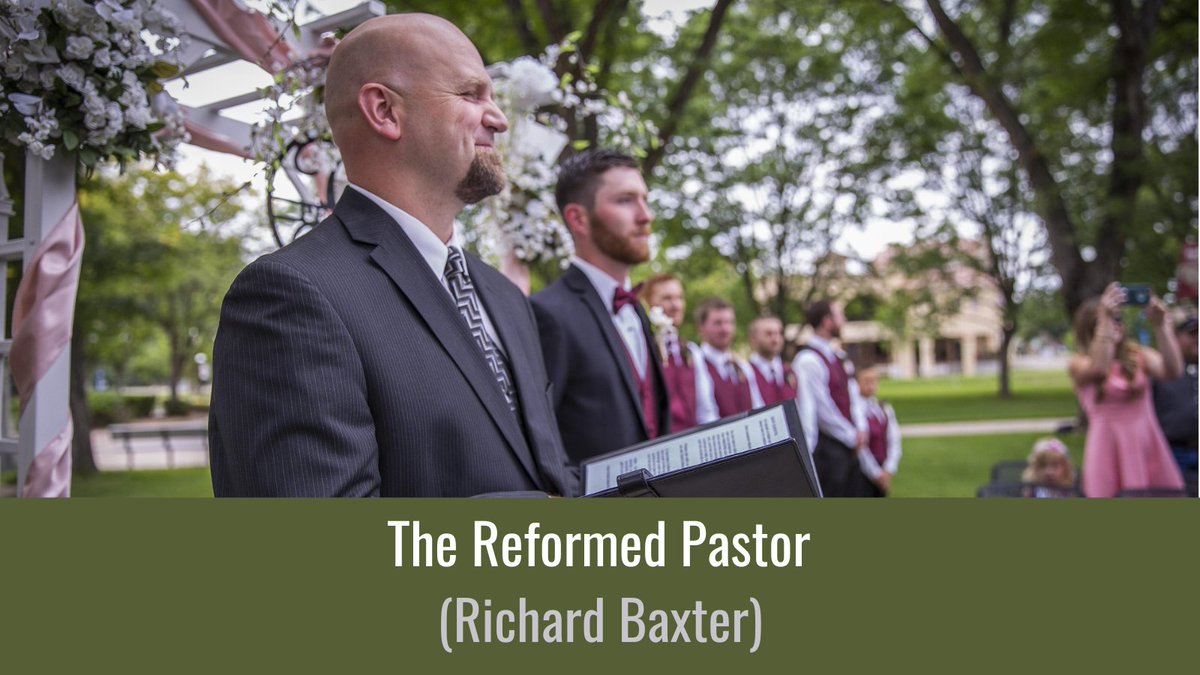
Many a tailor can go in rags while making costly clothes for others. Many a cook may scarcely lick his fingers when he has prepared the most sumptuous dishes for others to eat. Believe it, brethren, that God never saved any man for being a preacher. Nor did he reject a man because he was not an able preacher. He saved a preacher because he was a justified and sanctified man.
Take heed, therefore, to yourselves first. See to it that you be the worshiper which you persuade your hearers to be. Make sure first that you believe what you persuade others daily to believe. Make sure you have heartily entertained the Christ and the Holy Spirit in your own soul before you offer Him to others. He that bids you love your neighbor as yourself implied that you should love yourself instead of hating and destroying yourself—and others, too.
O dear brothers, what men then should we be in skill, in resolution, and in unwearied diligence, that have all this to contend with and to do? Did not Paul cry out, “Who is sufficient for these things?” (2 Corinthians 2:16). Can we then afford to be proud and lazy, as if we were sufficient? As Peter says to every Christian when considering the charge, there should be the reflection of our character: “What manner of person ought we to be in all holy conversation and godliness?” (2 Peter 3:11). So may I say to every minister, seeing how all these challenges lie upon us, what manner of persons ought we to be in all holy endeavors and resolutions for work!
by Richard Baxter, excerpted from The Reformed Pastor (1656)
#pastor #pastoring #seminary #TheReformedPastor #reformedpastor #RichardBaxter #Baxter #CCMMedia #CCMBooks
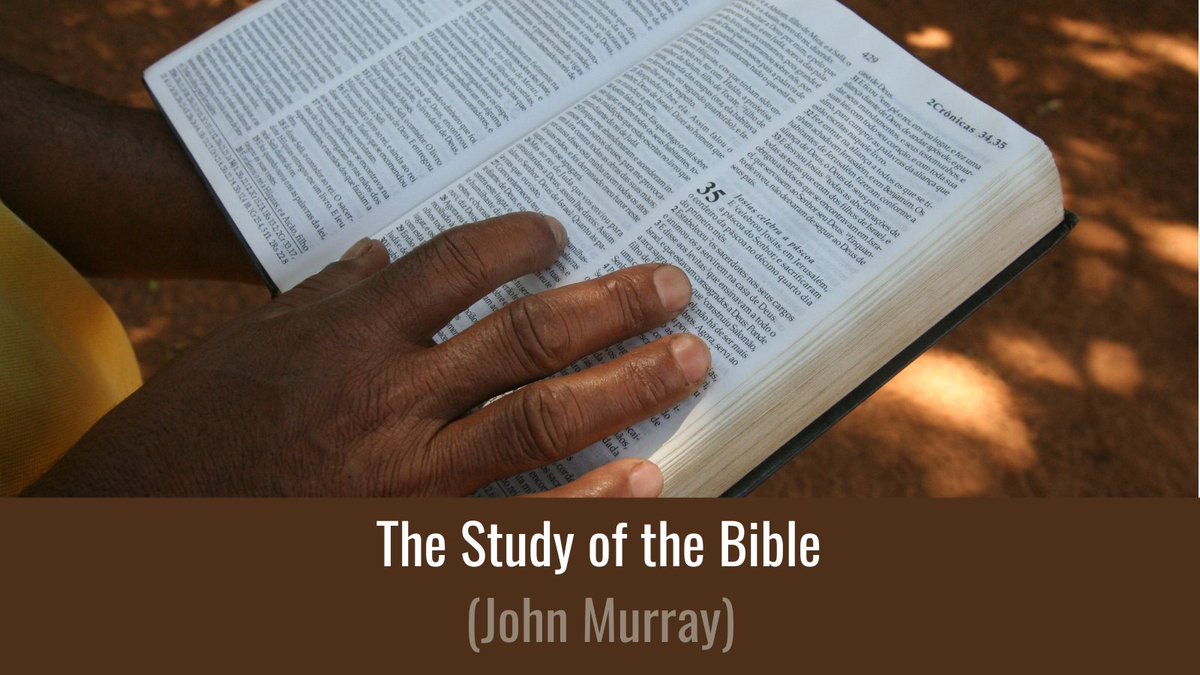
I take it for granted that we all believe the Bible to be the Word of God, the only infallible rule of faith and practice. I take it for granted that we all read the Bible with regularity. What I am going to plead for, however, is concentrated, sustained, devoted study of the Bible, the kind of study that is not fulfilled by the perfunctory reading of some passages each day. The set periods of family worship are not, of course, by any means to be disparaged. This is a highly necessary and most fruitful exercise. The influence for good exerted by honouring God’s Word in this way is incalculable for all concerned. Indeed, the minimal use of the Bible in this way has often left an indelible impression for good. And furthermore, the set periods of family worship may become the occasions for very concentrated and systematic study of the Bible.
But what I stress here is the necessity for diligent and persevering searching of the Scriptures; study whereby we shall turn and turn again the pages of Scripture; the study of prolonged thought and meditation by which our hearts and minds may become soaked with the truth of the Bible and by which the deepest springs of thought, feeling, and action may be stirred and directed; the study by which the Word of God will grip us, bind us, hold us, pull us, drive us, raise us up from the dunghill, bring us down from our high conceits and make us its bondservants in all of thought, life and conduct.
The Word of God is a great deep; the commandment is exceeding broad; and so we cannot by merely occasional, hurried, and perfunctory use of it understand its meaning and power.
Sustained and diligent study of the Bible is indispensable for several reasons. I am going to mention three of these.
1. The Bible is God’s Word, the revealed counsel of God. It is possible for us to develop a certain kind of familiarity with the Bible so that we fail to appreciate the marvel of God’s favour and mercy and wisdom in giving it to us. We need to stop and consider what hopeless darkness, misery, and confusion would be ours if we did not possess the Bible. We would be without God and without hope in the world, endlessly stumbling over our own vain imaginings with respect to God, with respect to His will for us and with respect to our own nature, origin, and destiny. The Bible is the infallible revelation to us of the truth regarding God Himself, regarding the world in which we live, and regarding ourselves. It reveals God’s mind and will for us; it declares the way of salvation; it discloses the knowledge that is eternal life. The secrets of God’s mind and purpose, secrets which eye hath not seen nor ear heard, have been laid open to us, the things that concern God’s glory, and our highest interests against all the issues of life and death, of time and eternity…
If we truly appreciate the mystery of God’s grace and wisdom, we shall study the Bible as one who has found great spoil. The very nature and content of God’s Word will compel our most earnest application to it.
2. We must study the Bible with all diligence and persistence if we are really to know and understand its truth. It is perfectly true and an unspeakable mercy that a certain simplicity characterizes the Bible. We cannot read it with some measure of intelligent attention without getting its great central message. The things necessary to be known, believed, and observed for salvation are clearly propounded in Scripture, and he that runs may read. But no Christian should be satisfied with the bare minimum of knowledge necessary for salvation. It is, indeed, to be lamented that the life of many earnest Christians is based upon a fragmentary, piecemeal knowledge of Scripture teaching... We must understand that the whole Bible stands together and that the fibres of organic connection run through the whole Bible, connecting one part with every other part and every one truth with every other truth.
3. Painstaking study of the Bible is indispensable to our own thought and practice. Life is very complex, and we are constantly beset with baffling questions. New situations daily confront us. If the situations are not entirely new, old situations take on new colour and new settings. We need to know anew what is the right thing to think and what is the right thing to do. If we are to meet these situations, we must be armed with the sword of the Spirit which is the Word of God, and we must be equipped with such knowledge of the Word that we shall derive from it the needed direction and strength.
Indolence is one of our greatest temptations. We are in constant danger of becoming static in our thinking. Perhaps we have a well-rounded and competent knowledge of the Christian faith… But if we rely on such a reservoir of knowledge we are in a dangerous and slippery position. Thought and life are too complex to be adequately met by any such reservoir. The means God has provided for every exigency that may arise is the Word of God itself. The demand of the multiform situations in which we are placed in our thinking and in our life are met only by the multiform wisdom deposited in the holy Scriptures. However much assistance we may derive from formulations and expositions of Scripture truth—and it is not only impoverishing but God-dishonoring to disparage and neglect these—yet, after all, the Bible is the only sufficient rule of faith and life as well as the only infallible rule. We must betake ourselves anew, day by day, with humble and submissive minds to the law and to the testimony so that our minds may be illuminated, replenished, refreshed, renewed, and reinvigorated by the pure light that shines in the pages of God’s inerrant Word. “Let the word of Christ dwell in you richly in all wisdom.” …
In all our study and application of the Word of God, we must appreciate a divinely-fixed coordination. It is that of the Word of God and the Spirit of God. “Where the Spirit of the Lord is, there is liberty.” God has not left us to our own resources in the study of His Word. There is the never-failing promise and the ever-present ministry of the Holy Spirit. He is the author of the Word, and it is His peculiar prerogative to illumine the Scripture and to seal its truth upon our hearts. These are the two pillars of faith and life—the whole organism of Scripture revelation and the promise of the Spirit to guide us into all the truth. The Spirit honours and seals His own Word, and the Word assures us that “if ye then, being evil, know how to give good gifts unto your children, how much more shall the heavenly Father give the Holy Spirit to them that ask Him?”
John Murray, Collected Writings, vol. 1, (Banner of Truth, 1976)
#Biblestudy #Biblereading #Bible #JohnMurray #CCMBooks #CCMMedia
Here are two benedictions which we find at the end of letters in the Bible.
“Now may the Lord of peace himself give you peace at all times and in every way. The Lord be with all of you” (2 Thess. 3:16).
“May the God of peace, who through the blood of the eternal covenant brought back from the dead our Lord Jesus, that great Shepherd of the sheep, equip you with everything good for doing his will, and may he work in us what is pleasing to him, through Jesus Christ, to whom be glory for ever and ever. Amen” (Heb. 13:20-21).
Please look at every phrase, for I will not comment on all of them. Notice “at all times and in every way” and “everything good for doing his will.” The God of peace does a thorough work in us.
Recently* I have been conscious of the lack of moderate commands in the Scriptures. During the same period of time, I have noticed many Christians moderating these commands. The commands are so extreme, we think we have to run them through a transformer or a reduction gear to bring them down to our size so we can consider the possibility of obeying them. This is not honest nor necessary. There are also immoderate promises like the ones quoted above. This is the way we can obey the immoderate commands.
Jim Wilson
*Written June 1999.
This post coordinates with today's reading in the Same Page Summer Bible Reading Challenge. If you are not in a daily reading plan, please join us at https://t.co/7Hy43lOrOO. We would love to have you reading with us.
#SamePageSummer #TotheWord #Biblereadingchallenge #thessalonians #promises #Godspromises #JimWilson #CCMMedia #CCMBooks
“‘Haven’t you read,’ he replied, ‘that at the beginning the Creator “made them male and female,” and said, “For this reason a man will leave his father and mother and be united to his wife, and the two will become one flesh”? So they are no longer two, but one. Therefore what God has joined together, let man not separate’” (Matthew 19:4-6).
The marriage service says that marriage is a “holy estate.” The Christian marriage is more than physical, economic, cohabitating and child bearing and rearing. It is a spiritual fellowship; it is a picture on earth of Christ and His body, the Church.
“Wives, submit to your husbands as to the Lord. For the husband is the head of the wife as Christ is the head of the church, his body, of which he is the Savior. Now as the church submits to Christ, so also wives should submit to their husbands in everything. Husbands, love your wives, just as Christ loved the church and gave himself up for her to make her holy, cleansing her by the washing with water through the word, and to present her to himself as a radiant church, without stain or wrinkle or any other blemish, but holy and blameless. In this same way, husbands ought to love their wives as their own bodies. He who loves his wife loves himself” (Ephesians 5:22-28).
At the time of this writing, I have recently seen eight Christian marriages break up after over twenty years of marriage. I am watching several more in the process. Is there an attempt to stop it? Yes! However, there is encouragement for divorce from counselors, attorneys, family members, and Christian friends. Intruding, teaching, and discipline may be in order, but what is really needed is the convicting power of the Holy Spirit. Each of you know friends of yours who are in this situation. Pray for the heavy hand of God to be upon them until there is repentance.
If there is any sign of trouble in your marriage, repent to God and call for help from the saints.
In case this all sounds too discouraging, we know of several marriages that have been wonderfully saved.
Jim Wilson
#SamePageSummer #TotheWord #Biblereadingchallenge #marriage #married #Christianmarriage #JimWilson #CCMMedia #CCMBooks
I have just written to a man in a California prison.* He has just started on a 44-year prison sentence. After that, he has 35 years waiting for him in an Idaho correctional institution. His children live with their mother in Florida. He is not a Christian. I am sending him a Bible and books. I am his only correspondent. We send Bibles and books to many people in prison at their request. We correspond with some of them and take collect calls from others. If you were here, you would think it is our only ministry. It is only a minor part, but biblically it is a very important part.
Jesus said in Matthew 25:31-40,
“When the Son of Man comes in his glory, and all the angels with him, he will sit on his throne in heavenly glory. All the nations will be gathered before him, and he will separate the people one from another as a shepherd separates the sheep from the goats. He will put the sheep on his right and the goats on his left.
“Then the King will say to those on his right, ‘Come, you who are blessed by my Father, take your inheritance, the kingdom prepared for you since the creation of the world. For I was hungry and you gave me something to eat, I was thirsty and you gave me something to drink, I was a stranger and you invited me in, I needed clothes and you clothed me, I was sick and you looked after me, I was in prison and you came to visit me.’
“Then the righteous will answer him, ‘Lord, when did we see you hungry and feed you, or thirsty and give you something to drink? When did we see you a stranger and invite you in, or needing clothes and clothe you? When did we see you sick or in prison and go to visit you?’
“The King will reply, ‘I tell you the truth, whatever you did for one of the least of these brothers of mine, you did for me.’”
Notice the words, “you did for me.” Isn’t that wonderful? Would you like to do something for Jesus?
Feed the hungry, give water to the thirsty, clothe the naked; invite strangers into your home, visit the sick, and visit prisoners. Suppose it is not Jesus you visit; it is a con man, a panhandler, or a thief. That is not a reason at all to choose to be with the goats and not with the sheep. Have I been conned, cheated, ripped off? Yes, several times. However, the blessing of giving and receiving has been much more than any negative experience.
Jim Wilson
*Written September 1999.
This post coordinates with today's reading in the Same Page Summer Bible Reading Challenge. If you are not in a daily reading plan, please join us at https://t.co/7Hy43lOrOO. We would love to have you reading with us.
#SamePageSummer #TotheWord #Biblereadingchallenge #JimWilson #CCMMedia #CCMBooks
*Nothing is too big to ask God, and nothing is too small to ask Him. If it is big enough to concern you, it is big enough to concern Him.*
“And when you pray, do not keep on babbling like pagans, for they think they will be heard because of their many words. Do not be like them, for your Father knows what you need before you ask him” (Matt. 6:7–8).
Why do we need to pray when God already knows what we need?
First, we should pray because God commands us to. We are to obey Him. “Rejoice always, pray continually, give thanks in all circumstances; for this is God’s will for you in Christ Jesus” (1 Thess. 5:16–18). “And pray in the Spirit on all occasions with all kinds of prayers and requests. With this in mind, be alert and always keep on praying for all the Lord’s people” (Eph. 6:18). The quality of our obedience is inextricably linked with the closeness of our walk with God. A major component of that walk is prayer. For a strong Christian life, look to the Lord continually. Seek His face. Pray the prayers of Scripture.
God has chosen us to fulfill His will. He taught us to pray for this fulfillment. “Your kingdom come, your will be done, on earth as it is in heaven” (Matt. 6:10).
The Bible is the story of God reconciling us to Himself. He wants to have a relationship with us. When you are in a relationship with someone, you talk to them. If we want a healthy relationship with God, we need to talk with Him, too. It is not enough to relegate prayer to church and our prayer group.
“Trust in the Lord with all your heart, and do not rely on your own insight” (Prov. 3:5 RSV, italics mine). We are absolutely dependent on God. “In him we live and move and have our being” (Acts 17:28). Many Christians forget this. God gave us brains, but not so that we could trust them. We are to trust Him. Make it the habit of your life to be constantly looking up to Him for guidance. Don’t let that be just a special event when you are in trouble or trying to make a big decision. “He will put all things right. He is both willing and able. Stop expecting the solution from yourself…and just yield yourself unreservedly to God to work in you. He will do all for you” (Andrew Murray). “I will instruct you and teach you in the way you should go; I will counsel you and watch over you” (Ps. 32:8).
Nothing is too big to ask God, and nothing is too small to ask Him. If it is big enough to concern you, it is big enough to concern Him.
If there is anyone we might think wouldn’t need to pray, it is Jesus. He is God! But what do we find in the Bible? Jesus was constantly going up on a mountain or off into a deserted place to pray to the Father. Read through the Gospels, and you will find that He spent many late (or early) hours in prayer. His earthly ministry began with forty days of fasting and prayer (Mark 1:13). Before choosing His twelve disciples, Jesus spent the entire night in prayer (Luke 6:12–14). He gathered His disciples to pray with Him the night before His death (John 17). After His ascension, the disciples continued to meet regularly for prayer (Acts 1:4).
If you want the Lord to be more and more precious to you, start praying for His coming. In the next-to-last verse in the Bible, Jesus said, “I am coming soon” (Rev. 22:20). John replies, “Amen. Even so, come, Lord Jesus.” For the next few days, pray every day, “Amen. Even so, come, Lord Jesus.” “But I don’t want Him to come; I’ve got things to do!” Begin praying for His return, and see if it cleans up your act. It will! “He who has this hope in Him purifies himself, even as He is pure” (1 John 3:3).
John Owen, a great Puritan theologian, found that “many saints have no greater burden in their lives than that their hearts do not…constantly delight and rejoice in God—that there is still an indisposedness of spirit unto close walking with him…. So do this: set your thoughts on the eternal love of the Father and see if your heart is not aroused to delight in Him. Sit down for a while at this delightful spring of living water and you will soon find its streams sweet and delightful.”
Unless you have a delight and a desire to follow Jesus, nothing else you learn about being a Christian is going to work. It will just be mechanics. Get into the habit of praying. You may be surprised at the results. When I think about all the answers God has provided, I wonder that I am not praying every minute of the day.
Jim Wilson
(This is a chapter from Answered Prayer: The Faithfulness of God Made Manifest, available at Amazon, Audible, and https://t.co/qLBtqQIVvt.)
This post coordinates with today's reading in the Same Page Summer Bible Reading Challenge. If you are not in a daily reading plan, please join us at https://t.co/7Hy43lOrOO. We would love to have you reading with us.
#SamePageSummer #TotheWord #Biblereadingchallenge #prayer #pray #praying #answeredprayer #JimWilson #CCMMedia #CCMBooks
@YoungBobRB Donated! Thank you for doing this. We are praying for a swift recovery from your injuries. Praise God for people like you who are willing to take a stand!
“Make every effort to keep the unity of the Spirit through the bond of peace” (Ephesians 4:3).
There is a unity in the Spirit. We become part of that unity at the instant we are born of the Spirit.
“There is one body and one Spirit—just as you were called to one hope when you were called—one Lord, one faith, one baptism” (Ephesians 4:4-5).
This unity is a reality! We are to make every effort to keep it. We cannot establish it. It is true already by virtue of our being born into the body of Christ.
Here are few of the ways we destroy this unity:
· We become men followers (1 Corinthians 1 & 3).
· We seek followers for ourselves (Acts 20:30).
· “We have the best church government.”
· “We have the best form of worship.”
· “We have the best doctrine.”
· “Our teaching on holiness is the right teaching.”
· “The meaning and form of our church’s sacraments/ordinances are most correct.”
· “Our view of the gifts of the Spirit is the biblical view.”
· “We are the true church of Christ.”
Even if any of the positions we hold happen to be right from God’s view, we might be in sin anyway because of how we hold them.
If all Christians of all cultures and nations were in 100% agreement on all practices and doctrines, both primary and secondary, many of the Christians would not like it. Why? Because none of us could then be the most right. We want to be exclusive, not inclusive.
We are saved by grace through faith. Entrance into the body of Christ is by rebirth; however, joining a local church is in many cases more difficult than getting into the real church.
Here is where our focus ought to be in our relationship with other Christians: “Make every effort to keep the unity of the Spirit through the bond of peace” (Ephesians 4:3).
Jim Wilson
This post coordinates with today's reading in the Same Page Summer Bible Reading Challenge. If you are not in a daily reading plan, please join us at https://t.co/7Hy43lOrOO. We would love to have you reading with us.
#SamePageSummer #TotheWord #Biblereadingchallenge #unity #Christianunity #bodyofChrist #JimWilson #CCMMedia #CCMBooks
“This is the confidence we have in approaching God: that if we ask anything according to his will, he hears us” (1 John 5:14).
Much of prayer is wishful, hopeful, anxious, or desperate praying. This text and the ones below are God’s conditions for answered prayer.
“Do not be anxious about anything, but in everything, with prayer and petition, with thanksgiving, present your requests to God. And the peace of God, which transcends all understanding, will guard your hearts and your minds in Christ Jesus” (Philippians 4:6-7).
“Until now you have not asked for anything in my name. Ask and you will receive, and your joy will be complete” (John 16:24).
“You did not choose me, but I chose you and appointed you to go and bear fruit—fruit that will last. Then the Father will give you whatever you ask in my name. This is my command: Love each other” (John 15:16-17).
“But when he asks, he must believe and not doubt, because he who doubts is like a wave of the sea, blown and tossed by the wind. That man should not think he will receive anything from the Lord” (James 1:6-7).
“When you ask, you do not receive, because you ask with wrong motives, that you may spend what you get on your pleasures” (James 4:3).
“If I had cherished sin in my heart, the Lord would not have listened; but God has surely listened and heard my voice in prayer. Praise be to God, who has not rejected my prayer or withheld his love from me!” (Psalm 66:18-20).
Here are the explanations for unanswered prayer: doubting, anxiety, wrong motives, iniquity in our hearts.
Here are the conditions for answered prayer: confidence, the will of God, thanksgiving, believing, abiding and fruitfulness, in Jesus’ name.
We have all experienced answered prayer when we violated all but the last one: “in Jesus’ name.” If God is that faithful to us, then we can lean on His faithfulness. That is what faith is—trusting in the faithfulness of God.
The preparation for believing prayer is: 1) a clean heart, and 2) being saturated in meditation with Scripture. (Faith comes from hearing the message, and the message is heard through the word of Christ.) Then answered prayer will not be a surprise to us, as it was in Acts 12 to the believers then.
Jim Wilson
This post coordinates with today's reading in the Same Page Summer Bible Reading Challenge. If you are not in a daily reading plan, please join us at https://t.co/7Hy43lOrOO. We would love to have you reading with us.
#SamePageSummer #TotheWord #Biblereadingchallenge #confidence #1John #anxiety #thanksgiving #JimWilson #CCMMedia #CCMBooks
“Christ is milk for babes and strong meat for men.” – John Calvin
I was recently* involved in a conversation regarding two distinguished, voluminously-published theologians. Both are divorced; their wives left them because they spent so much time reading, writing, and teaching that their families suffered from neglect. I was also disappointed to hear of a pastor who wrote a rather helpful book on child discipline, yet has a rebellious child. All three of these men know their Bibles very well, but their lives have not demonstrated practical godliness.
Practical godliness lies at the heart of the Christian life. Knowing good and evil is important, but it is not enough. Good must be practiced.
The Scriptures speak of a difference between milk and solid food. Milk is for the immature, and solid food is for the mature. We often associate milk with simple, basic truth, and solid food with lofty theological concepts. But Scripture denies any necessary correlation between godliness and vast Bible knowledge. The men mentioned above could tell us much about the Bible’s teaching on family life, but I would never recommend them as family counselors.
We read in Hebrews that solid food belongs to “those who by reason of use have their senses exercised to discern both good and evil” (5:14). The difference between milk and solid food is practice. Truth doesn’t impact lives when it is merely affirmed; it must be applied.
A particular verse may be milk to one person and solid food to another; the difference lies in how the verse affects lifestyle. When Paul tells the church in Corinth that he feeds them only milk because of their inability to take in solid food (1 Cor. 3:2), we should not conclude that his first letter to them is full of fluff. Quite the contrary—it carries good instruction for both the young and the mature in Christ. Through perseverance, the young will become mature.
John Calvin once wrote, “Christ is milk for babes and strong meat for men.” He was correct. Every doctrine which can be taught to theologians is taught to children. As we mature in Christ, we don’t move on to different, “deeper” topics. The maturing Christian is the one who remains in pursuit of that which he has sought from the beginning. Solid food always leads Godward. The Lord remains the same; our lives change.
Chris Schlect
*Written in 1991.
#godliness #Christianity #practicalChristianity #Corinthians #solidfood #ChrisSchlect #Calvin #JohnCalvin #CCMMedia #CCMBooks
To live by faith and to walk with God are all one. Enoch was said to have walked with God (Gen. 5:24). What was this else, but to rest and believe on God, whereby he pleased Him? (Heb. 11:5-6). The moral actions of man’s life are fitly resembled by the metaphor of walking, which is a moving from one place to another. No man, while he liveth here, is at home in the place where he shall be (Heb. 11:5-6). There are two contrary homes, to which every man is always going, either to heaven, or to hell. Every action of man is one pace or step whereby he goeth to the one place or the other…
First, you are commanded to walk as Christ walked (1 John 2:6); and it concerns you so to do, if you would approve yourself to be a member of His body: for it is monstrous, nay, impossible, that the head should go one way, and the body another…
Secondly, it is all which the Lord requireth of you, for all His love and goodness showed unto you, in creating, persevering, redeeming, and saving you. For what doth the Lord require of you, but to do justly, and to love mercy, and to walk humbly with your God (Micah 6:8)?
Thirdly, if you walk with God, and keep close to Him, you will be sure to go in the right way, in that good old way (Jer. 6:16), which is called the way of holiness (Isa. 35:8); in a most straight (Prov. 3:17), most sure, and (to a spiritual man) most pleasant way, the paths of which are peace; the very happiness and rest of the soul (Jer. 6:16). God teacheth His children to choose this way (Isa. 48:17, Psalm 85:13, Psalm 37:23). And if they happen to err, or to doubt of their way, they shall hear the voice of God’s Spirit behind them, saying, “This is the way, walk in it” (Isa. 30:21).
Fourthly, if you walk with God, you shall walk safely (Prov. 3:24); you will not need to fear, though ten thousand set themselves against you (Psa. 3:5-6); for His presence is with you, and for you.
Fifthly, when you walk with God you walk with the best company, even such whereof there is most need, and best use. While God and you walk together, you have an advantage above all that walk not with Him; for you have a blessed opportunity of that holy acquaintance with God, which is expressed in Job 22:21-30. You have opportunity to speak unto Him, praying with assurance of a gracious hearing. Is it not a special favour that the most high God, whose throne is in heaven, should condescend to walk on earth with sinful men? Nay, rather call up man from earth to heaven, to walk with Him (Phil. 3:20, Col. 3:2)? It would be therefore shameful ingratitude not to accept this offer, and not to obey this charge.
Sixthly, to set the Lord always in your sight is an excellent preservative and restraint from sin… For who is so foolish and shameless as willfully to transgress the just laws of a father, king, and judge, knowing that He is present, and observes him with detestation if he so do?
Seventhly, to set the Lord always before you (Psa. 119:168) is an excellent remedy against spiritual sloth and negligence in duties, and it is a sharp spur to quicken, and make you diligent and abundant in the work of the Lord. What servant can be slothful and careless in his master’s sight? And what master will keep a servant that will not observe him, and do his commands, while he himself looketh on?
Eighthly, walking with God in manner aforesaid doth exceedingly please God (Heb. 11:54). It also pleases God’s faithful ministers (3 John 3), and doth please and strengthen all the good people of God (Psalm 119:74), with whom you do converse. It is to walk worthy of God in all well pleasing (Col. 1:9-10).
Ninthly, thus walking with God, you shall be assured of God’s mercy and gracious favor. He keepeth covenant and mercy with all His servants that walk before Him with all their heart (1 Kings 8:23). When you do thus walk in the light, you have a gracious fellowship with God, and the blood of Jesus Christ cleanseth you from all sin (1 John 1:7). There is no condemnation to you who thus walk (Rom. 8:1). Your flesh, when you die, shall rest in hope. For to them that set God before them, He doth show the path of life, which will bring them into His glorious presence, where are fulness of joys and pleasures for evermore (Psalm 16:11).
Any one of these motives, seriously thought upon by an humble Christian, is enough to persuade him to this holy walking with God.
Excerpted from "A Christian's Daily Walk" by Henry Scudder, c. 1640
#Christianwalk #walkwithGod #walkingwithGod #Christianlife #Puritan #Scudder #JimWilson #CCMMedia #CCMBooks
*You send your kids to a Christian school. You take them to church. And they still don’t turn out right. Why are so many evangelical Christians rearing children who are not Christians at all?*
Many years ago, my wife and I heard a message that we took very much to heart. It was preached at our wedding. The message had been given first more than 3,000 years earlier to a people who did not take it to heart. It was part of Moses’ final talk to the new generation.
"Fix these words of mine in your hearts and minds; tie them as symbols on your hands and bind them on your foreheads. Teach them to your children, talking about them when you sit at home and when you walk along the road, when you lie down and when you get up. Write them on the doorframes of your houses and on your gates, so that your days and the days of your children may be many in the land that the LORD swore to give your forefathers, as many as the days that the heavens are above the earth" (Deuteronomy 11:18-21).
There was very little application of this teaching by the people of Israel in the Old Testament. I have also observed hundreds of Christians, senior to me, contemporary to me, and junior to me. My observation is that evangelical Christians seem to be able to rear children who are nominal Christians or not Christians at all. Or if some of the children are clear Christians, some of them are not. I realize that such a statement may bring many letters from people whose children are walking in close fellowship with the Lord. It’s worth making such a statement just to get such a barrage of good news.
When I was a child, I heard a saying that the preacher’s kids were the worst kids in town. From my limited experience at that time with preachers’ kids, the saying seemed to be validated. I remember one such kid. He was not a roughneck, but he sure was obsequious and unctuous to all his acquaintances. From my self-righteous view, I looked down on him.
When I became a Christian years later, I looked back on my earlier years and came to the conclusion that the preachers I had known were ultra-liberal in their theology and that’s why their kids were not godly. It was a simple explanation and may have kept me from being disillusioned with the power of the Gospel. However, it was not a true explanation.
Over the years, I have spent many hours with many Christian workers about the waywardness of their children. These are mostly missionaries and pastors. I have also spent many hours loving the children of other missionaries and pastors.
In addition, the Christian gossip circuit brings to our ears stories of children of famous Christians who have gone astray. The empathy is great among the Christians for other Christians who have rebellious children. The empathy is there because they either have such children themselves or perhaps expect to have such children.
There are many explanations, and they may be right, at least in part. “The Jones’ children did not turn out because they sent them to the public schools. We will send ours to a Christian school or to a Christian boarding school.” Still they do not turn out right. In all of the empathy and sympathy there seems to be a lack of hard scrutiny concerning the cause of the problem and a lack of action taken to solve the problem.
In the Deuteronomy passage quoted earlier, two things are very evident:
1. The continuous presence of Scripture in time and place—really all the time and in all places.
2. The continual presence of the father with the children.
I think there is a lack in the Christian home on both counts, but the greater lack is on the latter. There is very little difference in the time spent with the children by a full-time Christian worker and by a father in the world system. In both cases it is very little time. If there is a difference, it is that the Christian father has a “spiritual” justification for spending so little time. He is busy serving the Lord.
It may sound simplistic, but the basic causes of rebellious and unbelieving children of Christian parents are:
1. Not enough time spent with the children, or, if there is time with the children, it is not loving time.
2. Not enough time spent with the Scriptures alone and with the children.
Christian workers will give their time in counsel, in love, in the Scriptures to anyone in need outside of the family. Children must compete for time with their father. In most cases they cannot compete effectively. In order to get attention they have to act as evil as the people to whom their father gives his time. Even then it does not work because the children have now disgraced the Lord, their father, and the ministry.
From my perspective there seem to be many Christian pastors who know that what they are doing is wrong for the family, yet they keep on doing it. Or they have already lost one or more children to the enemy, and they keep on doing what caused the children to defect.
In Titus 1 and in 1 Timothy 3, the Scripture gives the qualifications for being an elder. Among the qualifications are these:
"An elder must be...a man whose children believe and are not open to the charge of being wild and disobedient" (Titus 1:6).
"He must manage his own family well and see that his children obey him with proper respect. (If anyone does not know how to manage his own family, how can he take care of God’s church?)" (1 Timothy 3:4-5).
Among elders who hold to the inspiration and the authority of Scripture, I have encountered ignorance of these texts, hedging and defensiveness; they thought their call to preach had a higher authority than the text. There were too many explanations why the situation in their home was not covered by these verses:
1. “Yes, the children are not believers, but they are not yet adult. The text does not apply.”
2. “Yes, the children are not believers, but they are adult and no longer under our authority. The text does not apply.”
3. “The texts apply only to people who are to be appointed elders. They do not apply to those already ordained.” (If so, is this true also for drunk, violent and quarrelsome elders?)
4. “Yes, I believed that it applied to me, so I submitted my resignation to the church. The church would not accept it and begged me to continue as their pastor.” Normally there is much sympathy from the congregation because of the apparent godliness of the pastor and his wife.
5. “I was in much confusion about my position as an elder, so I sought counsel from older men of God whom I respected. They assured me that they had children who had been far away from the Lord for many years and that they had recently come to the Lord. They encouraged me to stay in the ministry, and they would pray for my children.”
6. “This is my profession. I do not know how to do anything else.”
With very few exceptions, in evangelical churches we do not find discipline of elders based upon the belief and character of the elders’ children. The church members or hierarchy would not take action because of a false view of, “If any one of you is without sin, let him be the first to throw a stone at her” (John 8:7) and “Do not judge, or you too will be judged” (Matthew 7:1). I do not think it is realistic to expect churches to suddenly reverse an attitude that has been operating a long time. If they suddenly began to make judgment on such issues, it could happen without love and with bad attitudes. However, it is realistic and right for elders to judge themselves. As it stands, we have very clear teaching in the Scripture that is universally ignored and disobeyed.
While you are rereading and praying over 1 Timothy 3 and Titus 1, look at all of the requirements, not just those concerning children. Are you still as qualified as when you were called to the ministry? If not, then confess and forsake your sins and begin to obey.
If the results of your unelderly-like behavior include such things as unbelieving and disobedient children, then leave the ministry.
These are the reasons you should leave:
1. If you have succeeded in justifying yourself, you will not confess the sin, and, consequently, you are not walking in the light. You are not qualified to be an elder.
2. For the church’s good: you are not qualified, even though you have been forgiven.
3. For your children’s good: they will not have to compete with God (or what they think is God) for your attention.
4. For your own conformity to the likeness of Jesus Christ.
It is likely that your children will turn to the Lord when they find that their father is godlier, less busy, and more loving.
One of the results is that you may be back in the ministry with power that you never had before.
In Ezekiel 18, we are told that we will not be judged for our parents’ sins or our children’s sins. We will be judged for our own sins. It is our own sins I am writing about.
Early in our ministry, when our children were very young, my wife and I made a decision, a covenant or a very strong vow: if any of our children ever fit the description of 1 Timothy 3 or Titus 1 and were wild, disobedient, unmanageable, disrespectful, and unbelieving, we would leave the ministry that same day. We have not had to do that.
We do not seem to have many good examples of fathers in the Bible. Noah, Abraham, Isaac, Eli, Samuel, David, Solomon, Jehoshaphat, and even Josiah were godly in certain ways, but poor fathers. We do not have the examples, but we do have the teaching and the promises.
#fathers #fatherhood #parenting #raisingchildren #ministry #pastor #qualificationsforministry #Christian #Christianfathers #fatherlessness #JimWilson #CCMMedia #CCMBooks
*If your parents are still alive, it’s not too late to repair your relationship with them.*
Restoring Relationships with Your Parents, Part 3
As much as possible, follow up on the letters by spending time with your parents. Show them with your attention that they are valuable to you. When you go home, express affection to your parents physically. Don’t do the polite hug. Get into it. Really give them a squeeze. Maybe even a kiss! Just rock the old man. Surprise your mom.
You may receive a favorable response to your letters. If you do not receive a response, do not think that you did something wrong. Be patient and keep on giving. Some cultures (e.g. those of Northern Europe) are not expressive with their emotions, except for lost tempers. This kind of expression from you may be embarrassing for your parents. But they still want and need to receive this expressed love, even if they do not know how to return it.
If your parents are still alive, it’s not too late to do this. One man I know who is in his late fifties wrote this kind of letter to his father. His mother replied, “I have been married to your father for sixty years. When he read your letter, that was the first time in our marriage I saw tears in his eyes.”
Some years ago, my wife Bessie and I held a summer school of practical Christianity at the Delta House of the University of Idaho. Respect for parents was one of the subjects. About forty students attended. Because the class was big, I did not get to know everyone well and did not know the effect of the teaching.
The following fall, at a noon Bible study at nearby Washington State University, I was teaching the same subject again, and one of the students spoke up. “I heard this at the Delta House last summer, and I took action,” he said. “When I was sixteen, my father kicked me out of the house and told me he would never see me again. Later, I became a Christian and married a Christian woman, and now I am a graduate student in economics. I had never seen my father since he kicked me out of the house. This summer, I wrote two letters, one to my father, and one to my mother. I didn’t know it, but my parents were on the brink of divorce, living in separate bedrooms at home in North Dakota.
“It took me several days to write each letter, so I sent them a few days apart—but for some reason, the letters arrived on the same day, and both my parents were home when the mail came. Seeing that the letters were addressed separately, my mother took her letter to her room, and my father took his letter to his room. After reading them, they came out and traded letters, and went back to their rooms to read the other letter. When they came out the second time, my father had tears in his eyes. He told my mother, ‘I’m flying out to Pullman to see my son.’”
He had seen his father between the summer school and the fall Bible study. It saved his parents’ marriage.
Another student who had recently graduated told me of the awful relationship he had with his father, and I made this suggestion of writing letters. Some months later, when I was speaking to another group on this subject, he spoke up. “Jim told me to do this several months ago, but I wasn’t going to. I hated my father. In fact, one day I was going to write to tell him what I really thought of him and what a lousy father he had been. I had the entire letter in my head. But when I sat down to write, instead of that letter, I wrote the kind that Jim told me. My father got the letter, and he came down from Spokane immediately to see me. He’s dying now, and I read the Scripture to him by his bedside.” It reestablished the relationship.
If you already have a good relationship with your parents, go ahead and write these letters anyway. It won’t hurt. One young man I know did this, and a few weeks later, he told me he had gotten a letter back from his dad. I asked him what it said. “My father said that he wrote a letter like this to his father when he was my age, and, boy, was it good to get one from me!” That is your thousand generations, when you do it right.
What do you do with disappointment? Another student wrote two letters to her mom, the first about the love and respect, and a second one later asking for advice. The mother’s response to the first letter was, “Why are you being so soupy?” and the second reply was in anger: “Why do you need this information?”
You can expect questions like this the first time around—so send more than one letter. Likewise, if you come from a family that never hugs, the first time you hug your father, he’ll stand there like a fencepost. It will be awkward. Keep doing it. Hug him when you get home, but also, when you’re at home, hug him every time he walks by.[1]
This might make him ask, “What’s your angle?” or “What is this going to cost me?”
Say, “Dad, do you really want to know? If you buy me lunch, I’ll tell you.” Get together with him. Rather than being disappointed at his response, consider those questions an opportunity to do more.
Tell him, “Dad, here is why I’m doing this. I know you love me very much, but I have had to take it by faith. You have not been the best expresser of your love. So, growing up I did not think you loved me. You fed me and clothed me and housed me and sent me off to school. I know that is love, but there’s more to love than that, and I have needed more. You wondered why I got in trouble in high school and college. It’s because I needed more affection than you were giving me. I was boy crazy because I was looking for the male affection I was missing at home. I don’t think you would want me to get it somewhere else now. I still need my father, and you need me, so I thought I’d come home and prime the pump.”
Here is a very important caveat: if you tell your parents that you are giving them affection because you did not get enough growing up, be careful not to say it in an accusative fashion. What makes the difference is your attitude, your heart, and your manner of speech. Don’t say, “Dad, you never loved me.” Say, “I know you love me. And I love you. But I didn’t always know that, and now I want to cause more love.” Say it in a helpful way. Some people will still take it accusatively, but if you keep giving affection, they will know better.
You do not need to become a constant hugger if that is not your nature, but you should go to the limits of your normal means of expression, which is probably far more than your parents have been getting, and they do need it. If you keep on giving affection after the questions you get back, you will soften your parents. In a matter of weeks, months, or years (the timeline varies with different people), you will see a real turnaround. Be patient, and keep on showing love.
There are two problems to take care of in your relationship with your parents—the heart problem and the action problem. The heart problem is first. Only a true heart repentance will 1) stop the curse, 2) cause long life, and 3) turn the three or four generations of bad news around to a thousand generations of good news. Your own unlove, your disrespect, and your ungratefulness towards your parents have to be taken care of in repentance toward God. To write these letters without being forgiven by God only ensures that your letters will be insincere and hypocritical. You may have a long wait if you wait for your father to turn to you first. You cannot afford the wait, so get right with God now. After you are clean, write the letters. Then continue writing, calling, texting, and visiting your parents, expressing respect, love, and thankfulness.
Doing these things will change you. You will become a better husband, son, and father, or a better wife, daughter, and mother. Your love and obedience will bring love for a thousand generations.
Jim Wilson
[1] How can a child show physical affection to a father who has abused him/her? Suppose you were molested by your father, and you are not up to hugging him because he does not respond like a father. In this case, I do not suggest that you hug him. Express your love some other way that is not physical. Do you not love him? Again, take care of that. Confess it and choose to love your father. Then find a different form of expression for his benefit and your benefit. A few decades ago, a young woman with this background attended our School of Practical Christianity. It was so clear that she needed a father. Her father was from another country, and he lived overseas. I suggested that she write to him and say, “Dad, I need a father. I need to be hugged; I need to hug you. Dad, will you be my father?” He wrote back a repentant, broken-down letter saying, “Yes, I’ll be your father.” She needed a father, and he needed to be one. Their reconciliation was based upon her giving him respect. I cannot guarantee that a reconciliation will happen in every instance; nevertheless, it is very important that you respect and love and be grateful to your parents, however they might respond.
“Dear friends, now we are children of God, and what we will be has not yet been made known. But we know that when he appears, we shall be like him, for we shall see him as he is. Everyone who has this hope in him purifies himself, just as he is pure” (1 John 3:2-3).
“After that, we who are still alive and are left will be caught up together with them in the clouds to meet the Lord in the air. And so we will be with the Lord forever. Therefore encourage each other with these words” (1 Thessalonians 4:17-18).
“He who testifies to these things says, ‘Yes, I am coming soon.’ Amen. Come, Lord Jesus” (Revelation 22:20).
You may have wondered what my eschatology is. I do not often speak about it. These few words from the text summarize my anticipation:
Hope
Purifies
Encourage
“Amen. Come, Lord Jesus.”
This keeps me from differing with the saints on the order of events at the end time.
Jim Wilson
This post coordinates with today's reading in the To the Word! Bible Reading Challenge. If you are not in a daily reading plan, please join us at https://t.co/7Hy43lOrOO. We would love to have you reading with us.
#TotheWord #Biblereadingchallege #comeLordJesus #Biblereading #Revelation #JimWilson #CCMMedia #CCMBooks




![CommunityChris9's tweet photo. *If your parents are still alive, it’s not too late to repair your relationship with them.*
Restoring Relationships with Your Parents, Part 3
As much as possible, follow up on the letters by spending time with your parents. Show them with your attention that they are valuable to you. When you go home, express affection to your parents physically. Don’t do the polite hug. Get into it. Really give them a squeeze. Maybe even a kiss! Just rock the old man. Surprise your mom.
You may receive a favorable response to your letters. If you do not receive a response, do not think that you did something wrong. Be patient and keep on giving. Some cultures (e.g. those of Northern Europe) are not expressive with their emotions, except for lost tempers. This kind of expression from you may be embarrassing for your parents. But they still want and need to receive this expressed love, even if they do not know how to return it.
If your parents are still alive, it’s not too late to do this. One man I know who is in his late fifties wrote this kind of letter to his father. His mother replied, “I have been married to your father for sixty years. When he read your letter, that was the first time in our marriage I saw tears in his eyes.”
Some years ago, my wife Bessie and I held a summer school of practical Christianity at the Delta House of the University of Idaho. Respect for parents was one of the subjects. About forty students attended. Because the class was big, I did not get to know everyone well and did not know the effect of the teaching.
The following fall, at a noon Bible study at nearby Washington State University, I was teaching the same subject again, and one of the students spoke up. “I heard this at the Delta House last summer, and I took action,” he said. “When I was sixteen, my father kicked me out of the house and told me he would never see me again. Later, I became a Christian and married a Christian woman, and now I am a graduate student in economics. I had never seen my father since he kicked me out of the house. This summer, I wrote two letters, one to my father, and one to my mother. I didn’t know it, but my parents were on the brink of divorce, living in separate bedrooms at home in North Dakota.
“It took me several days to write each letter, so I sent them a few days apart—but for some reason, the letters arrived on the same day, and both my parents were home when the mail came. Seeing that the letters were addressed separately, my mother took her letter to her room, and my father took his letter to his room. After reading them, they came out and traded letters, and went back to their rooms to read the other letter. When they came out the second time, my father had tears in his eyes. He told my mother, ‘I’m flying out to Pullman to see my son.’”
He had seen his father between the summer school and the fall Bible study. It saved his parents’ marriage.
Another student who had recently graduated told me of the awful relationship he had with his father, and I made this suggestion of writing letters. Some months later, when I was speaking to another group on this subject, he spoke up. “Jim told me to do this several months ago, but I wasn’t going to. I hated my father. In fact, one day I was going to write to tell him what I really thought of him and what a lousy father he had been. I had the entire letter in my head. But when I sat down to write, instead of that letter, I wrote the kind that Jim told me. My father got the letter, and he came down from Spokane immediately to see me. He’s dying now, and I read the Scripture to him by his bedside.” It reestablished the relationship.
If you already have a good relationship with your parents, go ahead and write these letters anyway. It won’t hurt. One young man I know did this, and a few weeks later, he told me he had gotten a letter back from his dad. I asked him what it said. “My father said that he wrote a letter like this to his father when he was my age, and, boy, was it good to get one from me!” That is your thousand generations, when you do it right.
What do you do with disappointment? Another student wrote two letters to her mom, the first about the love and respect, and a second one later asking for advice. The mother’s response to the first letter was, “Why are you being so soupy?” and the second reply was in anger: “Why do you need this information?”
You can expect questions like this the first time around—so send more than one letter. Likewise, if you come from a family that never hugs, the first time you hug your father, he’ll stand there like a fencepost. It will be awkward. Keep doing it. Hug him when you get home, but also, when you’re at home, hug him every time he walks by.[1]
This might make him ask, “What’s your angle?” or “What is this going to cost me?”
Say, “Dad, do you really want to know? If you buy me lunch, I’ll tell you.” Get together with him. Rather than being disappointed at his response, consider those questions an opportunity to do more.
Tell him, “Dad, here is why I’m doing this. I know you love me very much, but I have had to take it by faith. You have not been the best expresser of your love. So, growing up I did not think you loved me. You fed me and clothed me and housed me and sent me off to school. I know that is love, but there’s more to love than that, and I have needed more. You wondered why I got in trouble in high school and college. It’s because I needed more affection than you were giving me. I was boy crazy because I was looking for the male affection I was missing at home. I don’t think you would want me to get it somewhere else now. I still need my father, and you need me, so I thought I’d come home and prime the pump.”
Here is a very important caveat: if you tell your parents that you are giving them affection because you did not get enough growing up, be careful not to say it in an accusative fashion. What makes the difference is your attitude, your heart, and your manner of speech. Don’t say, “Dad, you never loved me.” Say, “I know you love me. And I love you. But I didn’t always know that, and now I want to cause more love.” Say it in a helpful way. Some people will still take it accusatively, but if you keep giving affection, they will know better.
You do not need to become a constant hugger if that is not your nature, but you should go to the limits of your normal means of expression, which is probably far more than your parents have been getting, and they do need it. If you keep on giving affection after the questions you get back, you will soften your parents. In a matter of weeks, months, or years (the timeline varies with different people), you will see a real turnaround. Be patient, and keep on showing love.
There are two problems to take care of in your relationship with your parents—the heart problem and the action problem. The heart problem is first. Only a true heart repentance will 1) stop the curse, 2) cause long life, and 3) turn the three or four generations of bad news around to a thousand generations of good news. Your own unlove, your disrespect, and your ungratefulness towards your parents have to be taken care of in repentance toward God. To write these letters without being forgiven by God only ensures that your letters will be insincere and hypocritical. You may have a long wait if you wait for your father to turn to you first. You cannot afford the wait, so get right with God now. After you are clean, write the letters. Then continue writing, calling, texting, and visiting your parents, expressing respect, love, and thankfulness.
Doing these things will change you. You will become a better husband, son, and father, or a better wife, daughter, and mother. Your love and obedience will bring love for a thousand generations.
Jim Wilson
[1] How can a child show physical affection to a father who has abused him/her? Suppose you were molested by your father, and you are not up to hugging him because he does not respond like a father. In this case, I do not suggest that you hug him. Express your love some other way that is not physical. Do you not love him? Again, take care of that. Confess it and choose to love your father. Then find a different form of expression for his benefit and your benefit. A few decades ago, a young woman with this background attended our School of Practical Christianity. It was so clear that she needed a father. Her father was from another country, and he lived overseas. I suggested that she write to him and say, “Dad, I need a father. I need to be hugged; I need to hug you. Dad, will you be my father?” He wrote back a repentant, broken-down letter saying, “Yes, I’ll be your father.” She needed a father, and he needed to be one. Their reconciliation was based upon her giving him respect. I cannot guarantee that a reconciliation will happen in every instance; nevertheless, it is very important that you respect and love and be grateful to your parents, however they might respond.](https://pbs.twimg.com/media/HJRTVT0bQAAPacr.jpg)


