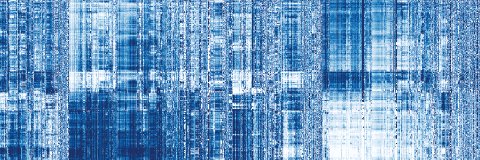
What kinds of dynamical structures have scientists developed models for?
Introducing the 1000×1000 collection: 1000 simulated time series × 1000 samples from 133 dynamical processes, from noise and chaos to hearts, brains and climate.
Have a play? 🐛
https://t.co/Eb7sOQ4IUA
What kinds of dynamical structures have scientists developed models for?
Introducing the 1000×1000 collection: 1000 simulated time series × 1000 samples from 133 dynamical processes, from noise and chaos to hearts, brains and climate.
Have a play? 🐛
https://t.co/Eb7sOQ4IUA
What kinds of dynamical structures have scientists developed models for?
Introducing the 1000×1000 collection: 1000 simulated time series × 1000 samples from 133 dynamical processes, from noise and chaos to hearts, brains and climate.
Have a play? 🐛
https://t.co/Eb7sOQ4IUA
Rivers, pendulums and the thalamus: how the brain balances stable and flexible dynamics, and what changes when consciousness fades.
Our latest journey into how the thalamus is shaping cortical dynamics in @ScienceAdvances 🧵1/10
https://t.co/1nMvbGmR5R
Highly comparative time-series analysis feature-extraction software (-hctsa-) now available in python as pyhctsa!
Compute *over 4500* time-series features from time-series data!
Code: https://t.co/Li88AImtpd
Docs: https://t.co/nOBhVm48g6
New preprint! (by @kieran_s_owens)
Of interest to anyone who analyzes time-series data!:
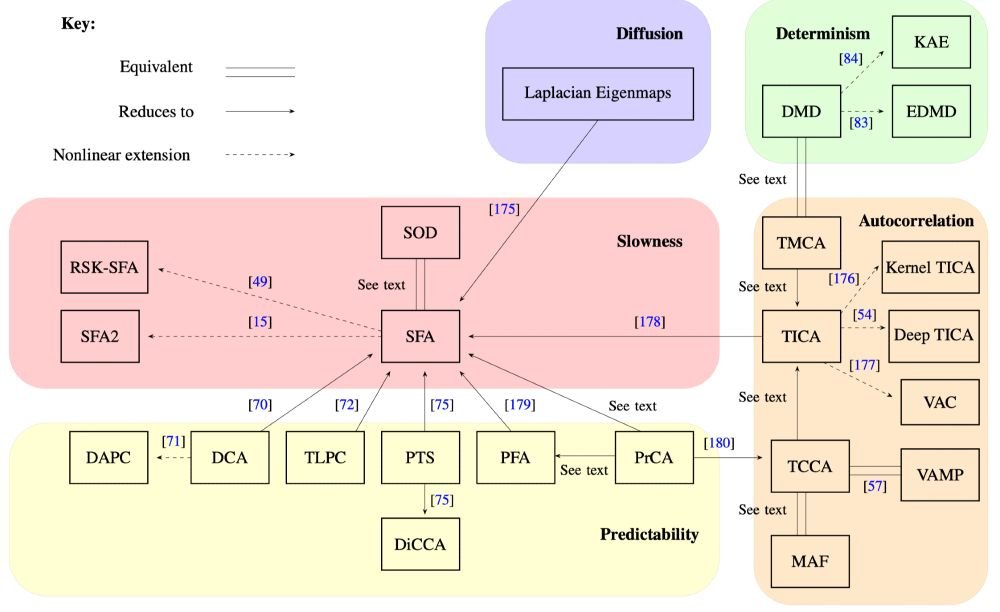
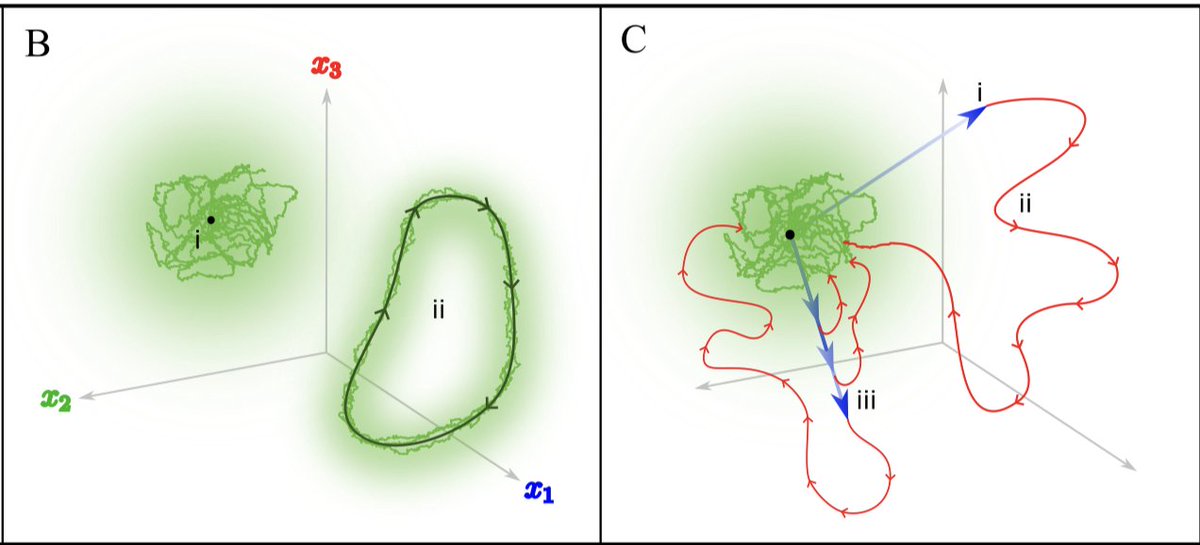
"Time-series dimension reduction: a comprehensive review and conceptual unification of algorithms"
https://t.co/mdoiHLBjPC
#timeseries#dimensionreduction#complexsystems
@kieran_s_owens (i) explains how all the methods can be understood through these conceptual groupings,
(ii) derives new relationships between existing methods, and
(iii) provides some case-study demonstrations/comparisons of how (insanely) well they can work on data
Better believe it, there are now TWO #timeseries feature sets available in #julialang.
The new CatchaMouse16.jl package joins Catch22.jl, bringing 16 more features tailored to (mouse) fMRI data: https://t.co/wAEY4ORspP
Check out the CatchaMouse16 paper below
A new method of detecting criticality from time-series data outperforms conventional metrics in the presence of variable noise levels for both simulated systems and real neural recordings.
Read https://t.co/E8DVA3w19i
#PRXjustpublished#PRXopenaccess#PRXComplexSystems
Our work by @brendanjohnh (w Leo Gollo) on tracking the distance to criticality in noisy systems is now out in @PhysRevX 🙂 (includes an application tracking criticality across the mouse visual hierarchy)
https://t.co/dDKA1h3WWE
Code details: https://t.co/Yl8smK3614
New preprint by Rishi Maran @eli_j_muller
"Analyzing the Brain's Dynamic Response to Targeted Stimulation using Generative Modeling"
A review/perspective on why new mechanisms may be found by modeling brain stimulation dynamics 🧠⚡️
https://t.co/XTbti5wm1X
Quick summary 👇
New preprint w/ Imran Alam, Patrick Cahill @Valerio_Zerbi @m_markicevic @brendanjohnh@olivercliff
"Canonical time-series features for characterizing biologically informative dynamical patterns in fMRI"
https://t.co/eEGK6ZGKPv
Code: https://t.co/DgSPHqKGqM
Short summary 👇
Latest preprint: "Parameter Inference from a Non-stationary Unknown Process" (PINUP)
We're really interested in the problem of inferring sources of non-stationary variation directly from measured time-series data.
https://t.co/7KI02eTFpO
Quick summary 👇
If you're at OHBM this year, check out @AnnieGBryant's great work developing a systematic method to extract interpretable dynamical patterns from fMRI time series!
Curious about scientific papers that have used hctsa for time-series feature extraction?
I maintain a log of this here, categorized across Biology, Cellular Neuroscience, Neuroimaging, Medicine, Pathology, Engineering, Geoscience:
https://t.co/oAFboRdGKH
@DrScienceMan1 Features in hctsa as coded assume a uniformly sampled series in time. Would need to adapt methods to non uniformly sampled data, or to use hctsa as it currently is, interpolate data. Although hctsa in general better suited to higher temporal resolution and lower noise modalities