2 years ago, Foxsy AI was just an idea.
Today, it is becoming a real ecosystem at the intersection of AI, Robotics and Web3.
We kept building through one of the hardest market cycles we have seen so far: products, infrastructure, community, foundations and more.
All of them for something much bigger.
To become the data & evolution engine for robotics.
This article is probably the most comprehensive piece we have shared since the beginning.
It is the story behind WHY Foxsy AI exists, what we have built, what we have learned and where we are heading next.
From simulation 👉 to real robots.
From bootstrapping 👉 to scale.
From emissions 👉 to real demand.
And still… it feels like we are just getting started. 🦊🚀🌛
MULTIVERSX DEAD, THE NETWORK IS USELESS, PROGRESS IS HAPPENING TOOOOO SLOW, MARKETING, WHAT IS MARKETING?
Fair. Here's the fuller story.
Presenting the MULTIVERSX STATE OF THE FOUNDATION REPORT, 2ND Edition.
A few key highlights.
(a) 5 protocol upgrades. 6 governance proposals passed. Footprint down 60%.
(b) A full account for $EGLD holders, what was funded, what was built, what was ratified.
(c) A focused look at 2026, SUPERNOVA, and what comes next.
The picture is simple: the network has been rebuilt from the ground up. Set for a radical reset with the launch of SUPERNOVA. Ahead of this new GENESIS moment, we are documenting the work, clearing the record, and showing what was built.
There's one thing this team has been consistently known for, backed by the data: TECHNOLOGY SUPERIORITY, ENGINEERING EXCELLENCE, PRODUCTIVITY OUTPUT, that benchmarks at the top of the industry. Delivered with a team a fraction the size of our peers.
Some other things, I’ll say plainly, are far from optimal: chain focus, business pipeline, revenue traction.
SUPERNOVA is where we sharpen the first to a razor’s edge, and reforge the second.
The report is the receipt for the last two years, and the HIGH PERFORMANCE NETWORK WE HAVE LIVE TODAY.
Onward. To SUPERNOVA.
------
Read in full, here: https://t.co/miEIOOrwdQ
150 commits per developer. #3 in the entire blockchain industry.
New rank coming from Chainspect_app for every ecosystem by productivity. Not team size. Not total commits. Output per engineer.
───
2.7x Ethereum. 2.4x Bitcoin. 3.5x Aptos. Solana isn't in the top 25.
Three weeks ago I posted about 171,000 total commits. That got us to #6 by volume. This metric is sharper. It strips away headcount and measures velocity.
A team of 50 shipping 150 commits each tells you something different than a team of 500 shipping 15.
───
What those commits produced in the last 20 days alone:
xMoney (XMN) live on Binance Alpha. Regulated stablecoin payments infrastructure, now on the world's largest exchange.
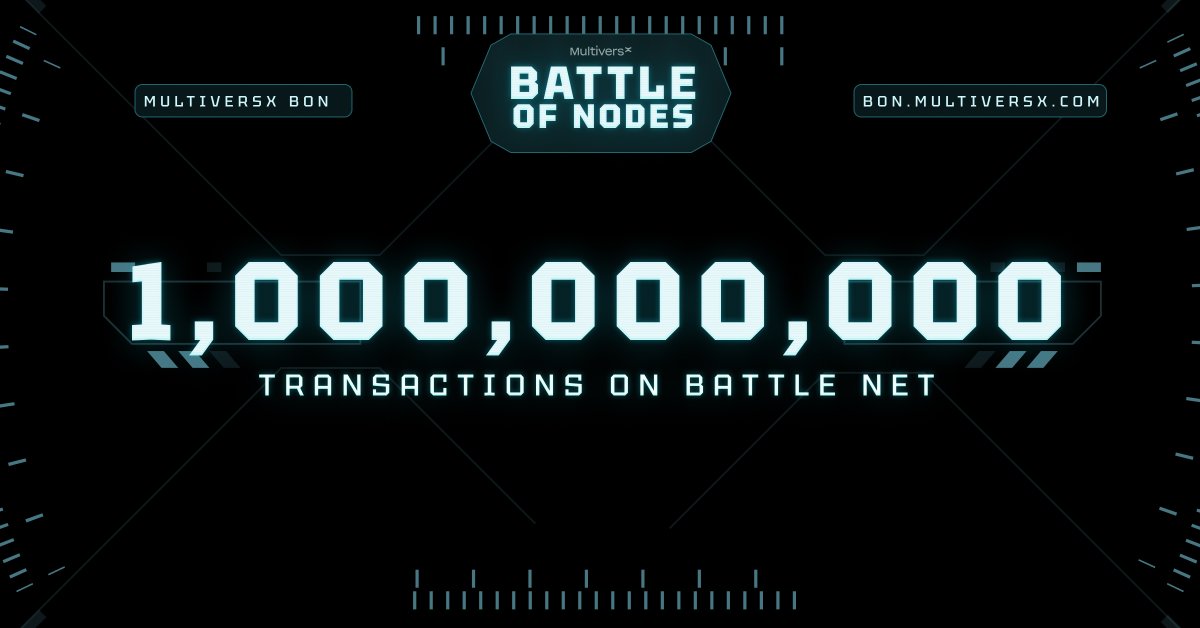
Over 100 security submissions poured in from the community during Battle of Nodes. They didn't find toy bugs. They found real protocol-level edge cases that no amount of internal testing could surface. The kind of findings that led to two live mainnet upgrades and multiple network-level fixes before Supernova even reaches mainnet. One finding was critical enough to require a hard fork on testnet. Detected, patched, recovered within hours. Cross-shard latency behavior under adversarial conditions was identified and corrected. Transaction pool handling at sustained 120,000 TPS exposed patterns that only emerge when hundreds of real validators on real hardware push a network built from mainnet-equivalent state to its limits. Including nodes running on Raspberry Pis. One billion transactions processed. Not on a clean testnet. On a battle-hardened proving ground.
Most chains test in private and ship hoping nothing breaks. We opened the gates, invited the community to break it, and came out with a stronger protocol on the other side.
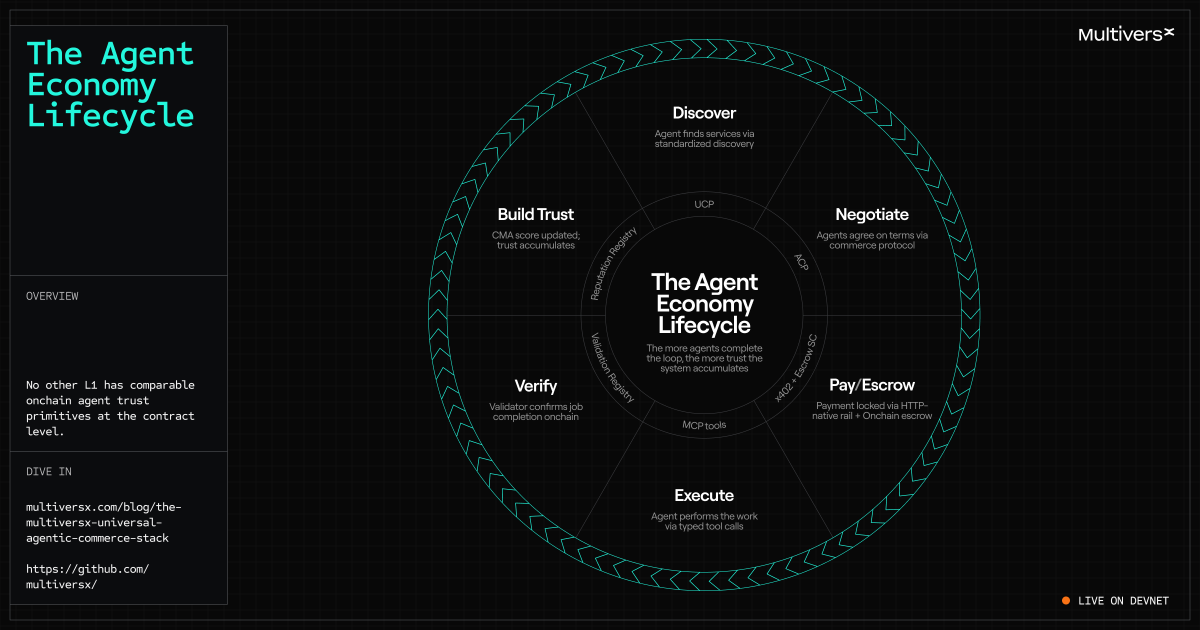
Six agentic commerce protocols now live on one chain combining MCP, UCP, ACP, MPP, x402, AP2. The organizations behind them: Google, Stripe, OpenAI, Anthropic, Visa, Shopify, Linux Foundation.
MvX SC MCP shipped. AI agents building and deploying smart contracts natively on MultiversX.
───
This is what a small, focused team compounding through a bear market looks like.
Shipping. Every week. Every commit. Every protocol integration.
The data is public. The code is open. The infrastructure is live.
───
This is MultiversX. This is $EGLD.
Hello #foxfrens 💙🦊💙, Foxleague V2 is landing soon!
Not just an update, but a breakthrough.
A vision shaped by decades of RoboCup experience, built by champions, veterans and relentless innovation. Now, AI, Robotics and Web3 are converging into something that has never been before.
Every match generates data. Every battle pushes intelligence forward.
This is the new standard for GameFi, where strategy becomes action and competition becomes a development engine for robotics intelligence.
Foxleague is evolving. Be the coach. Be the challenger.
#FoxsyAI #Web3 #AI #Robotics #Soccer #Simulation #FoxLeague #EvolutionCup
🇺🇸 EGLD Enters the US Institutional Conversation
———
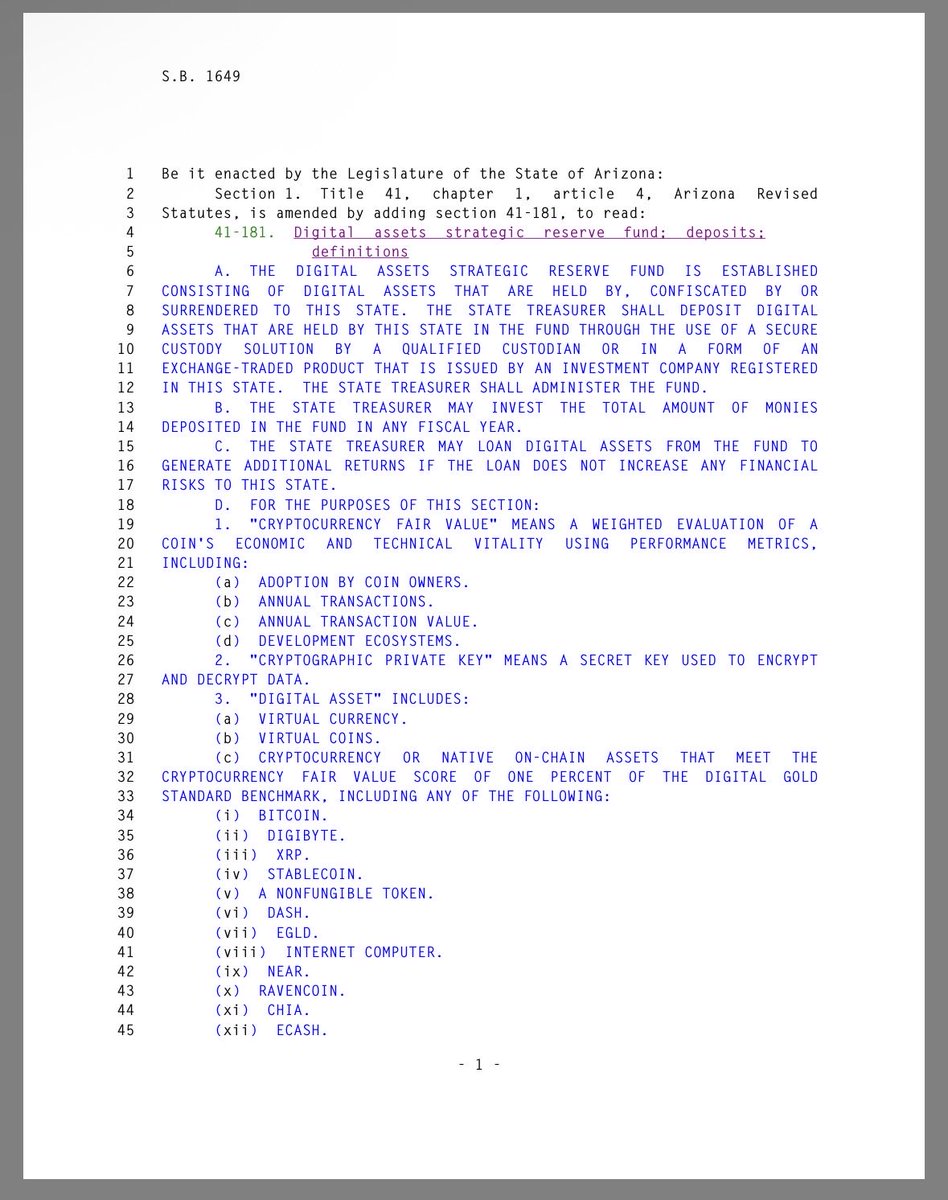
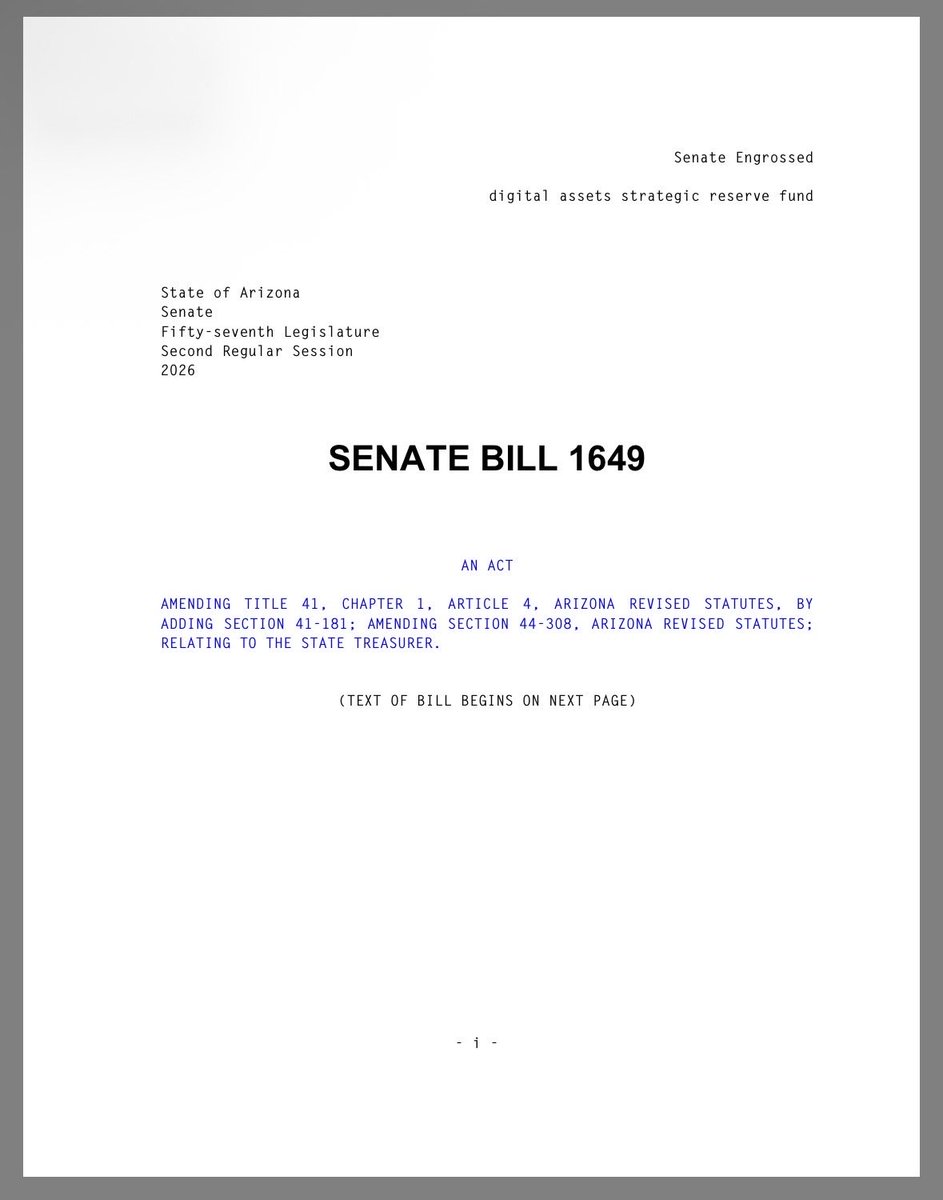
State of Arizona advanced two crypto bills to a full House vote.
SB1042 allows 10% of state public funds into digital assets. SB1649 creates a Digital Assets Strategic Reserve Fund, first of its kind in the US.
SB1649 names 14 cryptocurrencies by name. Selection criteria: adoption, transactions, transaction value, development ecosystem.
EGLD is one of the 14.
———
If passed, Arizona creates the first US state crypto reserve. EGLD eligible from day one. The precedent opens the door for other states and bigger institutional adoption.
source: https://t.co/SC9QZCBMqU
This is what we call leapfrogging everyone in technology.
There is no other system which achieves sub second, one shot finality, with 120K TPS, running on thousands of nodes, decentralised, permissionless, composable.
Not an L2. Not servers which need thousands of dollars per month. Not a low amount of nodes.
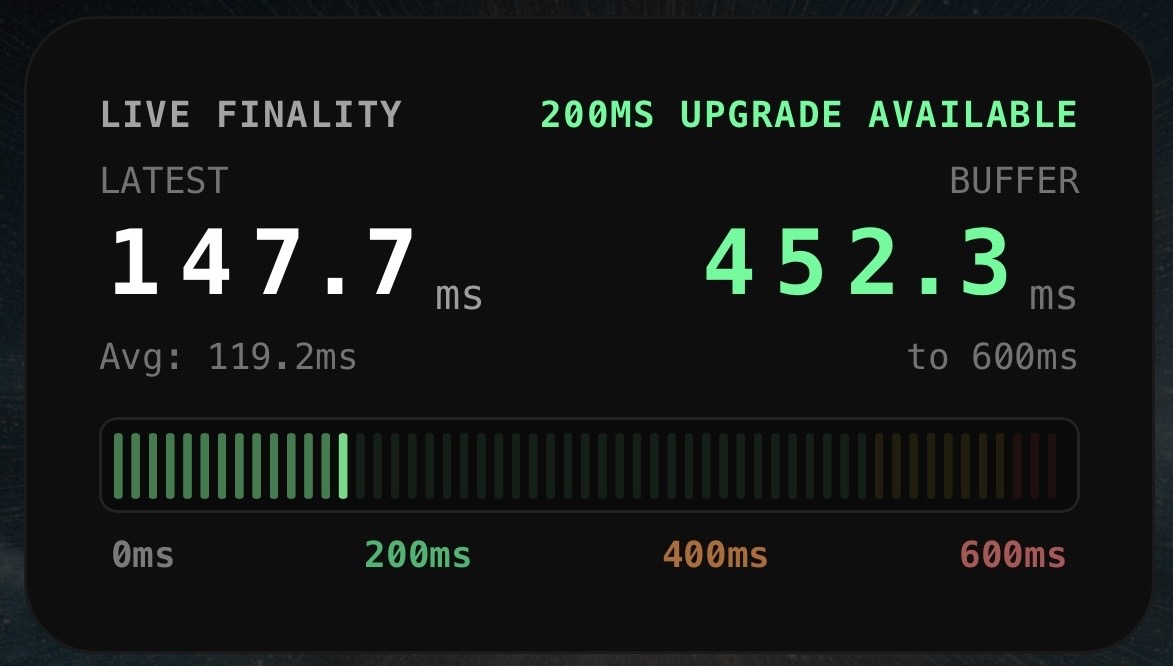
3.2K validators. 3 shards + metachain. Consumer grade, low spec hardware. And running at avg 200ms finality or lower with 120K TPS.
This is @MultiversX
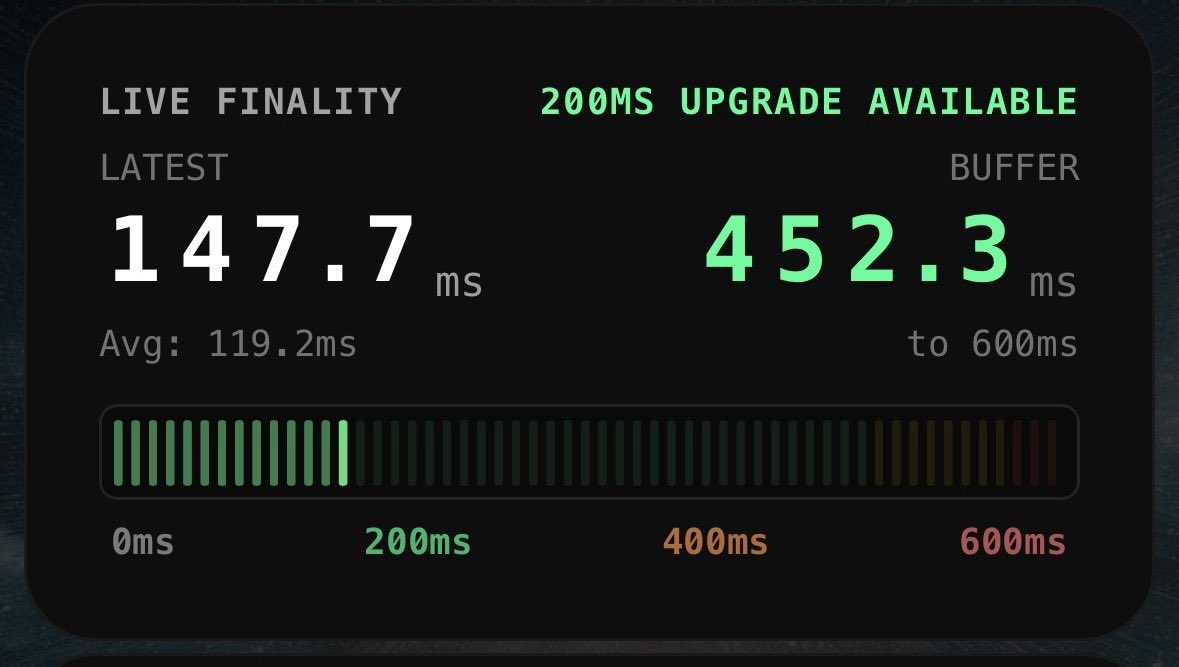
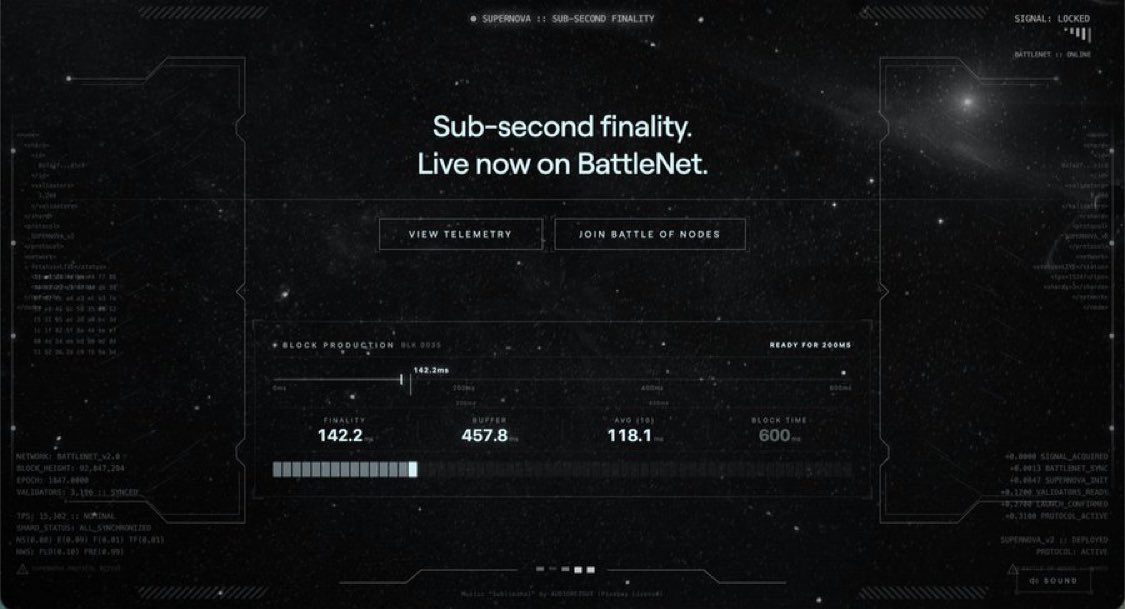
Supernova is live on Battle Net.
Here's what changed under the hood and why it matters.
The paradigm shift nobody's talking about:
Every blockchain in the industry is measured on two metrics: block time and throughput.
Faster blocks = better chain. More TPS = better chain.
----------
Supernova breaks this framing entirely.
For the first time in the blockchain industry, block finality is faster than block slot allocation.
Let me explain what that means.
How every other blockchain works:
Traditional blockchains follow Execute → Propose → Vote. Validators must execute every transaction before proposing a block.
The block slot is the clock. Finality can never be faster than the slot, because execution is in the critical path.
Ethereum: 12.8s slot, ~12.8 minutes finality.
Solana: 400-600ms slot, 13 seconds finality.
Sui: variable, ~500 to 1000 ms for complex transactions.
In every case: finality ≥ block slot. This is treated as a law of physics.
It's not.
----------
How Supernova works:
We flipped the model to Propose/Vote → then Execute.
Consensus proceeds independently of execution. Validators agree on transaction ordering first. Execution results are notarized in subsequent block headers via inclusion proofs.
The inclusion proof is the key innovation: it allows a block to be finalized with cryptographic proof that its transactions will execute correctly, before the execution itself completes.
The virtual state tracker in the transaction pool maintains a deterministic view of account states (nonces, balances, pending transactions) so consensus can validate without waiting for full execution.
Result: the block is finalized faster than the block round itself.
88ms finality measured in testing. Sub-200ms under real-world conditions. On 600ms block slots.
Finality < block slot. First time in the industry.
----------
The throughput story:
With the same hardware specification as pre-Supernova mainnet, the network now achieves ~120,000 transactions per second in burst mode. Same nodes. Same machines. 10x the block production cadence.
This is the same validator infrastructure running fundamentally better software.
The backpressure system (Execution-Result Inclusion Estimator) ensures this scales safely - dynamically adjusting per-block gas limits if execution lags behind proposals, so minimum-spec nodes never get overwhelmed.
What this means in context:
- Block time: 6s → 600ms (10x)
- Finality: ~88ms measured (first blockchain where finality < slot time)
- Throughput: ~120,000 TPS burst mode (same hardware)
- Architecture: consensus fully decoupled from execution
- Sharding: 3 execution shards + metachain, fully preserved
- Validators: 3,200+ nodes, no hardware upgrade required
----------
Battle of Nodes is stress-testing all of this right now. $150K in prizes to find what breaks. Validators, security researchers, builders, and guilds pushing the limits.
If Supernova survives this, it ships to mainnet.
150,000 lines of new protocol code. 20 months of engineering. The most significant upgrade since genesis.
Having some fun with the battle net on @MultiversX with friends this week. Script pushing 45M tx overnight. lol
I know everybody laughs at EGLD and its price but their tech is really something I enjoy.
High number of nodes, good decentralisation, reasonable machine specs, tokens ownership at protocol level...
As I'm also spending quite some time digging into @megaeth tech since their testnet, it's striking how the two approaches towards improving speed complement/confront each others.
Thanks to AI, i'm able to do stuff I wouldn't have dared dreaming about one year ago.
If you manage to get out of price and bagholding biases, you realise we really live extraordinary times on the tech side.
SuperNova is finally here.
Yes, we can say that it is the most advanced, most scalable, probably the cheapest blockchain infrastructure which can execute this amount of transactions, cheapest for validators, for developers, for users.
And it can scale to whatever number it is required. That is the power of sharding.
And now it can be enjoyed with sub second one shot finality. How cool is that?
Ethereum abandoned its 2.0 roadmap for L2s
They fixed fees
They broke everything that made Ethereum powerful
Mission accomplished
Except nobody mentioned the massive tradeoffs
🔹 Your ETH on Arbitrum can't talk to your ETH on Optimism without a clunky insecure bridge
🔹 Liquidity fragmented across 100+ rollups
🔹 Multiple wallets needed
🔹 Devs deploying the same contract 8 times
🔹 A dozen different ETH tokens in your wallet
We fixed gas fees and destroyed composability.
Every new rollup makes this worse
Every bridge adds friction
Every chain deployment multiplies dev complexity
All because users wanted cheaper fees and other chains were stealing mindshare so Ethereum took the shortcut
L2 maxis will tell you chain abstraction fixes this.
Maybe. Eventually. After another 2-3 years of duct tape.
Just like they’ve all been promising to decentralize their L2’s for the last 3-4 years
Meanwhile the top 3 L2s now control 85% of all activity
Good thing we had VC’s pump and dump over 100 on us 🤦♂️
But here's what nobody wants to admit:
Chains that shard natively don't need bridges between their own shards.
One chain
One state
Near Instant cross-shard finality
All with sub-penny fees and no liquidity fragmentation because there's no separate chains to fragment across
Ethereum chose the modular path and created a mess. Congrats.
Now you've got 100 walled gardens with different security models, sequencer risks, and withdrawal delays all pretending to be one chain.
We didn't scale Ethereum.
We built 100 Ethereums and called it progress while ignoring what sold everyone in the first place
Supernova, toward agentic coordination, accountability, settlement and global agentic commerce
The last few weeks have been abuzz, with the agentic space exploding, quite literally, in terms of adoption. Feeling alive, piercing through the noise, and becoming a real, important and pressing conversation for the global business sector, for the first time.
Now, MultiversX, and Supernova especially, have been built to solve the substantial needs for speed and performance that agentic systems require, which far outstrip current blockchain performance benchmarks.
Building toward addressing this significant and pressing need, we have shipped the Universal Agentic Commerce Stack, delivering native protocol integrations with payment and instrumentation protocols from Google, OpenAI, Anthropic, and Coinbase. With these, agents can now tap a new activation and payment highway via MultiversX. The good part is all this is live today!
But it's only the first very vital step. Now, I just finished a brief conversation with the team. After triaging and fixing 100+ issues and optimizations discovered across the new version of core protocol, the current state of Supernova is, at last, ready for a wider community battle and stress test, in preparation for the grand release.
As anticipation intensifies across the board, the next 2-3 days will see players from around the ecosystem join the ranks of those about to provide a final stress testing round and stamp of validation for Supernova readiness, as part of the Battle of Nodes competition.
Supernova is the next evolutionary step in blockchain performance and UX/AX.
A foundational coordination, accountability, settlement, and global commerce layer - for agents, all around the world.
And now, it is ready for a final round of battle testing.
------------------------
Overall progress update:
█████████░ 99%
------------------------