"This book is a reminder that understanding the origin and dynamics of clans is fundamental to creating meaningful, relevant, and grounded work with communities in the region. [...] To overlook this is to risk designing programmes that miss the mark."
For the Turnover Ceremony, CCAA, represented by Prof. Lara, along with the chapter authors, present the clan book to the Australian Embassy, represented by Senior Program Officer Mr. Emmanuel Joseph Solis.
#StrongholdStranglehold#ClansOfBangsamoro#CCAA
He admits that most studies of clan dynamics have hidden the role of women—how mothers, sisters, and daughters are neutralizing forces; women have the ability to form alliances, not just exercise power through violence.
Prof. Lara concludes that the increase in the number of rido can be traced to the diminishing influence of some clans and the rise in the influence and strength of new types of clans. [...] Clans are not just concerned on local power but now has a more global orientation.
Second, political legitimacy holds no traction in those situations where local strongmen exercised extreme personalistic rule and utilized formal and informal institutions only as a veneer to mask their absolute power
By encouraging tribes to reorganize and strengthen traditional governance structures and justice mechanisms and marrying these with modern state institutions, Lumads and Moros will find it comfortable to work with the state thereby facilitating socialization with the modern state
"Institutional multiplicity, when practiced with an eye on statebuilding objectives, can ease the integration of IP communities into mainstream society."
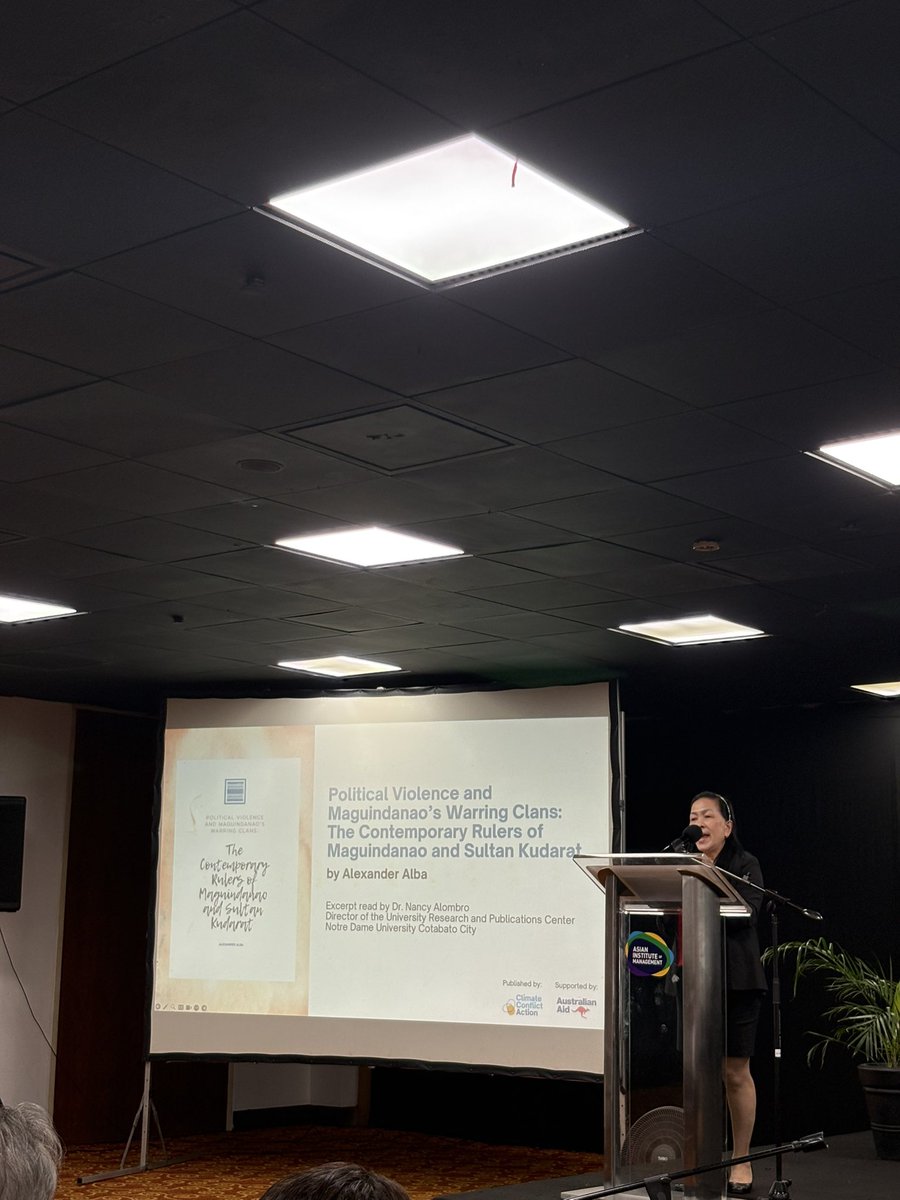
Dr. Nancy Alombro of Notre Dame University Cotabato City is reading an excerpt from the chapter “Political Violence and Maguindanao’s Warring Clans: The Contemporary Rulers of Maguindanao and Sultan Kudarat” authored by Mr. Alexander Alba
#StrongholdStranglehold#CCAA
He now talks about the role of the Alontos in the split of the MILF. As for the Dimaporos, the pivotal moment was during the EDSA Revolution when he withdrew his security forces in MSU when the students were rallying agaisnt the Marcos administration.
He talks about the difference of violent extremism in Lanao del Sur compared to the global context. While the Mautes were able to study abroad, the youth who were involved in VE were recruited due to their experiences in clan feuding.
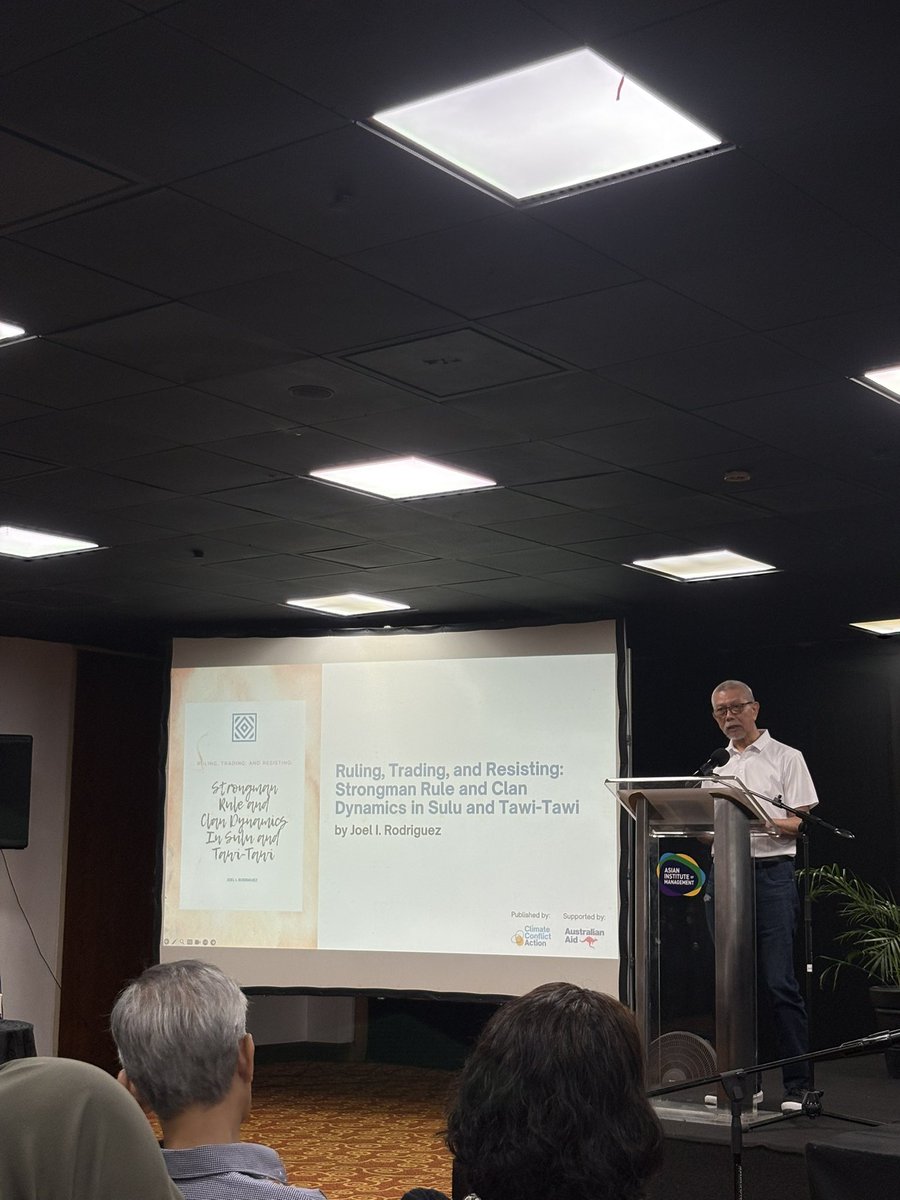
Reading of excerpts from the book Stronghold Stranglehold begins with Mr. Joel Rodriguez, the author if the chapter “Ruling, Trading, and Resisting: Strongman Rule and Clan Dynamics in Sulu and Tawi-Tawi”
#StrongholdStranglehold#ClansOfBangsamoro#CCAA
The Hatamans did not plan to get into politics. Intially, they wanted to strengthen the civil society in Basilan. The Hatamans are also known as warriors in Basilan.