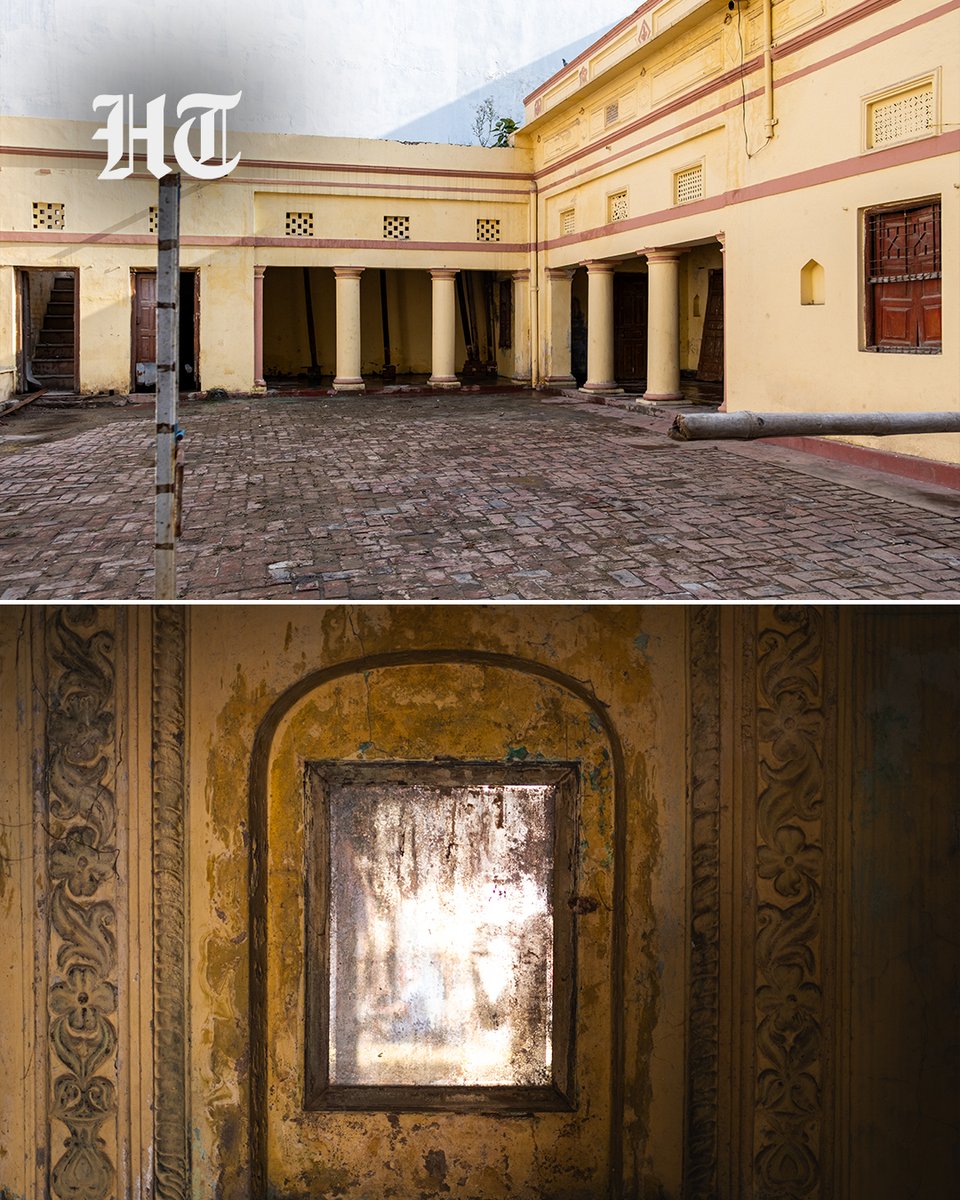
This village, in the vicinity of the Yamuna, is Madanpur Khadar. Khadar translates to the fertile new alluvial belt by the river that is below the flood line. It is highly cultivable land and mostly surrounded by villages that work on this land.
When the British began making administrative strides in Delhi, this area came under their consideration. The British, around the 1850s, based their decision on issues such as caste or tribe, local influence, extent of landholding, services rendered to the state by a person or their family, and personal character and ability. So, they appointed a Zaildar from the Madanpur Khadar. The position was created so that local issues could be settled at the village-level, where the elderly headmen already had a hegemony over the people and was later also absorbed as member of the British jury.
The Zaildars, who were like Chaudharis of the village, then took on this hereditary position to become the administration’s revenue officers, thus extending the influence of the colonial state into the villages.
This was an important decision for the British as this Zaildar would control a very large tract of land with several villages under them from the Yamuna to Mehrauli, which comprised over 28 villages. This position had such influence and power that the first Zaildar, this title was included in the official communication.
At the outset, Tirkha Ram Zaildar centralised the village by establishing a chaupal where elders sat through the day. It became an area for convening village gatherings and the centre for controlling the trade that was routed through Yamuna, with access to railway track connecting north and south India, something of great interest to the British. As the village administration began to be defined, several communities were brought into the scope, especially the fishing community of the river. The Zail was becoming a behemoth of an administrative district.
@cultureanica ✍🏻 in today's special #DelhiHouses.
Read in full in today's e-paper 🗞️
Story 🔗 https://t.co/N4PqfmjVWr
Honoured to be speaking at my alma mater on the history, law, and policy that have shaped Delhi into one of the most environmentally challenged cities in the world—and how, in this process, indigenous voices were largely left unheard.
In an era of constant ideological shifts among young politicians, Sachin Pilot stands out for consistency and conviction—still one of the straightest spines in Indian politics.
This Hindustan news discusses how three young enthusiasts Puneet Singh Singhal , Gagandeep Singh Khadar, and Parth Shokeen have launched the "Dilli Dehat Project" to archive the vanishing memories of Delhi's villages through photography.
#DilliDehat#DilliDehatProject
A welcome step by MCD, thanks to this great coverage by @appriseParas for @htTweets , and quoting our co-founder @connect_gagan :
https://t.co/QIVvgXXnvR
People should see how Menka Guruswami argues in the courtroom—reducing her to her sexuality is deeply myopic. No one said Jethmalani was nominated to the Rajya Sabha because of who he was attracted to.
Celebrating Dilli with the Delhi Dehat team and the ever-inspiring Adil Hussain ji, along with H.E. May-Elin Stener, Ambassador of Norway to India, Sri Lanka, Bhutan, and the Maldives, at the curtain-raiser of Kahani Dilli Ki.
Left ignored Delhi’s farmers.
Right ignored Bhumia & Khedas.
Centre ignored liberal villages.
Delhi’s villages stand abandoned—Left, Right, Centre. #DilliDehat
Left ignored Delhi’s farmers.
Right ignored Bhumia & Khedas.
Centre ignored liberal villages.
Delhi’s villages stand abandoned—Left, Right, Centre.
In Delhi, AAP politics established a deterrent against political movements arising from public movements. BJP politics is establishing a deterrent against women-led politics. Delhi is being used as a laboratory for ideological experimentation.
#DilliDehat