👁️ Could eye colour track avian flu outbreaks in wild birds?
This study finds different levels of iris pigmentation in Northern Gannets may indicate previous flu exposure, but more long-term validation is needed.
Read it here ➡️ https://t.co/F3E9Elf0hT
⏰ ONE WEEK LEFT to book!
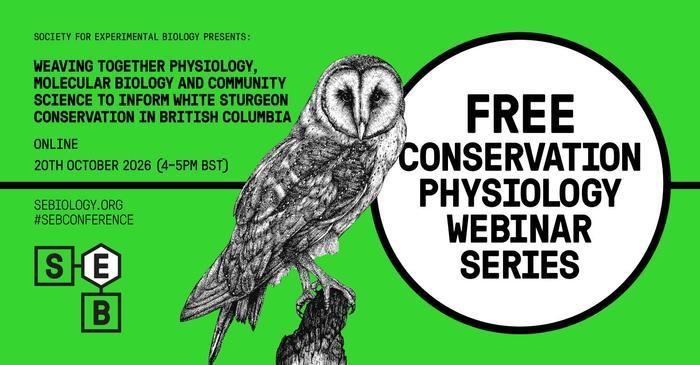
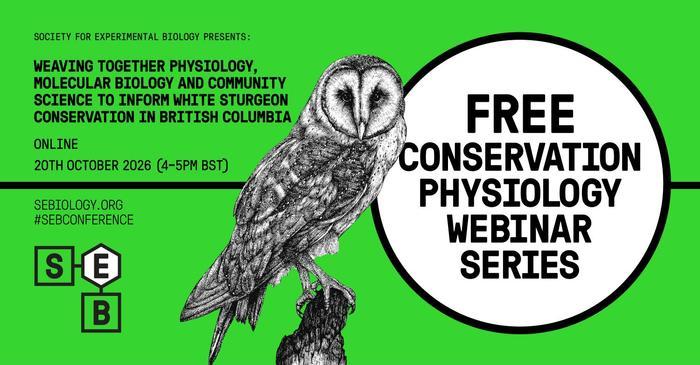
Join the @conphysjournal "Community Conversation" webinar with Dr Madison Earhart on Tuesday 20 October, 16:00 UK time, to explore science and collaboration in white sturgeon conservation.
Free online event 👇
https://t.co/tK6t85C9Mi
Delta Smelt 🐟 conservation often relies on hatchery-raised fish, but hatchery conditions may not prepare fish to survive in the wild. To help solve this problem, this study tested if managed wetland ponds could serve as semi-natural rearing habitats.
➡️ https://t.co/yZ95YtTrgF
⏰ Just 2 weeks to go!
Join @conphysjournal ’s Community Conversation on 20 October, featuring Dr Madison Earhart on how physiology, molecular biology and community science can support white sturgeon conservation.
Book now for this free webinar:
https://t.co/4unS6BY9v8
#Migration of herbivores is often related to food availability, but how does movement of individuals relate to diet and fitness? Find out in this study which tracked wild caribou over three years 🦌 .
Read it here ➡️ https://t.co/PbuXtnY8oO
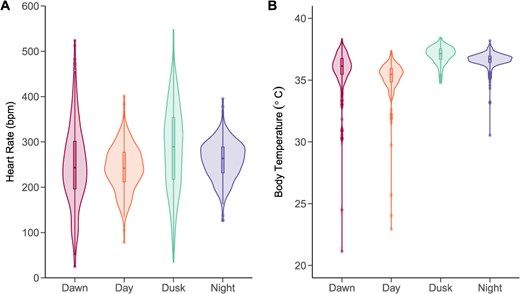
Energy underpins survival and reproduction but is difficult to measure in free-ranging animals. This study used #BioLogging to determine how energy needs are affected by reproductive condition in Krefft’s glider.
Read it here ➡️ https://t.co/hc42CTXJTO
Welcome to our new Associate Editor Katie Edwards!
As lead conservation scientist at Chester Zoo UK, Katie oversees the zoo’s lab facilities. She also develops physiological #Biomarkers to support conservation work.
🐟 Less than a month to go!
Join the upcoming @conphysjournal FREE webinar on 20 Oct to explore white sturgeon conservation in British Columbia.
⚠️ Limited places, so register now!
More info:
https://t.co/aZmas2RrEG
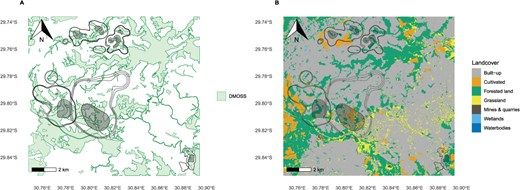
How do African crowned eagles cope with rapid urbanisation?🦅
This #BioLogging study used GPS and accelerometery to show how energy expenditure varies across habitats, emphasising the need to preserve forests in urban planning.
Read it here ➡️ https://t.co/2KL7VKTjKr
Welcome to our new Associate Editor Julia Nowack!
Julia runs the Cool Mammals Lab at Liverpool John Moores University UK, where she studies ecophysiology, thermoregulation and energetics of mammals.
✳️ Special issue open for submission ✳️
We are inviting submissions to a new #SpecialIssue on wildlife endocrinology in collaboration with the International Society for Wildlife Endocrinology.
Full details here ➡️ https://t.co/LDVUH02q6t
Seagrass restoration is valuable for marine conservation, yet replanting success is not guaranteed.
This study shows how biochemical measurements can help restoration efforts by providing early indicators of seagrass transplant’s health.
➡️ https://t.co/mIpkzpQ85x
How can different scientific approaches come together to support white sturgeon conservation?
Join Dr Madison Earhart for the next @conphysjournal "Community Conversation" on 20 October.
Free to attend for SEB members : https://t.co/aZmas2QTP8
We hope to see you there!
Some Fraser River sockeye salmon face a challenging migration to their spawn site.
This #BioLogging study used tags to reveal how salmon use and conserve energy, relying on burst swimming to reach their destination.
Join the journey here⬇️
https://t.co/d2jUZgjpVK
✳️ New webinar alert! ✳️
As part of our #CommunityConversations 💬 series, Dr. Madison Earhart will discuss her work using physiology, molecular biology and community science to inform white sturgeon conservation.
Register here ➡️ https://t.co/ApHIoBK3fm
Fat reserves predict survival and reproduction in free-ranging wildlife.
This new #BioLogging study tracks female elk with implanted biologgers, providing continuous tissue conductivity readings to monitor energy use in real time 🫎.
Read here ⬇️
https://t.co/CpLl1nzDQB