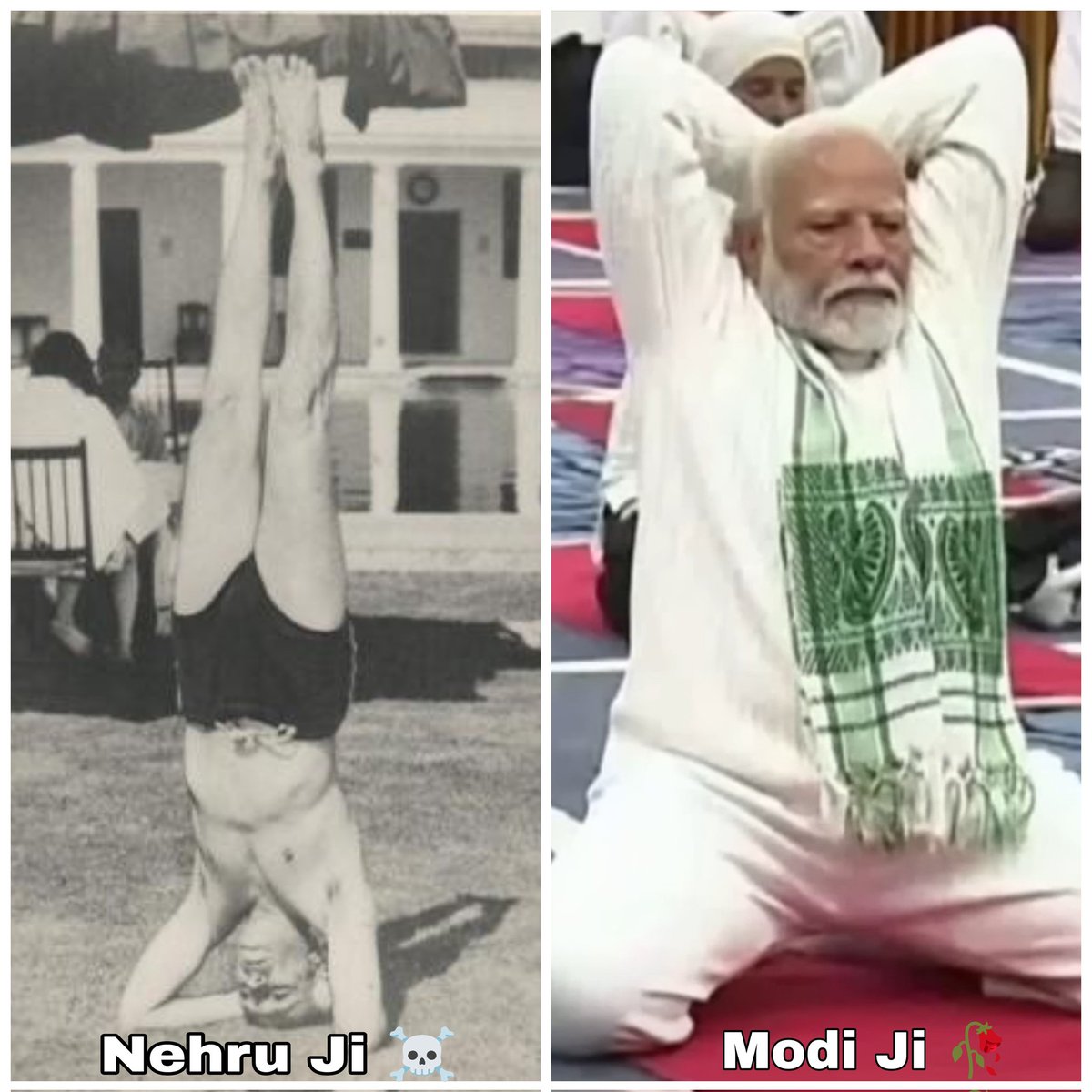
PV became PM 27 years after Nehru's death and was separated from him by no less than 8 Prime Ministers, including 3 non-Congress PMs and 6 non-Nehru family PMs. Why didn't they discontinue this so-called "rich people's socialism"?
What economy did Nehru destroy? India had a 12% literacy rate and a life expectancy of 35. It had no machine-tool manufacturing plant capable of producing a precision lathe, milling machine, or cylindrical grinder from scratch.
PV himself said his policies were a continuation of the Nehruvian legacy.
China had the Mao revolution, which killed 3–6 crore people, yet its economy remained much the same until the 1980s, with India briefly overtaking China in 1987.
We built nukes, tested them, integrated all the princely states, Goa, and NEFA, achieved the Green and White Revolutions, established PSUs, won wars, and did a thousand other things that wouldn't have been possible if we had been in Uncle Sam's shackles.
Any option besides the London-educated Nehru were several times more socialist(Bose/JP/Lohia/even Ambedkar Proposed state ownership of key industries and agriculture).
Protectionism was meant to protect Indian industries. You all talk as if we're doing wonders in manufacturing now. We're simply benefiting from the institutions built back then while still importing critical.
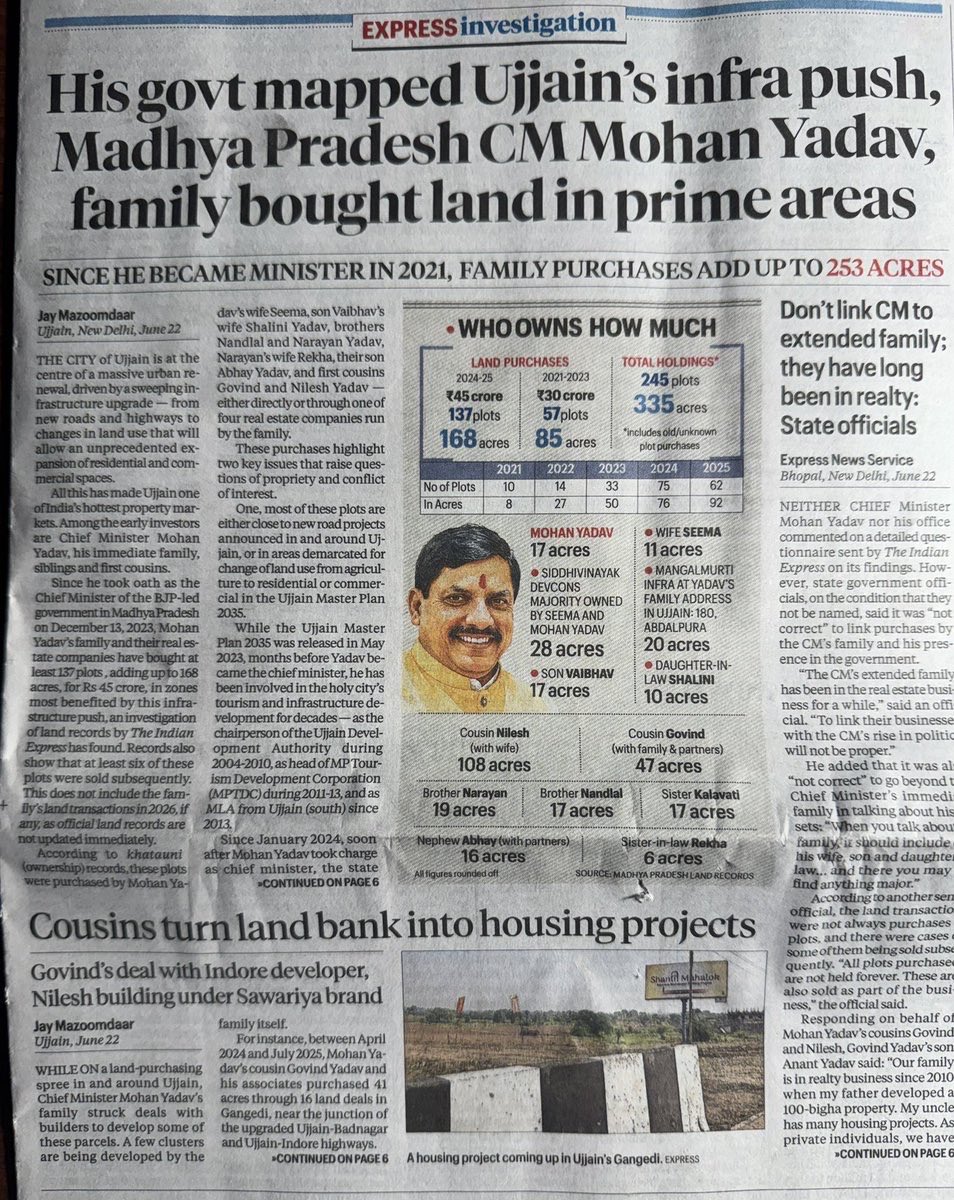
Super story by @mazoomdaar at @IndianExpress that only confirms another of the worst kept secrets of Indian politics. Across India, those in power are making windfall profits in private real estate deals by simply getting a change effected in land use. Only difference: no punitive action if it’s a ‘DOUBLE ENGINE’ state! 🙏
There's no hell hot enough for this piece of shit. I hope he (and other vile people like him) suffers and suffers badly in this life. The fuck up is that there is no hell, no karma. So it had to be this life.
A huge number of tutors use @Telegram every day to share notes, lectures and study material with students.
Stock market professionals use it to share updates, calls and alerts with their clients.
Small businesses, educators, creators, communities, millions depend on it daily.
But this clueless, incompetent Govt sees one problem and responds with one lazy solution: ban the platform.
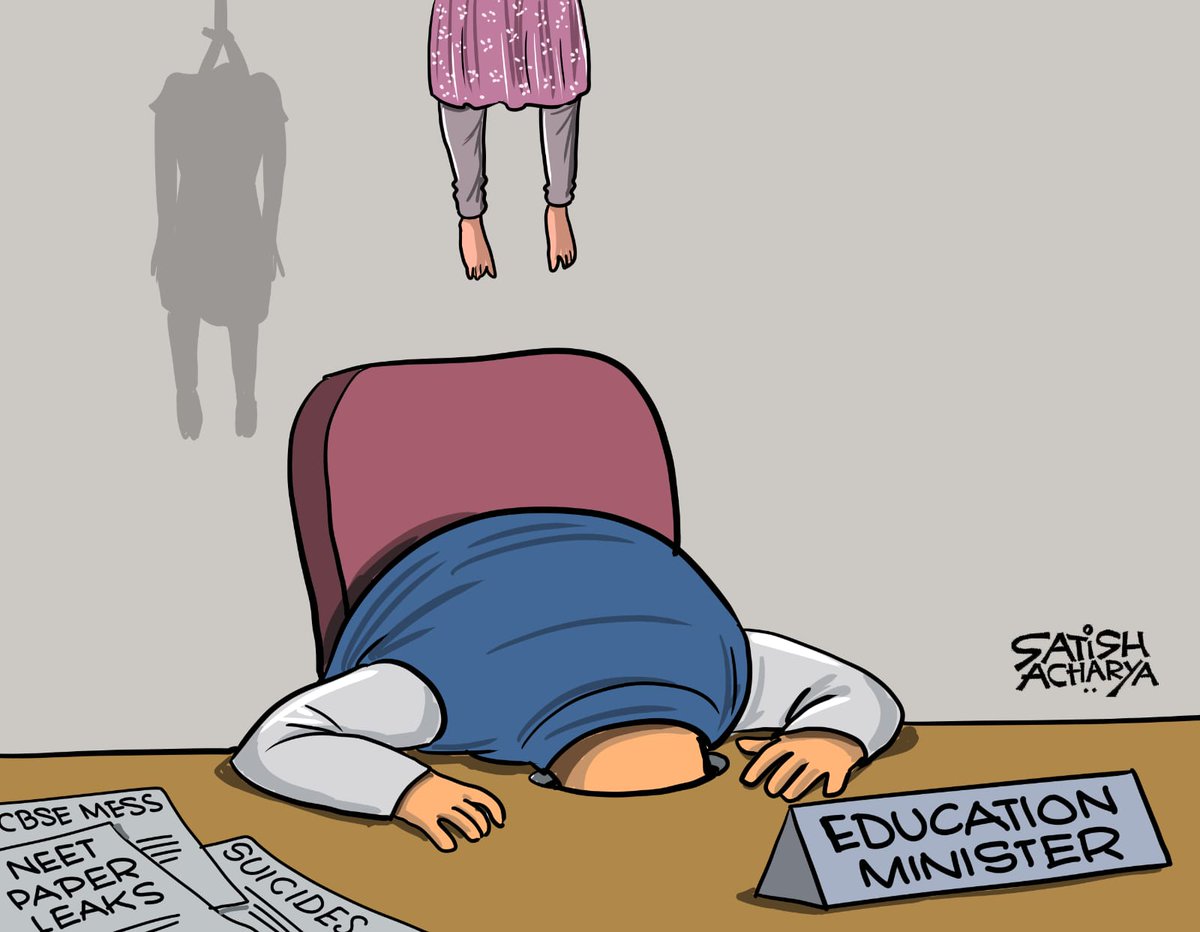
Instead of catching paper leak mafias, fixing exam security and holding the guilty accountable, they punish ordinary users.
This Govt is so far away from ground reality that it does not even understand how people actually study, work and communicate in 2026.
What does it mean? Disenfranchising 27 Lakh in West Bengal?
Have Vedas or Upanishads set up any Jurisprudence?
Is the CJI of Cockroach Fame referring to Manu Smriti — where women and shudras (95% of Indians) are to be treated sub-humanly?
Let CJI clarify please.
Jawaharlal Nehru became Prime Minister of India on August 15, 1947 presiding over a stellar Cabinet - the likes of which have rarely been seen in the world. Over the next five years, modern India came into being.
Over 560 princely states were integrated peacefully into the Indian Union, the Constitution of India was debated and adopted, zamindari was abolished, reservations for Scheduled Castes and Scheduled Tribes were put in place, a number of multipurpose irrigation-cum-power projects were launched, the infrastructure for science and technology capability was established (including in nuclear energy), and India emerged as a force in global affairs. Electoral rolls bearing 170 million registered voters were prepared to ensure universal adult franchise and free India’s first General Elections were held between October 1951 and February 1952.
The 1947-52 record of achievements of India with Nehru as PM and in which stalwarts like Sardar Patel, Dr. Ambedkar, Dr. Rajendra Prasad, C. Rajagopalachari, and Maulana Abul Kalam Azad played such a pivotal role is now sought to be erased by Mr. Modi who has a pathological fixation on Nehru. He may have passed a self-proclaimed and dubiously invented milestone today but he is a millstone around India’s neck, presiding as he is over the Murder of Democracy in India. The very same establishments of democracy - an independent Election Commission and a sacrosanct voter list - are now threatened. Scientific temper has been erased through the destruction of our educational institutions - as exposed most recently by the NEET-CBSE scandals. Reservations for Scheduled Castes, Scheduled Tribes, and Other Backward Classes have been weakened through privatisation and nefarious instruments like ‘Not Found Suitable.’
And while Nehru won in 1952, 1957, and 1962 with a hugely decisive majority, Mr. Modi did NOT secure even a simple majority by a considerable margin in 2024 and had to hurriedly convene a NDA meeting bypassing the BJP Parliamentary Party to anoint himself as PM. 2024 was most certainly not a mandate for Him.
The reason Dharmendra Pradhan will never resign, and his Bosses will never let him, is that they just don't care. Elections are captured end-to-end, and the public has almost totally lost its ability to punish the regime democratically. So, zero fear.
Big Capital via its endless funding made this possible, at every stage, in the most heinous and deadly way possible. In return, they got India.
Big Capital now owns India, dear fellow serfs.
Breakaway #TMC faction joining the NDA is morally a bankrupt move. But this doesn't make Mamata Banerjee a victim. It is just her karma payback for practicing haughty authoritarianism at the top and franchise politics at the grassroots.
But the elephant in the room is a washing machine taller than that Sardar Patel statue. We are now officially behaving like a tinpot African state. Vishwaguru has gone to buy snake oil.
Whenever I see Umar Khalid, I feel terrible about what hatred has done to us. Years in jail without a verdict should disturb our conscience, but people are applauding.
The delay in justice is troubling. But the silence of society is disturbing.
Sirf Umar hi nahin, uska poora parivar saza kaat raha hai is nafrat ki andhi mein.
Just thinking aloud. No claims made.
This is a Time Magazine Cover from 2011. I reposted @RahulSeeker's tweet yesterday.
I have not been able to stop thinking about this cover.
15 years ago, the world was watching two countries and genuinely could not decide which one would lead the future.
One of them does now. The other has spent the last decade and a half fighting over whose god is bigger.
I am writing this as a common citizen who grew up in this country, who continues to believe in what it is capable of, and who finds it genuinely dificult to explain the drastic economic downturn in these past years through poor governance alone.
India in 2011 was a country that had grown at consistently high rates for two decades, had a young demographic profile, and was positioned as a genuine superpower in the making.
We were leading the IT revolution at a time when the world had just figured out that technology was the new currency of power. An Indian spotted abroad was asked one common question: "Do you work in IT?"
It wasn't a stereotype so much as a signal. The world had noticed. It had clocked which direction we were moving in, and it had started to take us seriously. We weren't just a large country anymore. We were a country with momentum. And momentum, in geopolitics, is the most threatening thing of all.
And then there was the one thing that makes powerful nations genuinely nervous. India is an independent nuclear power. Not a dependent state. Not a country whose arsenal exists because someone else permitted it. Ours. On our terms. Answering to nobody.
A large, young, fast-growing, technologically ambitious, independently nuclear nation with a democratic mandate and a civilisational confidence. That is not a country you want going fully unchecked.
Putting on my tin foil hat, here is the thought I cannot entirely shake: that what has happened to India over the last many years is not simply the consequence of bad governance, corruption, or misfortune. (That of course, is a very real issue laughing in our faces every single day)
That some portion of it has been engineered, or at minimum exploited, by actors with a strategic interest in ensuring that India never becomes what it was projected to become.
There are powers that have done this before. They don't need to invade a country. They just need to find a wound in it and not let it heal - through tools of debt, dependency, tariffs, and narratives shaped by controlled media or manipulated social media algorithms. And then stay out of the way while it consumes itself.
"Just keep the wound open", as they say.
Mismanagement of a population's growth trajectory, and its basic needs which is this consistent and directional, feels almost scripted.
Let me also say - the fractures in Indian society are not new. Religious tension, caste hierarchy, linguistic division: these have existed for centuries. No government manufactured them from scratch.
A country whose population has been allowed to be preoccupied with questions of communal identity, whose minorities are economically anxious and politically marginalised, and whose civil society is increasingly reluctant to speak plainly, is a country whose productive capacity is diminished.
A nation fighting itself cannot look outward with coherence.
They couldn't tame the dragon. So they slowly fed the elephant poisoned food. Enough to keep it from breaking its own shackles. Enough for it to be grateful to be fed. The elephant didn't die. That was never the plan. A dead elephant attracts attention. It is still standing - tall above others, swaying, looking busy, occasionally making noise, hoping to get better, some day.
Someone needed only one new superpower to emerge. Not two. Someone did not want a second China.
And someone got exactly what they needed.
There is a memory I carry with me from my years as a civil servant. It has never left me....
Back then, I had just been transferred as Collector to Mangalore, a city then shadowed by communal violence and a menacing sand mafia. Before I left, word came that the Chief Minister wished to see me personally. It was unusual. Collectors don't typically get called in. I walked into his chamber with a knot in my stomach.
He looked at me, that familiar, unreadable face. Steady. Unhurried.
"Banri…" he said. (Come in.)
"Nimage ondhe kelasa… alli ennum communal aaga baradhu."
(You have only one job there. No communal incident should happen.)
That was it. No preamble. No politics. No performance. Just a Chief Minister, alone with a young IAS officer, telling him exactly what mattered. In that single sentence lived an entire philosophy of governance. one rooted not in optics, but in the protection of ordinary people from extraordinary hatred.
Fifteen days later, Mangalore erupted. Two communal murders, two communities, one city on edge. He called me again. Just as directly.
"DC... Do what is required. Take anyone into custody, even our party people. Don't bother. But stop this within a day."
To a young collector, those words were everything. They were permission. They were protection. They were political will at its most honest.
I have known the contrast too. Under a different dispensation, in a similar crisis, the instruction from the top was the opposite. Do nothing strongly. Let things fester. …That silence said everything about who governs for whom.
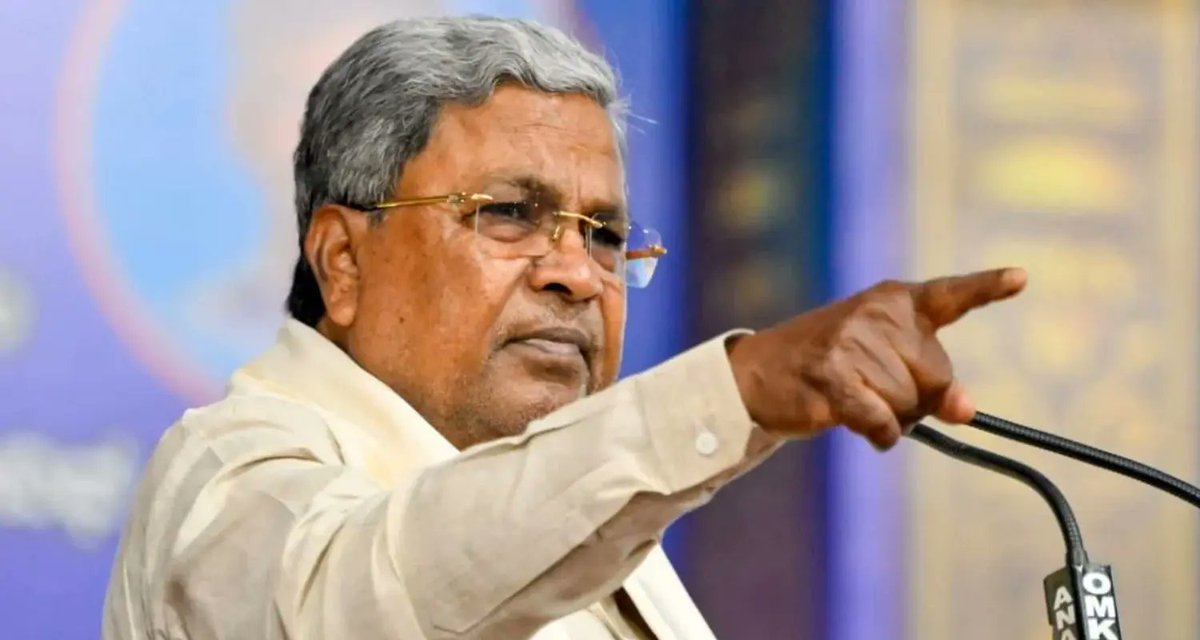
Siddaramaiah Ji was never that kind of leader.
He carried government finances in his fingertips and social justice in his spine. He refused to tour places that reeked of feudalism. He spoke plainly, governed sharply, and stood on the side of the last person in the room.
If there was one political figure I have genuinely admired, from the stage and up close, it has been him. His legacy is not in the schemes he launched or the budgets he read. It is in the kind of Chief Minister he chose to be when no one was watching. . On that quiet phone call. In the way he asked a nervous young officer to go out and keep the peace.
And now, as he steps back with the same quiet dignity with which he always led, I find myself moved. He has handled this transition with the grace of someone who always knew that principles outlast positions.
Siddaramaiah Ji....long life, good health, and please keep guiding us. The Congress, and this country, still needs the kind of moral clarity only you carry so naturally.