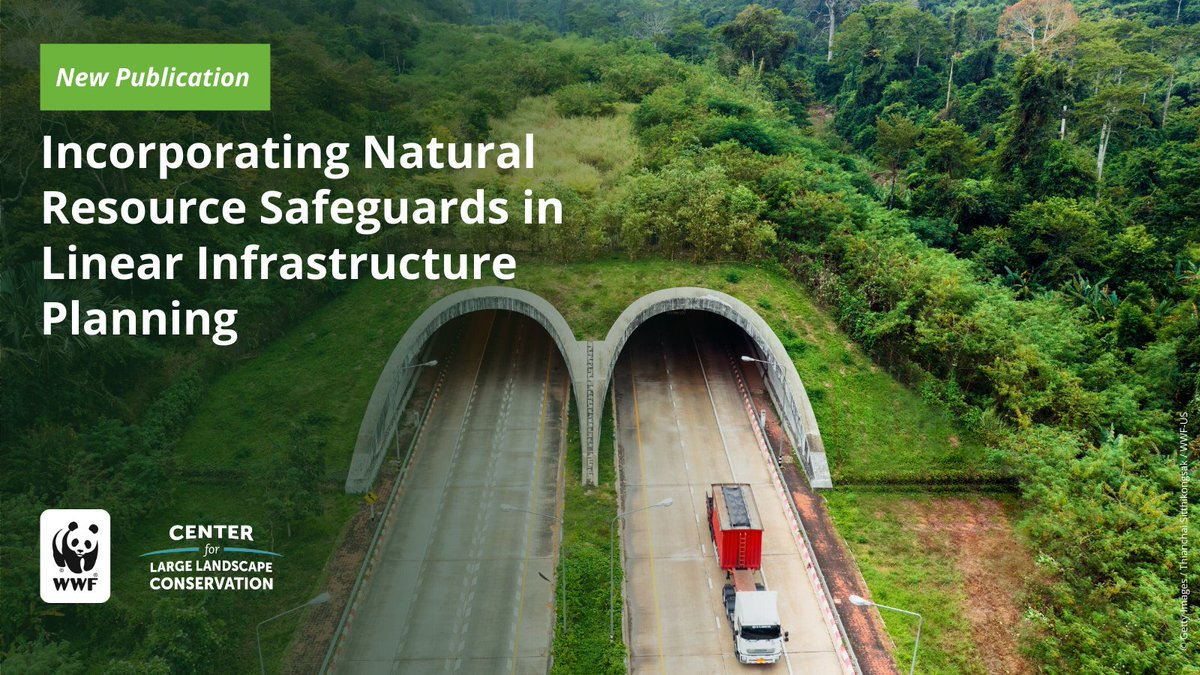
Global ecosystems are threatened by rapid expansion of linear infrastructure like roads. A new publication from @Largelandscapes & @World_Wildlife compiles 170+ resources to shortlist 10 best practices essential for supporting communities and biodiversity.
https://t.co/0JoppV7I5x
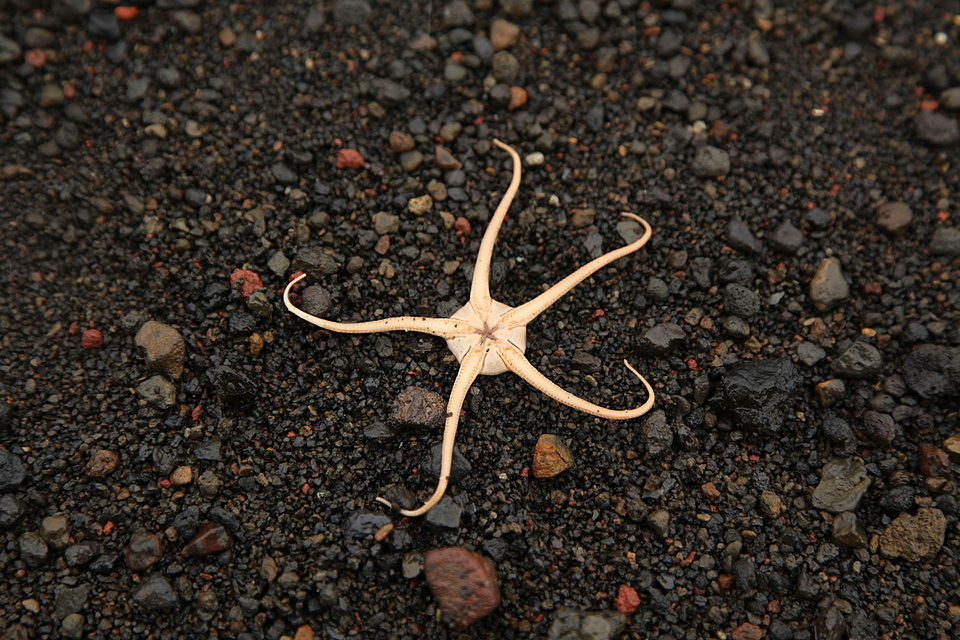
We may not know exactly who is in the deep ocean...🐠🐙🦑
... but new research reveals that deep-sea ecosystems are more connected across oceans than shallow waters, meaning we need for conservation strategies that protect biodiversity at all depths:
https://t.co/T89KoaZQm3
We're helping spread the word about GECOT! 🧰⚒️
GECOT is an open-source connectivity tool from @CecilehAlbert & colleagues that can address cumulative effects between conservation actions and optimize connectivity planning:
https://t.co/vHwiPB125U
Need another tool in your connectivity toolbox?🛠️
Check out Connecting Landscapes(CoLa) from @PatrickJantz & colleagues to help integrate habitat connectivity into land-use planning and development assessments:
https://t.co/jciZmV0IO5
Will the world's protected areas be enough to safeguard species from major biodiversity threats?
New research shows 76% of highly threatened areas lack adequate protection. Read more in our latest digest:
https://t.co/Kb3BuJyJqA
Over the past 200 years, Iowa has lost 99 percent of its prairie land. Experts are calling for Iowa to focus on creating ecological corridors to reconnect isolated habitat and allow wildlife movement.
https://t.co/dFH8zxZlbX
The Wallis Annenberg Wildlife Crossing in California just entered the final phase of construction. It will become the world's largest wildlife crossing and it will save mountain lions and other species from extinction while also protecting motorists.
https://t.co/fD9B83MCU4
The relationship between #biodiversity and habitat #connectivity is complicated! 🌿
We highlight new research that shows woodland connectivity enhances biodiversity, especially in landscapes with low woodland cover.
https://t.co/ivil45YKMm
The state of Montana passed two pieces of legislation this spring that will fund new wildlife crossings across the state. The Center's Kylie Paul praised the bills and the role they will play in reconnecting fragmented landscapes.
https://t.co/slvAanYmvY
Wouldn't it be nice if everything was rolled up in one place?
Get a summary of the latest news, science, and ideas on #corridors and #connectivity - once a month 🗓️
Sign up for our newsletter at https://t.co/DflExvwmEH
New research advances efforts to protect marine species by identifying key migration sites and corridors. Learn more in our latest digest 🌊🌊🌊 @ExploreMiCO
https://t.co/31e0AJHS1i
How can we reduce road mortality and improve connectivity for wildlife?
Read our newest digest to learn more about the strategy that reduced amphibian road mortality by 80%!
https://t.co/uLkpdzNTzs
"connectivity is likely to be more impacted as ocean depth increases, meaning that species will be less likely to find suitable habitats under climate change at the greatest ocean depths"
Read more in our latest digest...
https://t.co/zndE1aPs26
Fences can restrict wildlife movement and block access to essentials like food and water. Wildlife-friendly fencing can alleviate some of the harshest consequences for wildlife.
Read more: https://t.co/46pSQ2TqJp
Biodiversity leakage could compromise the efficacy of conservation projects like 30x30. New research breaks down how to confront this “leakage.”
Learn more in our latest digest:
https://t.co/a2XxliWtLA
What's the optimal width for corridors?
New research shows that "pinch points" may not effect corridor effectiveness for insects.
Read more in our latest digest 🦋
https://t.co/m0JhPgXJ7q
Habitat fragmentation affects even the smallest creatures!
Learn more about edge effects and soil microorganisms in our newest digest 🦠🦠🦠 @clairecwinfrey
https://t.co/uLoU2l8DZc
A recent survey found that 87% of U.S. respondents supported the idea of building new wildlife crossings. Wildlife crossings with fencing have been found to reduce wildlife-vehicle collisions by up to 97% when placed in areas of known animal movement.
https://t.co/F9pzuQUyy1
Road underpasses can help wildlife avoid habitat fragmentation, but new research shows that #lightpollution may affect the benefits of road underpasses for wildlife.
The good news... it's reversible!
https://t.co/57aPloCz6t
New Mexico has set aside $50 million to build over- and underpasses for wildlife in the state. This is the largest amount a U.S. state has earmarked for this purpose. https://t.co/xXTaud8RMp