I have seen some arguments questioning the advocacy for AI safety research. Few would disagree that AI is the most consequential technology in human history and could cause harm. What should worry you, then, is not necessarily that p(doom) is high 1/n
, informed by all aspects of human knowledge, which can then be clarified and formulated by mathematicians and translated into safety guarantees. AI will be a far bigger agency than we have seen so far, and we cannot afford to underestimate the asymmetry between AI and us. 3/n
Hello.
I would like to hear more from mathematicians moving into AI safety. I am more interested in the human side of the story, from career anxieties to what moves them to escape the lure of whatever little corner of mathematics occupies them and commit to AI safety.
Congratulations to Francis Halzen of @UWMadPhysics on the 2026 @NobelPrize in Physics, and to the whole @uw_icecube team.
They turned a cubic kilometre of Antarctic ice into a neutrino telescope. Our short film explains how it works and what it took to build. 🧊
Quantum Sensors, Explained · Episode 2: Catching the Glow.
A diamond reports the magnetic field as a faint red glow, mostly trapped in the crystal and buried in the laser's flicker. Here's how a lens, a filter and a second photodiode free it in the style of @3blue1brown.
The thing that makes diamonds sparkle is one of the hardest problems in building our sensor.
Our sensor reads the field from a faint red glow inside the crystal, so most of our signal is stuck.
Episode 2: how we get it out
https://t.co/CyywmIb5WT
Though a more rigorous name would be "Am I a sheaf?" (modulo the locality condition), who cares? You can try familiar Bell, Hardy, or PR box-like scenarios, or check for the existence of a global section for your own empirical models over arbitrary ri(n)gs.
Global section calculator for no-signaling empirical models based on Abramsky and Brandenburger's sheaf-theoretic formalism of contextuality.
Fondly named "what's my sheaf?"
link: https://t.co/9YrVD2gRQB
have fun!
though a more rigorous name would be "Am I a sheaf ?"(modulo the locality condition), but who cares. you can try out the familiar Bell, Hardy, PR box like scenarios or check for the existence of global section for your own empirical models over arbitrary ri(n)gs.
The rocks beneath you are broadcasting a map. A diamond can read it.
94 seconds on how our quantum magnetometer works, @3blue1brown style. The last shot is a real sweep from our sensor.
https://t.co/s6sqxVJq1b
Quantum Sensors, Explained · Episode 1
We are huge fans of @3blue1brown and believe his visual style is the best way to show what these instruments are.
This one follows the Earth's magnetic field into a diamond and ends on a real sweep from Polaris, the magnetometer we build.
AI is making remarkable discoveries in mathematics. The exposition is often substandard; however, the proof is often accompanied by a Lean certification. While we wait to digest these proofs, can we place our trust in the fact that the proofs have been verified in Lean?
post here: https://t.co/ZkqsIJieJi
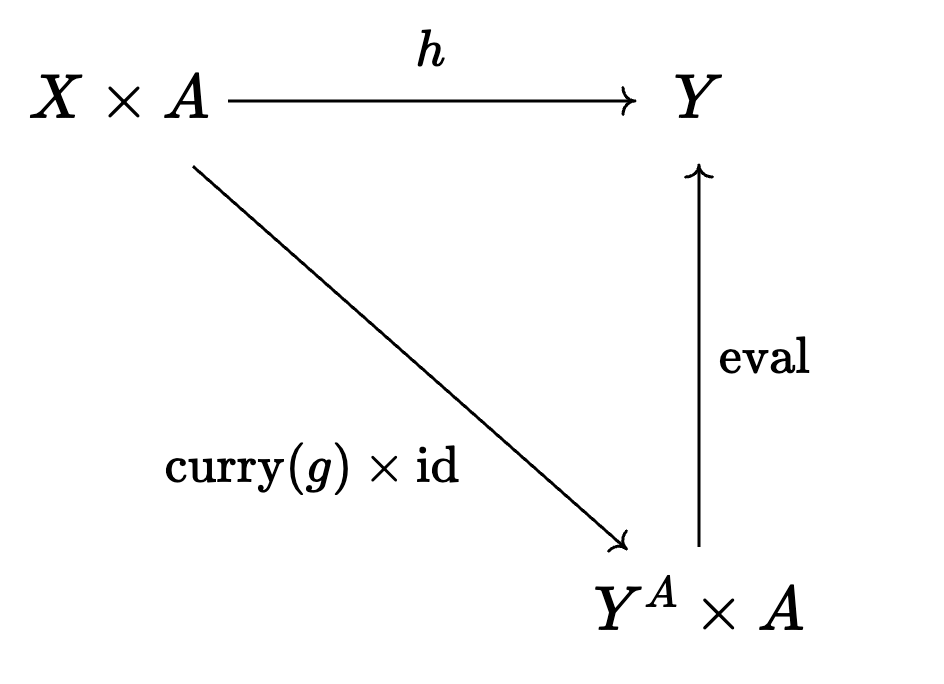
In this post, I explore the Curry-Howard-Lambek correspondence between proofs and programmes. The particular focus of this post is on the Lambek side (aka the categorical side) of this correspondence.
And work needs to be done to further refine these analogies. One of the main goals of putting this out is simply to connect researchers in quantum foundations and agentic AI safety. AI safety is an urgent challenge which requires foundational ideas from diverse fields.
finally broke the wall and wrote something.
Heisenberg meets Anju: Notion of agents in quantum foundations and artificial intelligence
link here: https://t.co/QnRsSBsQ6j
a few details and disclaimers in the comments.
A disclaimer: I study category theory and quantum foundations and have been reading about AI safety, mostly due to my concerns. So, a mathematician's warning is that one should take these claims as analogies, maybe loose analogies at that. Nonetheless, I hope this is of value.