Learn more:
https://t.co/lC3of4EPya
Disturbance rejection requires a different tuning philosophy than setpoint tracking.
Aggressive proportional gain improves tracking but can amplify noise and interaction during real disturbances.
Register for the free webinar:
https://t.co/ZV79H8jhuM
Designed for engineers newer to process control—or anyone looking for a practical refresher, this session focuses on application, not theory alone.
📅 June 16, 2026
🕙 10:00 AM – 11:00 AM EDT
Request a demo: https://t.co/idnbHBbUis
Engineers need clarity, not more dashboards.
Actionable performance systems identify:
• What to fix
• Why it matters
• Expected improvement impact
Visit: https://t.co/zrA7Zno9mg
Fast and slow process dynamics require different analytical approaches.
- LOOP-PRO Tuner models dynamic behavior.
- PlantESP verifies performance impact.
- Digital Lifecycle Solutions ensure alignment across the lifecycle.
Level loops are among the most oscillation-prone in process industries.
Understanding integrating behavior and disturbance patterns is essential for stability.
Watch: https://t.co/uJSIakayF1
Improvement programs fail when they rely on isolated tuning efforts.
Sustained performance requires:
• Continuous monitoring
• Model-based retuning
• Enterprise visibility into loop health
Request a demo: https://t.co/idnbHBbUis
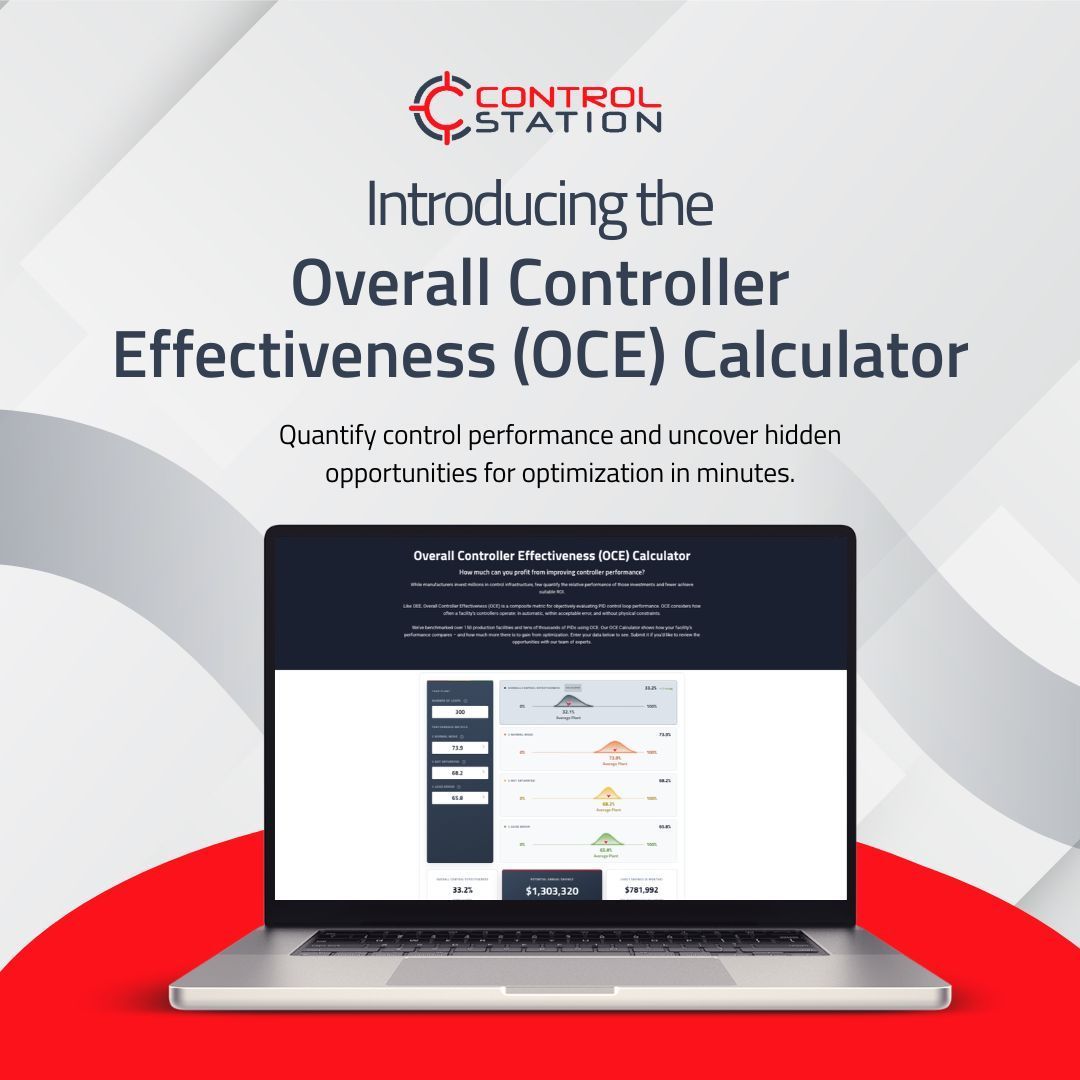
Try the OCE Calculator now: https://t.co/1CP6oqf4K7
Built from benchmarking 150+ production facilities and tens of thousands of PID loops, the OCE Calculator helps you measure controller performance and uncover optimization opportunities using your own plant metrics.
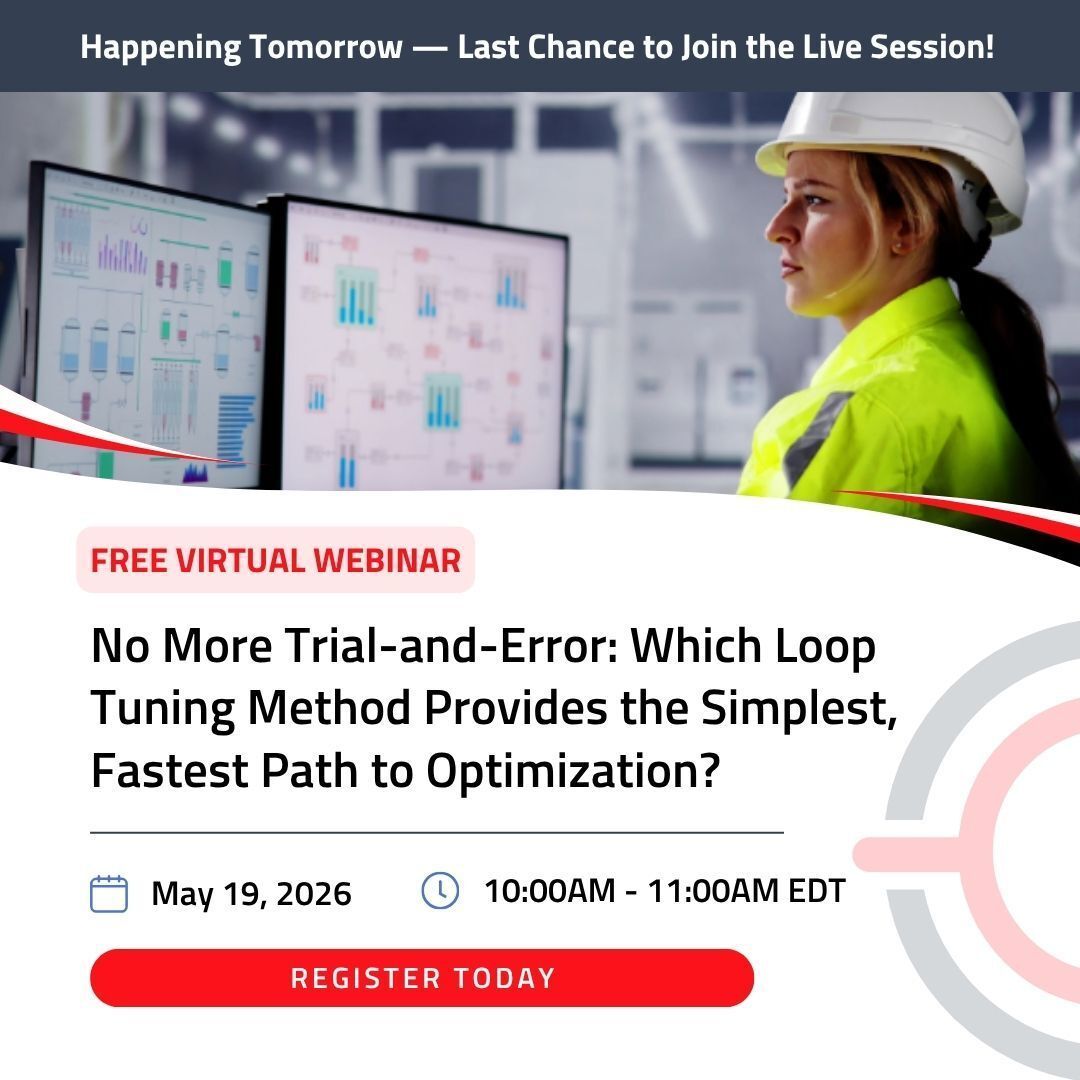
Register for the free webinar: https://t.co/NALVunzG7Z
If you’ve ever spent hours adjusting a loop only to get inconsistent results, this webinar will feel familiar—and useful.
It’s a practical session built for engineers who need results they can apply immediately.
Valve stiction reduces control precision and increases variability.
This short shows how early detection prevents performance loss.
Watch: https://t.co/GpKEkP8awP
Visit: https://t.co/zrA7Zno9mg
- LOOP-PRO Tuner models process dynamics to maintain tuning aligned with real behavior
- PlantESP tracks variability, interaction, and constraint performance over time
- Digital Lifecycle Solutions connect these insights to prioritized improvement
Happening Next Week — May 19, 2026!
Register for the free webinar: https://t.co/VYdhe81HoQ
For many facilities, inconsistent tuning methods lead to wasted time, unnecessary process disruption, and loops that never quite perform the way they should.
Register:
https://t.co/eLH8OE8ITx
Applied methods for diagnosing oscillations, modeling process dynamics, and implementing model-based PID tuning.
Built for engineers responsible for loop performance and variability reduction.
Cascade strategies improve disturbance rejection by separating fast and slow dynamics.
This short explains when dual-controller structures outperform single-loop tuning—and why proper configuration matters.
Watch: https://t.co/pLR97f2Bks
Register for the free webinar: https://t.co/VYdhe81HoQ
Built for controls engineers, this session focuses on practical decision-making and real-world application—not theory.
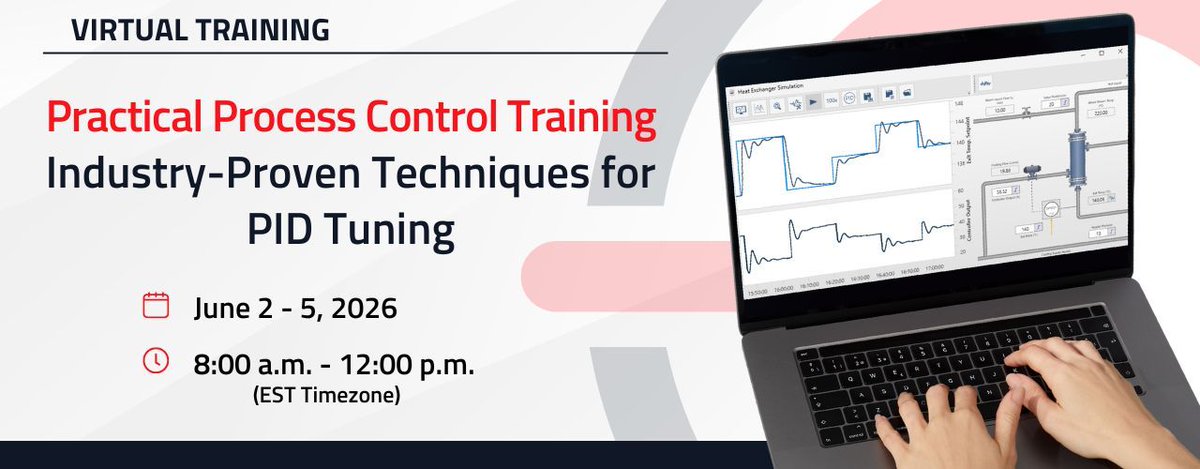
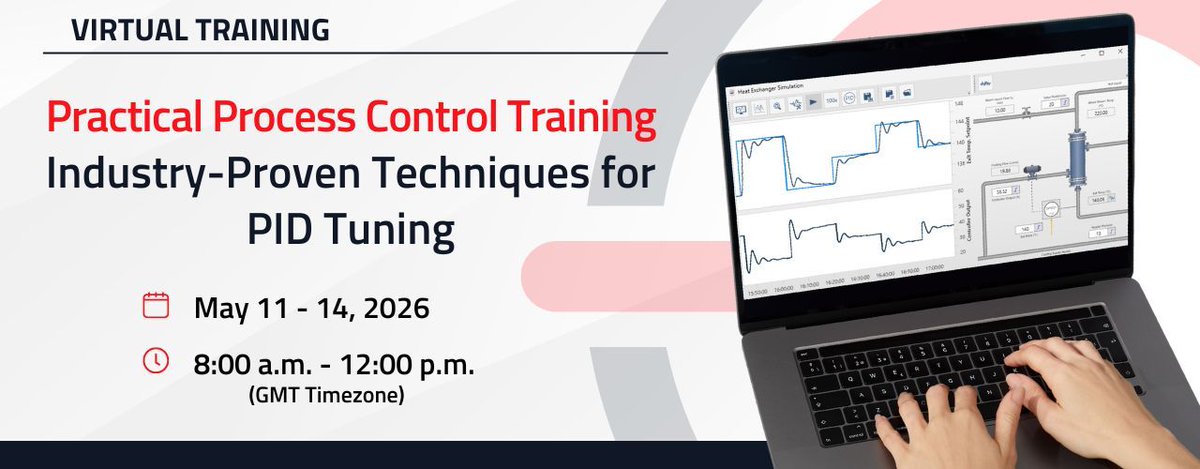
Practical Process Control Training | May 11–14 (GMT)
Applied techniques for diagnosing loop issues, tuning effectively, and improving controller reliability.
Register → https://t.co/jeLqVQ91hM
Request a demo → https://t.co/idnbHBbUis
Tuning success must be verified against real performance.
Model-based tuning establishes parameters.
Performance monitoring confirms whether variability, constraints, and manual interventions decline.
Most industrial production depends on PID loops — yet many operate below their potential due to variability, poor tuning, and undetected nonlinearities.
This short highlights the scale of improvement opportunity.
5.5 Million PID Loops Control the World
Watch now: