This year really feels like the end for traditional gaming. Consoles less affordable, layoffs galore and now physical media on PlayStation is dead. Really hard to feel any excitement for any new consoles given this - I'm sure plenty of you don't care, but it matters a lot to me.
Let me trace the timeline here because nobody's connecting it.
Step 1: Scrape the entire internet. Every book, every article, every conversation, every piece of art, every forum post. Do it without asking. Do it without paying.
Step 2: Train a model on all of it. Call it "artificial intelligence."
Step 3: Go to BlackRock's Infrastructure Summit and announce: "We see a future where intelligence is a utility, like electricity or water, and people buy it from us on a meter."
Step 3 is where you sell people's own knowledge back to them. On a meter.
They took the collective output of human thought, compressed it into a model, and now they want to charge you by the token to access a version of what you and everyone you know already created.
One Reddit user put it perfectly: "They stole all this data from us, the people, our life's work, creativity, art, by devouring the internet and blowing through all copyright laws. Now they want to sell it back to us in the form of a utility."
Imagine if someone photocopied every book in the public library, burned the library down, and then opened a subscription service for the copies.
That's the metered intelligence business model.
And they're pitching it to infrastructure investors as though they invented water.
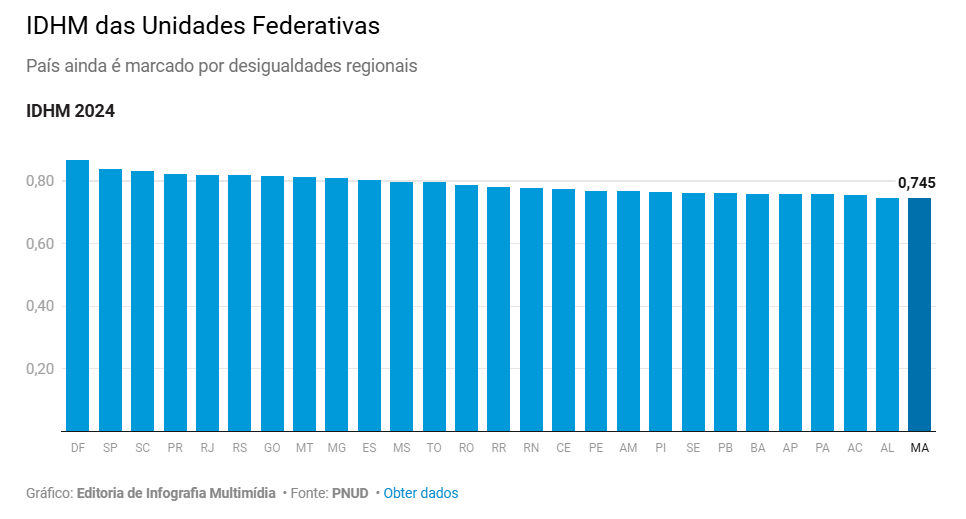
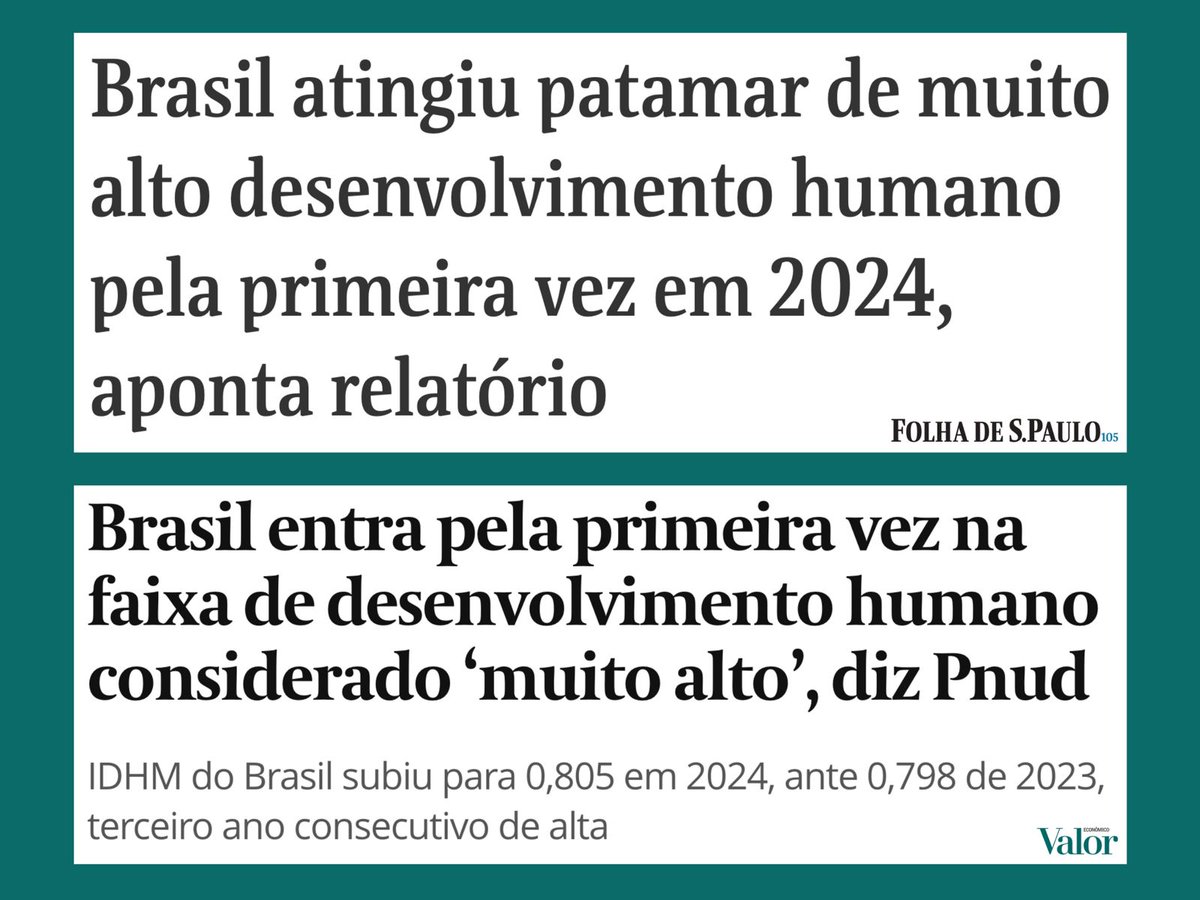
Pela primeira vez na história, o Brasil alcança o patamar mais elevado do Índice de Desenvolvimento Humano (IDHM). O IDHM avalia o bem-estar de uma população numa escala que varia de 0 a 1. Um país é classificado no patamar de Muito Alto Desenvolvimento Humano quando seu índice atinge ou supera 0,800. E foi esta a barreira que ultrapassamos. Chegamos a 0,805 em 2024.
Os dados são do Radar IDHM, divulgados nesta terça pelo PNUD (órgão da ONU), IBGE e Fundação João Pinheiro. Um resultado que não é coincidência, mas reflexo de escolhas políticas consistentes e coordenadas, com impacto direto nos indicadores de educação, longevidade e renda mapeados pelo IDHM. O maior destaque no período foi a educação, que saltou de 0,679 para 0,798 desde 2012.
Outro avanço significativo veio na redução da desigualdade racial: o IDHM da população negra cresceu 10,3% entre 2012 e 2024, quase o dobro da população branca (5,5%), que partia de patamar mais alto. Merece destaque também o aumento dos níveis de desenvolvimento nos estados do Norte e Nordeste, com crescimento relativo acima da média nacional.
Sabemos que ainda temos um longo caminho pela frente, com desigualdades regionais, de gênero e de raça que precisam ser superadas. O resultado já alcançado mostra que estamos no caminho certo.
🚨🇧🇷 SUÉCIL: Pela primeira vez na HISTÓRIA, o Brasil atinge IDH considerado ''muito alto'' (status de país de primeiro mundo)!
Segundo relatório de hoje do Radar IDHM, o índice saltou de 0,744 para 0,805 entre 2012 e 2024, chegando ao maior valor da série.