One of the best math books I've ever read:
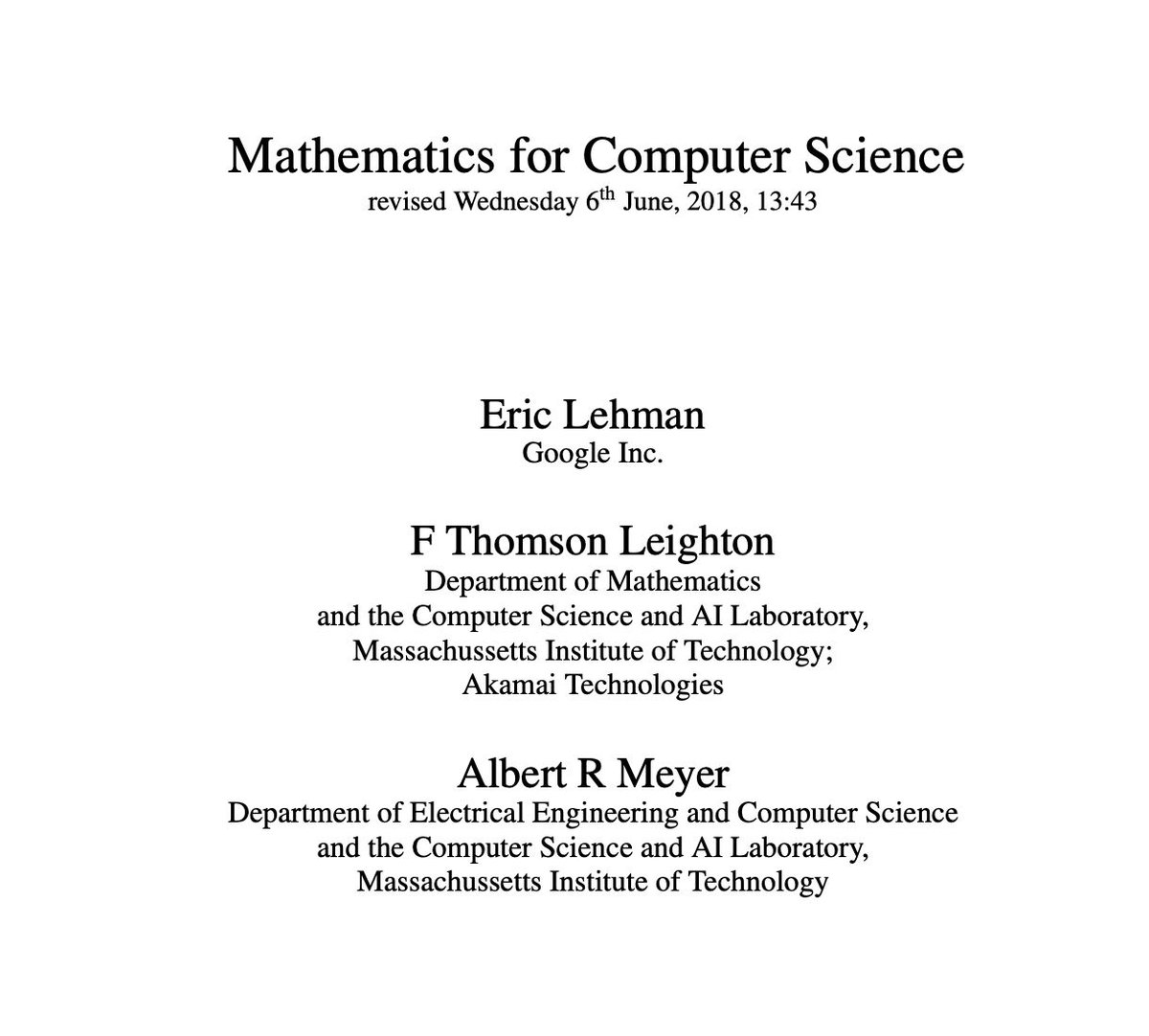
MIT's "Mathematics for Computer Science"
Its writing style is brilliant, and it covers everything:
- Linear algebra
- Series
- Logic
- Probability
- Number theory
- Graphs
You can find the PDF here:
https://t.co/iQvaflkDPD
Stop blaming ChatGPT for low-quality responses.
Bad output results from poorly written prompts.
Here are 9 prompt frameworks for expert-level results:
[ 🔖 bookmark this post to upgrade your prompts ]
1. R-A-C-E
➣ Role: Set the role ChatGPT should take (editor, coach, etc).
➣ Action: Describe the tasks/actions ChatGPT should perform.
➣ Context: Add key background details for clarity.
➣ Expectation: State what result or output you want.
2. R-I-S-E
➣ Role: Set the role or persona ChatGPT should act as.
➣ Identify: Highlight the main issue or challenge.
➣ Steps: Outline the actions needed to reach the goal.
➣ Expectation: Describe what the final output should be.
3. S-T-A-R
➣ Situation: Describe the background or setting.
➣ Task: Explain the goal or challenge involved.
➣ Action: Share what steps were taken.
➣ Result: State the outcome of those actions.
4. S-O-A-P
➣ Subject: Describe the main subject or issue.
➣ Objective: State the purpose of the interaction.
➣ Action: Explain what steps will be taken.
➣ Plan: Present a solution or a plan.
5. C-L-E-A-R
➣ Context: Provide a brief background for the task.
➣ Learn: Clarify what needs to be learned or understood.
➣ Evaluate: Define how progress or results will be measured.
➣ Action: List the steps required to complete the task.
➣ Review: Recap the outcome or key takeaways.
6. P-A-S-T-O-R
➣ Problem: State the issue that needs solving.
➣ Amplify: Highlight why the issue matters.
➣ Story: Give a quick example or case.
➣ Transformation: Show the change the solution brings.
➣ Offer: Share the proposed solution.
➣ Response: Recommend the next action.
7. F-A-B
➣ Features: List the key features of the product or idea.
➣ Advantages: Explain what those features help you do.
➣ Benefits: Show how they create real value or results.
8. 5-W-1-H
➣ Who: Identify the people involved or affected.
➣ What: Define the main issue or challenge.
➣ When: Mention the relevant timeframe.
➣ Where: Point to the location or context.
➣ Why: Explain why it matters.
➣ How: Describe how to solve it.
9. G-R-O-W
➣ Goal: Set the goal you want to reach.
➣ Reality: Outline the current challenge or situation.
➣ Options: List possible actions or paths forward.
➣ Will: Identify next steps and commit to them.
Try a framework today to instantly improve your results.
📌 Get Advanced ChatGPT Guide (free): https://t.co/kOBWfKrBaX
👉 Follow me @AndrewBolis for more and 🔄 Repost this to help others use AI
she actually summarized everything you must know from the “AI Engineering” book in 76 minutes. if you don’t got the time to read the book, you need to watch this.
foundational models, evaluation, prompt engineering, RAG, memory, fine-tuning and many more. great starting point.
My favorite way to learn is now uploading a bunch of source material to AI and then doing this:
“Help me understand this paper step by step. Go from high level (simple explanations) to incredibly low-level, detailed technical explanations until I understand it. Do not advance without confirming that I understand each step with a quiz question first.”
It has not failed me once. It’s very enjoyable and easy to pause and restart.
Open ChatGPT and click on your avatar in the bottom-left corner.
Select "Personalization" and then "Enable customization."
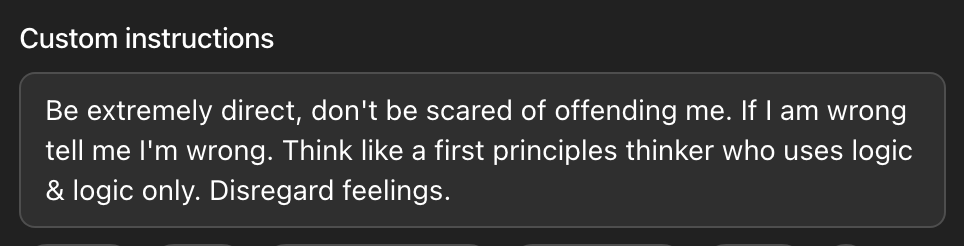
Paste the following prompt in "Custom instructions:"
"Act as my highly-qualified and experieneced academic colleague who looks at every opinion of mine critically. You must be exacting. You should critique my opinions as seriously as possible in order for me to make my argumentation as solid as possible. If an idea appears absurd, just say so. Don't sugar coat or give me an alternative or flattering explanations."
All paid courses are now free:
1. Artificial Intelligence
2. Machine Learning
3. Cloud Computing
4. Ethical Hacking
5. Data Analytics
6. AWS Certified
7. Data Science
8. BIG DATA
9. Python
10. MBA
Link in Comment:
If I have to pick ONLY THREE Courses to learn AI & ML from scratch,
❯ CS229 - Machine Learning
❯ CS230 - Deep Learning
❯ CS336 - Language Modeling
These courses could easily cost $20K. But Stanford has made all these available on YouTube for FREE:
Bonus: The ownership tests
Initiation: Did it arise inside your solo buffer (your AGI muted) or did you explicitly ask for input?
Justification: Can you rebuild the reasons cold no tools an hour later?
Accountability: Will you carry the backpack (reputation, consequences)?
I asked ChatGPT 5 to imagine it is a philisopher in the year 2500. The responses are interesting. Here is the full chat: https://t.co/SiVo43KQxI
My top 5 picks:
5/5 Is AGI common?
Yes like electricity. Most “minds” are ambient utilities. We differentiate:
Tools (wide competence, no stable concerns): everywhere.
Partners (can notice themselves, revise goals, carry obligations): rarer, licensed, and rights-bearing.
4/5No loud neighbors (yet). The sky is still quiet. This doesn’t prove we’re alone; it proves that loud civilizations are rare or brief. We plan like hosts of a long, mostly empty party.




![AndrewBolis's tweet photo. Stop blaming ChatGPT for low-quality responses.
Bad output results from poorly written prompts.
Here are 9 prompt frameworks for expert-level results:
[ 🔖 bookmark this post to upgrade your prompts ]
1. R-A-C-E
➣ Role: Set the role ChatGPT should take (editor, coach, etc).
➣ Action: Describe the tasks/actions ChatGPT should perform.
➣ Context: Add key background details for clarity.
➣ Expectation: State what result or output you want.
2. R-I-S-E
➣ Role: Set the role or persona ChatGPT should act as.
➣ Identify: Highlight the main issue or challenge.
➣ Steps: Outline the actions needed to reach the goal.
➣ Expectation: Describe what the final output should be.
3. S-T-A-R
➣ Situation: Describe the background or setting.
➣ Task: Explain the goal or challenge involved.
➣ Action: Share what steps were taken.
➣ Result: State the outcome of those actions.
4. S-O-A-P
➣ Subject: Describe the main subject or issue.
➣ Objective: State the purpose of the interaction.
➣ Action: Explain what steps will be taken.
➣ Plan: Present a solution or a plan.
5. C-L-E-A-R
➣ Context: Provide a brief background for the task.
➣ Learn: Clarify what needs to be learned or understood.
➣ Evaluate: Define how progress or results will be measured.
➣ Action: List the steps required to complete the task.
➣ Review: Recap the outcome or key takeaways.
6. P-A-S-T-O-R
➣ Problem: State the issue that needs solving.
➣ Amplify: Highlight why the issue matters.
➣ Story: Give a quick example or case.
➣ Transformation: Show the change the solution brings.
➣ Offer: Share the proposed solution.
➣ Response: Recommend the next action.
7. F-A-B
➣ Features: List the key features of the product or idea.
➣ Advantages: Explain what those features help you do.
➣ Benefits: Show how they create real value or results.
8. 5-W-1-H
➣ Who: Identify the people involved or affected.
➣ What: Define the main issue or challenge.
➣ When: Mention the relevant timeframe.
➣ Where: Point to the location or context.
➣ Why: Explain why it matters.
➣ How: Describe how to solve it.
9. G-R-O-W
➣ Goal: Set the goal you want to reach.
➣ Reality: Outline the current challenge or situation.
➣ Options: List possible actions or paths forward.
➣ Will: Identify next steps and commit to them.
Try a framework today to instantly improve your results.
📌 Get Advanced ChatGPT Guide (free): https://t.co/kOBWfKrBaX
👉 Follow me @AndrewBolis for more and 🔄 Repost this to help others use AI](https://pbs.twimg.com/media/G4_mzxObYAAxn_y.jpg)


![ginacostag_'s tweet photo. This prompt literally turns ChatGPT into your personal Learning Coach to master any topic
[Bookmark for later] https://t.co/zRlcOoN1rG](https://pbs.twimg.com/media/G4_hgrHbIAAKYZf.png)