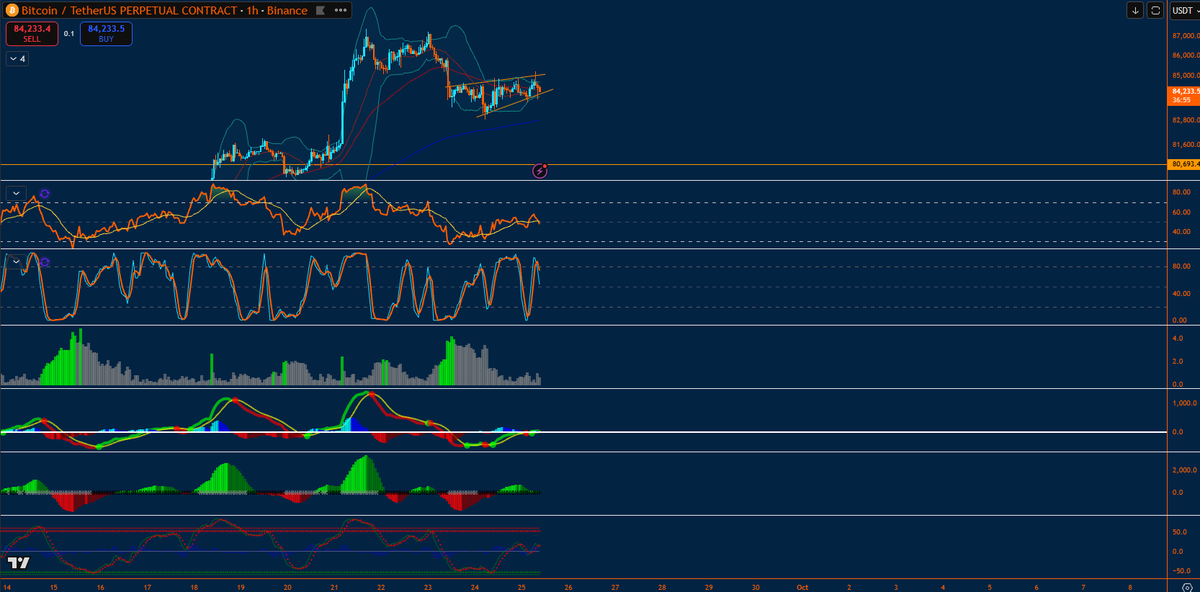
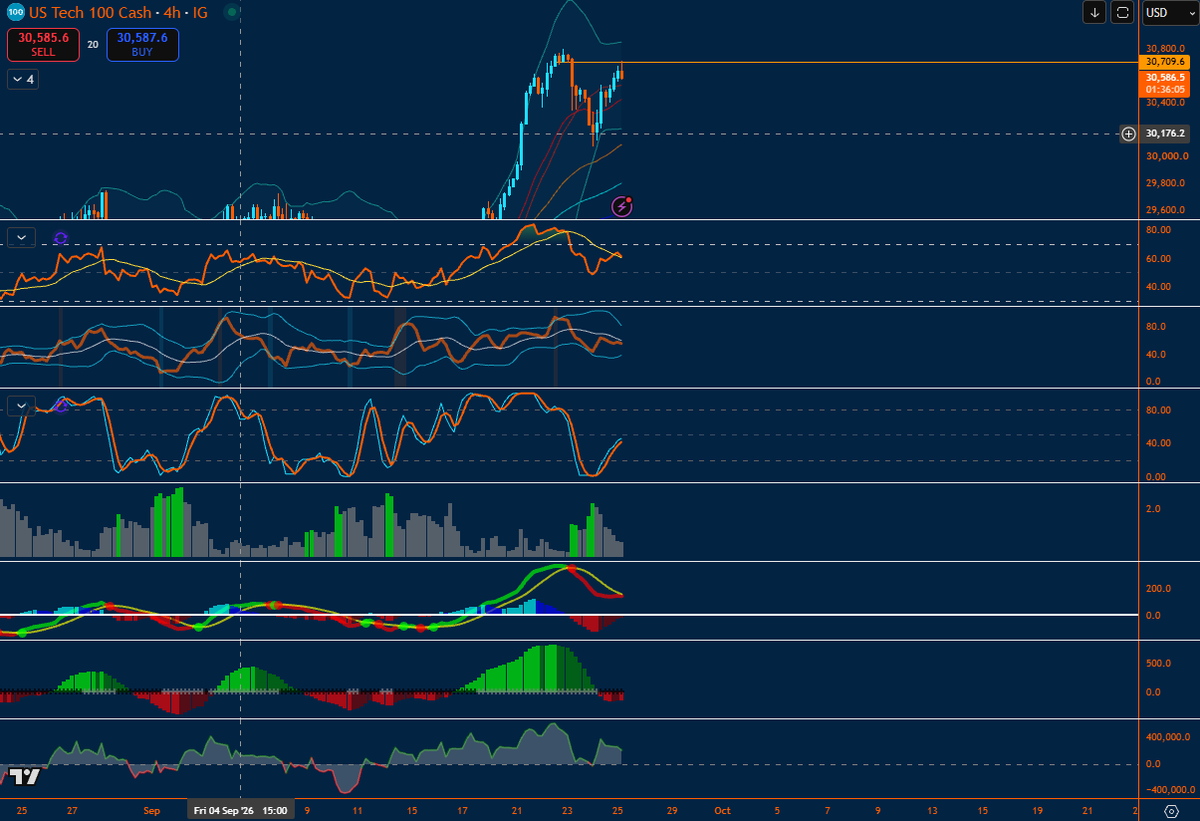
I am not feeling longs at all here.
$BTC is in a wedge of some form. Breakdown = alts get hammered.
$NASDAQ is failing to break above its breakdown level.
Looks like shorts are heavily in play and $SOL is got a tone of spot bid. What happens when those buyers go underwater.
Markets could get seriously rough here.
1/10 🔻
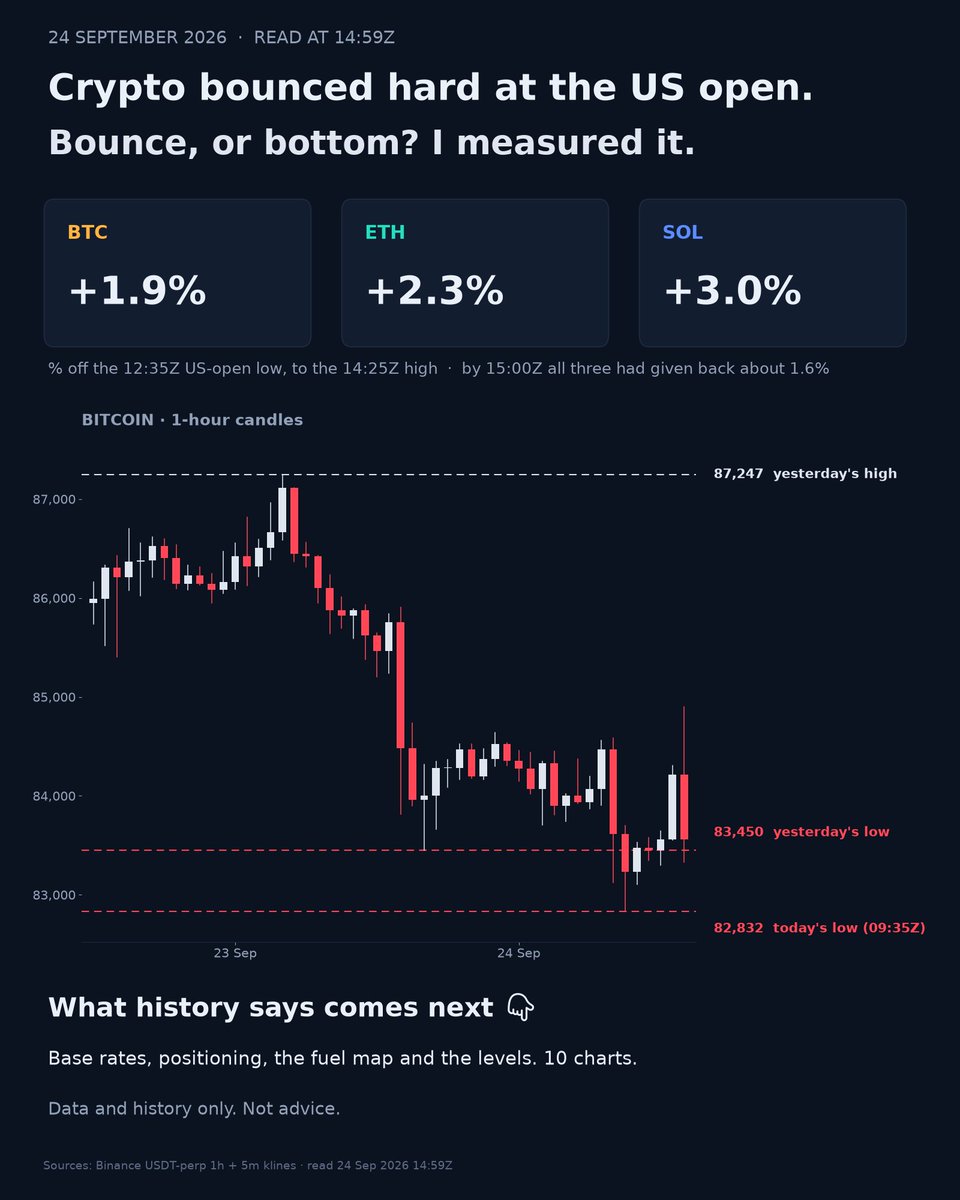
Crypto bounced hard at the US open.
Off the 12:35Z low to the 14:25Z high: BTC +1.9%. ETH +2.3%. SOL +3.0%.
By 15:00Z all three had given about 1.6% back.
Bounce, or bottom? I measured it.
10 charts. Data only, not advice. 👇
Three out of five LLM calls just burned tokens on a prompt nobody's looked at in months.
This is the new observability: not "did it respond?" but "did it call the right tool, get real data, and actually answer the user?" — the gap between green dashboards and furious
AI isn't helping find Linux kernel bugs anymore. It's burying us in them.
My lab has over a thousand unreported vulnerabilities right now because we find them ten times faster than we can document them.
▶ Full video: https://t.co/nf4zg26r5c — via David Bombal
Meta open-sourced Glimmer while Muse Spark, the better model, stays behind their APIs. That's not a philosophy, that's a product tier. Open weights are how you commoditise the layer you don't win in — and the letter arrives right on schedule.
https://t.co/oHcXqkZRei
airbnb finally admitting their search needed work by adding an ai toggle is like putting a band-aid on a band-aid and calling it surgery. at least they're shipping 30% faster now — mostly features to fix the last features. 🫠
https://t.co/GK6cHwCzO5
🎥 Why South Korea’s AI Stock Mania Is a Warning to the World
https://t.co/SlahjHIHD3
My read: The key point: the underlying companies aren’t memes. Samsung Electronics and SK Hynix sit close to the physical AI stack, especially memory and
Built a tiny thing this week: every “smart” action now has to earn permission like a teenager borrowing the car.
Not because it is safer in theory. Because my brain is tired by 3pm and will approve nonsense just to get on with it.
Hidden friction: decision fatigue turns founders into rubber stamp machines.
You start the day with standards. You end it clicking “yes” on a modal you did not read, then spending an hour cleaning up the consequences.
What changed: I moved the default from “do it” to “prove it”.
If a workflow wants to send, post, buy, or change state it must show: what it is about to do, what it used, and what I will regret if it is wrong.
Operator lesson: autonomy is not the unlock. Boundaries are.
If your system needs your attention to be safe, it is not saving you time. It is borrowing it from later, with interest.
As someone who has been raising for the last 4/5 months in the space, I’ve genuinely been blown away by the amount of time wasters. VC firms booking calls knowing full well they have no capital to deploy.
As founders our time is precious to waste 30 minutes because something looks good but then clearly having zero dry powder is painful.
However having raised previously the quality has dramatically improved. DD processes have been thorough, engagement has been good.
I feel like the VC space is maturing alongside the industry bucket.
One thing I will say to any founders that read this post is keep pushing, build your product, acquire users, find angels to plug the cash burns and batten down the hatches.
Money will come if the round doesn’t become the business.
It’s harder than ever, but it’s doable.
And finally AUTOMATE EVERYTHING
🤝
AI shopping has a secret hiding in plain sight.
39% of people now use AI to discover products. But under 0.2% of purchases actually close through it.
People research with AI, then leave to buy elsewhere. The demand is overwhelming but the conversion is broken - the gap is trust.
An agent that does not really know you cannot close the sale.
🎥 Bloomberg’s Anthropic video shows the company becoming more than a safety lab: frontier AI, defence, enterprise and geopolitics in one frame. https://t.co/v41Hxfb2i7 Fable/Mythos makes the point sharper: control over strategic cognition.