They tell us to turn off taps, switch off hosepipes, drink from bottles with tethered caps, turn the lights off and tell us to eat less red meat…but at the same time, allow huge AI data centres that deplete our natural resources. We are being conned by our own governments.
@Bleddyn25598275 Yes! We're going up the tidal section of the Trent next week, which will be exciting, and taking the boats to be sold so we can move to Shetland 😀
I'm fuming to read this! 🤬
Year in and year out this kind of crap happens in the summer, when most birds are already breeding, not just with Swifts, but with all birds! 😒
Birds and their nests are protected by law, but the law is clearly inadequate and is riddled with loopholes that councils, builders, farmers... anyone really, can exploit. 😡
Yet still some wonder why the UK is the most nature depleted place on earth...
https://t.co/q2grIPa3g5
A tenant farmer in the Cairngorms says land that sold for £500 an acre a few years ago now goes for £5,000. He is being moved off ground his family has worked for generations, because he cannot outbid the people buying it. The buyers are corporations, and they have no intention of farming a single acre of it.
Here is how the trick works. A company keeps emitting carbon exactly as before. Same factories, same flights, same supply chain, same product. Then it buys a Scottish hillside, plants some trees, and announces to the world that it is now carbon neutral, or, if it is feeling brave, carbon negative. The emissions never fell. It simply bought a landscape to point at.
Take BrewDog. In 2020 it bought a 9,300-acre Highland estate, propped up with public grant money, and promised a million trees and the crown of the world's first carbon negative beer business, removing twice the carbon it emitted, forever. By 2023 roughly half of the 500,000 trees it had managed to plant were dead, killed by drought, with critics noting the planting was drying out the peat and releasing carbon of its own. The advertising regulator ruled its carbon-negative claims misleading. In 2024 it quietly dropped the badge and dismissed the entire carbon credit market as a flood of cheap schemes whose benefit was "questionable, maybe even non-existent." Then it sold the estate to a firm whose actual business is selling carbon offsets.
That is the whole model in one story. Public money in. Dead trees out. A green halo worn for four years and then dropped. The farmer who used to be on that land, gone. The hillside passed to a company that exists purely to sell other people the right to keep polluting.
This is no fringe case. In one recent year, half of every estate sold in Scotland went to investment funds, corporations and charitable trusts rather than anyone who would farm it. A third of the deals for plantable land are now done off-market, in secret, precisely so the local community never gets the chance to bid.
So this is what net zero looks like on the ground. A man who produced food is priced out of his own glen. A corporation that produced emissions buys the glen, calls itself a force for good, and sells the carbon. The land stops feeding anyone. Nobody's emissions actually went down by a gram.
The food was real. The farmer was real. The carbon saving is a line in a slide deck.
And we have somehow decided the villain in all this is the man with the sheep.
Right you lovely #boaters@CanalRiverTrust issued a press release asking us to conserve water by sharing locks, don't turn any lock set against you etc. So let's see photos pls of all the lock waterfalls out there (with locations) that if repaired would defo save water.
Tia
With everything we are hearing right now about ticks this seems like good information to share.
“Here’s what I’ve learned after more ticks than I care to count.
First, whatever your uncle told you, forget it. No matches. No nail polish. No Vaseline. No soap on a cotton ball. All of those do the same terrible thing, they stress the tick out, and a stressed tick empties its gut back into the bite before letting go. Which, if you think about what that actually means for a second, is literally how Lyme and the rest get transmitted so you’re not speeding up its exit. You’re making it throw up into you.
Fine-tipped tweezers. Grip right where the mouthparts enter the skin, not the body, the head. Pull straight up, steady, no twisting, no jerking. It’ll feel like it’s resisting because it is, the mouthparts are barbed. Just keep the pressure on and it lets go in a few seconds. If a piece breaks off in the skin, leave it alone. Your body pushes splinters out. Digging around with a needle does more damage then the fragment ever would.
Clean it with alcohol or soap. Wash your hands.
Now here’s the part most people skip: don’t flush the tick.
Tape it to an index card. Clear packing tape right over the body, write the date and where on your body it was, and stick the card in a drawer. If you come down with anything weird in the next 30 days, rash, fever, joint pain, that flu-that-isn’t-flu feeling, that tick goes with you to the doctor. Some labs will test the tick itself, which is faster and often more reliable than waiting for antibodies to show up in your own blood. A dated tick taped to a card is one of the most useful things you can hand a doctor who’s trying to figure out what’s wrong with you.
The other thing worth saying out loud: if the tick was engorged when you pulled it, and you can’t swear it was off your body within 24 hours, call your doctor that same day. Don’t wait for a rash. Fewer than three out of four Lyme cases even produce the classic bullseye. A single preventive dose of doxycycline within 72 hours of a deer tick bite cuts the Lyme odds way down, and most docs in tick country will write that prescription without giving you a hard time, especially if you walk in with the tick taped to a card and a clear timeline.”
Attention #boatsthattweet dangerous situ at lock 7 Audlem flight nr Br77. Horizontal step, lower offside gate is not fixed down. Do NOT use it to cross lock. @CanalRiverTrust have been notified but can't send a team out until tomorrow . NABO Vice Chair has tied warning tape 1/2
@TheRegencyCook I absolutely love dianthus, especially the little cottage pinks. Their scent, wonderful colours, and the neat picotee edging they so often have - just gorgeous.
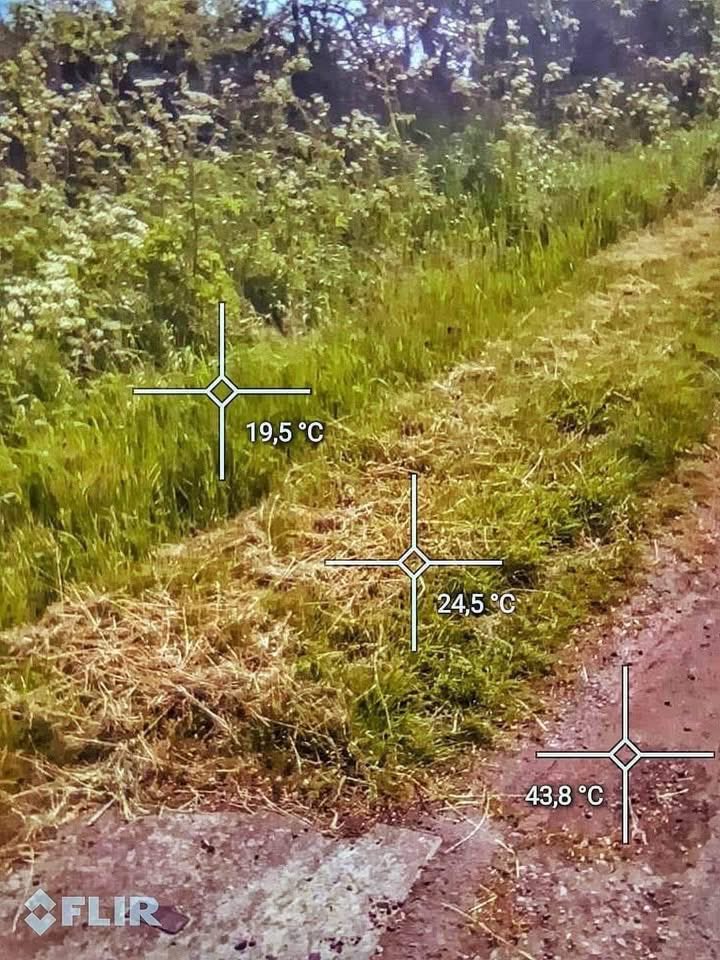
Uncut grass keeps the ground at around 19.5°C
Grass cut to 10 cm raises the ground temperature to about 24.5°C
Bare ground in the middle of summer rises to over 40°C
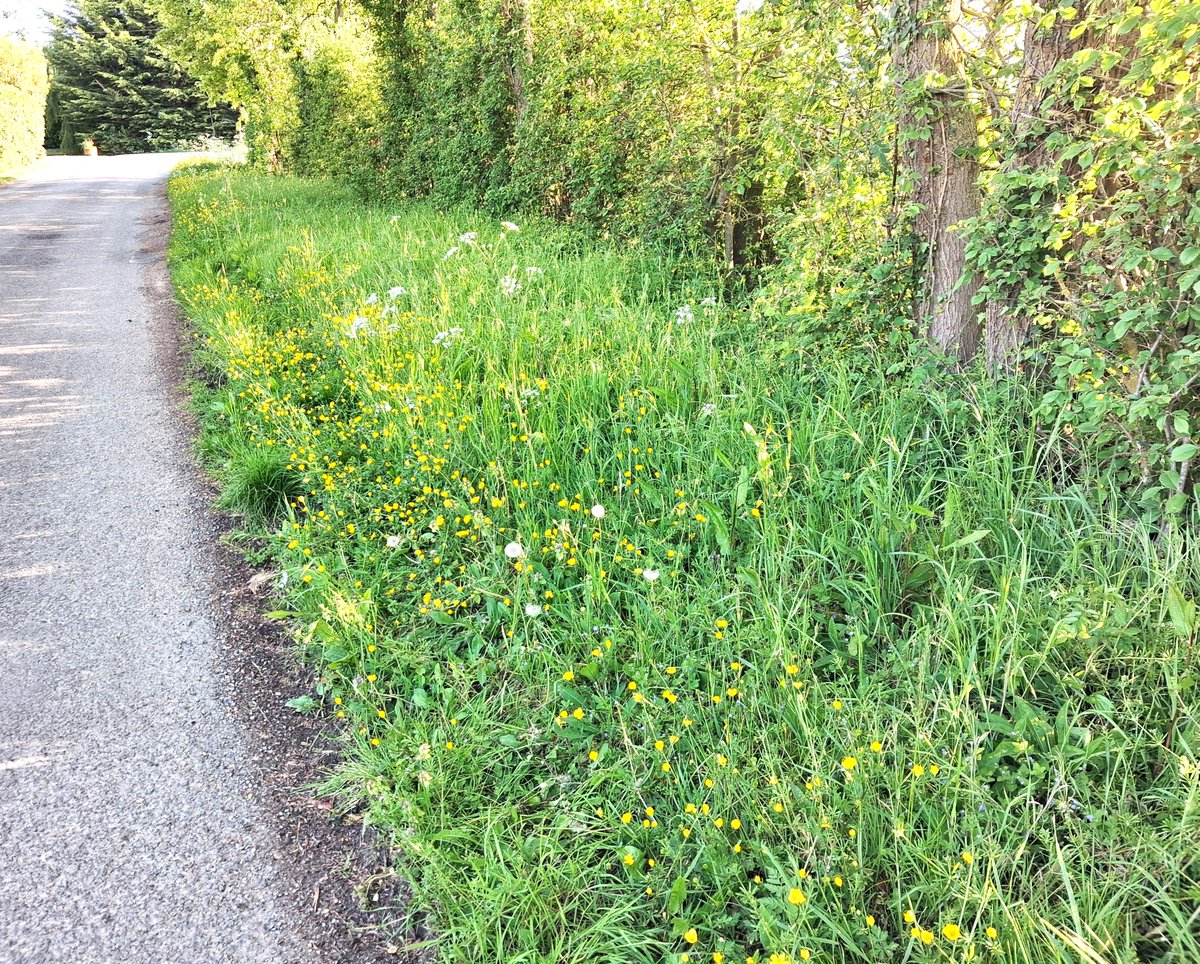
It's important to raise awareness #NoMowMay
A rural roadside verge along a quiet lane, no visibility issues, cut down in May (again) for no reason other than 'it's what we always do'.
Why is this happening Essex County Council @Essex_CC
Colchester Council @yourcolchester ?
What happened to your 'nature recovery policy' ?
A farmer dies in April 2026.
His son inherits the farm. The farm has been in the family since 1847.
The farm consists of: 300 acres of grazing pasture, a farmhouse built in 1892, a barn, a milking parlour, two tractors of varying ages, a Land Rover that runs about 70% of the time, and a herd of 180 Hereford-cross cattle.
On paper, the farm is worth approximately £3.2 million. This is because land near him has been bought recently by a London hedge fund looking for carbon credits, which has dragged the comparable value of every field within forty miles upward to a number nobody local can justify.
In cash, the farm produces a profit of about £28,000 a year in a good year. In a bad year it loses money. The son also works as a fencing contractor three days a week to keep the operation viable.
The inheritance tax bill on a £3.2 million estate, even at the reduced 20% rate, comes to approximately £140,000 after the increased threshold is applied. The son does not have £140,000. The son has never had £140,000. The son has £4,200 in his current account and an overdraft.
The son sells 60 acres to a developer to pay the tax. The developer puts solar panels on the 60 acres. The remaining herd cannot be sustained on the reduced land. The herd is sold. The barn becomes a holiday let.
A different family eats Brazilian beef this Christmas without knowing why the price went up.
The Treasury collects £140,000.
The land never produces British food again.
🪶 A dog doesn't need to make contact to kill a brood.
A hen pheasant freezes when threatened, trusting her drab plumage to keep her invisible. It works against the predators she co-evolved with. It doesn't work against a curious dog moving back and forth across her patch of grass.
In high-footfall areas, dogs off leads are now one of the greatest threats to ground-nesting birds. Flushing a hen, scattering chicks, or repeated disturbance during brooding is enough to end a breeding attempt.
Under the CRoW Act, a short lead is the law on much of the moor.
Short lead. Big difference.
🎞️ Courtesy of Peak District Moorland Group
@giveashitnature A reminder that many vets no longer recommend routine prophylactic tick and flea treatments for pets. Chemicals in flea collars and in drops applied to skin, remain active for weeks and are lethal for aquatic animals when dogs enter ponds, lakes and streams.