B cells activated by low amounts of antigen require DOCK8 to acquire survival and differentiation signals via T cell help @SciImmunology@CornallLab
https://t.co/yUNqanwfC0
Exciting postdoc role with our friendly supportive group and @trig_oxford@fgissa. Cell therapy for IgA Nephropathy, part of EU /Horizon consortium. Do you like immunology, kidneys and translational research? Informal enquires / DMs for more info welcome
https://t.co/WQWaany7DE
I am really excited to announce that our paper (@PKlenermanLab) exploring MAIT cell transcriptional and TCR repertoire diversity in human blood and liver has been released @NatImmunol https://t.co/R1kMgWyLZB #MAITcells
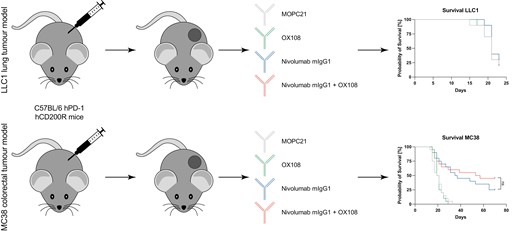
Researchers at @DavisLab_Oxford investigate the potential of a new combination #immunotherapy of #nivolumab, a clinically approved #PD1 blocking antibody, & OX108, a #CD200R blocker
Explore their results in mouse models for colorectal & lung #cancer ➡️https://t.co/MV44mMN76W
Very pleased to have my first PhD publication published in @IMTadvances. Using humanised mice we trialled the combination immunotherapy of nivolumab and OX108 (a CD200R blocker) in two tumour models.
@DavisLab_Oxford @CornallLab @MRC_HIU @MRC_WIMM@RDMOxford
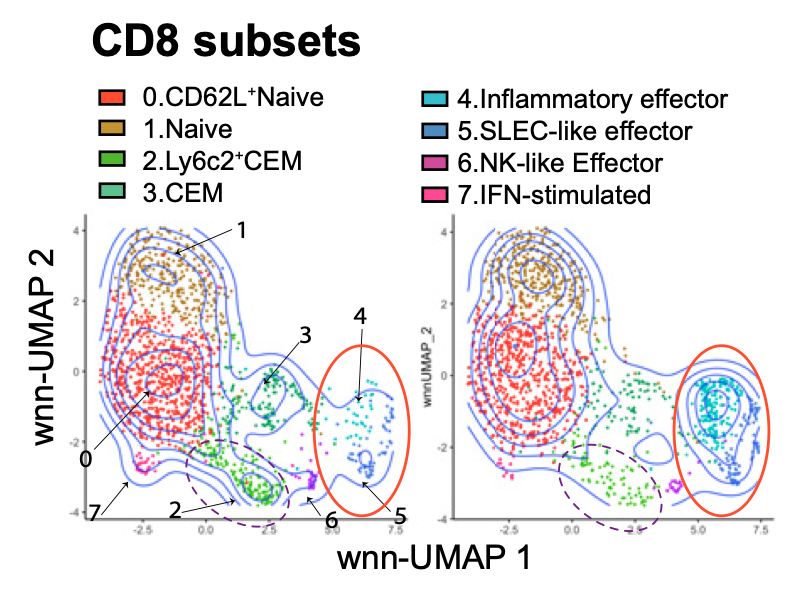
We demonstrate that the autoimmune phenotype is associated with a populations of effector CD8 T cells with a phenotype similar to short lived effector cells (SLEC) in viral infection. Read on to find out more: https://t.co/65fGVksE15 @BetterKidneys
Just published! Prolidase deficient mice have increased incidence of anti-nuclear antibodies, immune complex deposition and altered T cell population composition.
https://t.co/65fGVktbQD
Delighted to share our paper on autoimmunity due to prolidase deficiency. We confirm loss of PEPD results in ANAs and renal immune complex deposition, assoc with T cell activation. https://t.co/w0Qzks0aAx
I’m completely thrilled to share our new preprint!
Multiscale topology classifies and quantifies cell types in subcellular spatial transcriptomics
https://t.co/pVkX50HRff
Joint work with Aneesha Bhandari, @BGI_Genomics, Ulrike Tillmann, @BetterKidneys, and @haharrington
1/9
NDRG1 is a target for cancer treatment. But it was also thought to help immune cells 'switch off', so NDRG1 drugs might cause immune over-activity. However we show that although NDRG1 goes up in these immune cells, they don't need NDRG1 to switch off. https://t.co/DCSloSTd1S
Our new paper: NDRG1 is an anti cancer therapeutic target, upregulated in anergic B cells, and previously described as a T cell anergy factor, but we show it is not required for B or T cell tolerance. work led by Rose Hodgson, with @CornallLab@NDMOxford https://t.co/DCSloSTd1S
I dunno, you guys. It seems like the "B is for Boring" slogan might have been a campaign funded by Big B Cell. Those guys are up to some nefarious stuff!
https://t.co/KvePeBcYWW
Anyway, T cells to the rescue!