Happening now:
NDC presidential candidate, Mr. Peter Obi, passes through Uga Junction, Onitsha, Anambra State, on his way to the venue of the Obi-Kwankwaso Town Hall Meeting.
NIGERIANS, GO AND VERIFY (5)
CONNECTING COMMUNITIES, UNLOCKING PROSPERITY: OUR ROAD INFRASTRUCTURE RECORD
Peter Obi
Another critical foundation of development is infrastructure, particularly road construction and maintenance.
Infrastructure is not just about constructing roads, bridges, and buildings. It is about connecting people, opening up economic opportunities, reducing poverty, and enhancing the well-being of ordinary citizens. A road that connects a farmer to a market, a patient to a hospital, a child to a school, or a manufacturer to a distribution centre is an investment in economic and human development.
This thinking informed our approach under the Anambra Integrated Development Strategy (ANIDS). We set out to connect all 177 communities in the State with motorable roads, paying particular attention to rural communities that had suffered years of neglect. Our objective was to build an interconnected road network that served the entire State, rather than concentrate projects in major cities or politically important locations.
I. The Road Revolution: Over 900 Kilometres of Road Projects
Between March 2006 and March 2014, during my two-term tenure in office, my administration asphalted over 900 kilometers of roads. These projects were deliberately distributed across the three senatorial zones of Anambra State to connect communities, facilitate commerce, and enhance transportation.
I acknowledge that Dr. Chris Ngige started the road revolution in Anambra State, and I commend the efforts his administration made in initiating several road projects. When we assumed office in 2006, we recognised the importance of continuing worthwhile projects rather than abandoning them simply because they had been initiated by a previous administration.
Among the roads we inherited from Ngige and completed were the Owerri–Ezukala–Umunze–Umuchu–Amesi–Uga–Igboukwu Road, where his administration stopped around Umuchu and we continued through Amesi, Uga, and onward to Igboukwu; the Iseke–Orsumoghu–Ukpor–Utu–Nnewi–Awka-Etiti Road, where his administration stopped at Ukpor and we continued towards Awka-Etiti; and the Ideani-Otuocha where work stopped around Awkuzu before our administration continued the project from Nteje to Otuocha.
There were also roads, such as Mmili John and Nkwelle Ezunaka bypass, which had been awarded before we took over, but on which no payment had been made by the time we assumed office. We took over these projects, assessed their status, and proceeded with the work. This was our approach to continuity in governance: acknowledging what had been started, distinguishing between projects merely awarded and those on which work and payment had actually commenced, and ensuring that important infrastructure projects were carried forward.
Some of the major roads and corridors included Amansea–Ebenebe Road; Aguleri–Umueze Anam–Mmiata Road; Nnewi–Ozubulu–Okija Road; and the Old Onitsha–Awka Road.
Other important projects included:
Awka and its Environs: Zik’s Avenue, Awka; Adazi-Nnukwu–Obeledu–Neni Road; 33 Junction–Nwafor Orizu College of Education Road; roads within the Awka Government Reserved Area (GRA); and the Old Nkpor–Amawbia Road.
Nnewi and Surrounding Communities: Nnobi–Nnewi Road; roads within Nnewi town; Akwaeze–Oraeri–Igboukwu Road; and Ekwulobia–Nkpologwu–Akpo–Achina–Umuchu Road.
Onitsha and its Environs: Bridge Head–Umunya Road; over 30 roads in other parts of Onitsha; more than 25 roads within the Onitsha GRA; over 20 stone-based roads within Harbour Industrial Estate, Onitsha; and the Nkwele Ezunaka Bypass.
Other Communities and Strategic Corridors: Awgbu–Amaokpala Road, with the Odor Bridge; Aguluezechukwu–Ogboji–Ajalli Road; Awkuzu–Igbariam Road, passing through the university; Owerri–Ezukala–Umuchukwu Road; Ugwuoba–Obosi Road; and Lilu Road.
For Those That Registered For Their PVC From January - April 2026.
Your PVC Is Now Available For Collection At INEC LGA Offices.
Please Pass This Round📌
THREE APPOINTMENT LETTERS FROM THREE CONTINENTS! A DIVINE CAREER UPLIFTMENT! 🔥👏
Architect Dr. Sunday, a lecturer at Kano University, has come to testify of God’s goodness and supernatural upliftment in his career.
Having consistently prayed for career advancement and connected to the Tuesday Healing and Deliverance Services at the Glory Dome, his testimony began on the 19th of June when he received an appointment letter from the International Journal of Architecture in India as their editor.
Overjoyed, he told his wife they would come to Dunamis to testify. The following morning, another appointment letter arrived from California, USA, and that same evening, a third appointment came from Bauchi, Nigeria!
Three appointment letters from three different locations in such quick succession!
He attributed these remarkable openings to his connection to the altar, even humorously wondering, “What if the set man of the commission lays hands on me?” 😂
Indeed, God is still opening doors and lifting destinies!
TO GOD ALONE BE ALL THE GLORY! 🔥
Celebrate 30 years of God’s faithfulness with us!
https://t.co/JkevSBYVsz
NIGERIANS, GO AND VERIFY (4)
Building a Healthy Nation: Our Health Sector Record in Anambra
Peter Obi
In the previous instalment of this series, I discussed our investments in education and explained why we considered human capital development central to the progress of Anambra State. Another sector that received considerable attention under our administration was healthcare. We understood that education gives people the tools to build their future, while good healthcare enables them to live healthy and productive lives.
When we assumed office in 2006, the healthcare system in Anambra faced serious challenges. Our health institutions required rehabilitation, medical equipment was inadequate, many communities lacked accessible primary healthcare facilities, and several medical training institutions had not secured accreditation. We therefore decided to approach healthcare as a comprehensive development priority, rather than concentrate resources on a few prominent hospitals.
Under our Anambra Integrated Development Strategy (ANIDS), we invested simultaneously in primary, secondary, and tertiary healthcare, medical training, maternal and child health, medical equipment, and partnerships with religious and private institutions.
Our approach was simple: healthcare should be accessible to people wherever they live, and the quality of treatment they receive should not depend on their status or whether they live in a city or a rural community.
Building a Teaching Hospital and College of Medicine
One of our most significant achievements was the establishment of the Chukwuemeka Odumegwu Ojukwu University Teaching Hospital at Awka.
We initiated, constructed, equipped, and secured accreditation for the institution, building it virtually from scratch. When I discovered that the state university was admitting medical students without having a teaching hospital through which they could complete their training, possibly with the intention of assigning them elsewhere, I considered the situation unacceptable. We therefore embarked on the construction of a modern teaching hospital to address this deficiency.
We constructed more than 25 buildings and provided facilities for the College of Medicine, laboratories, pathology, accident and emergency services, pediatrics, male and female wards, special wards, consultant clinics, and other essential departments.
We also provided vehicles, including ambulances and staff buses, to support the hospital and the College of Medicine as part of the accreditation requirements.
The objective was not merely to build another hospital but to establish an institution capable of providing specialist healthcare while training the next generation of Nigerian medical doctors.
Rehabilitating General Hospitals
We also recognized that a teaching hospital alone could not meet the healthcare needs of the population. General hospitals had to function effectively because they provide the essential link between primary healthcare and specialist treatment.
We rehabilitated and resuscitated 15 general hospitals across the three senatorial zones of Anambra State. We undertook substantial improvements in their buildings, wards, equipment, and general facilities.
In 2013, we provided ₦400 million for the ongoing renovation of 11 selected general hospitals, alongside other healthcare interventions.
Our intention was to ensure that people did not have to travel unnecessarily long distances to obtain basic secondary medical care.
Taking Primary Healthcare to the Communities
We believed that the best healthcare system is one that prevents illnesses and treats people early, rather than one that waits until minor health problems become emergencies.
That informed our extensive investment in primary healthcare. We built over 120 primary healthcare centers across communities in the 177 autonomous communities of Anambra State and rehabilitated existing facilities.
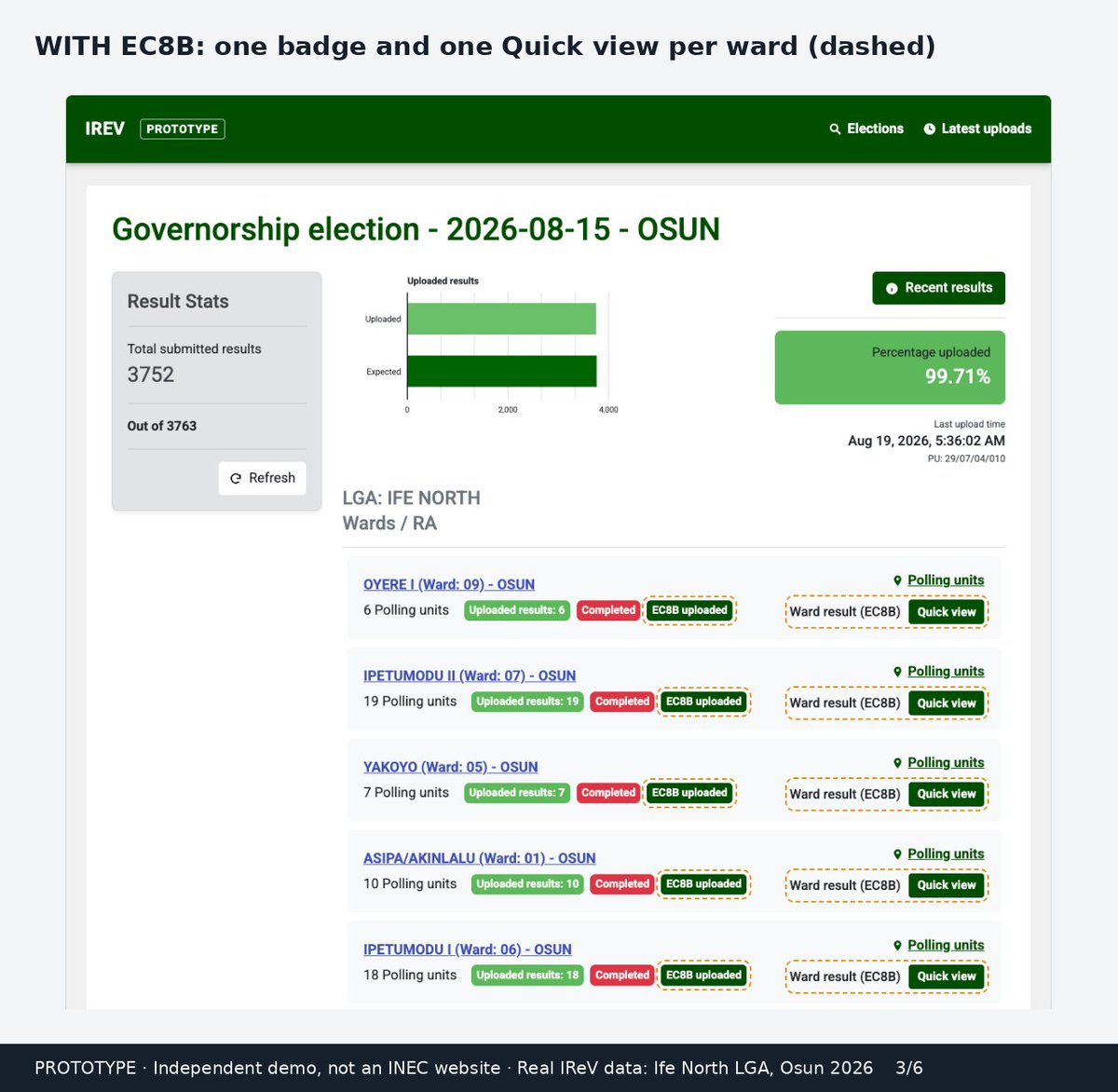
Yesterday, @inecnigeria said ward collation results can’t go on IReV because the feature hasn’t been built or tested, and that it would take a while.
We disagree.
It’s not rocket science, so we built it. In one evening. On IReV’s own data.
Left: IReV today.
Right: IReV with Form EC8B. 🧵👇
International Engagements to Strengthen Nigeria’s Democracy Continue.
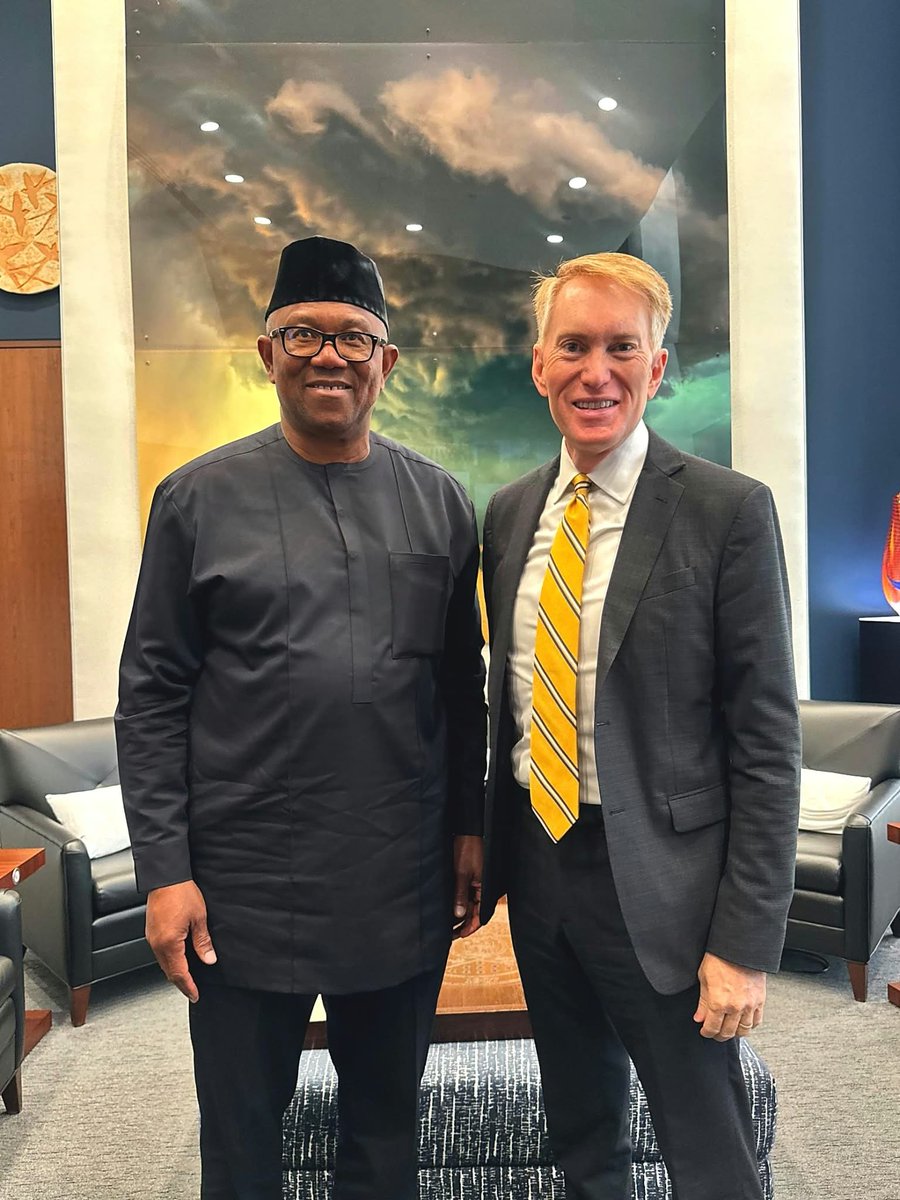
Yesterday, November 17, the second day of our engagements on Capitol Hill in Washington, D.C., we visited the United States Senate and met with some senators, including Senator James Lankford, who kindly invited me over to his office.
I am deeply grateful to Senator Lankford for his warm reception, generous time, and meaningful exchange of views on strengthening democratic institutions, fostering peace, and promoting our shared values.
Our conversations underscored the importance of international collaboration, effective governance, credible democratic processes, and the security and well-being of all Nigerians.
These engagements offer a further opportunity to deepen relationships and advance our shared vision of a peaceful, united, and prosperous Nigeria.
Our commitment to building a nation that serves every Nigerian remains steadfast.
A New Nigeria Is POssible! -PO
NDC-NCC PRESS STATEMENT:
DELE ALAKE’S ALLEGATIONS: A COVER UP - APC EXPORTING PRESIDENT TINUBU’S LAGOS PATTERN OF POLITICAL VIOLENCE/AGBERO STYLE TO THE ENTIRE COUNTRY
The Nigeria Democratic Congress (NDC) National Campaign Council rejects the false press statement by the All Progressives Congress (APC) Presidential Campaign Council Spokesperson, Mr. Dele Alake, accusing the NDC and other opposition parties of recruiting thugs ahead of the 2027 elections. Rather, the APC supporters are the ones perpetrating a yearlong campaign of terror against the NDC across Nigeria. And Nigerians are not surprised, as this ongoing violence is simply a chapter from President Bola Tinubu’s Lagos State pattern of political violence and agbero style of governance, introduced since 1999 and now being exported across the entire country.
Alake’s baseless accusation is a textbook case of the perpetrator crying victim. For the past year, the NDC and our peaceful supporters have endured relentless intimidation and targeted attacks orchestrated by thugs loyal to the ruling party. To set the record straight, the NDC states as follows a documented trail of violence against the party because Mr. Alake’s claims insult Nigerians.
Where were Mr Alake and the APC on 18 July 2025, when Edo State Governor Monday Okpebholo publicly threatened and warned our presidential candidate, Mr Peter Obi, not to enter Edo State without prior clearance during a political rally in Uromi?
Senator Francis Adenigba Fadahunsi, representing Osun East Senatorial District, was caught on a viral video in Ilesa instructing APC supporters in Yoruba to "seek out and kill" members of the rival Accord Party before the election. To date, he has faced no real accountability, proving that violence is tolerated and rewarded within the APC.
On October 10, 2026, armed thugs invaded NDC Enugu campaign office, fatally shooting our member, Ifeanyi Christopher Nwolie. On November 12, 2026, hoodlums attacked a peaceful NDC town hall in Oregun, Lagos, injuring supporters.
It was an APC governor, Governor Hyacinth Alia of Benue State, who deployed thugs to violently block, harass, and disrupt Mr Peter Obi when he sought to pay a solemn condolence visit to Yelewata for the tragic massacre of 273 innocent souls in Benue
Across Calabar, Delta, and Edo States, Mr Peter Obi and his campaign entourage have been repeatedly targeted and attacked by thugs linked to the ruling party. NDC running mate, Alhaji Rabiu Musa Kwankwaso’s team was also attacked in Kano while on campaign
Mr Alake should direct his lectures on peaceful conduct to his principal, President Bola Tinubu, who famously declared that power is not served à la carte and instructed his followers to "grab it, snatch it, and run away with it." The President is also on public record stating his desire to win by any means necessary and boasting that he enjoys seeing the opposition in disarray.
The truth is undeniable: the surging popularity of the NDC, and the Peter Obi–Rabiu Kwankwaso ticket is entirely organic. It has grown by leaps and bounds because the APC administration has failed Nigerians woefully, inflicting untold hardship through harsh, ill-conceived, and unworkable economic policies.
NDC does not need to instigate citizens who are already pushed to the wall by daily hunger, multidimensional poverty, and rampant insecurity. What the APC is witnessing at its rallies is not sponsored disruption—it is the genuine, spontaneous rejection of a failed government by a traumatised populace. NDC must not be dragged into the self-inflicted chaos of a ruling party facing the wrath of the electorate.
Unlike the APC, whose playbook relies on voter suppression and exploiting vulnerable youths, the NDC’s movement is built on ideas and competence. We view youths as nation-builders deserving jobs and education, not foot soldiers for violence.
@mundus01@inecnigeria INEC Chairman, the ICT director and their families will be held responsible if anything goes wrong with the 2027 elections
These people are really playing.
The only coalition Nigeria’s opposition needs is a coalition against INEC impunity and electoral irregularities.
Whatever their differences, opposition parties should unite now to pressure @inecnigeria. Demand an independent audit of the voters’ register, timely publication of polling-unit results on IReV, and public access to signed collation sheets.