Thoughts from my Shanghai field trip
Sentiment among Greater China investors was far worse than I expected. Unlike the US market, A shares had not seen a single rebound since July. Still holding Chinese and Hong Kong AI stocks that had crashed and Korean memory stocks that had collapsed, investors kept pressing me on when memory would bounce back.
Many investors said the AI trade was over, and a few said they doubted whether even 2027 capex, not just 2028, would go ahead as planned.
Overall, the bearish sentiment was so strong that even I, a bull before coming to China, started to waver.
It got to the point where, faced with the bear case that memory prices could start falling in the third quarter of next year, I took it seriously and couldn't refute it.
As the conversations went on, I gradually began to understand where their pessimism was coming from. In the end, they were all asking the same question.
So what comes after AI coding? What will be the next engine of ARR for Anthropic and OpenAI?
Several candidates came up. AI4S, AI chip design, and so on... But none of them clearly convinced investors.
I couldn't offer a clear answer either. Sure, there are rumors that Anthropic has made major breakthroughs in both AI4S and AI chip design, but what we actually want to know is when any of that turns into money.
With AI4S, there could be beneficiaries right away, such as companies that sell lab monkeys or diagnostic kits. In fact, there already are. But while we can trade those names in the short term, what we ultimately want to know is whether Anthropic can make money by developing drugs. That is still several years away.
As for AI chip design, the TAM itself is hard to calculate, and even if you do calculate it, it is hard to monetize. That makes it difficult for the market to believe in.
Honestly, this feels like the hardest market in history. If a company isn't making money, selling makes sense. But right now the market sells even when companies are making money, even when they beat, and even when they say demand will stay solid all the way through 2028 and 2029.
So my recommendation to investors was to buy memory, and within memory, DRAM. Not because I have conviction in the DRAM cycle, but because I see it as a relatively defensive choice within the AI trade.
Memory stocks are now trading close to 1x P/B on 2027 BPS. Historically, memory stocks have staged technical rebounds when they fell below 1x P/B.
And even if the broader market falls further from here, the three DRAM makers will keep buying back their own shares. I thought that would guarantee a certain level of buying and concluded the stocks would have downside support.
Of course, I don't know whether memory stocks can break above their previous highs. That depends on whether sentiment across the broader market recovers. But I think there is a fairly good chance that memory outperforms the rest of the AI trade.
Over the past week, I’ve been overwhelmed by the love and support of friends, industry colleagues, and people I've never met. Thank you to everyone who has shown kindness to my family and me. It means the world to me.
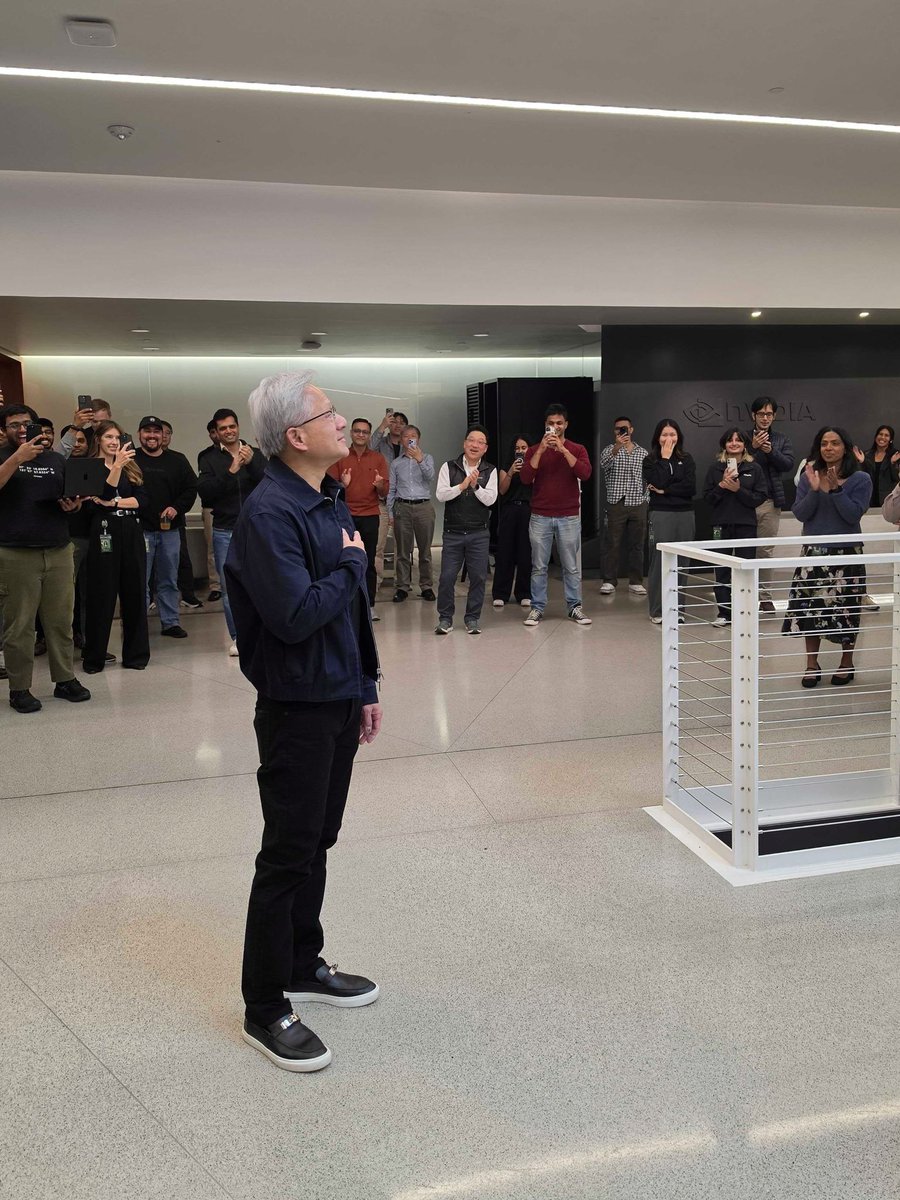
I came to the United States 53 years ago, and becoming an American citizen is one of the greatest gifts and proudest moments of my life. NVIDIA has been my life’s work. Building it into the company it is today alongside my colleagues has been a privilege and an honor. Nowhere but in America could a company like NVIDIA be possible. I love our country, and I love NVIDIA.
I did not live up to the standards expected of everyone at NVIDIA, and I have made serious mistakes in my personal life. I created problems for the Board that I deeply regret. I own my mistakes completely, and I am committed to cooperating with the Board’s independent investigation.
Since my departure, I’ve seen an outpouring of calls from NVIDIA’s employees, investors, business partners, and customers for me to return as CEO. Many continue to reach out to me directly as the company navigates complex technology, market, competitive, and geopolitical dynamics. NVIDIA is a once-in-a-generation company. If the Board of Directors decides that my return is in the best interest of our shareholders, our employees, the company, and America, I would be honored to answer these calls and return as CEO.
Thank you again to everyone who has shared their good wishes. I am profoundly humbled by your support. To my family: I love you, and I will spend the rest of my life being worthy of yours.
Jensen
Many Chinese Americans say the persecution of Jensen Huang reminds them of the Cultural Revolution. During the Cultural Revolution, when the CCP wanted to persecute someone, they would first call him a foreign spy. Then they would dig up dirt from his personal life and publicize it. This tactic was called "overthrow and make them stink" (批倒批臭). They published attack articles in the media and put up posters with large lettering (大字报). The posters contained name-calling, vilifying images, and calls for violence, exactly like what we see in The New York Times and The Economist.
I am not old enough to have experienced the Cultural Revolution, but my parents did. We Chinese Americans know exactly the dangers of tyranny and the importance of freedom of the press. We cannot let the (deep) state controlled media attack Jensen, the American hero who leads the AI revolution. As Chinese Americans, we have an obligation to warn all Americans about the dangers.
We stand behind Jensen Huang. Please repost if you are with us.
Chinese men are at the bottom of the American Woke DEI hierarchy.
Not the Anglo establishment.
Not the Jewish bootlicker pedo.
Not women.
Not brown.
Not black.
Not Muslim.
Not trans.
Not retarded.
Jensen Huang is innocent, having an affair with a woman of his own race is a nothing burger.
He was targeted solely because he is Chinese and meritocratic thus alone in the American Hobbesian identitatrian Hunger Games.
If he steps down that will be a brutal awakening for Chinese Americans.