Kohli, Garrido et al. on the pleiotropic roles of ER chaperones during viral infection, including their essential roles viral glycoprotein folding and QC and how viruses co-opt ER chaperones to evade host defenses https://t.co/sZSxbkJTAI #MMBR@ASMicrobiology
Mesquita, Wu and Tringe have a new review on methyl-based methanogenesis, an important source of methane in a variety of environments @jgi@BerkeleyLab@sgtringe@ASMicrobiology#MMBRJournal https://t.co/POTpxYBjoI
Wingfield et al. elucidate genetic networks and pathways involved in each major stage of the sexual cycle in filamentous ascomycete fungi #mmbr@ASMicrobiology https://t.co/SKhZKMgCoL
Arcangioli and Gangloff on how one haploid fission yeast cell generates two sister cells with opposite mating types, a prerequisite for sexual reproduction
https://t.co/m15K4W34G7 #MMBRJournal@ASMicrobiology
Zanders and Johannesson explore fungal spore killers, meiotic drive elements that cheat during sexual reproduction to increase their transmission into the next generation of ascomycete genera https://t.co/COTgIzvLTM #MMBR@ASMicrobiology
Check out this PBS Vitals episode on antibiotics and their waning ability to cure bacterial infections. https://t.co/kPxdqkKbhm
Your hosts, Alok and Sheena, are doing a terrific job of making health science accessible through Vitals: https://t.co/fDyeML1RWe
Just out, Carol Blair revisits the discovery of the mosquito’s use of RNAi to combat arbovirus infections, including exploration of the exo-siRNA response and the piRNA response. @ASMicrobiology https://t.co/aNap96xT0m @ASMicrobiology#MMBRJournal
@CorrieDetweiler@ASMicrobiology And taking probiotics galore without giving them their preferred diet will make very little difference. They won’t establish and thrive.
New, Seike & Niki detail how diversification of ascomycete fungi mating phermones drives speciation. M-factor may mediate partner discrimination, and P-factor may allow flexible adaptation and variations in S. pombe @Sp_2106 https://t.co/KnbtGPV8dY @ASMicrobiology#MMBRJournal
Just out, Franzén et al. on bifidobacteria: their use as probiotics is complicated by their highly heterogenous tolerance to stressors in the gut, such as oxygen, acid, and bile salts. https://t.co/ZWAPaIPjTr @ASMicrobiology#MMBRJournal
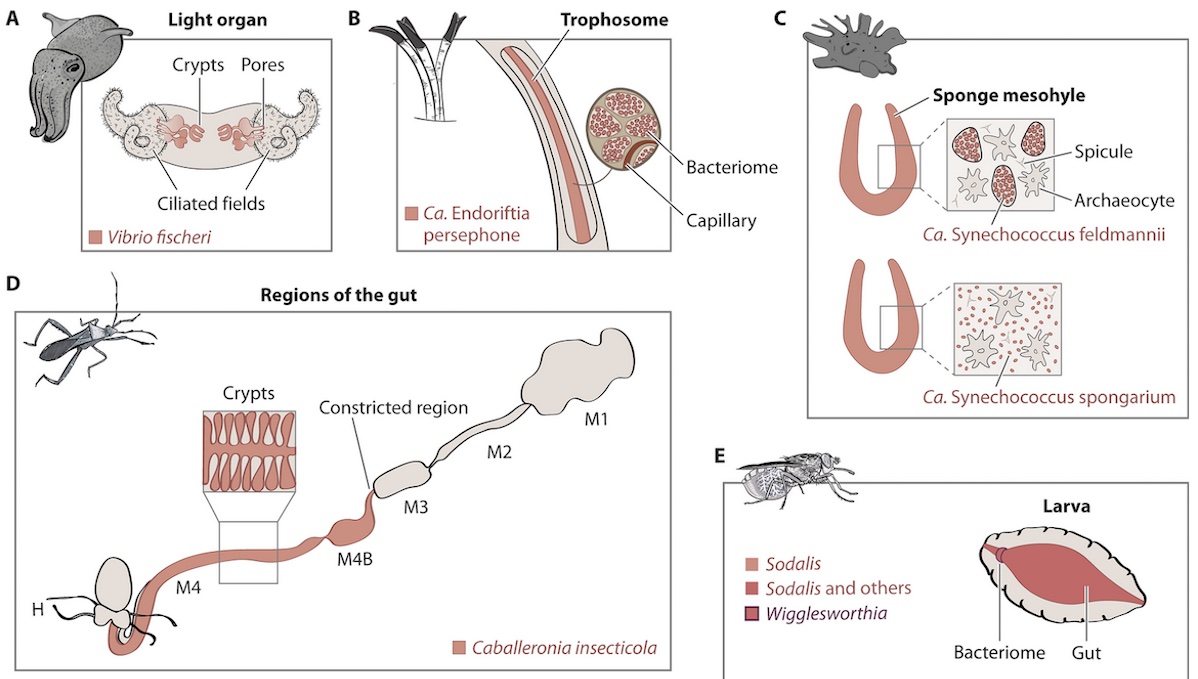
New, Flórez and colleagues on mechanisms underlying the early stage of beneficial bacterium-invertebrate associations, from initial contact to the establishment of the symbionts in specific locations within the host. https://t.co/H08IF78VPU @ASMicrobiology#MMBR
Just out, Nowrousian shows how transcriptional control and chromatin structure drive the formation of fungal fruiting bodies in 3D from a simple vegetative mycelium across several model organisms. https://t.co/nUhfUnhigv @ASMicrobiology#MMBRJournal
Carding & Juodeikis address the thorny challenges of distinguishing Gram-negative bacterial nonlytic outer membrane vesicles (OMVs) from other extracellular vessicles based on biogenesis, cargo, function and isolation. https://t.co/hApvVTUuJj @ASMicrobiology#MMBRJournal
Ziegler et al. on Harnessing the Power of Model Organisms To Unravel Microbial Functions in the #coral Holobiont and improve the response of reef-building corals to future ocean conditions. https://t.co/MWYALoV7cn @ASMicrobiology#MMBRJournal@sPuntinGi @marenfaren
This is why reproductive-system-specific healthcare research is so important. Generalization and system-nonspecific research can lead to further and incorrect generalizations. Controls are more than just null experiments, it's reporting everything you can and cannot account for.
La biodiversidad no siempre es buena, al menos en lo tocante a la microbiota vaginal
Parece que es mejor tener solo lactobacilos que otros microbios
#microbiota