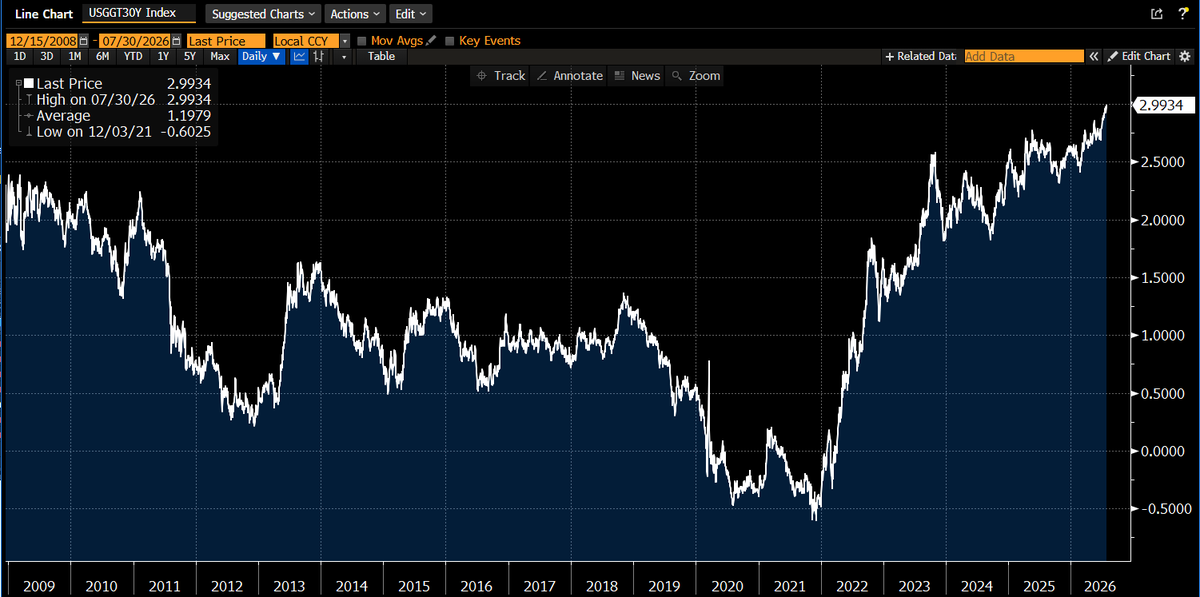
I understand why Argentina is reluctant to lock in relatively high interest rates on new bonds -- its impressive fiscal performance has been helped considerably by the low interest rate it pays on its external debt (thanks to the 2020 restructuring)
But ...
1/many
Someone 'accused' me of vibe coding the LFRR simulator.
I've been coding since 1982, I've hand assembled machine code, injected fixes into running processes, worked on software that's made it to Mars and worked as a software developer for decades.
OF COURSE I USED AI CODE TOOLS
The Economist picked a good week to do a "currency" cover --
and for what it is worth, the big Mac index agrees with my own work, the yuan is undervalued by something like 30%
1/
Wait, you're telling me that running $2 trillion deficits, introducing new taxes on goods, and starting a fresh war in the Middle East, has not been effective at getting the cost of living down?
Prison abolition is one of those issues where you can safely quarantine every single person who believes in it as an insane lunatic not to be trusted with an iota of power or influence. No exceptions.
Many such policies, in fact, but prison abolition is one of the clearest.
Walked by a bunch of restaurants and bars tonight that were slammed w/ppl
They were smiling, drinking, eating, spending money on $19 cocktails
Do they not realize the 30 year treasury yield is now 5.3%???
A 7-year study of 3,900 social science papers found that only ~50% could be replicated.
There was significant variation across fields, however.
While more than 60% of political science & econ papers were replicated, only ~25% of sociology & 0% of education papers were.
⚡️What you are seeing here is the rise of the credentialed underclass.
These people were trained to expect elite status, then entered an economy that gave them debt, rent, weak bargaining power, and little ownership.
Their education raised their expectations faster than the system raised their material position.
That gap creates political intensity.
A postgraduate degree gives cultural capital. It teaches the language of institutions, morality, expertise, identity, and systemic critique. Lower-to-middle income keeps the person economically dependent on those same institutions.
That combination is unusually powerful.
The wealthy graduate already owns the system.
The non-college worker often distrusts the system.
The underpaid graduate depends on the system while feeling betrayed by it.
That person becomes the natural base of modern progressivism.
They work disproportionately inside universities, nonprofits, media, government, health care, policy, law, and professional administration. Their income may be ordinary, but their worldview is shaped by elite institutions. They possess status language without status security.
That is the hidden class position:
Cultural rank without economic sovereignty.
A degree became a title without an estate.
This group votes Democratic because the party offers recognition, institutional protection, debt relief, public spending, credential legitimacy, and a moral explanation for why the promised life never arrived.
The real political fuel is frustrated expectation.
Poverty alone does not create this level of ideological coherence. Wealth does not create it either. The strongest radicalizing force is being told you belong near the top, then discovering that you cannot afford a home, raise a family comfortably, or escape institutional dependence.
That is why this bloc matters so much.
They have the vocabulary to turn private disappointment into public doctrine.
They have the institutional access to distribute that doctrine.
They have enough education to command authority.
They lack enough wealth to feel settled.
As housing stays unaffordable, graduate debt persists, and AI compresses white-collar work, this class becomes more politically aggressive. Its demand will be simple:
Make the state deliver the status the economy refused to provide.
That pressure will keep pulling the Democratic Party toward redistribution, debt cancellation, rent control, professional protection, expanded public employment, and stronger institutional management of economic life.
The deepest fracture in American politics is moving beyond rich versus poor.
It is becoming owners versus credentialed non-owners.
One group has assets.
The other has claims.
Politics will become the battlefield where those claims demand conversion into reality.
Jamieson Greer: "If America doesn’t develop and implement its own policies to protect its industry and its workers, we will end up being policy takers. So if we’re not policymakers, we end up being policytakers."
I think this is among the most important points Greer makes in this New York Times interview, but it is not nearly as well-understood by policymakers around the world as it should be.
What Greer is arguing is that in a hyperglobalized world in which some economies exert much greater control over their external accounts, while others exert much less, if the former also implement aggressive domestic industrial policies, they will be able to externalize the resulting imbalances through their trade and capital accounts.
This has extremely important implications that mainstream economists almost alway miss. Not only are economies that exert much greater control over their external accounts able to determine their domestic imbalances, they are also able to determine the domestic imbalances of their more open trade partners through their control of both countries' external imbalances.
In effect the former are able to make their domestic industrial policies also the industrial polices, in reverse, of the latter.
For example, if a country that can control its external accounts decides that as a matter of domestic industrial policy it wants to shift out of producing services and/or commodities and into manufacturing, and so increase its share of global manufacturing, its more open trade partners will automatically reduce their share of global manufacturing as they shift either into services, like the EU, or into commodity production, like Brazil.
There will of course be constituencies in the EU that say that producing services is better than producing manufactured goods, and constituencies in Brazil that say that producing commodities is better than producing manufactured goods, and in some cases they may even be right.
But the point that they miss is that these shifts were not the result of local market conditions, nor of the decisions of their own policymakers. The shifts were imposed upon them by the policymakers of their more closed and more aggressive trade partners.
The changes in their economies were designed, in other words, not to accommodate their own economic needs but rather to accommodate the economic needs of their trade partners. It should be obvious (but isn't to many economists) that this is not how free markets work.
https://t.co/SCf5ohZrG9
I love this chart. It communicates so many important asset allocation lessons:
1) Cash is safe in the short term and very risky in the long term.
2) Stocks are risky in the near term and safe(r) in the long term.
3) Long bonds don't enhance safety much vs intermediate bonds.
4) A blended portfolio enhances intermediate term safety while still generating long term safety.
The wealthier you are in the US, the more likely your kids are to be employed by 27. That is until you get to the 90th percentile (about $250k a year in household income today), after that it’s all downhill
Before vibe coding became a thing, programming was already evolving in that direction. It already increasingly consisted of installing and configuring stuff other people wrote, without reading the source.
One of the most jarring things about adulthood is the realization of how many truly incompetent people are in the most important jobs. When I was a kid, I just assumed everyone “important” was smart or they wouldn’t be important. Boy, was that fucking wrong.
Pro Waymo, pro data center, pro nuclear, pro solar, pro train, anti zoning, pro housing has to be one of the most correct and unelectable combinations in America
“If we expand the electorate to include highly uninformed, grossly immature people that almost no other society deems responsible enough to vote, it will be a boon to socialists” is quite the admission from Jacobin.
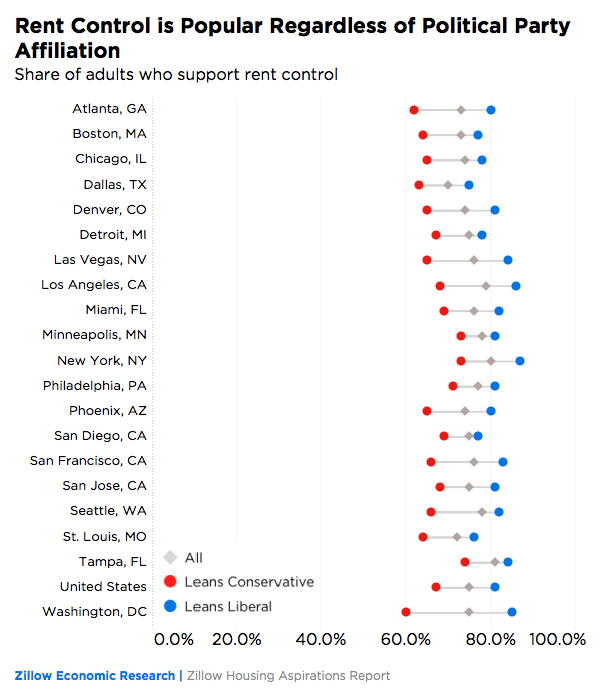
Rent control is a stunning policy.
The literature, the experts, and the repeated experience of reality all stand undivided in saying it's bad.
But the public loves it. It's insanely popular. It's basically a 75:25 issue and voters want more of it.
the one conspiracy i believe is that this place is full of bots programmed to say insane, incendiary things and they're funded by foreign organizations who want to divide americans and destabilize US society
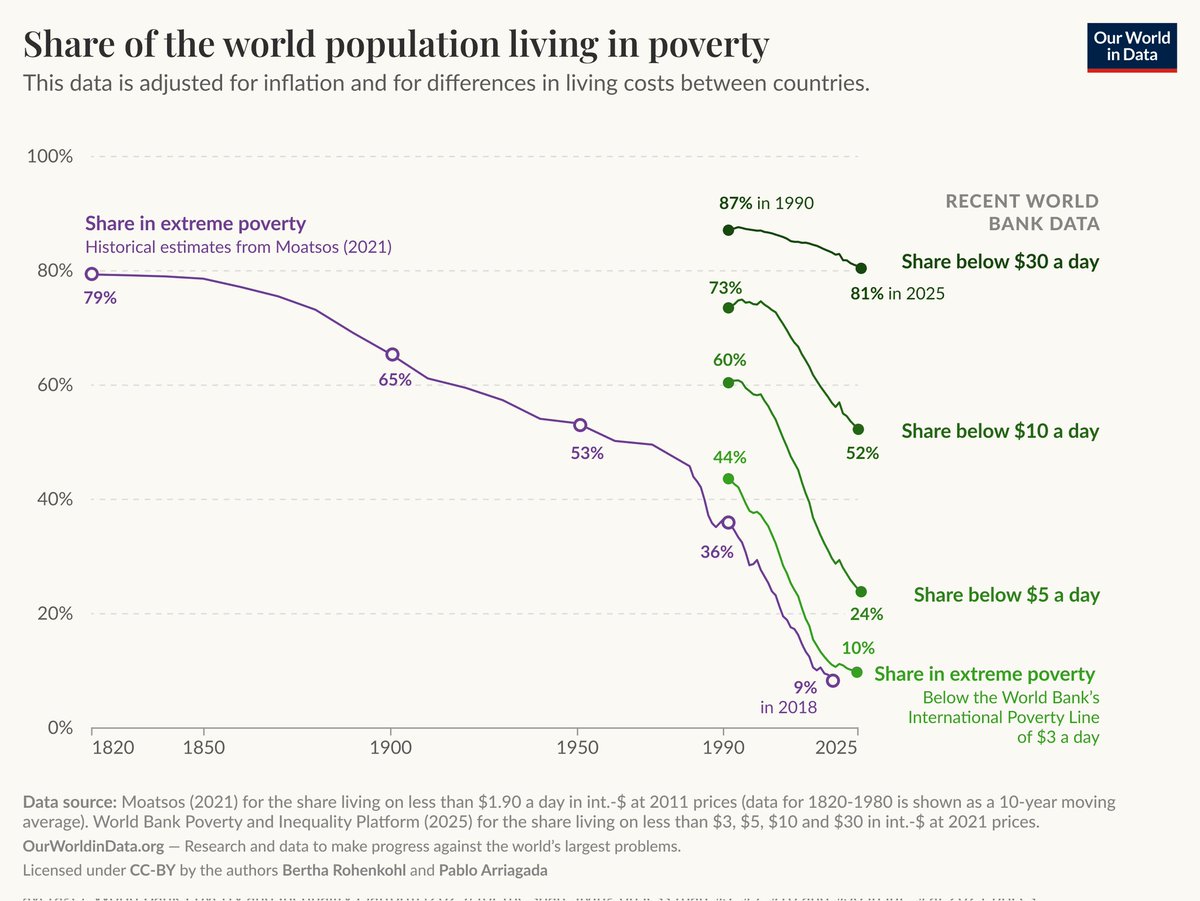
Extreme poverty worldwide has never been as low as it is today, and it's never fallen as fast as in recent decades.
We need more facts and less ideology...