@mattyp Yep, pretty much. It depends on the repo/project though… e.g. for React I might just open the src/content folder from the docs project to avoid all the docs website code.
Ideally, public blockchains = secure+decentralised+performant. IMHO Solana’s tradeoffs around decentralization in the interest of performance (i.e. concentrated stake distribution and high hardware requirements for validator nodes etc) might not be the right fit for all applications/institutions/tokens. Its focus on a great developer experience is ace but I think there’s better blockchains for finance, e.g. @chia_project (by BitTorrent creator @bramcohen). Chia has a nice piece about these principles (by @hoffmang): https://t.co/uHTA6adBHQ
When it comes to proving API references, what are the formats or approaches you’ve found that work best?
I’ve had good results building small programs that interact with REST APIs by providing LLMs OpenAPI specs but I haven’t really experimented with other formats. I have played with proving recipes that follow a “How to Design Programs” method and also referenced HtDP with the LLM which has worked for smaller programming tasks.
Check this out!
A member of our community built a Chrome extension that allows developers to get data from the `?debug=context` command - DIRECTLY in the DevTools console! 🤩
https://t.co/kAQ5Hpu7z3
@adamwathan was listening to your podcast with @asmartbear +1 for the 1-year, 2-year, 3-year etc supporter merch. I’ll pay for the supporter fee + pay for the special edition merch. 🙏
I’ve only paid a one-time fee for tailwind ui and you guys keep updating it… fee for annual updates sounds reasonable to me.
Last night @grantosan and @steppsr were the first 2 people to do a BTC <> XCH Offer File. Par for the course that major events on Chia go unnoticed but a CROSS CHAIN OFFER FILE is monumental.
ok. this references the big daddy of all elementary confusions in derivatives.
Black-Scholes (and related) models, for which Nobel prizes were won: we do NOT use them as models, we use them as normalizations only, as a convenient change of variables.
@adamwathan What’s great about Tailwind UI for me is seeing how different UI patterns are implemented using best practice HTML and Tailwind CSS from some of the best in the biz… you can use a lot of the patterns for your own designs.
Each bug is the result of tripping over a hazard.
If we treat bugs (and near misses) as a signals; if we look for the hazards and to remedy them, then over time we can make the system safer, and bugs will happen less often.
We'll fix bugs more slowly, but quality will improve.
In 1951, Adelbert Ames created the mind-boggling ‘Ames Window’. It’s so effective that even when you know how it works you can’t break the illusion [video from The Curiosity Show: https://t.co/DF82ASFj1a]
GM #Chialisper
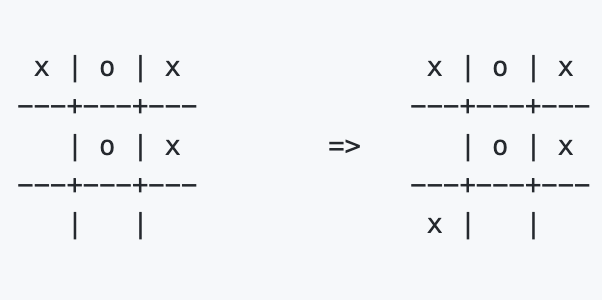
Finally done with a simple Tic Tac Toe game in a coin set model with #Chialisp on #Chia Blockchain.
This example demonstrates many important Chia concepts and design patterns.
https://t.co/S6EyXZ91sf
@CJDesiderio Class names are an abstraction that comes with trade offs… class=“small-tile” class=“small-tile2” … they all need to share the same rule. CSS preprocessors like SASS helped make the resulting CSS more efficient but Tailwind solves the naming problem using a declarative approach