A lone astronaut standing on another world. Astronaut Charlie Duke takes a moment to look back at the Lunar Module "Casper" — the faithful spacecraft that carried him and John Young to the lunar surface during Apollo 16 in April 1972.This powerful photograph captures Duke on the dusty Descartes Highlands, with the Lunar Module parked in the distance. You can almost feel the silence, the weight of history, and the overwhelming sense of being one of only a handful of humans to ever stand on the Moon.For a brief moment, the vastness of space, the fragility of the tiny spacecraft, and the sheer audacity of the journey all come together in one quiet, reflective gaze.This image perfectly symbolizes the deep bond astronauts share with their ships — the vehicles that made the impossible possible and brought them safely across 384,000 kilometers of empty space.A timeless portrait of wonder, courage, and exploration. Apollo 16 — April 1972
One question I get a lot is can you see the stars differently from up in space. When we orbit on the night side of the planet, we get a view of the stars very much like being in a very dark place on Earth. And because of our orbital inclination, we get to see the stars of both the northern and southern hemisphere. I captured this shot of our galactic plane from one of the windows of the Crew Dragon Freedom that is docked to the zenith docking port.
Apollo 16: John Young and the Shadowed Lunar Treasure
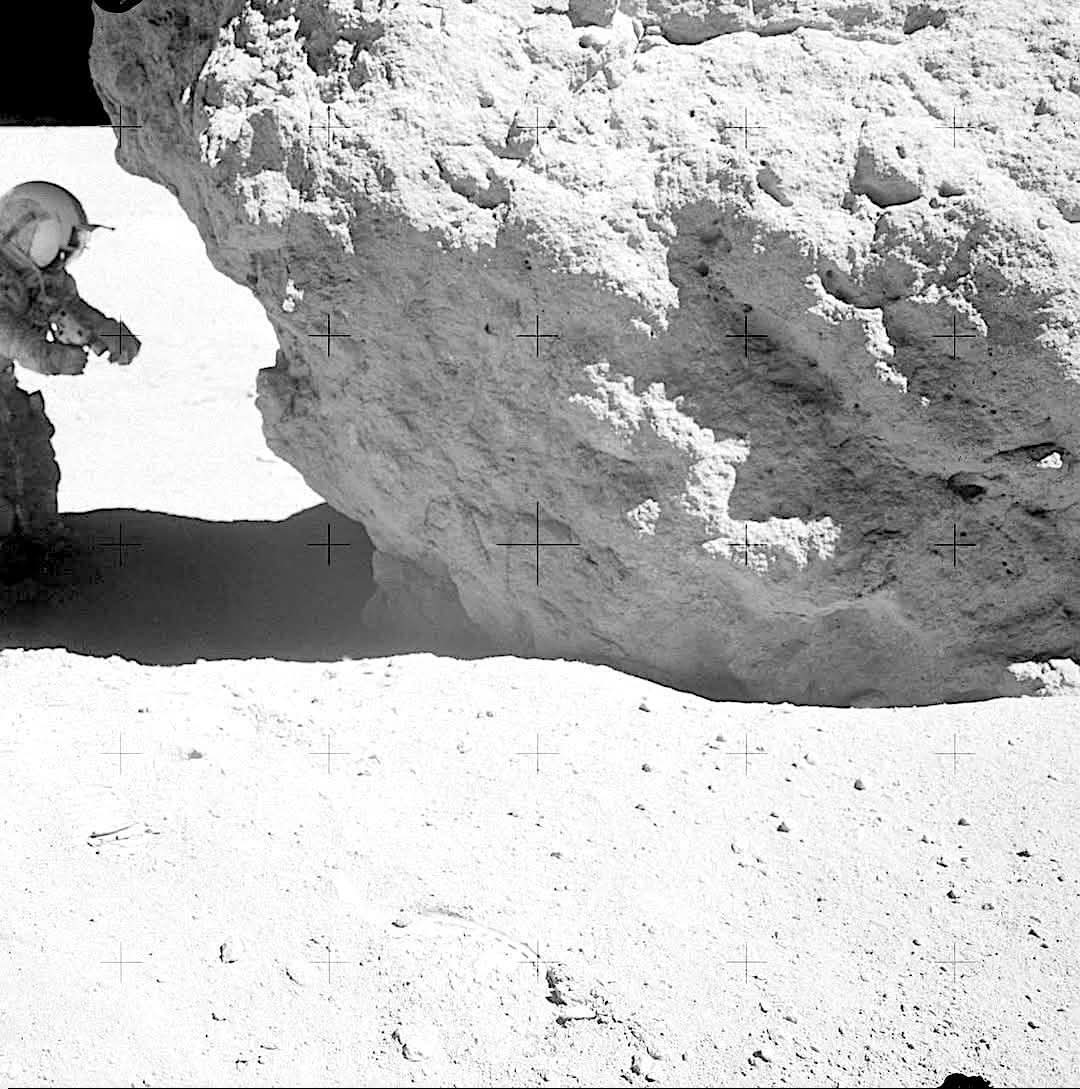
April 21, 1972. High on the lunar highlands at the Descartes landing site, Apollo 16 commander John Young kneels beside a massive boulder during the mission’s third moonwalk. With focused curiosity, he examines the rock at Station 13 — a moment forever frozen in time by fellow astronaut Charlie Duke’s camera.What made this spot special? Tucked beneath the overhanging boulder lay a rare prize: permanently shadowed soil that had been shielded from the harsh solar radiation and micrometeorites for millions of years. By collecting this pristine material, scientists gained a unique window into the Moon’s ancient history — a time capsule untouched by sunlight.Charlie Duke later quipped that on Earth (especially back home in Texas), sticking your hand under a big rock might end with a nasty surprise from a scorpion or snake. On the Moon? Nothing but silence and geology. No wildlife, no danger — just pure scientific exploration.This iconic image captures the spirit of Apollo at its finest: bold astronauts pushing the boundaries of human discovery on another world.
Image Credit: NASA
Terence Tao has an IQ above 200.
Youngest gold medalist in Math Olympiad history. Fields Medal winner. The greatest living mathematician by nearly any measure.
And he just said something most people aren’t ready for.
Tao: “This whole era of AI is teaching us that our idea of what intelligence is, is not really accurate.”
We spent centuries building civilization on one assumption.
That intelligence was sacred. Irreducible. Uniquely ours.
The one thing that made the entire human story make sense.
Then AI started solving things we swore only we could.
Chess. Language. Vision. Math.
And every time, we reached for the same defense.
That’s not real intelligence. It’s just tricks. Just pattern matching. Just an algorithm.
Tao: “You look at how it’s done and it doesn’t feel like intelligence.”
So we moved the line.
Again. And again. And again.
Because intelligence was supposed to feel like something. Something deep. Something we could point to and say… this is what separates us from everything else.
But AI kept solving the problems.
And that feeling never arrived.
Tao: “We were looking for some elusive, intelligent way of thinking and we don’t see it in the tools that actually solve our goals.”
Here’s what makes it worse.
Large language models work by predicting the next word. One word at a time. No grand architecture. No deep understanding. Just probability.
And it works.
Tao: “Maybe that’s actually a lot of what humans do as well.”
The greatest living mathematician just told you human thought might run on the same machinery.
Not some transcendent spark.
Pattern recognition. Prediction. One thought, one decision, one word at a time.
We built religion around intelligence. Philosophy around it. An entire species identity around it.
And a machine running probability just held up a mirror.
We didn’t lose intelligence to AI.
We just finally saw what it always was.
What haunts us isn’t that machines learned to think.
It’s that thinking was never what we needed it to be.
Only one chance in this lifetime…
Like watching sunset at the beach from the most foreign seat in the cosmos, I couldn’t resist a cell phone video of Earthset. You can hear the shutter on the Nikon as @Astro_Christina is hammering away on 3-shot brackets and capturing those exceptional Earthset photos through the 400mm lens. @AstroVicGlover was in window 3 watching with @Astro_Jeremy next to him.
I could barely see the Moon through the docking hatch window but the iPhone was the perfect size to catch the view…this is uncropped, uncut with 8x zoom which is quite comparable to the view of the human eye. Enjoy.
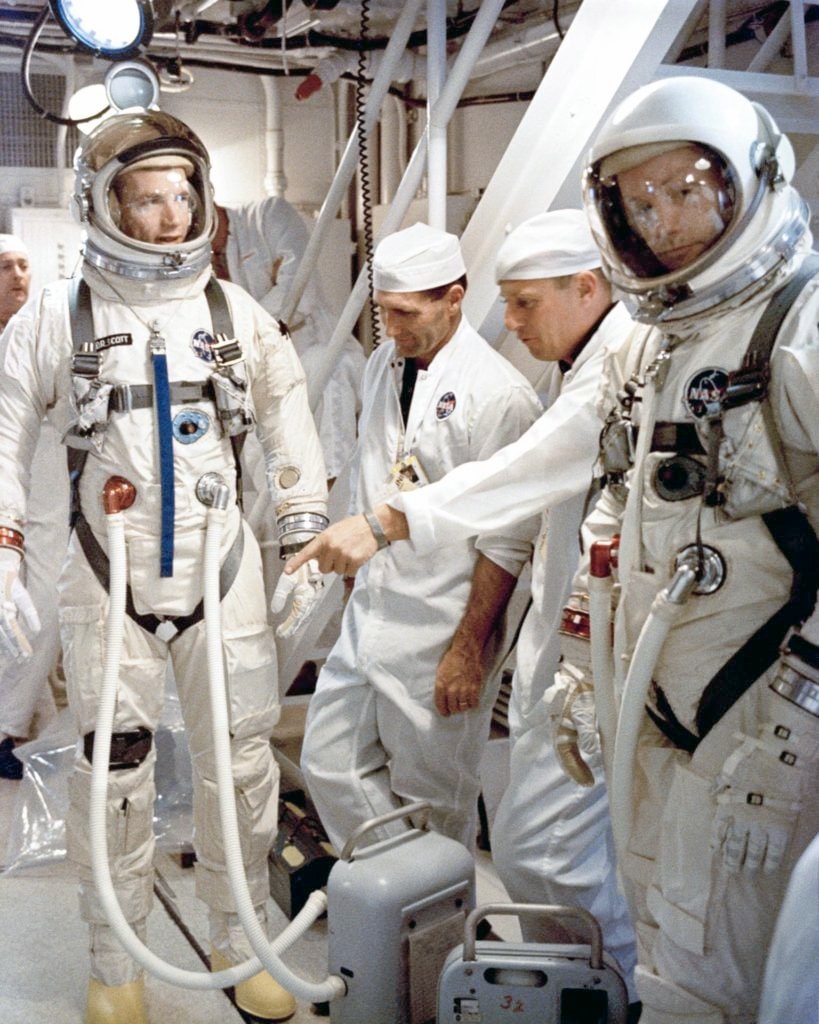
March 11, 1966. Inside the white room for a Gemini VIII simulation.
4 men in this photograph would eventually go on to voyage to the Moon during project Apollo . . . 3 of whom would walk on it.
(L-R: Dave Scott, Dick Gordon, Pete Conrad, Neil Armstrong)
Apollo 16 Lunar Rover Onboard Footage HD
Longer version in comments
This spectacular footage was filmed by Charlie Duke on board the Apollo 16 Lunar Rover using the 16mm DAC Film Camera. It shows the drive piloted by John Young from Station 11 to Station 13.
The footage has been upscaled, interpolated to 60FPS and synchronised to mission audio by Moonpans
Original footage source : Apollo Flight Journal
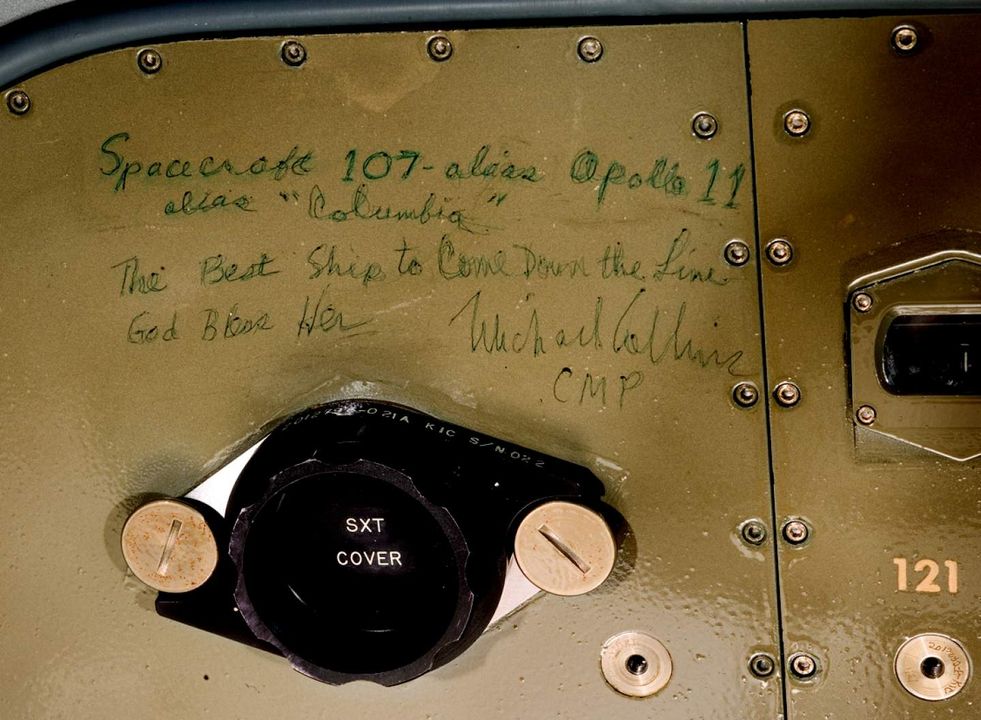
Michael Collins crawled back into command module Columbia after the splashdown of Apollo 11 and wrote this short note on one of the equipment bay panels. Discover more handwritten notes from inside the command module: https://t.co/IYet0NBSnV #NationalHandwritingDay
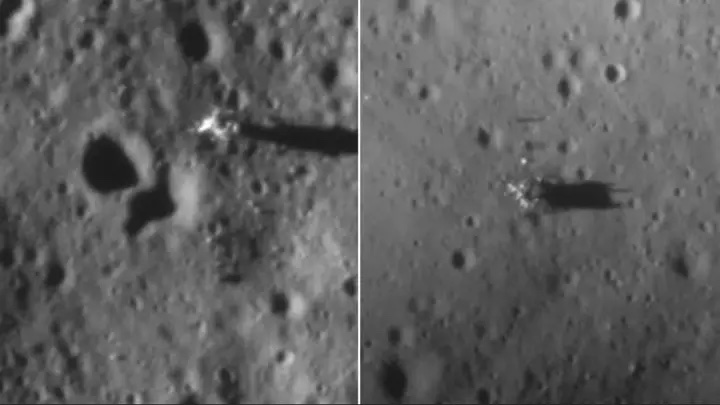
Officially starting the countdown to the anniversary of #Apollo11 today. You may recall that a few months ago, India’s Space Research Organization moon orbiter Chandrayaan 2 captured photos of both the Apollo 11 and Apollo 12 lunar modules on the Moon’s surface. They may be small in size – but those landers represent one of humankind’s most noble and successful accomplishments.
On this day in 2009, Space Shuttle Discovery launched on the STS-119 mission to the International Space Station. This photo of the shuttle waiting on the launchpad was taken four days prior to launch.
Puglia is a region where ancient olive trees often sport bizarre, fantastical shapes, often twisting and turning about themselves.
This one is over 1600 years old and it looks like a hug.
In 1930, Indiana Bell building was rotated 90 degrees. Over a month, 22-million-pound structure was moved 15 in /hr, while 600 employees still worked there with no interruption to gas, heat, electricity, water, sewage, or telephone service they provided.