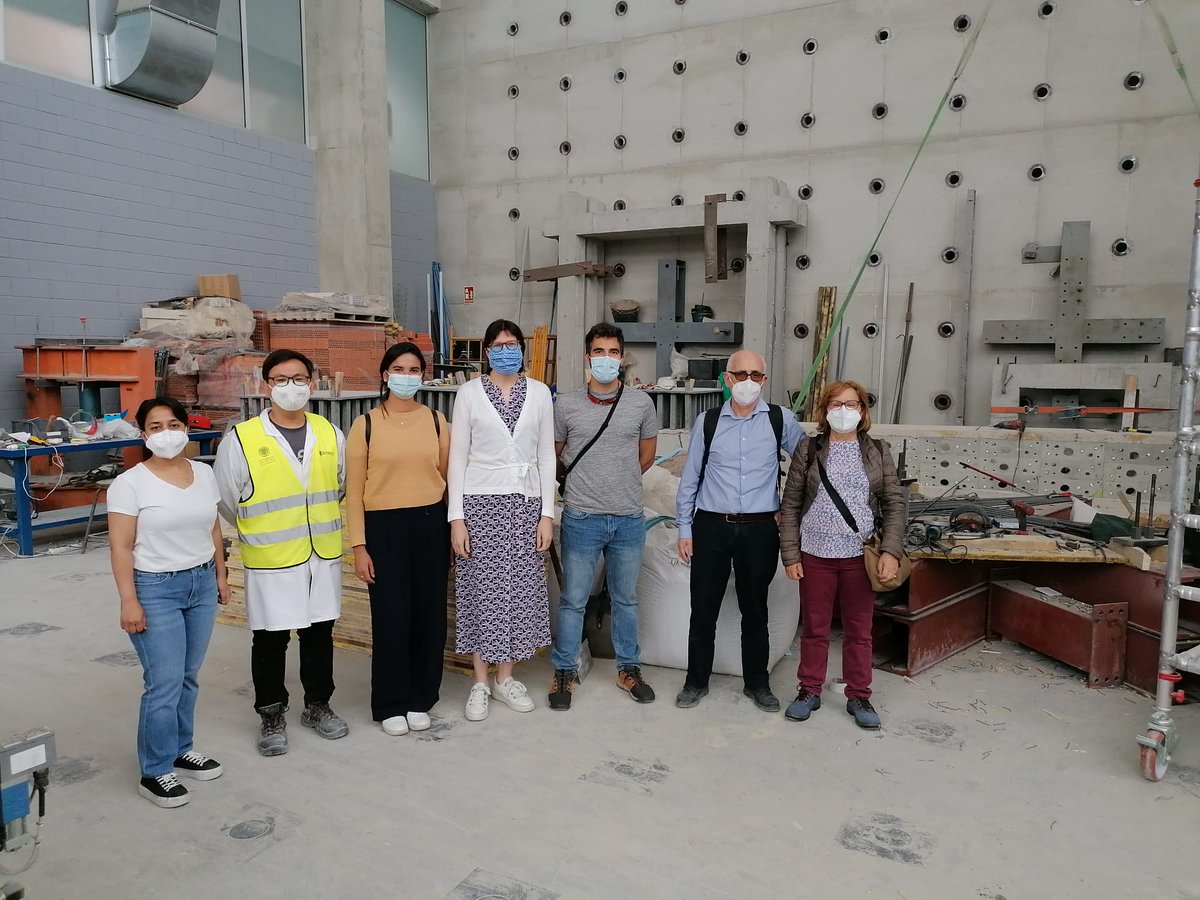
📢 @COSTsarcos promotional video is now available on YouTube! Don't miss it! It displays a summary of the activities performed until the end and it shows the great network we created 🌍. Many thanks to @COSTprogramme for granting our project!
https://t.co/mD7TTAjJfV
Congratulations to Ismael on putting together this comprehensive review of self-healing of concrete with non-ureolytic bacteria. Free to download for 50 days. https://t.co/dy2yWllIzE
Laís and Harry left their home institutions, @ugent and @KU_Leuven, in order to obtain knowledge on the commercialization of innovative technologies at @rdconcretes and do experiments with concrete mix design at @UPV, respectively.
#H2020#smartincseu
Pleased to say that I'll be representing the Institute of Concrete Technology at this 24-hour event and I'll be presenting the work of @Materials4Life on the development of autonomic self-healing concrete. 17:00 UK time (noon in Detroit) on 14 July. Come along!
📰 Cracks may represent the total extent of damage or the first signs of serious trouble. Some recommendations for troubleshooting concrete cracks prior to designing or performing repairs.
https://t.co/wLzJE4gfNN
SMARTINCS is organising a Research #Workshop on Smart, Multi-functional, Advanced #self-healing and #Repair Technologies In #Cementitious Systems, on May 3rd, 2021 (13.00-17.15 CEST). Program and registration procedure here: https://t.co/l7GEMmbsga
Last chance to register for the first SMARTINCS workshop on May 3rd! Presentations will be given from both experts in the field of self-healing concrete, as well as SMARTINCS early-stage researchers.
Visit https://t.co/wEj9JNfYbT to register.
#H2020#smartincseu
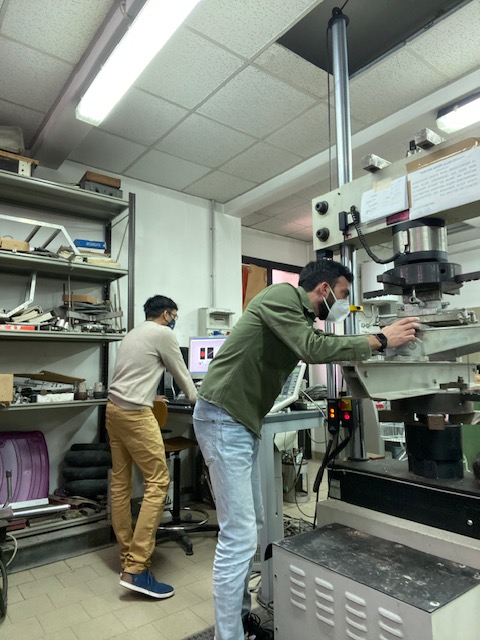
Niranjan Prabhu (ESR 10) is working on the effects of severe temperature conditions on the autogenous healing capacity of HPFRC by subjecting specimens to Freeze/Thaw cycles. After the F/T cycles, Niranjan (on the left) performed a four-point bending test.
#H2020#smartincseu
Our latest paper, which we hope will dispel some misunderstandings about how bacteria behave when added to concrete. "The case against MICP as a means for strength improvement" with @gebhardlab @bjreeksting (free for 50 days) https://t.co/fpzgRDotBg
The next presentation in our seminar series, comes from @JoseLabMat on April 28th who will cover "Self-Healing Bituminous Materials Based on Waste". The seminars are free to attend and start at 17:15 (UK time). To book your place visit: https://t.co/bizGPJjH6U
ESR2 has been investigating complex emulsion stability using Micropore’s cross flow membrane emulsification technology. Here, she has produced a water in oil in water emulsion with a coefficient of variation of 8.8%, in relation to droplet size distribution.
#H2020#smartincseu
Nuestra compañera Marta Roig imparte una charla sobre hormigón autosanable en el el Open Worshop SMARTINCS organizado por Ghent University el próximo 3 de mayo.
Inscripción gratuita en https://t.co/MfyesT1PVf
#selfhealing#concrete#structures@MMCTE_UJI@UJIuniversitat
The word is out; I am on the shortlist of the @NewScientistNL competition and you can vote for me. Your vote, by following the link below, would be highly appreciated! https://t.co/DlsnMdYZke
Cool stuff, @DidierSnoeck staat op de lijst @newscientist Wetenschapstalent 2021!
Geef deze #UGent-onderzoeker een extra duwtje in de rug en stem hem naar de finale.
https://t.co/o52bsqBe4e
New Research: Immobilization of Bacterial Cells on Natural Minerals for Self-Healing Cement-Based Materials: Recent research in the field of concrete materials showed that it might be possible to develop a smart cement-based material that is… https://t.co/M4KhXqae67 #Builtenv
Check out our new article on (self-)healing solutions ✅
@LJMUResearch@snepevucetic@F_TechnologyNS@COSTsarcos
Comparison of Microbially Induced Healing Solutions for Crack Repairs of Cement-Based Infrastructure https://t.co/Cy3ekKYYxO
We are pleased to announce the first SMARTINCS workshop, taking place online on May 3rd, 2021 (13:00-17:15 CEST). Presentations will be given from both experts in the field of self-healing concrete, as well as SMARTINCS early-stage researchers.
#H2020#smartincseu
This #OpenAccesspaper published on Materials and Structures presents an update on the RILEM #State-of-the-Art Report published in 2012 about the the working mechanisms of #SuperabsorbentPolymers (#SAP) in concrete. https://t.co/CLb6N9NaDM