@Luca_WithoutS No definitivamente. Es una idiotez comparar una infidelidad con el asesinato. Pero si creo que "demonizarla" o "juzgarla duramente" no me parece mal.
@ddeadman5@Tougi_mahjong kjjj Literalmente borges nunca mezclo su política con su literatura, y es de lejos uno de los mejores y más reconocidos autores de todos los tiempos. Además decirle facho por ir en contra de LA DICTADURA que vivió y lo torturó, es de estar muy mal informado.
Al argentino más importante de la historia (el que va a ser recordado por haber creado algo, por ser reconocido universalmente) ustedes lo nombraron inspector de aves de corral.
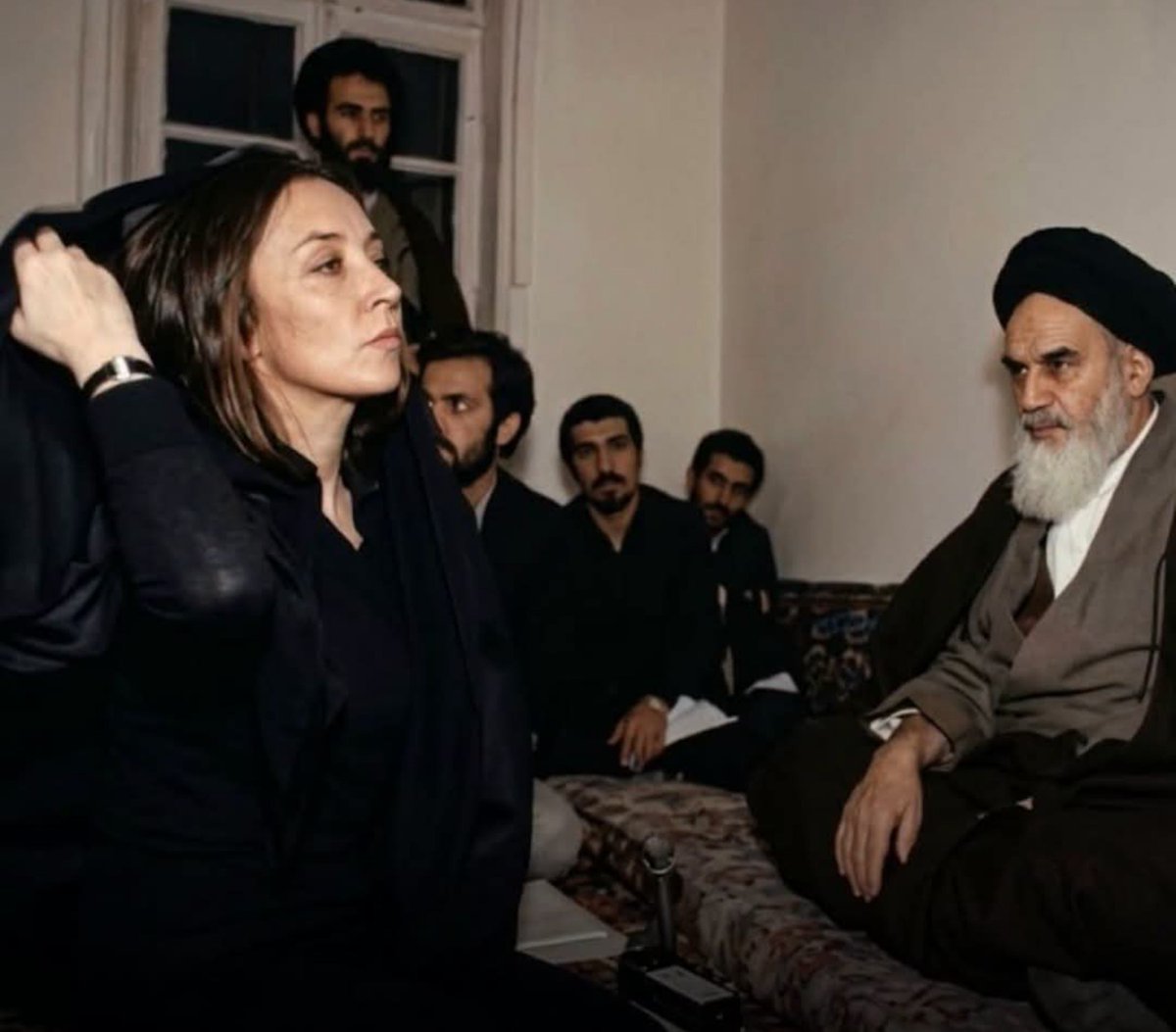
Italian journalist Oriana Fallaci removing her chador during her tense 1979 interview with Ayatollah Ruhollah Khomeini in Qom, Iran...
In October 1979, Italian journalist Oriana Fallaci traveled to Qom, Iran, to interview the Islamic Revolution's supreme leader. To get inside the room, Fallaci was forced to cover herself from head to toe in a heavy black chador, leaving only her face visible.
The conversation inside the room was tense from the very start. Fallaci did not hold back her questions.
She pushed the Ayatollah on political executions, the sudden shutdown of independent newspapers, and the sharp loss of rights for Iranian women under the new regime.
When she asked about the forced wearing of the veil, Khomeini dismissed her concerns and claimed the garment was meant to protect young and respectable women. He then added,
"If you do not like the Islamic dress, you are not obliged to wear it."
Fallaci took his words literally and replied, "Thank you, Mr. Imam. Since you tell me so, I am taking it off right now."
With a quick move, she pulled the chador off her head, leaving her hair completely exposed right in front of the Supreme Leader.
Khomeini was furious.
He stood up without saying another word and walked out of the room. The room fell silent, and the interview was abruptly stopped. However, Fallaci refused to leave Iran until he returned a day later to finish the conversation.
This confrontation became legendary in the history of journalism.
It showed a reporter refusing to bow down to authority, even in one of the most dangerous settings imaginable.
Fallaci proved that real journalism requires standing up to power, asking hard questions, and refusing to be silenced by fear or tradition.
When journalists trade raw courage for easy access and comfortable silence, we lose one of our strongest shields against tyranny.
In an era where true courage in reporting feels rare, her brave stand reminds us that honest journalism still has the power to light up the dark, giving a voice to the voiceless and inspiring future generations to speak truth without fear.
#archaeohistories
Se viralizó que un empresario hace comer a sus empleados lo que a él le parece bien. En 2026, pero con vibes del Missouri de 1830.
En las PyMEs lo que falta hoy es lo contrario: hay que fomentar una CULTURA DE ADULTOS… sin paternalismo y sin el discurso de “somos una familia”, entendiendo que agentes, empleados, socios y empresa tienen intereses propios que tienen que estar razonablemente alineados. 🫶
Dejen de tratar a sus empleados como boluditos.
¿Quieren tip de “liderazgo”? Recluten bien, córranse del medio y no le rompan las pelotas a la gente. Ni simpáticos tienen que ser siquiera. Fin.