This is a deep misunderstanding of how economics works.
Economists don’t start with unrealistic assumptions to reach irrelevant conclusions. Theorists spell out the assumptions under which an idealized, stylized result can be proven—and very often that result is an irrelevance result. In finance, for instance: Modigliani–Miller (capital structure doesn’t matter), no-trade theorems (nobody trades), etc.
The point isn’t the conclusion. We all know firms do optimize their capital structure (we teach how) and people trade trillions of dollars of securities every day.
The “result” is really the assumptions: they tell you what has to be true for a phenomenon not to matter or not to exist—and therefore what frictions make a field interesting or a phenomenon exists. A huge share of economic research is about relaxing those assumptions and studying what changes.
So when we say markets work “perfectly” under perfect competition, perfect substitutes, complete markets, and fully rational agents, we’re not claiming those conditions hold. We’re saying the literature should be built around the violation of these assumptions.
About a decade ago, a theory emerged:
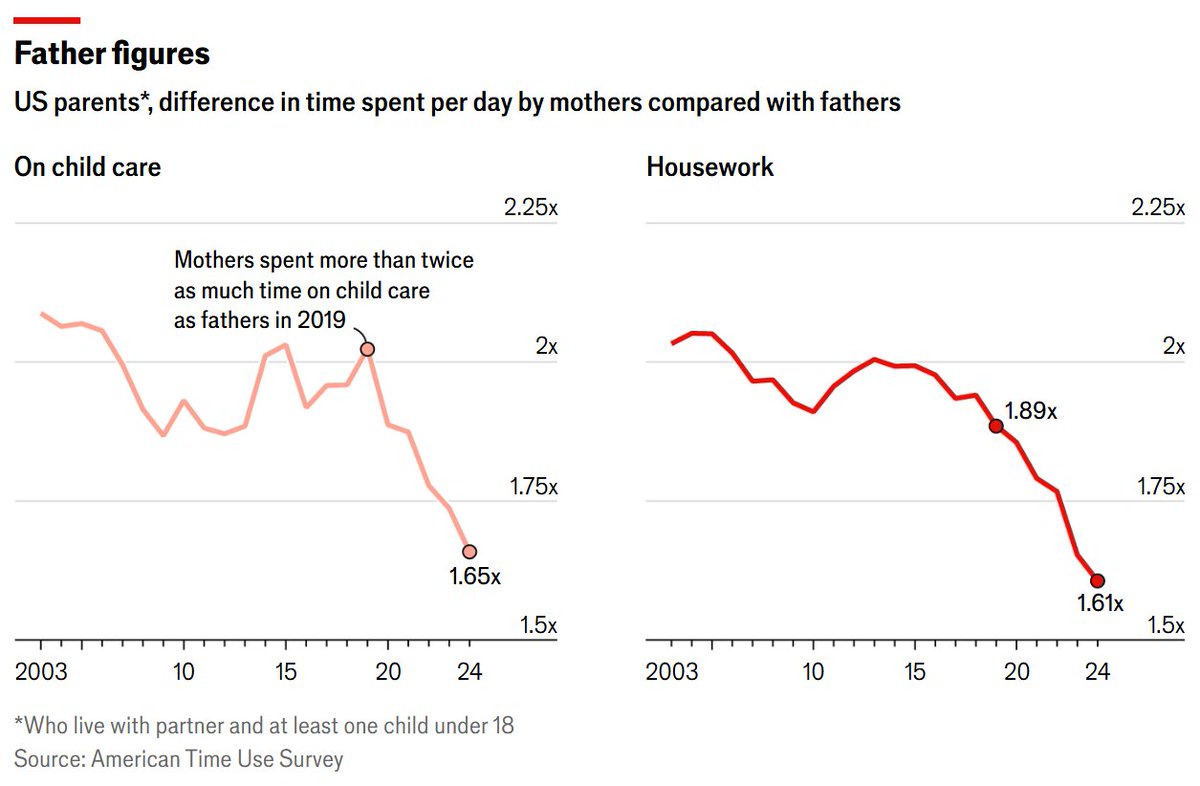
If men do more of the housework and child care, fertility rates will rise!
Men have been doing increasingly large shares of the housework and child care.
Fertility is lower than ever.
Really cool!
"Economics Literature Search: Full-text search across 30,000+ papers from top economics journals and NBER working papers" by Paul Goldsmith-Pinkham.
"This tool lets you search the full text of papers from the American Economic Review, American Economic Journal series, and over 30,000 NBER working papers."
https://t.co/ZacwkA2FgW
Example for Empirical Methods Trends: Machine Learning
Weekend win: The proof I submitted for Erdos Problem #397 was accepted by Terence Tao.
The proof was generated by GPT 5.2 Pro and formalized with Harmonic.
Many open problems are sitting there, waiting for someone to prompt ChatGPT to solve them:
Like @davidbessis and others, I think that Hinton is wrong. To explain why, let me tell you a brief story.
About a decade ago, in 2017, I developed an automated theorem-proving framework that was ultimately integrated into Mathematica (see: https://t.co/nGCIUk44TP) (1/15)
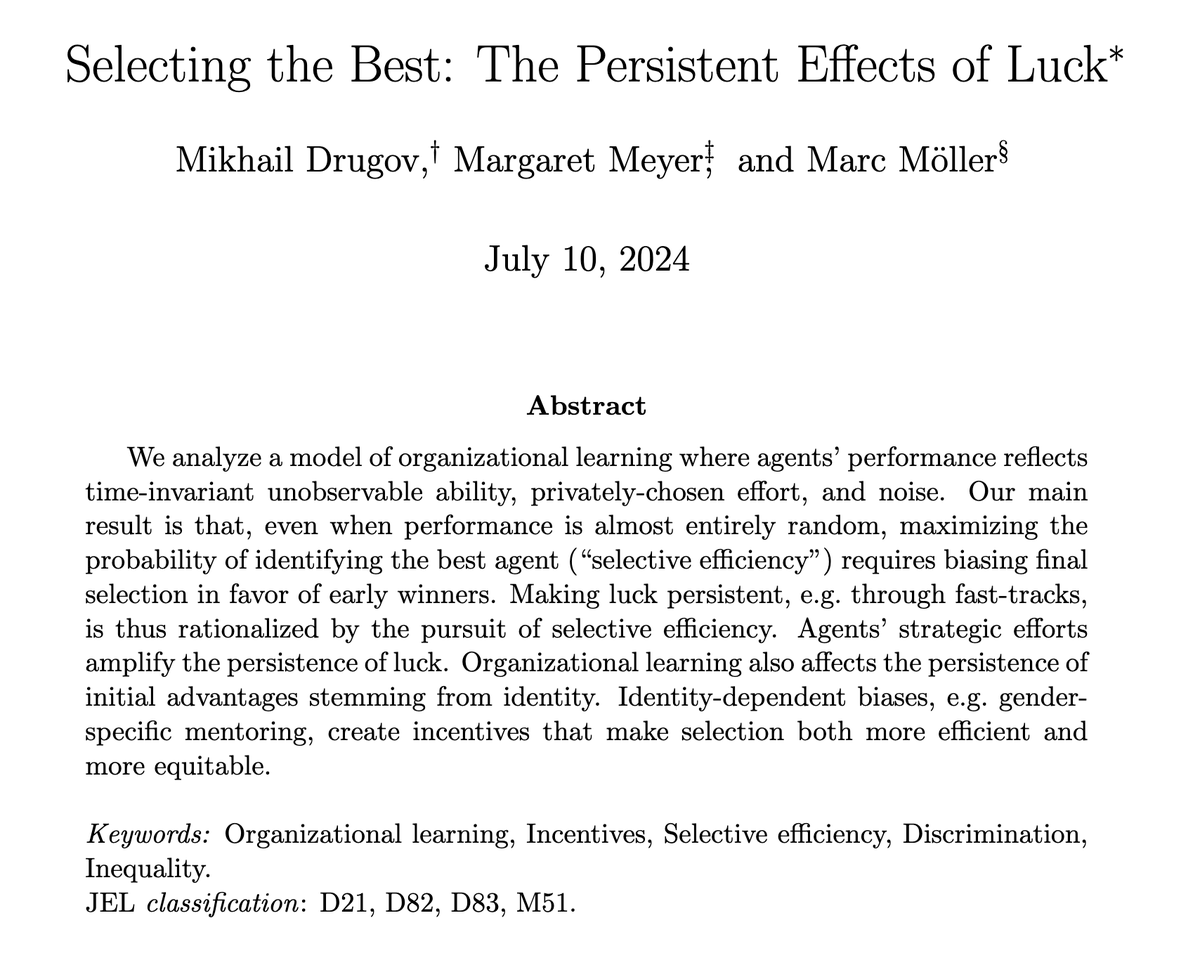
A deep paper -- that popped into my head as I was perusing @sndurlauf's recent essay on meritocracy. The paper raises a broader question: how to be meritocratic when there is uncertainty about the relative weights of luck and effort in individuals' production function? One
This is a wild result.
TikTok is somehow worse for people's mental health than Instagram is.
And messaging apps are generally *good* for all of those outcomes: they make friendships closer and they make people happier!
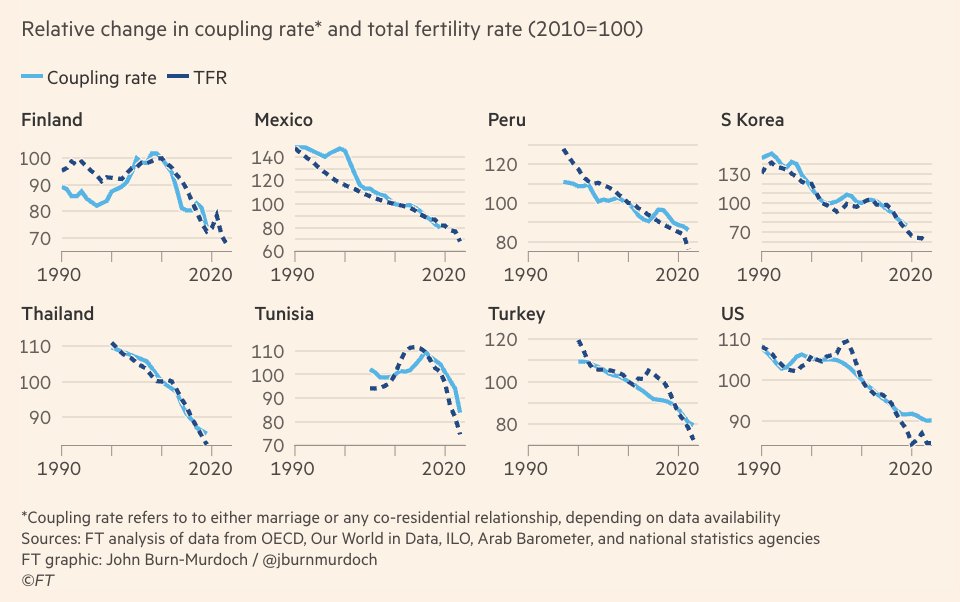
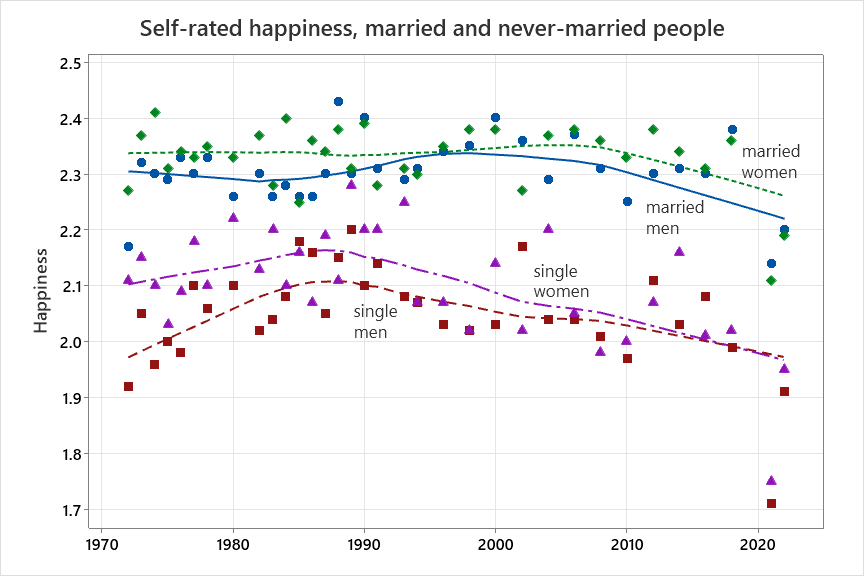
The drop in fertility tracks falling marriage rates, all over the world. Yet the advantages of marriage for happiness, health and wealth have never been higher.
In my newest article, I argue that solving problem of low birthrates requires doing a better job selling marriage.
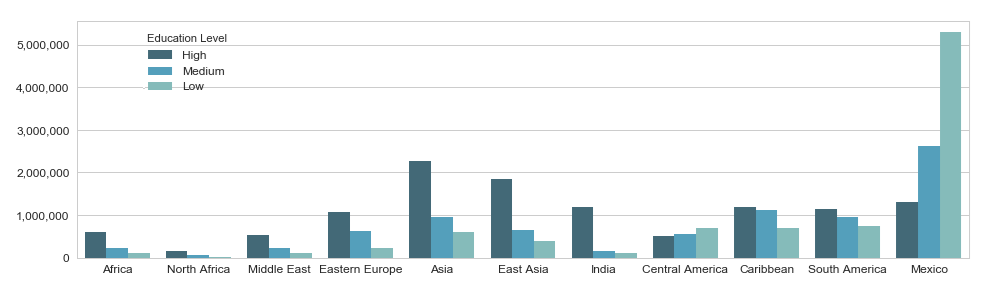
America gets great immigrants from most places and very low-quality immigrants from Mexico.
If you look at their education levels, you'll see that every group coming into America is educated, except for Mexicans and Central Americans.
La première d’une belle série d’interviews sur le Ph.D. Nos candidats sont aux Canada, US, France et UK !
On commence fort avec Didier Noutch , PhD candidate en mathématiques à l’université de Montréal ���🇦!
Lien YouTube: https://t.co/OP1sZVLzfW
🚨📢 NOUVEAU !
💬 Nous vous proposons un nouvel espace de dialogue avec « AFRICARRIÈRE - #SPACE » 🎤
Un espace pour parler de nos parcours, de nos métiers et de nos ambitions.
📆 1 jeudi sur 2
⏰ 21h30🇫🇷- ⌛���1h30.
Et si vous aussi souhaitez partager votre expérience, vos conseils ou votre parcours, nos DM sont ouverts pour planifier votre intervention. 🙌🏾
Hâte de partager ensemble nos parcours, nos métiers... NOS HISTOIRES !🤗#Afrique #Carrière #Parcours