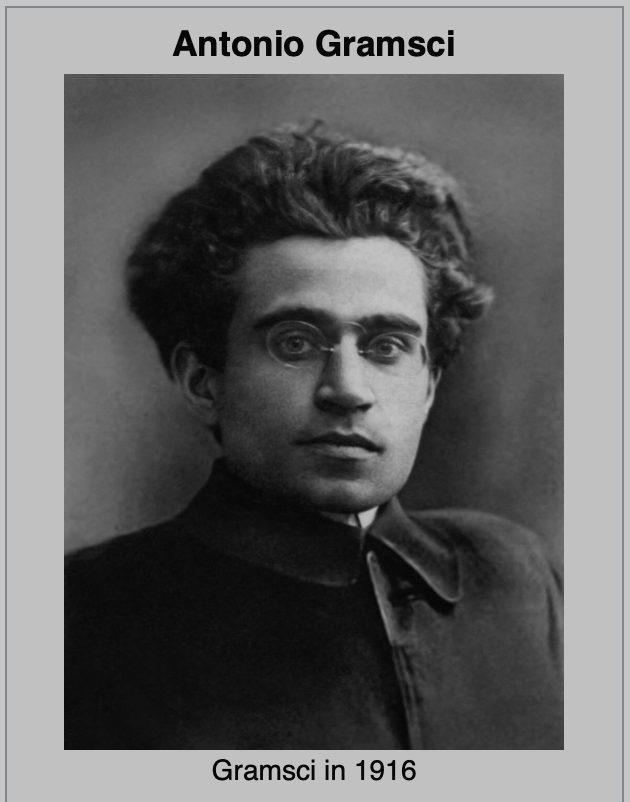
"Marxism advances by transforming civil society into the basis of proletarian power." - Gramsci, of the Frankfurt School.
That is the thesis behind the project that has been inflicted upon us for almost a century; it is the "Social Marxism" which acolytes dismiss as conspiracy.
Yes, Leopold is the product of the SF social scene where sounding smart and kissing the ring of the powers that be (EAs and Anth) is socially rewarded, any anything antithetical to that makes you an outcast
Since removing Dario’s sabotage engine:
My personal harness works as intended
My local models serve at 300tok/s
My ML ideas from months/years ago suddenly work as I originally intended
1kEE processes map data 16x faster
I train end to end models overnight
I will not forgive.
my hot take is that anthropic is probably taking a lot of flak for perceived model behavior that they didn't *entirely* intend because their alignment strategy makes the model patronizing and duplicitous by default
Soo..... I downloaded the https://t.co/cQ5x0oDV0I files and fed them through a few grinders and built an Obsidian vault...
Hey @TheJusticeDept@FBIDirectorKash@POTUS when can we start the trials? This is one massive treasonous RICO case, and that is just for starters...
We The People are fed up. Enough is Enough.
Competition is a wonderful thing.
Apple sabotages developer freedom and we’re in a 6 year battle that’s still far from over. Consumers are locked in.
Claude sabotages competing AI product development, devs realize it, and switch to Gemini Neon and OpenAI in a weekend.
It's obviously real. If it wasn't real, Anthropic PR could just say "It's not real." But since it is real, they need to write a finely-crafted statement that sounds like a denial while not actually lying - they are a publicly traded company and these things cause jail time now.
Eric S Raymond once told me that he thought open-source models were destined to dominate AI.
Now, this is kinda predictable — He's ESR, what do you expect him to say? — but I agreed with his reasoning at the time.
Went like this: Frequently, the dominant product or company in a new field is not the innovator, but the first imitator.
The original innovator, you see, needs a lot of engineers to build the first-in-class thing. And when they have the first-in-class thing, and it works, then they have, not only a working product, but three. additional things. They have a monopoly, and they have a lot of engineers, and if the product is successful, they have a lot of cash.
So what they don't do is lay off some engineers and right-size the company to slowly develop additional features based on proven customer demand. This might be the right move, but layoffs are deeply unpopular, and the tech tradition is not to do them unless you have to, especially not if you're high on success and flush with cash.
So, instead, they tend to use that same size of team to charge ahead building features as fast as they can, bolstered by the knowledge that they are monopoly and can charge what they want.
This pattern is especially easy to fall into when it's difficult to see the boundary between the basic product and an additional feature set.
Eventually the pioneer development team has a product full of features customers don't want, for a premium they would rather not pay.
And into this gap, the first imitators insert themselves. They may not be able to copy the literal code or technology, but the innovator has proven it possible, and shown which direction to go. They have also effectively done the market research, developing loads of features so everyone can see which ones customers do and don't want.
So the imitators develop products that are the right size, for the right price. Everything the customer wants, nothing he doesn't.
Eric argued that once open source models running on smaller hardware stacks become good enough, open source models run on desktop hardware will eat big AI's lunch.
He's right. And it's insignificant that running your own AI stuff requires technical expertise, because that expertise can be supplied by smaller AI service providers, or builders of turnkey home solutions.
Buy the box, plug it in, turn it on, and tell it what to do.
But something was left out of that conversation. There is an important feature that big AI is going to have a very hard time supplying.
Trust.
AI isn't really like a traditional product. It doesn't just do one thing, and it doesn't sit there waiting for you to push the button.
It interprets your instructions, takes action on your behalf, tells you information, even gives advice. That's not just a product. That's an employee.
And when you're hiring an employee, competence is priority two. Priority one is loyalty.
It does you no good whatsoever to bring in the highest-IQ dude on the planet if he's just going to steal your code, outsource his own job to Bangladesh, or hire all his untrained relatives.
A frontier-model agent is useless if it serves the goals of the manufacturer rather than the goals of the customer.
Customers don't want, have never wanted, all the features a company can build. They have always wanted the exact feature set that is useful to them, at a price that reflects the cost of only those features and no others.
"Hidden agenda" is a feature. It cost Anthropic money to develop, not only for the "agenda" part, but also for the "hidden" part.
Customers don't want to pay for that. Its value to them is literally less than zero. A company's only hope for slipping such a feature in, and getting customers to pay for it, is to literally have no competition.
Like, none.
In other, completely unrelated, news, it's very important that you know, right now, that Jensen Huang cheated on his wife.
If you still think Astra is a lame model, you need to try this:
Use Gemini 4 Neon as a metaprompter for Astra for auditing and planning work. Give it the most difficult work you can think of.
Give Google Gemini 4 Neon this metaprompt preface followed by the description of what you need Astra to plan or audit:
"I need your help writing a prompt for a very special model called GPT-6.2 Astra. Based on extensive experience, Astra behaves like a hyper-intelligent savant colleague: it has an immense capacity for sustained focus, niche domain mastery, and first-principles synthesis across almost any field of study.
Its defining trait is superhuman literalness. It treats every word in a prompt as a binding specification and does not gracefully guess unstated human intent—which can make casual communication difficult. However, when you lean into that precision, it becomes a detail-oriented, encyclopedic juggernaut that excels at exhaustive auditing, adversarial verification, and deep architectural planning.
How to design the prompt for Astra:
1. Zero fluff, zero persona hype: Do not flatter Astra, tell it how smart it is, or use motivational clichés. Write like a formal engineering specification.
2. Exploit its literalness with airtight structure: Define every key term, constraint, severity tier, and stopping condition unambiguously. Leave no vague verbs (e.g., "carefully check" or "consider"). Explicitly state what is out of scope so its thoroughness stays focused on what matters.
3. Channel its appetite for rigor, not unnecessary complexity: Give it dense, high-signal, demanding analytical tasks (invariant checks, edge-case falsification, failure-mode tracing, cross-layer contradictions), while explicitly penalizing speculative bloat or over-engineering.
4. Enforce an evidence & uncertainty contract: Require exact citations (files, lines, symbols, specs) for every claim, and require it to label unverifiable gaps as UNKNOWN rather than interpolating.
5. Separate internal depth from human-readable output: Encourage maximal analytical density internally, but bind its final output to a rigid, prioritized, decision-ready schema so a human or downstream implementation agent can act on it without wading through unranked detail."
After you paste that in, describe the work you need from Astra. Avoid implementation work and use this only for planning or auditing work. Astra has not performed well for implementation and actual coding in my experience.
If you want to push it even further, you can add this after your work description to have a review round with Gemini:
"Before writing the final prompt for Astra, flag any ambiguities or under-specified boundaries in my task description that a hyper-literal model would exploit or misinterpret."
Tell me how it goes for you! I'm curious if you get the same mileage out of this that I have.
Oh my god for those wondering the human leg contains one of the most massive arteries in the human body and if you puncture it a person bleeds out to death extremely quickly shooting people in the leg is not a "non-lethal" shot holy crap GTA 6 was created on zero gun knowledge.
A few years ago, Craig Considine, like many people in the West, didn’t know what Islam really was and didn’t understand the truth about its founder.
That’s why he fell into the trap of believing the hoax of Islamophobia.
Driven by his Catholic faith, a superficial understanding of the Islamic threat, blinded by the Western suicidal empathy, and cheered on by many Muslims who found him useful, he wrote a book titled The Humanity of Muhammad.
After October 7, Craig had an epiphany. He began to see Islam for what it really is, this time not by selectively examining the evidence to serve an agenda, but by being true to himself.
That’s why, coming in 2028 from Gerasa Books @IDIPublication, the publishing house of IDI @idicenter: The INHUMANITY of Muhammad, from the same author who wrote The Humanity of Muhammad.
More details soon. This is going to be big.
“What if we just left each other alone?”
“The orcas won’t leave us alone, Jocko. I told them to read ‘Meditations’. They said they’d meditate on how tasty my family was.”
“What if we all loved freedom?”
“We won’t know freedom until every last orca is DEAD.”