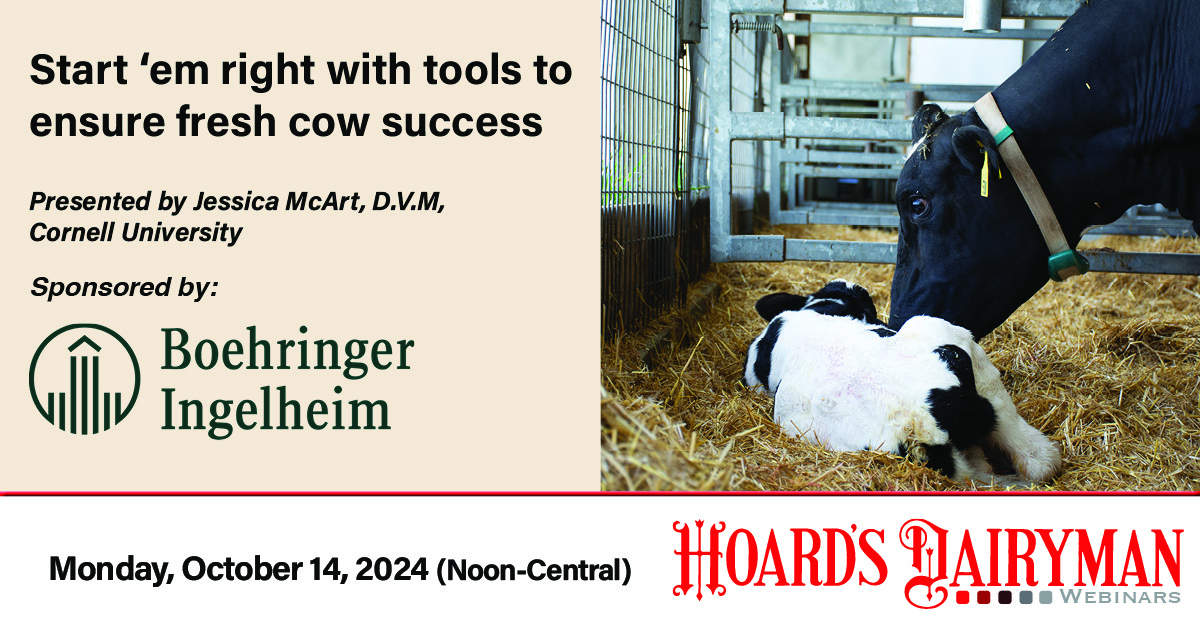
The “Start ‘em right with tools to ensure fresh cow success” webinar will discuss management methods that assist cows in successfully transitioning from the dry pen into early lactation. Register: https://t.co/ao347Clx06
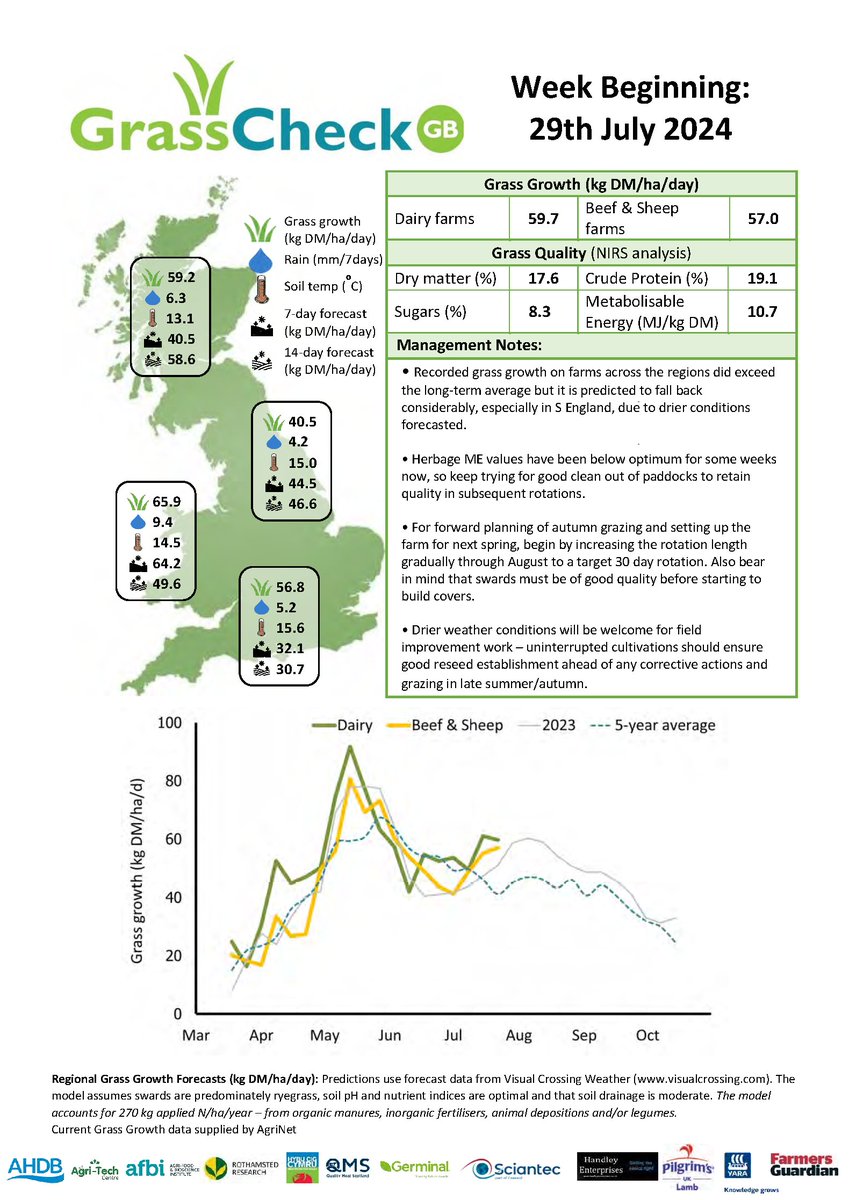
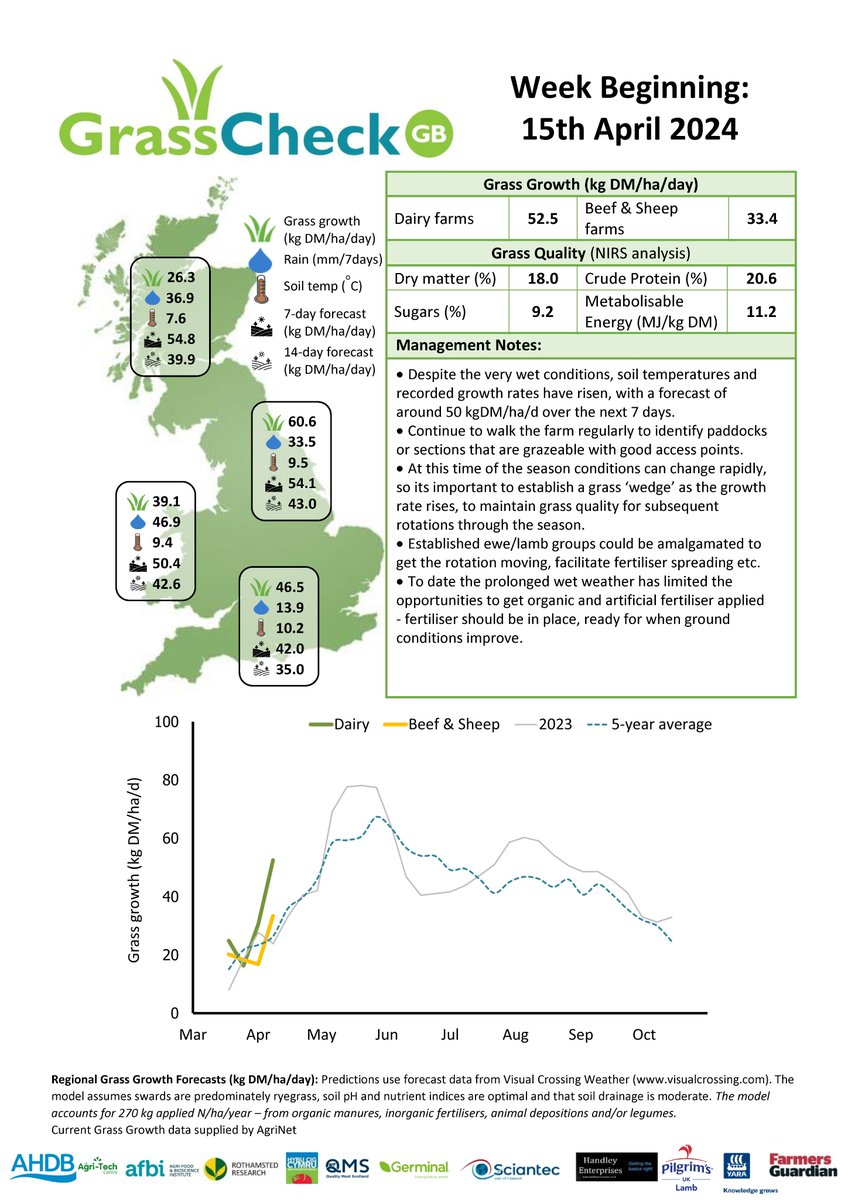
🌱Grass growth has exceeded the long-term average but is set to decline, especially in S England due to forecasted dry conditions. Herbage ME values are below optimum—ensure good paddock cleanout for quality in rotations. @UKAgriTech@TheAHDB@qmscotland@HybuCigCymru
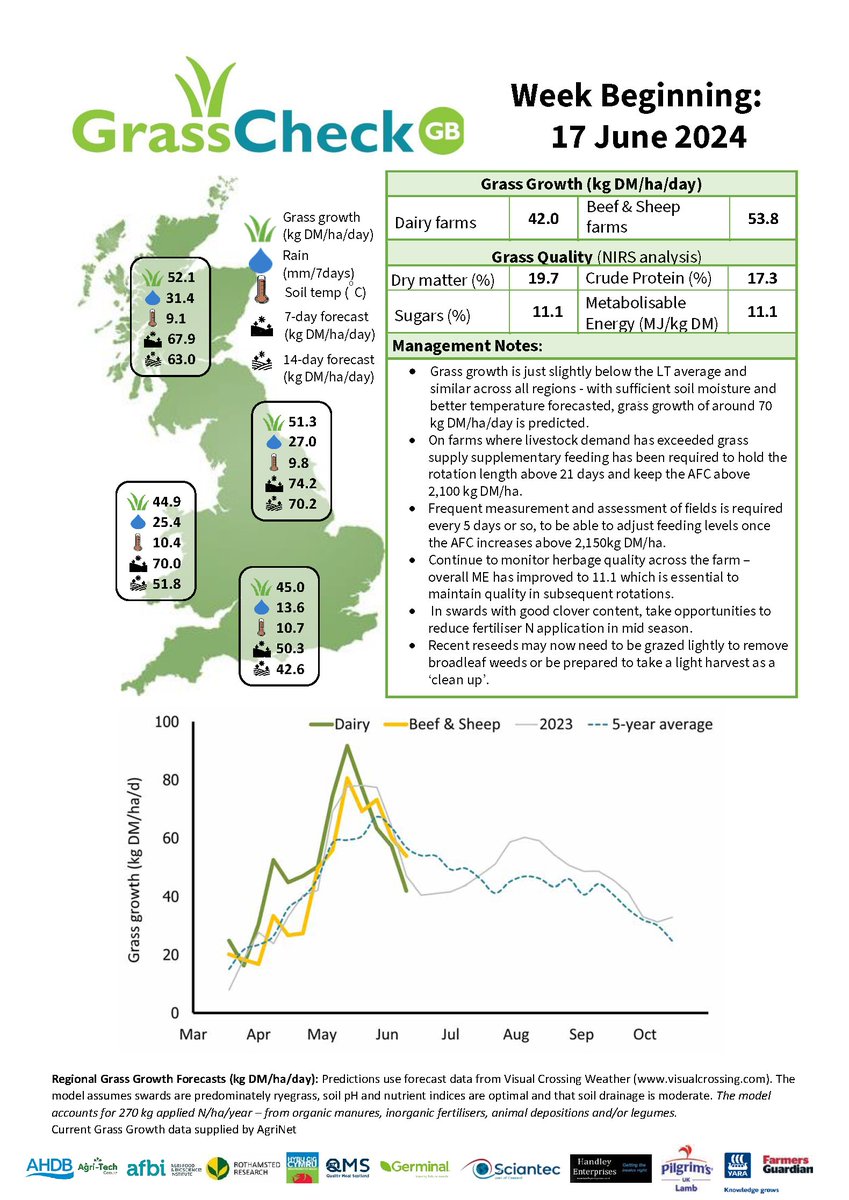
🌱 Grass growth is slightly below LT average, but with better temps and soil moisture, 70 kg DM/ha/day is expected! Ensure rotation length stays above 21 days by supplementing feed if needed.@TheAHDB@HybuCigCymru ~@qmscotland
“An update on feed additives” webinar will evaluate uses, economics, and new research on feed additives. Topic will be discussed by Mike Hutjens, professor emeritus at the Univ of IL on Mon, June 10 noon (CT). #dairy#agchat#cows https://t.co/ao347Cm4PE
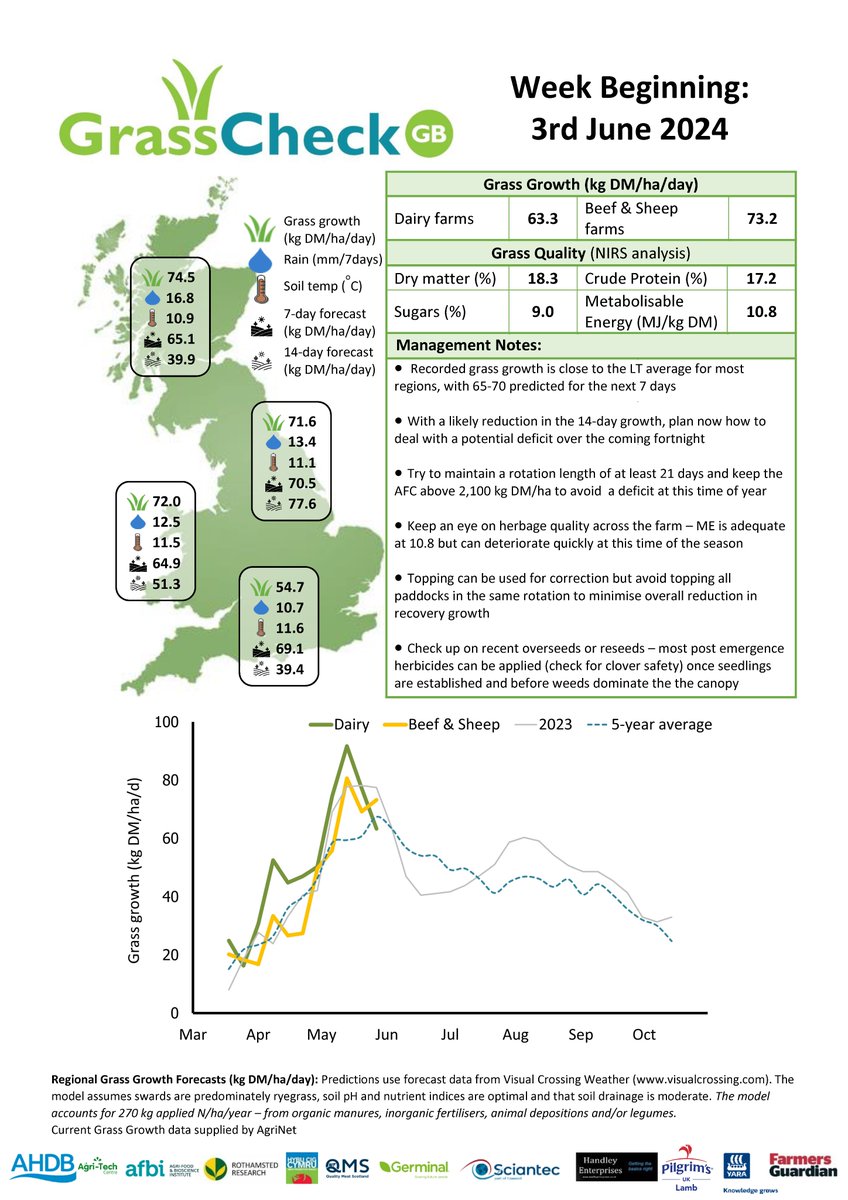
🌱 Grass growth is near average, but a reduction is predicted in 14 days. Plan ahead to manage potential deficits! Maintain a 21-day rotation & keep AFC above 2,100 kg DM/ha. Monitor herbage quality and be cautious with topping. 🚜
@TheAHDB@HybuCigCymru@qmscotland
🌱 Grass growth is back to average and expected to stay strong over the next 7-14 days due to recent rain and warm temps. Keep an eye on grazing residuals to maintain feed quality and measure paddocks weekly to monitor availability.@TheAHDB@qmscotland@HybuCigCymru
Our next webinar will take place on Monday, May 13 at noon (Central time). Jim Salfer, an extension educator with the University of Minnesota, will present, “Feeding and managing cows in a robotic milking system.”
Register: https://t.co/ao347Clx06
🌱 Soil moisture levels dropping, growth rates rising! With settled weather ahead, it's time for on-farm tasks like fertilizing and grazing management. Don't forget those regular grass walks to keep up with the optimum growth. 🚜@TheAHDB@HybuCigCymru@qmscotland
Growth is set to increase over the next couple of weeks, so plan now to increase grazing pressure and make use of this surge! @TheAHDB@HybuCigCymru@qmscotland
Cow cooling during late gestation is valuable, but do cows need cooling the *whole dry period* to reap the benefits? @uf_ansci's Geoffrey Dahl shared results from a recent #JournalofDairyScience study (https://t.co/AdVpGTgQWt) to help get an answer.
https://t.co/WPcmbXZ2wd
Along with clinical signs like reduced appetite and weight loss, though, an elevation of ketones indicates ketosis. These cows produce less milk, have poorer reproduction, and are more likely to contract other diseases and leave the herd. https://t.co/o3AYkwQRwv
Ration formulation: The health of dairy cows depends on a fully functioning rumen. Thus, the ration should provide adequate fiber, energy, and protein to feed the rumen microorganisms. https://t.co/NLG8xAPfw2
Research has shown that feed strategies—dietary fat, nitrate, & 3-nitrooxypropanol (3-NOP)—have the potential to reduce enteric methane emissions in #dairycows. But can they be combined? Learn more from a @AarhusUni_int team in the #JournalofDairyScience: https://t.co/JR11hdHZQA
Your least exciting ration is still important: Though we have come a long way since then, the far-off dry cow ration is still an important diet that needs adequate attention. https://t.co/WiokXCLjVq