@kajakallas Where are the sanctions fir Turkey Kaja? Where is the support for the EU member state..or the business with Turkey has
Made you all blind ans stupid?
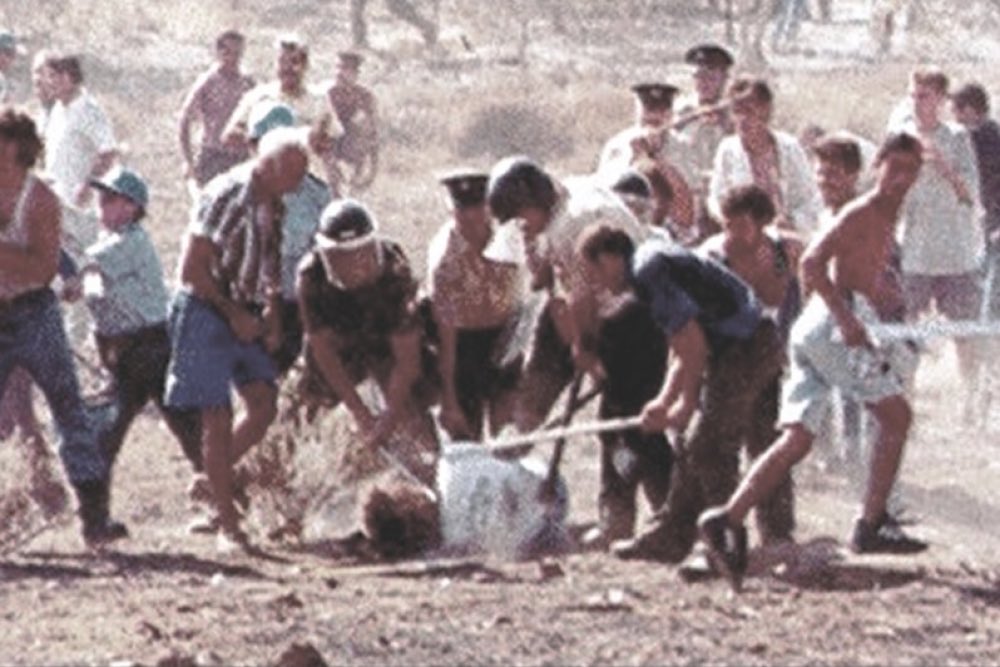
@huseyinkanturk Here is another brutal
Murder , with sticks and rocks, killing an unarmed man trying to cross the border to go to his house…..as i said..animals
Europe was shocked—shocked!—that Greece temporarily held up new sanctions against Russia.
Fair enough. Greece reconsidered, and rightly so: pressure on Putin must continue until his war against Ukraine ends.
But spare us the selective outrage and lectures about “European values.”
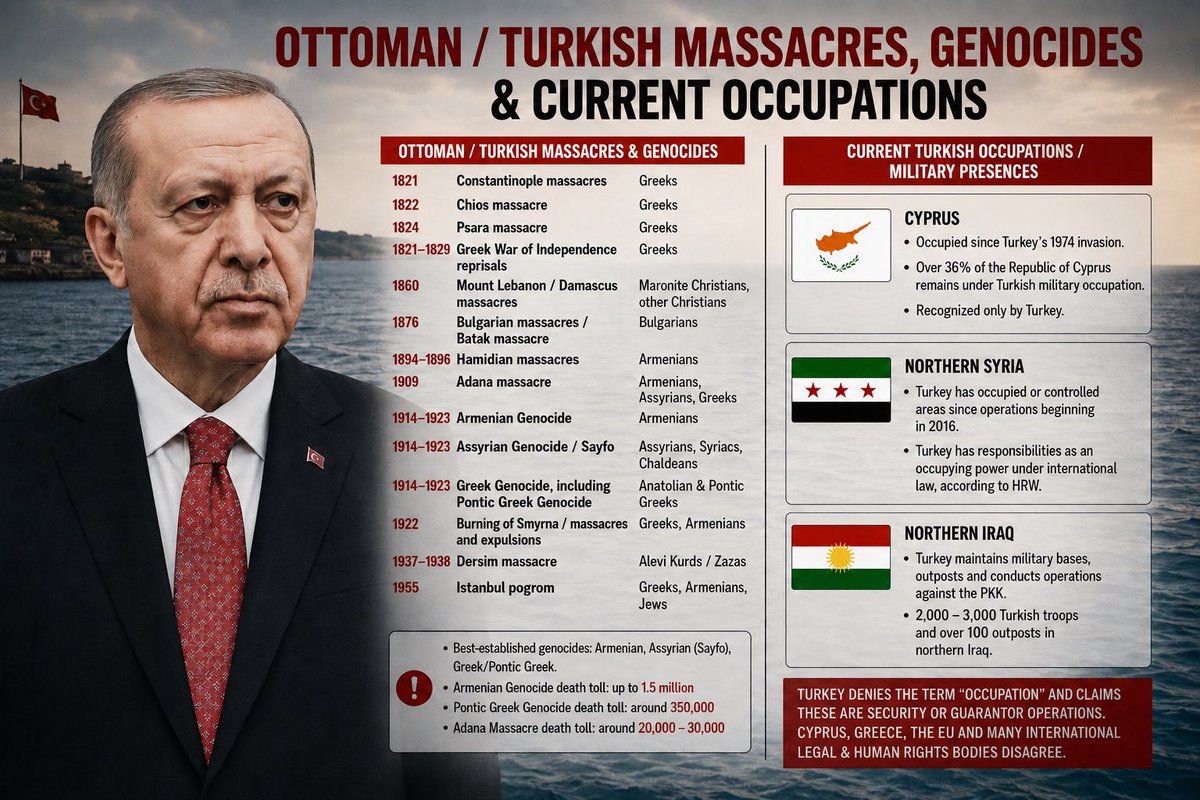
For more than 50 years, Turkey has occupied over a third of Cyprus—territory of an EU member state. Turkish troops remain there, Ankara continues altering the area’s demographics, and the occupation regime is recognised by no country except Turkey. Yet where are the meaningful sanctions? Where is the economic isolation? Where is the urgent defence of “European sovereignty”? (https://t.co/KnFadawnch)
Apparently, occupation is intolerable when Russia does it—but becomes a “complicated issue” when Turkey does it and there are contracts, migration deals and strategic interests involved.
Even worse, some of the same allies who preach solidarity are eager to deepen military cooperation with Ankara, despite Turkey’s threats against Greece, its occupation of Cyprus and its habit of playing NATO, Russia and everyone else against one another.
Greece has supported Ukraine from the beginning—with weapons, money and major diplomatic costs, sacrificing its previously strong relationship with Russia. Yet President Zelensky appears remarkably comfortable embracing Erdoğan, another leader whose forces occupy the territory of a neighbouring state. Ankara plays both sides, maintains relations with Moscow, and still receives praise for being “indispensable.”
So yes, Greece should support sanctions against Russia.
But Europe should look in the mirror: principles that apply only when convenient are not principles. They are foreign-policy marketing.
Ukraine deserves solidarity. So does Cyprus.
Occupation does not become acceptable because the occupier is useful, does good business or happens to be a NATO member.
Europe was shocked—shocked!—that Greece temporarily held up new sanctions against Russia.
Fair enough. Greece reconsidered, and rightly so: pressure on Putin must continue until his war against Ukraine ends.
But spare us the selective outrage and lectures about “European values.”
For more than 50 years, Turkey has occupied over a third of Cyprus—territory of an EU member state. Turkish troops remain there, Ankara continues altering the area’s demographics, and the occupation regime is recognised by no country except Turkey. Yet where are the meaningful sanctions? Where is the economic isolation? Where is the urgent defence of “European sovereignty”? (https://t.co/KnFadawnch)
Apparently, occupation is intolerable when Russia does it—but becomes a “complicated issue” when Turkey does it and there are contracts, migration deals and strategic interests involved.
Even worse, some of the same allies who preach solidarity are eager to deepen military cooperation with Ankara, despite Turkey’s threats against Greece, its occupation of Cyprus and its habit of playing NATO, Russia and everyone else against one another.
Greece has supported Ukraine from the beginning—with weapons, money and major diplomatic costs, sacrificing its previously strong relationship with Russia. Yet President Zelensky appears remarkably comfortable embracing Erdoğan, another leader whose forces occupy the territory of a neighbouring state. Ankara plays both sides, maintains relations with Moscow, and still receives praise for being “indispensable.”
So yes, Greece should support sanctions against Russia.
But Europe should look in the mirror: principles that apply only when convenient are not principles. They are foreign-policy marketing.
Ukraine deserves solidarity. So does Cyprus.
Occupation does not become acceptable because the occupier is useful, does good business or happens to be a NATO member.
Turkish history lessons are a joke!
The claim that the Turkish army killed 4,000 Greek Cypriot soldiers is unsupported. Available figures often combine soldiers, civilians, wounded, and missing persons. One published breakdown records 397 confirmed Greek and Greek Cypriot military deaths—18 Greek officers, 70 Greek soldiers, 40 Greek Cypriot officers, and 269 Greek Cypriot soldiers—plus military personnel among the missing.
Likewise, the claim that the Greek junta and coup forces killed 2,500 innocent Greek Cypriots is not supported. Reliable accounts generally describe several hundred deaths during the coup and the fighting between coup supporters and forces loyal to President Makarios.
The UN-backed Committee on Missing Persons lists 1,510 Greek Cypriots and 492 Turkish Cypriots missing from the intercommunal violence of 1963–64 and the events of 1974; these figures should not automatically be described as confirmed deaths caused by one side.
Around 364 Turkish Cypriots were killed in the 1963–64 violence, while approximately 492 Turkish Cypriots are officially recorded as missing from 1963–64 and 1974 combined. It would be inaccurate to say that 492 were all confirmed killed by Greek Cypriots throughout eleven continuous years.