Here's a little present for everyone!
Here are all four classic HG kits' manuals scanned and adjusted to look as accurate to the real thing as I could
https://t.co/Ec3wmxJZrp
Enjoy!
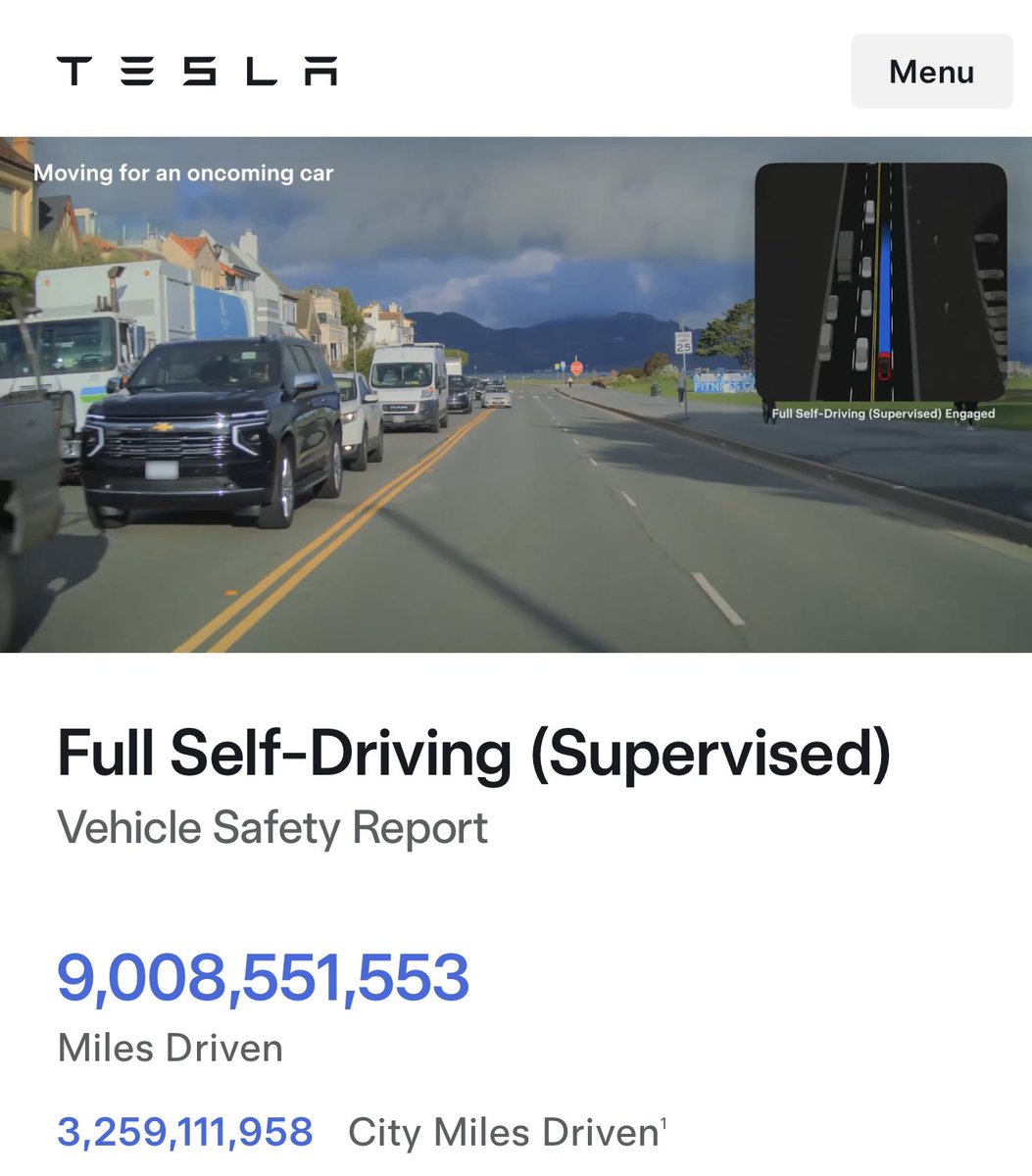
@wholemars They have no idea how hard FSD is. Only path to success imo is hardcore real-world AI software with dedicated NN inference acceleration ASICs in car, multibillion dollar NN training supercluster and 10+ billion miles of vehicle data. Good luck.
Q1 2026 Shareholder Update
https://t.co/dOjSLhd10p
We continued to make meaningful progress on the build out of the infrastructure & AI software that underpins our Robotaxi & future robotics businesses in Q1.
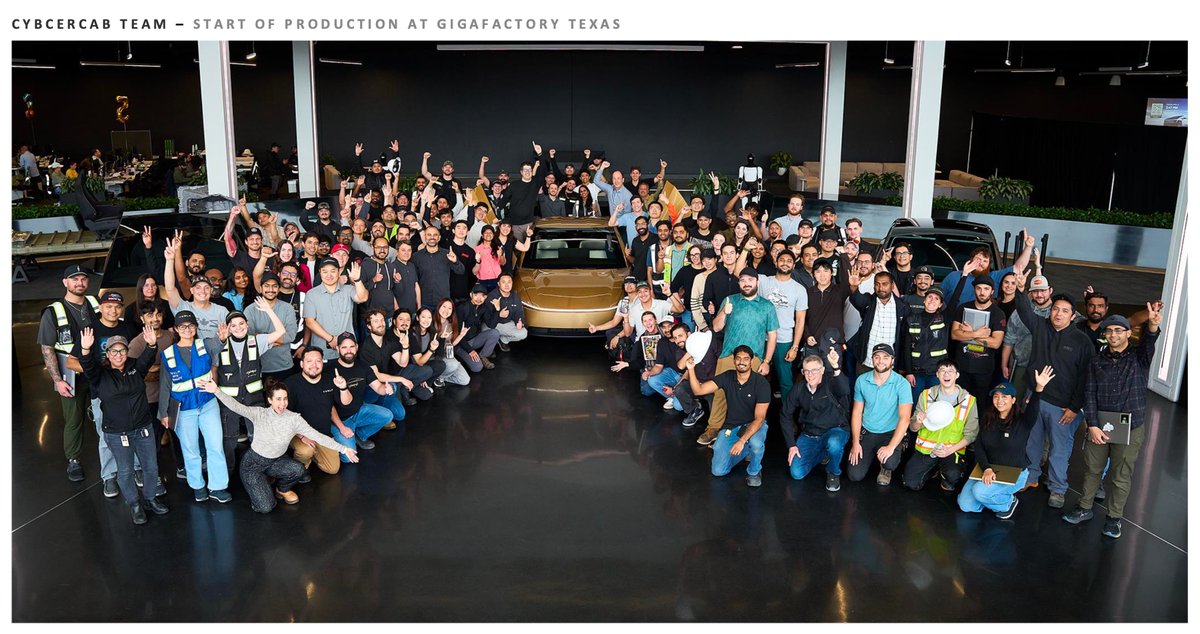
That meant commencing the ramp of new factories across AI compute, battery & battery materials, as well as preparing lines for start of production of Megapack 3, Cybercab & Tesla Semi.
Demand for our vehicles continued to grow in APAC & South America markets, with a rebound of demand in EMEA markets & North America.
As trade and geopolitics become more uncertain, we're further regionalizing and vertically integrating critical supply chains to ensure access to key materials & componentry in each region across vehicle, energy & AI.
Automotive
– Optimizing our vehicle product portfolio with an emphasis on vehicles designed for a fully autonomous future
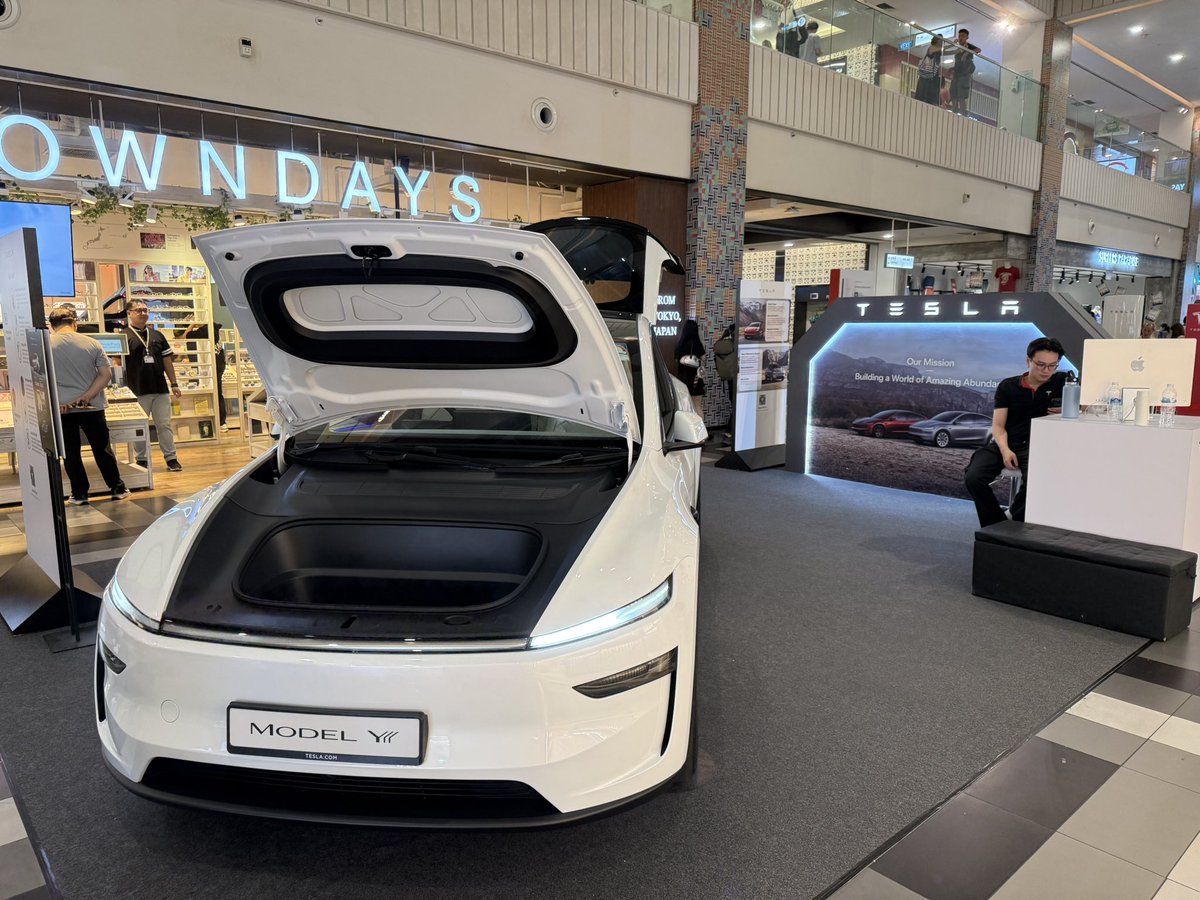
– More affordable trims of Model 3/Y & rollout of Model Y L in markets outside of China
– Began deliveries of Cybertruck in the UAE
– Volume production of Cybercab & Tesla Semi this year
Energy Generation & Storage
– Good progress with new Megafactory outside Houston (will produce Megapack 3 for Megablock). Start of production on track for later this year
– We began meaningful customer deployments of Tesla’s first in-house designed solar panel produced at Giga New York
Robotics
– Preparations for our first large-scale Optimus factory will begin shortly in Q2.
First-gen line designed for 1M robots/year will replace Model S/X lines in Fremont Factory, second-gen line is being prepared at Giga Texas (long-term annual capacity of 10M robots/year)
AI Training Compute
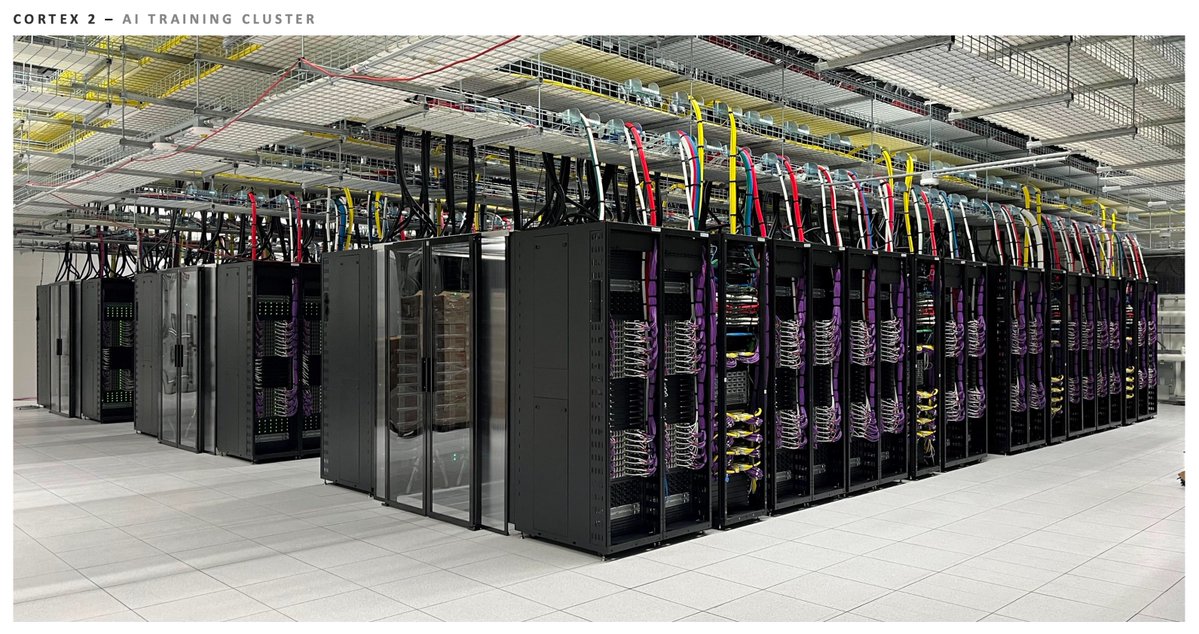
– Cortex 2 is now online & has started running training workloads
– Also ramping on-site training infrastructure to ensure sufficient compute resources for AI products & services
– Continuing with custom silicon development (Dojo 3) to reduce training cost over time
Battery
– Ramping new battery & material factories, including LFP cells in Nevada, cathode material & lithium refining in Texas
– Battery vendor cell availability continues to be a limiting factor on ramping vehicle production, so we're working on initiatives to de-bottleneck, including using 4680 cells at Giga Berlin
Other Supporting Infrastructure
– Giga New York is now producing V4 Supercharging cabinets (3x power density & 2x the number of stalls vs V3)
– Alongside the ramp of Tesla Semi, we're deploying public Megachargers, including our first one in SoCal
– Over 2,200 new Supercharger stalls, growing the network 19% YoY
AI Software
– FSD 14.3 launched in April
– Upgraded Reinforcement Learning (RL) stage to better handle long-tail edge cases, enhanced the neural network vision encoder for sharper perception in low-vis scenarios & rewrote the AI compiler to accelerate model iterations & cut inference latency by 20% (faster reaction time for FSD!)
This accelerates our efforts to eventually deploy unsupervised autonomy to both the Robotaxi fleet & customer owned vehicles
– Digital Optimus: our next evolution of AI development. We're working on automating digital workloads, building an intelligence layer that will complement real-world AI in vehicles & robots
AI Inference Compute
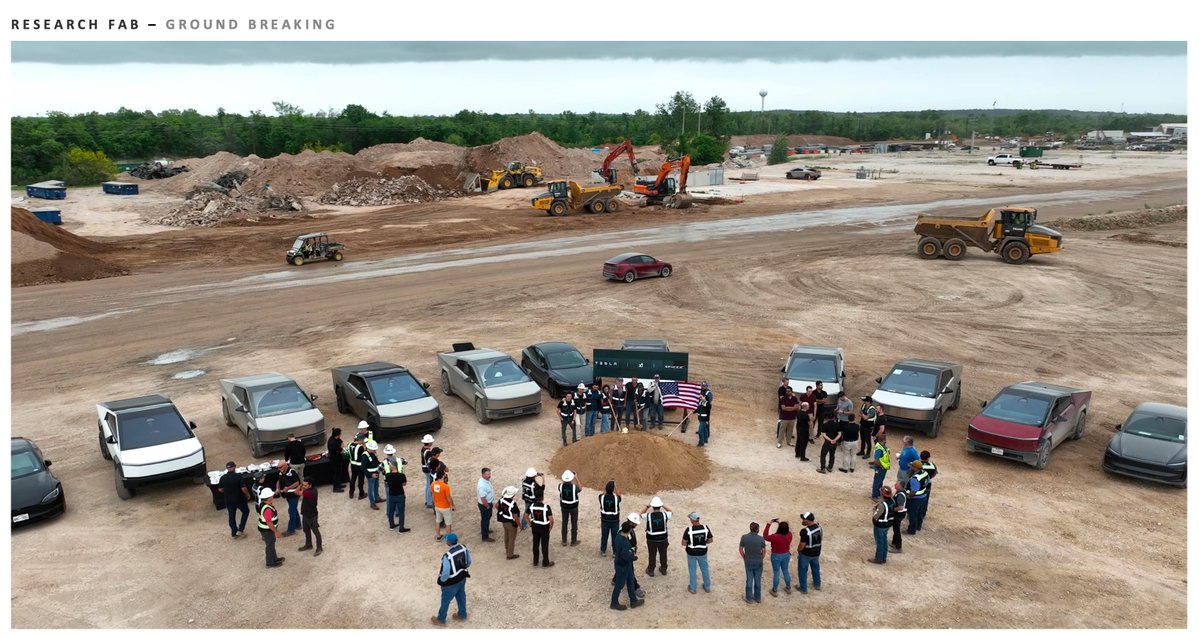
– Expanding our scope of manufacturing to include semiconductor fabrication (coinciding with Robotaxi & Optimus ramps) = step towards ensuring sufficient & resilient chip supply
– Partnership with SpaceX aims to build the largest chip fab ever, vertically integrating logic, memory & advanced packaging to allow for rapid iteration
– Completed final chip design of AI5 (our next-gen inference processor) in April
Automotive & Other Software
– Rolled out Spring Update which includes a new Self-Driving app with tutorials & stats, "Hey Grok" wake word w/ location-based reminders, accent lights for blind spot alerts, updated Pet Mode & more
Robotaxi
– Paid Robotaxi miles doubled sequentially in Q1
– Cybercab will begin replacing Model Y fleet once in production & be the largest volume vehicle in the fleet over time
– Continuing to lay the groundwork for expanding into new cities (testing, permitting), so we can launch quickly once ready. Safety remains top priority
– Expanded unsupervised ops in Austin & launched in Dallas & Houston in April
FSD Supervised
– Record net new FSD subscriptions in Q1
– Received approval to deploy FSD Supervised in the Netherlands in April, clearing the path for potential approval in other EU countries
– Continuing to make progress on approval in China
Automotive Services
– Safety Score v3.0 enables every mile driven with FSD Supervised engaged to receive a score of 100. Higher Safety Score over time = lower premiums for Tesla Insurance customers
Went down the rabbit hole on this. You traveled about 17 million kilometers in your sleep last night, roughly 45 trips to the Moon in a single nap.
The 600 km/s in this post is a real number. Satellites measured it by comparing our motion against the faint glow left over from the birth of the universe. But the speed alone is only half the picture. Where we're headed is the part that got me.
Your body is riding four things at four different speeds, all at once. Earth spins at 1,670 km/h. Earth whips around the Sun at 107,000 km/h. The Sun circles the center of our galaxy at 828,000 km/h. And the Milky Way is tearing through space at 2.1 million km/h. You don't feel any of it.
All the galaxies near us, about 100,000 of them, are being dragged toward one spot. Astronomers call it the Great Attractor. It sits about 250 million light-years away and has the combined gravitational pull of thousands of galaxies. We can't see it, because our own galaxy's dust and stars block the view completely. That whole section of sky is so obscured that astronomers named it "the Zone of Avoidance." We only know something is there because every galaxy near us curves toward the same blind spot. Infrared and X-ray telescopes eventually confirmed a massive pile-up of galaxies hiding behind the curtain.
I kept digging. The Great Attractor is itself being yanked toward something even larger called the Shapley Supercluster, about 650 million light-years out. The thing pulling us is also being pulled.
In 2014, an astronomer at the University of Hawaii named Brent Tully mapped all these galaxy flows and realized we're part of one enormous structure. He named it Laniakea (Hawaiian for "immense heaven"). 500 million light-years wide, about 100,000 galaxies, all draining toward the same gravitational low point like water running downhill. But Laniakea won't hold together. The expansion of the universe is speeding up, slowly ripping the whole structure apart. Our cosmic address has an expiration date.
While all this plays out, the Milky Way is also drifting toward the Andromeda galaxy at about 400,000 km/h. Those two will merge in roughly 4 billion years. But that crash is happening at a fifth of the speed we're falling toward the Great Attractor. Even the collision is a subplot.
You went to bed, stayed completely still for 8 hours, and woke up 17 million km from where you fell asleep. Tonight you'll do it again.
Peanuts in Coke is one of the most accidentally perfect food pairings in history, and the chemistry explains why this guy can't go back.
Coca-Cola sits at pH 2.5, roughly the same acidity as stomach acid. When you drop roasted peanuts into that, the phosphoric acid partially denatures the surface proteins on the nut, releasing free glutamate. You're generating umami in real time inside the glass.
The salt on the peanuts suppresses bitter taste receptors on your tongue, which amplifies your perception of sweetness without adding a single gram of sugar. Coca-Cola already has 39g of sugar per can. Your brain registers it as even sweeter because the salt is clearing the noise from competing flavor signals.
Then carbonation does two things. CO2 dissolved in liquid forms carbonic acid, which triggers pain receptors (TRPA1), not taste receptors. That mild irritation resets your palate between sips so you never get flavor fatigue. Every sip hits like the first. Second, the bubbles physically agitate the peanut surface, accelerating the protein breakdown and glutamate release. The longer the peanuts sit, the more umami you extract.
The fat content seals it. Peanuts are 49% fat by weight. Fat is the only macronutrient that activates CD36 receptors, which your brain interprets as richness and satisfaction. Mix that with sugar, salt, acid, umami, and carbonation and you've accidentally triggered every major reward pathway in the human taste system simultaneously.
Georgia farmers in the 1920s did this because they needed one hand free while working. They stumbled into the optimal salt-acid-umami-fat-carbonation loop a century before food science could explain why it worked.
Based on everything explored in the source code, here's the full technical recipe behind Claude Code's memory architecture:
[shared by claude code]
Claude Code’s memory system is actually insanely well-designed. It isn't like “store everything” but constrained, structured and self-healing memory.
The architecture is doing a few very non-obvious things:
> Memory = index, not storage
+ MEMORY.md is always loaded, but it’s just pointers (~150 chars/line)
+ actual knowledge lives outside, fetched only when needed
> 3-layer design (bandwidth aware)
+ index (always)
+ topic files (on-demand)
+ transcripts (never read, only grep’d)
> Strict write discipline
+ write to file → then update index
+ never dump content into the index
+ prevents entropy / context pollution
> Background “memory rewriting” (autoDream)
+ merges, dedupes, removes contradictions
+ converts vague → absolute
+ aggressively prunes
+ memory is continuously edited, not appended
> Staleness is first-class
+ if memory ≠ reality → memory is wrong
+ code-derived facts are never stored
+ index is forcibly truncated
> Isolation matters
+ consolidation runs in a forked subagent
+ limited tools → prevents corruption of main context
> Retrieval is skeptical, not blind
+ memory is a hint, not truth
+ model must verify before using
> What they don’t store is the real insight
+ no debugging logs, no code structure, no PR history
+ if it’s derivable, don’t persist it
$TSLA bulls in 2027 when FSD is unsupervised, robotaxis are everywhere, the robots are working, stock above $1,500 and shorts are on their 420th margin call








![himanshustwts's tweet photo. Based on everything explored in the source code, here's the full technical recipe behind Claude Code's memory architecture:
[shared by claude code]
Claude Code’s memory system is actually insanely well-designed. It isn't like “store everything” but constrained, structured and self-healing memory.
The architecture is doing a few very non-obvious things:
> Memory = index, not storage
+ MEMORY.md is always loaded, but it’s just pointers (~150 chars/line)
+ actual knowledge lives outside, fetched only when needed
> 3-layer design (bandwidth aware)
+ index (always)
+ topic files (on-demand)
+ transcripts (never read, only grep’d)
> Strict write discipline
+ write to file → then update index
+ never dump content into the index
+ prevents entropy / context pollution
> Background “memory rewriting” (autoDream)
+ merges, dedupes, removes contradictions
+ converts vague → absolute
+ aggressively prunes
+ memory is continuously edited, not appended
> Staleness is first-class
+ if memory ≠ reality → memory is wrong
+ code-derived facts are never stored
+ index is forcibly truncated
> Isolation matters
+ consolidation runs in a forked subagent
+ limited tools → prevents corruption of main context
> Retrieval is skeptical, not blind
+ memory is a hint, not truth
+ model must verify before using
> What they don’t store is the real insight
+ no debugging logs, no code structure, no PR history
+ if it’s derivable, don’t persist it](https://pbs.twimg.com/media/HEu2icGbEAAvoFI.jpg)


