A 14-item core outcome set was developed from the perspective of key stakeholders focused on key aspects for best care for the dying person. #hpm#hapc https://t.co/3lb2KG0Sm7
Our @PLOSDigiHealth paper out today!
Use of virtual end-of-life care was associated with higher acute healthcare use in the last 90 days of life and a higher likelihood of dying out-of-hospital - these rates increased during the pandemic.
https://t.co/PZQCGC8LyO
Primary & specialist level #palliativecare must work collaboratively & synergistically to improve access to quality pall care. In our new article we describe a conceptual framework, the Consultation-Shared Care-Takeover (C-S-T) Framework, to assist this 👇 https://t.co/FKTNJAFwmi
"If good intentions & funding announcements alone were viable solutions to anything, Canada would be a palliative-care paradise," @cardusca Health Program Director Rebecca Vachon & I break down what we need to improve #palliativecare in Canada 👇 https://t.co/QCS3S44R4d
We are so excited to welcome Dr. Katie Goldie to the Providence Care team! Read more about this excellent collaboration that focuses on innovation and patient care! #LoveWhereYouWork#ProvCare
5 academic publishing companies use publicly funded research as free content & generate greater % profit margins than Apple or Google (while limiting access to articles for researchers & public). Read about it in blog, "The Wall" https://t.co/r2b3rFQw8R @QueensuDOM@queensutime
@PalliativeMed_j Recommended articles available with free access through 1/25/24:
https://t.co/kiPCygPiAX
https://t.co/5ayp9NO8Y1
https://t.co/1i2P3a8Qa7
https://t.co/5UxQ3QCNeA
https://t.co/6ADhL74MxW
Cheyne Stokes respiration at end of life- Thread
Can be scary to witness for family, loved ones and health care professionals looking on.
Understanding a little about what is happening may help alleviate some of that distress 🧵
Exciting news! The first pilot study results of the Canadian Atlas of Palliative Care are now available.
Explore the current state of #PalliativeCare access in the Central-East subregion of Ontario, with our innovative and interactive tool: https://t.co/xWwTfKKHTF
“Volunteers adding life to patients’ days.” A new palliative care program in Kingston will train volunteers to help support patients in their homes. Based on a model from @palliumindia, the @queensuResearch project partners w/ @CompassionateCK: https://t.co/yfGLxJcuRo
We're thrilled to launch the Palliative Care Atlas for Ontario.
The Atlas will offer an unparalleled overview of the state of #PalliativeCare service availability in Ontario, a crucial step toward enhancing the delivery of palliative care for all: https://t.co/bgkX8mWclc
Opioids and renal failure 🧵
“Hi I’m looking for advice on opioids for pain control”
A common reason for contacting palliative care.
If asked for advice I’m inevitably going to ask:
“Do we know the patients most recent renal function?”
Why the eGFR questions?
Free #EAPWebinar focusing on how primary care has the potential to provide universal access to a palliative care: 23 November 2023, 3pm CET
To register to attend click on this link: https://t.co/NJiYpiaQY4
For more information go to this page: https://t.co/S3jmA1llgU
🧵
This 3y v. 2y 🇨🇦Family Med residency debate shines light on some bigger problems re: #FamilyDoctorShortage
⬇️people are choosing family med than before
Why? continued reliance on individual doctors to fix, run, & staff the primary care system...
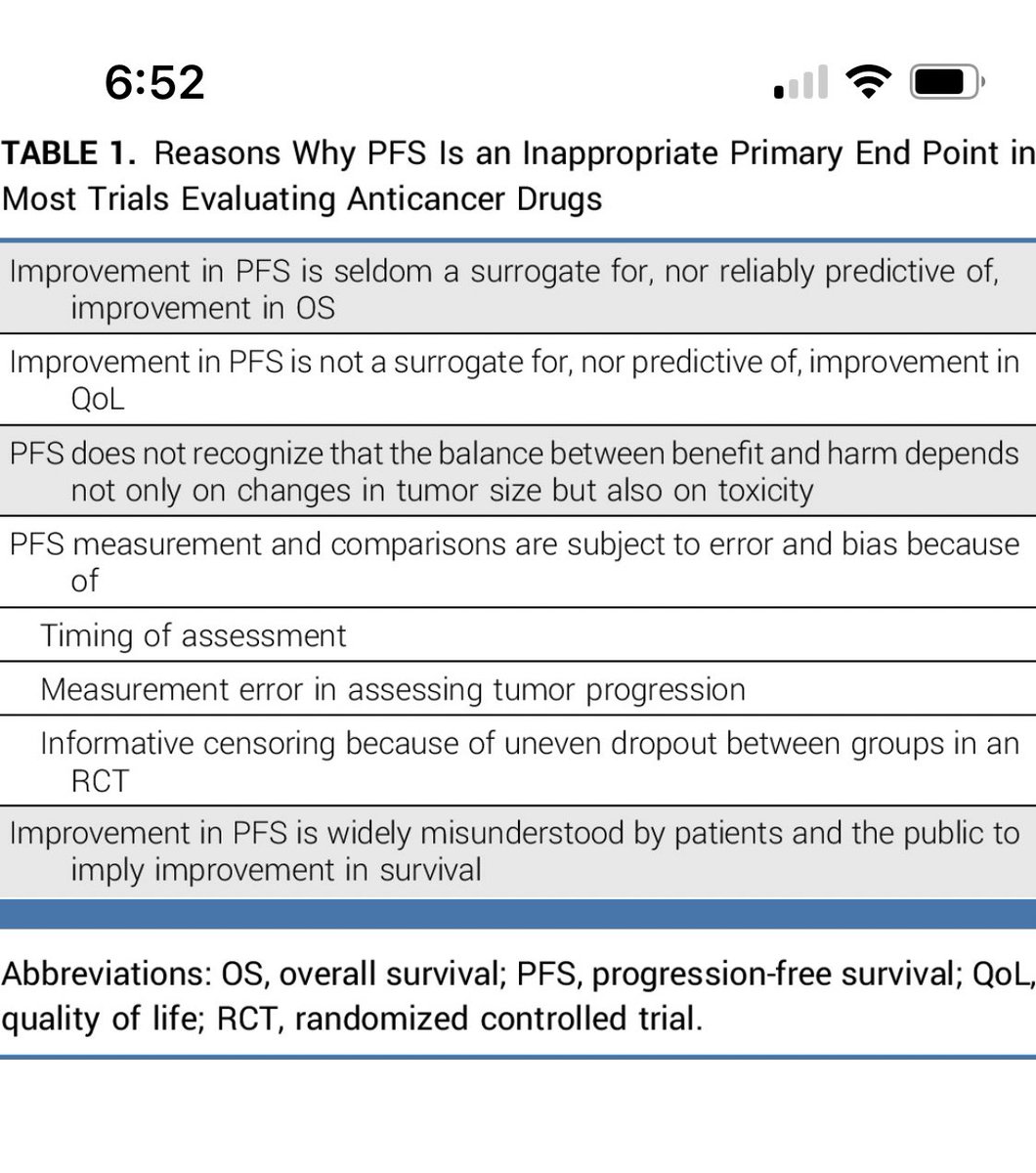
Hot off the press in @JCO_ASCO from the @csoncol team. We argue that PFS should not be used as the primary endpoint for registration trials of anti cancer drugs. https://t.co/3FJJFwiZjd @EAEisenhauer@ian_tannock#ChrisBooth
12 Reasons Why Cities Need More Trees:
1. Temperature Control
One large tree is equivalent to 10 air conditioning units, and the shade they provide can reduce street temperature by more than 30%.
2. Noise Reduction
Trees can reduce loudness by up to 50%. In urban areas filled with the sound of cars, construction, sirens, aeroplanes, and music, trees are essentially the best way to block noise and keep cities — along with the homes and workplaces in them — quieter.
3. Air Purity
Trees remove an astonishing amount of harmful pollutants and toxins from the air. In urban areas air quality is often disastrously bad — with severe consequences for our health. Trees make the air we breathe much cleaner.
4. Oxygen
And, while absorbing all those pollutants, trees also put more oxygen back into the urban environment. Oxygen levels are significantly lower in cities compared to the countryside; trees help to solve that problem.
5. Water Management
Trees do more than just shelter us and our buildings from rain — which is, in fact, extremely important. They also absorb huge quantities of water, reduce run-off, neutralise the severity of flooding, and make flooding more unlikely altogether. Not to forget that their roots absorb pollutants and prevent them from feeding back into a city's water supply.
6. Psychological Health
Studies have proven what we instinctively know to be true: that human beings are significantly happier when surrounded by nature rather than sterile urban environments. Our emotions, behaviour, and thoughts are shaped by the places we spend time — and trees have a profoundly positive effect on our psychology. The consequential benefits of being happier and more peaceful — as individuals and as a society — are immense.
7. Physical Health
Beyond all the other ways in which trees improve air quality and the urban environment, much to the benefit of our health, they also encourage people to go outside. Cycling, running, and walking are all more common in urban areas with plenty of trees. A knock-on effect of people spending more time outdoors is also social integration and stronger communities.
8. Privacy
A simple point, but not inconsequential, is that trees provide privacy.
9. Economics
The total economic benefit of urban trees is hard to calculate. There are costs, of course, including the repair of infrastructure damaged by roots and maintaining the trees themselves. But the total economic benefit — a consequence of everything else in this list and more — far outweighs the expenditure. Trees make cities wealthier.
10. Wildlife
Trees are miniature cities all of their own, serving as a habitat for hundreds of different species, including birds and mammals and insects.
11. Light Pollution
Trees don't only block the light shining down, therefore keeping us and our cities cooler — they also disrupt light shining up, from street lighting, cars, houses, and billboards. Skies are clearer in cities with more trees.
12. Aesthetics
And, finally, trees are beautiful. They break up the potential monotony of urban environments — the sharp geometry, the greyscale roads and buildings, the endless rows of cars — with their trunks, boughs, canopies, and flowers.
Just think: the gold and red of falling leaves in autumn, the white and pink blossom of spring, the vast green canopies of summer, and the branches lined with hoar-frost in winter. Every single tree is a myriad of intricacy and texture, of colour and scent, of dappled light on the pavement, mottled bark, knotted roots, of clustered leaves and delicate petals and stern boughs.
Few streets would not be improved by the kaleidoscopic aesthetic delights of a tree, not to mention the many different species of tree, all over the world, whether willow, oak, lime, cherry, aspen, maple, birch, horse chestnut, dogwood, hornbeam, ash, sycamore... the list goes on.
There are some drawbacks to urban trees, most of them context-specific, and they are not — of course — universally appropriate. But it seems fair to say that many cities would benefit from at least a few more trees here and there.
P- people deserve the truth
A- acknowledge fears
L- listen
L- learn to be present
I- invite reality into the room
A- acknowledge the family
T- tell them how things will unfold
E- explain what to expect
PALLIATE DON’T PLACATE!
#MedTwitter#Palliativecare#Palliative ##Meded